Word identification Reading Worksheets for Ages 5-7
5 filtered results
-
From - To
Welcome to our engaging selection of word identification reading worksheets tailored for ages 5-7! Designed to foster early literacy skills, these worksheets help young learners recognize, read, and understand words in a fun and interactive way. Each activity is crafted to enhance vocabulary, boost reading confidence, and develop comprehension. With colorful illustrations and age-appropriate content, children will enjoy identifying words through games, exercises, and more. Perfect for home or classroom use, our worksheets support the foundational skills needed for effective reading. Explore our comprehensive resources today and watch your child’s reading abilities flourish!
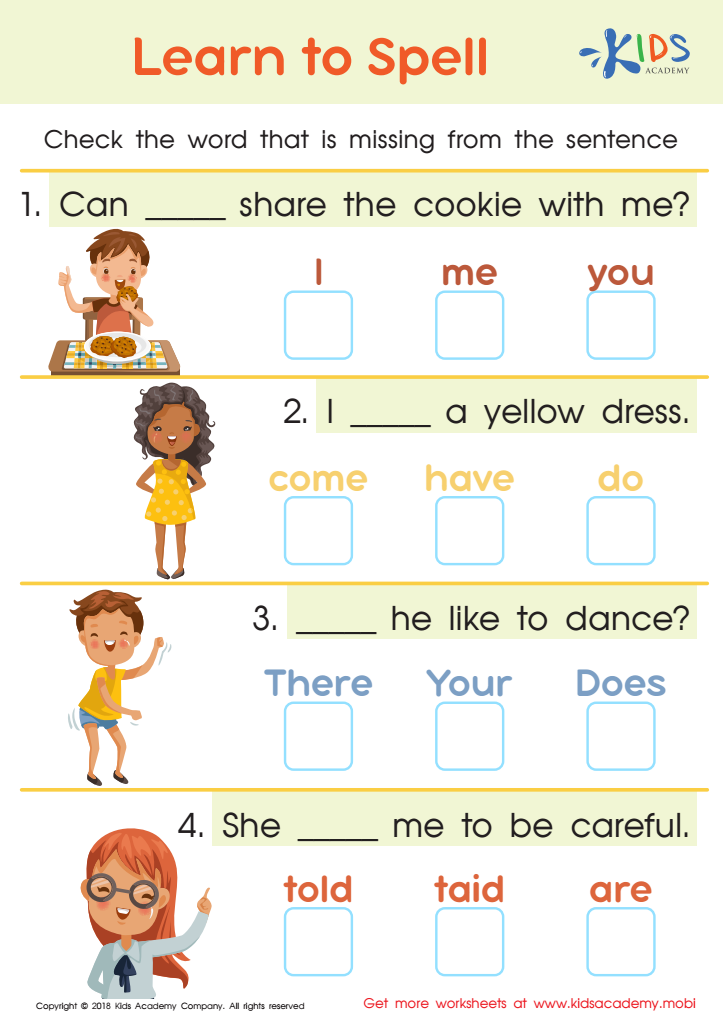
Learn to Spell Worksheet
 Assign to My Students
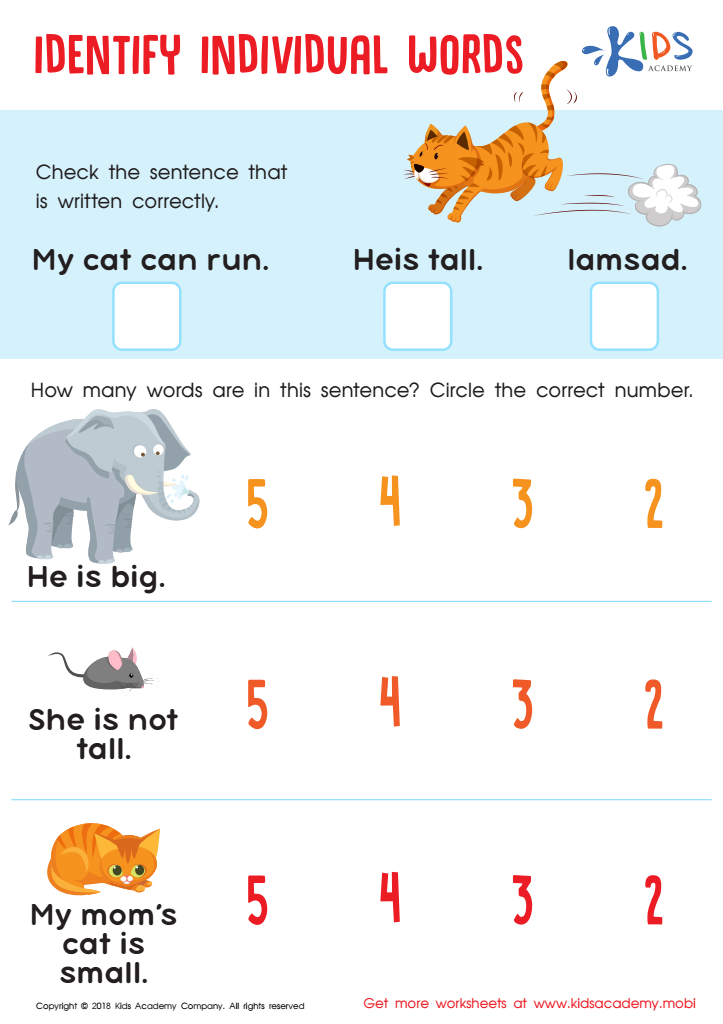
Identify Individual Words Worksheet
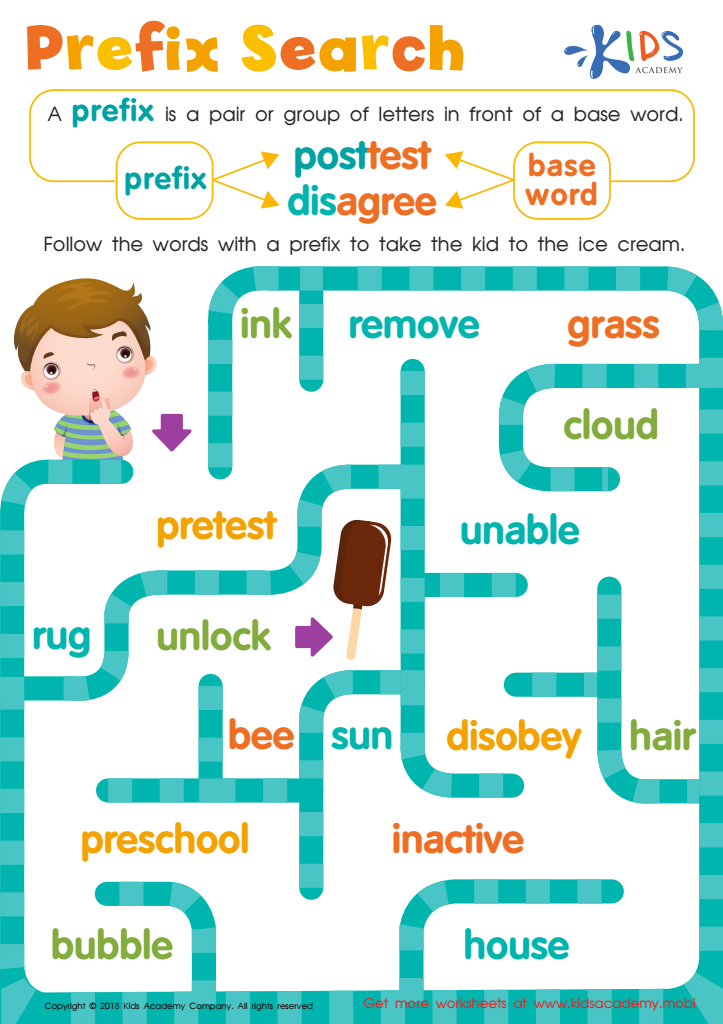
Reading: Prefix Search Worksheet
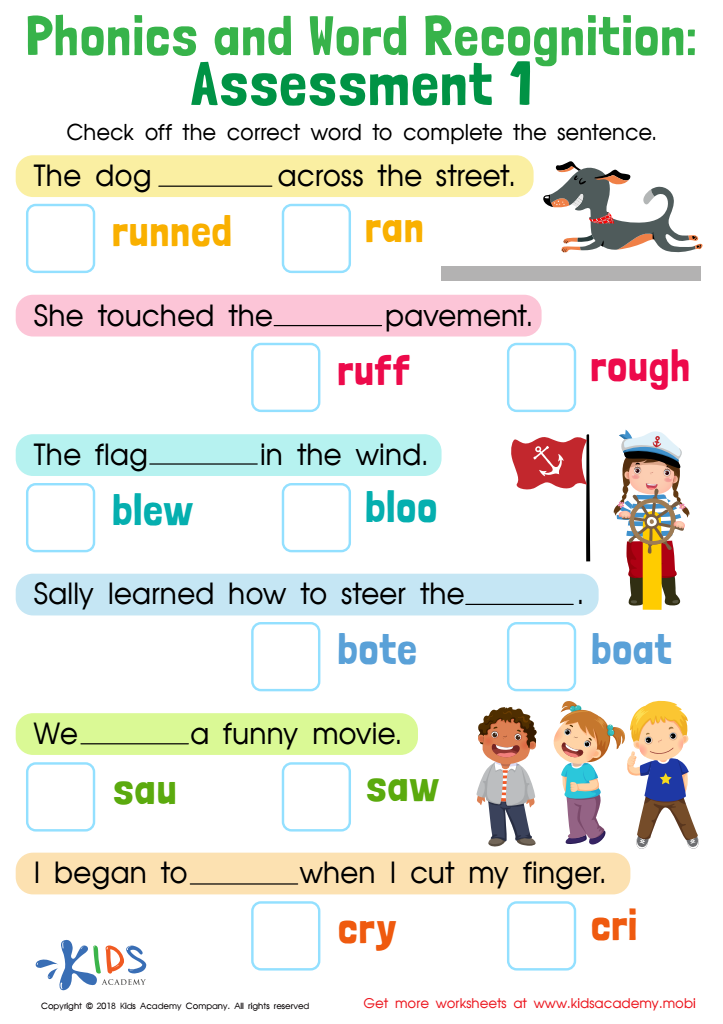
Phonics and Word Recognition: Assessment 1 Worksheet
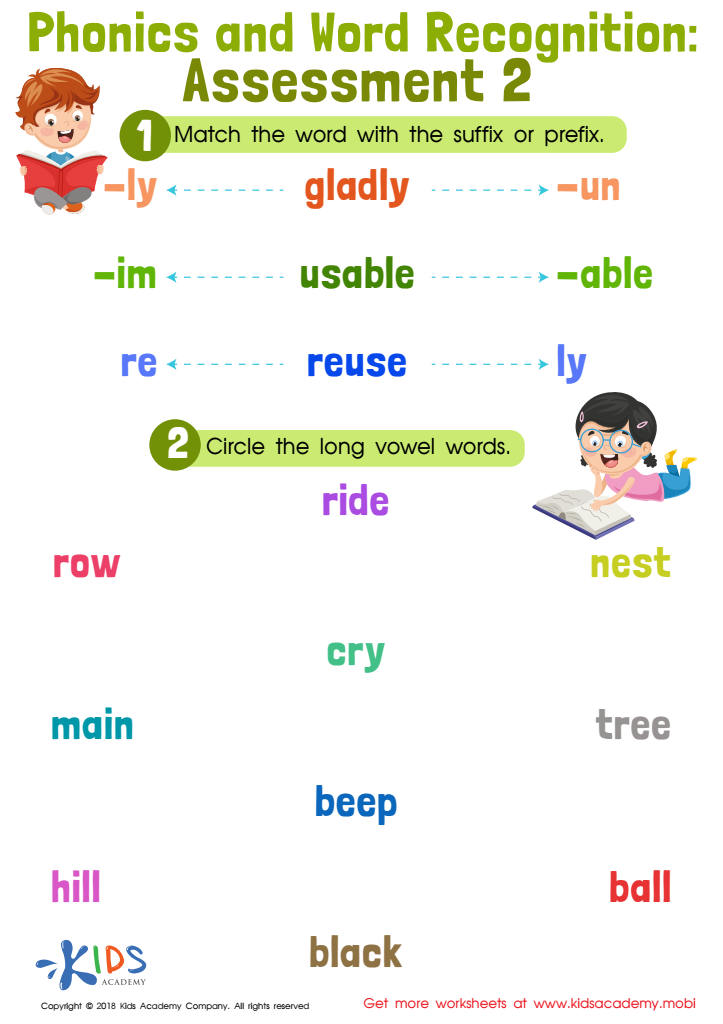
Phonics and Word Recognition: Assessment 2







Word identification reading is crucial for children ages 5-7 as it lays the foundation for successful reading and overall literacy development. At this age, children are beginning to decode words and recognize familiar sight words, which contributes significantly to their reading fluency. When parents and teachers prioritize word identification, they provide young learners with essential skills needed to understand text, enhancing their literacy confidence.
Moreover, recognizing words helps nurture a love for reading, as children can engage with stories and information that fascinate them. It fosters critical thinking and comprehension skills; once students can identify words quickly, they can focus on understanding context and meaning rather than struggling with decoding.
Additionally, effective word identification strategies support struggling readers by integrating phonics and visual recognition, thus addressing diverse learning needs. This inclusivity plays a vital role in promoting an engaging learning environment.
By caring about word identification, parents and teachers create stronger reading foundations that allow children to progress academically, socially, and emotionally, contributing to their lifelong learning journey. Early intervention and support in word identification can mitigate future reading challenges, making it a pressing priority for anyone involved in a child's education.








