
Attention to Detail Reading Comprehension Worksheets for Ages 5-7
4 filtered results
Difficulty Level
Grade
Age
-
From - To
Subject
Activity
Standards
Enhance your child's reading skills with our Attention to Detail Reading Comprehension Worksheets designed for ages 5-7! These engaging activities promote critical thinking and meticulous observation as young learners navigate various texts. Through fun exercises and age-appropriate examples, children will sharpen their ability to identify key information, make inferences, and grasp the finer points of stories. Our worksheets are perfect for reinforcing reading comprehension in a playful yet educational way, ensuring your child becomes a confident reader. Explore our diverse range of printable worksheets today and support your child's literacy journey with focused, skill-building practice!
Favorites
With answer key
Interactive
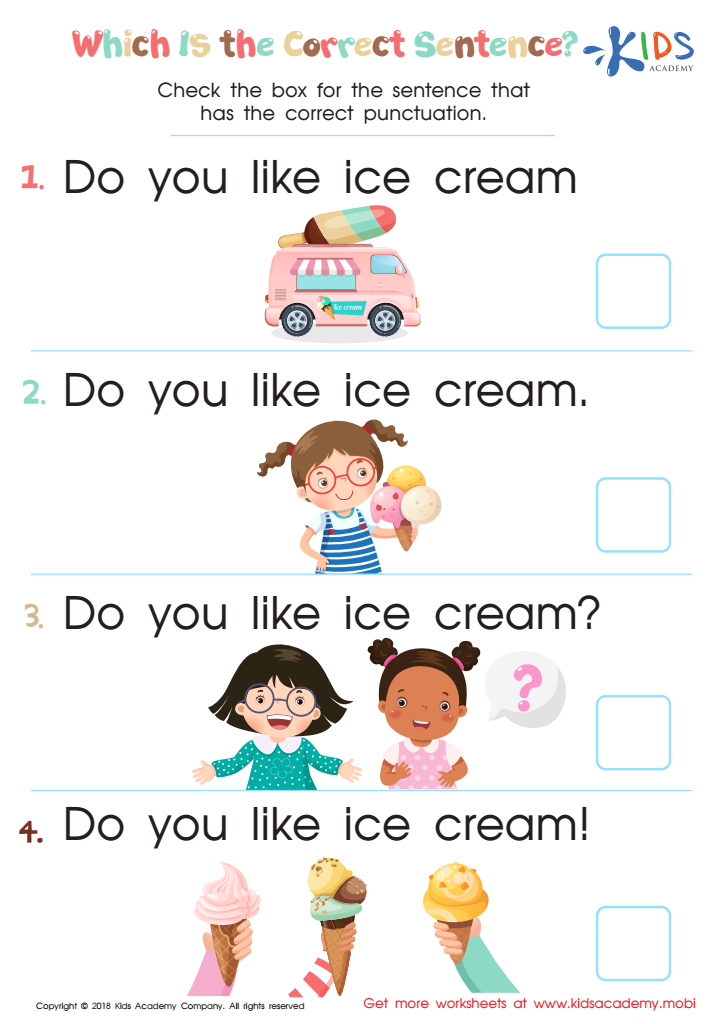
Which is the Correct Sentence? Worksheet
Punctuation is crucial in sentence formation. If your kid still doesn't grasp it, bigger hurdles await when writing sentences. Get them to read simple sentences, then ask if they know the right punctuation. Assist them in selecting the sentence that has the accurate punctuation.
 Assign to My Students
Which is the Correct Sentence? Worksheet
Worksheet
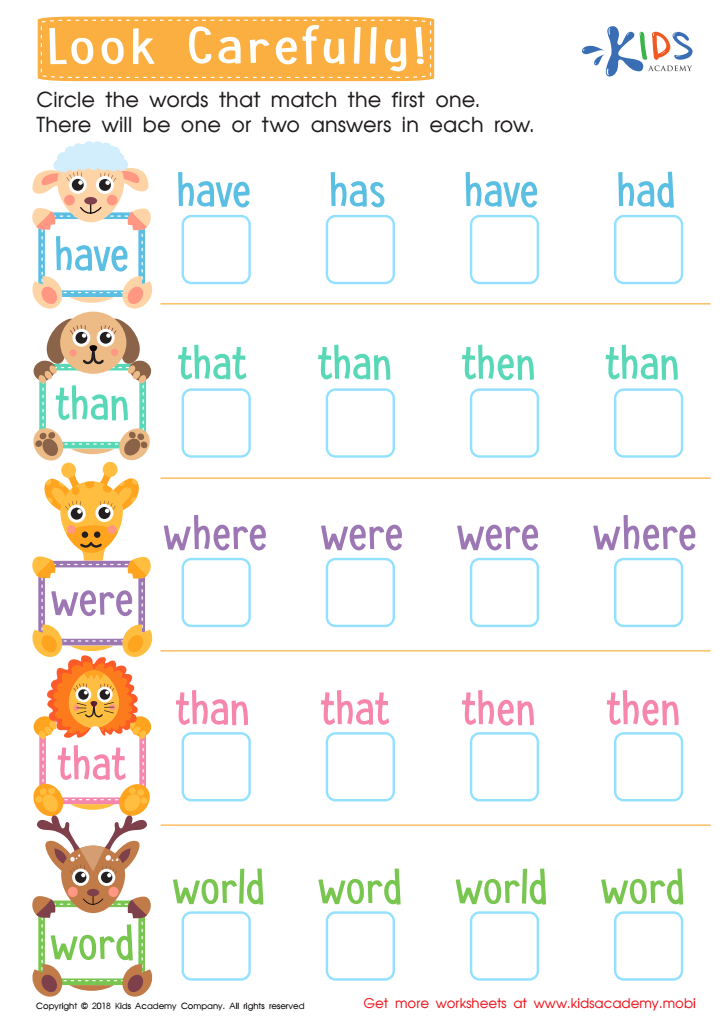
Look Carefully Worksheet
It's crucial to teach kids to identify sight words and become fluent readers. This free worksheet helps make it simpler for kids to learn the similarities and differences between similar words. They'll get practice by looking at the box word and selecting the one that matches from the row.
Look Carefully Worksheet
Worksheet
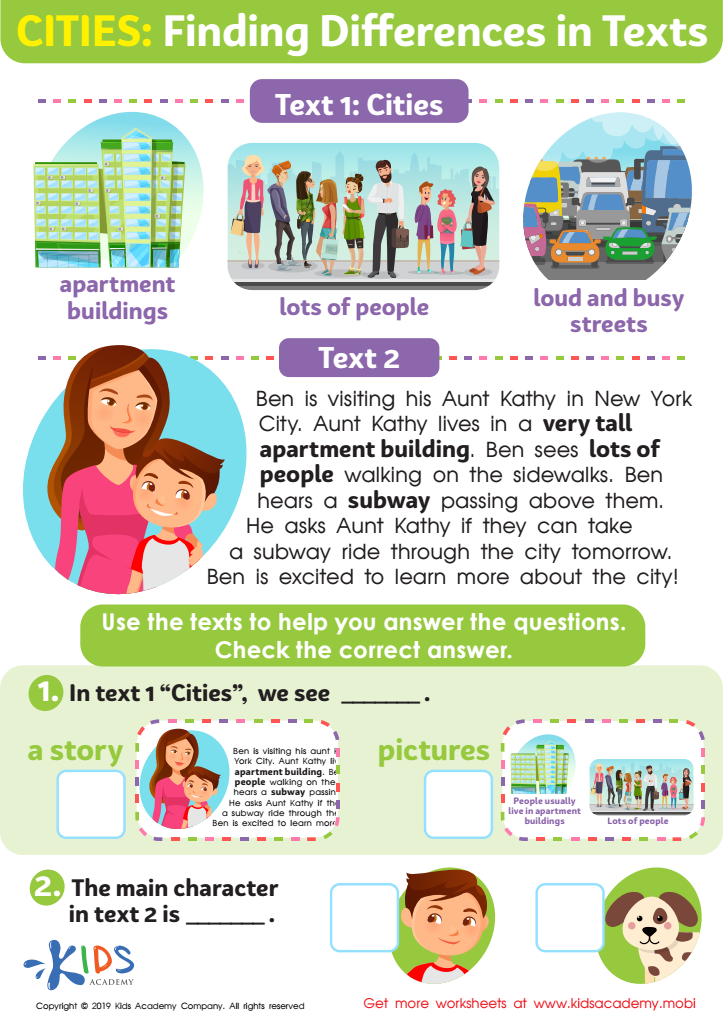
Cities: Finding Differences Worksheet
Critical thinking is essential for reading comprehension. New readers must be able to identify the key information in different text formats. This worksheet helps children learn what they might find in cities and how to differentiate between stories and pictures.
Cities: Finding Differences Worksheet
Worksheet
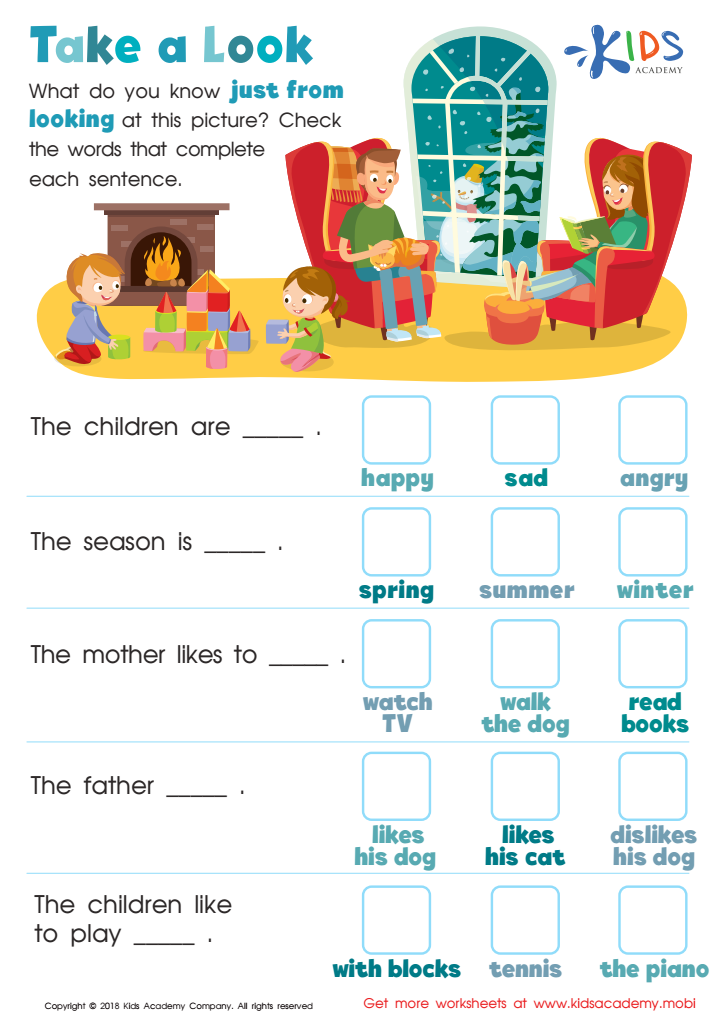
Take a Look - Part 1 Worksheet
Young learners gain understanding when using picture clues when reading. Looking at illustrations can help students learn the meaning of key vocabulary when reading fiction or informational text. Ask your students to look at the worksheet and observe what they can learn from the picture. It's a great comprehension strategy for early readers.
Take a Look - Part 1 Worksheet
Worksheet
Join Kids Academy for Free
Who is primarily going to use this learning content?





.jpg)


Attention to Detail Reading Comprehension is crucial for children aged 5-7 as their foundational literacy skills are being developed. During this critical growth period, children learn not only to recognize words but also to understand the meaning behind them. Focusing on attention to detail helps children grasp key information, details, and nuances in texts, which is essential for full comprehension.
For parents and teachers, promoting this skill fosters critical thinking. By encouraging young readers to notice details in stories—such as character traits, plot developments, or subtle clues—adults are equipping children with the tools to analyze and engage with texts more deeply. This skill is not just academic; it translates into everyday life, helping children to make informed decisions and solve problems effectively.
Moreover, attention to detail can improve memory retention. Children who practice these skills can recall information better, enabling them to actively participate in discussions and build connections between texts and their own experiences. Ultimately, when children master attention to detail in reading, they become more confident readers, enthusiastic learners, and independent thinkers, which significantly enhances their overall educational journey. Therefore, fostering comprehension skills in young readers should be a shared priority for both parents and educators.








