Understanding life cycles Reading Comprehension Worksheets for Ages 5-7
3 filtered results
-
From - To
Discover the "Understanding Life Cycles Reading Comprehension Worksheets" designed specifically for children aged 5 to 7. These engaging worksheets help young learners grasp the concept of life cycles through captivating stories and relatable characters. Each activity promotes critical thinking skills while encouraging students to answer questions and make connections. By exploring the life cycles of plants, animals, and more, children enhance their reading comprehension abilities while gaining a deeper appreciation for nature. Perfect for parents and teachers, these resources are easy to print and incorporate into lesson plans, making learning both fun and educational. Start nurturing your child's understanding of life today!
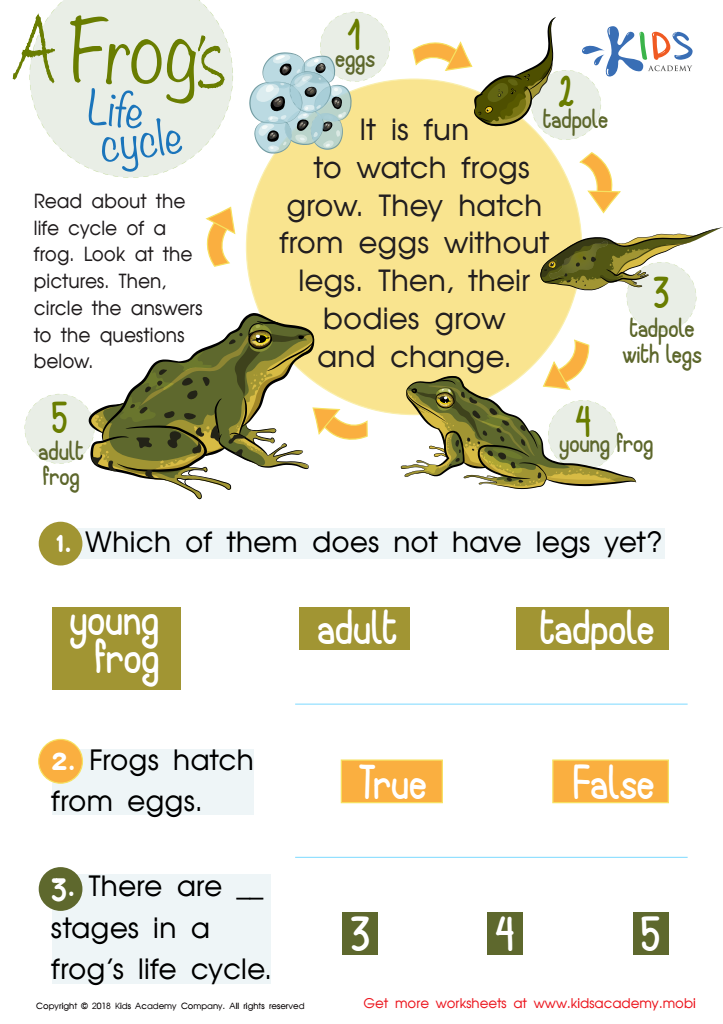
A Frog’s Life Cycle Worksheet
 Assign to My Students
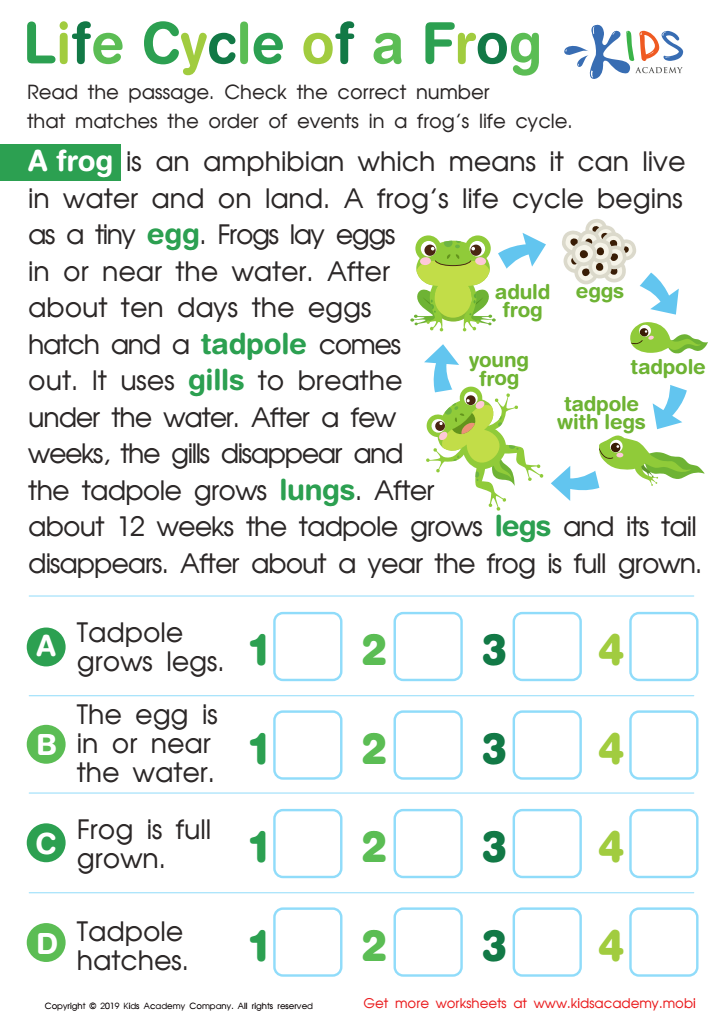
Life Cycle of a Frog Worksheet
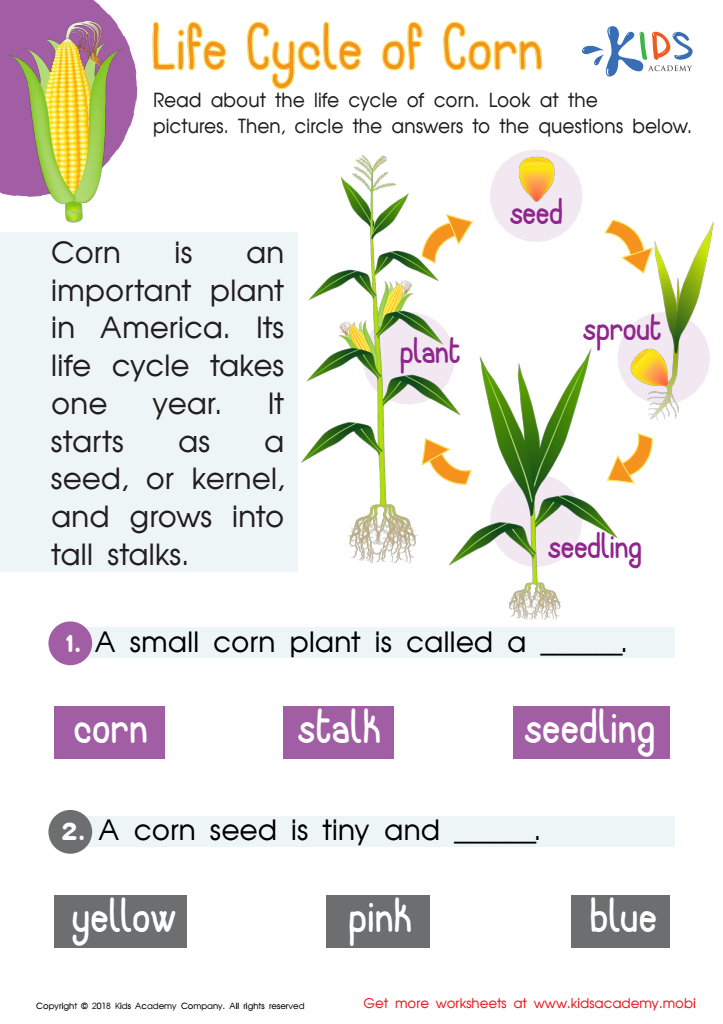
Life Cycle of Corn Worksheet


.jpg)



Understanding life cycles is crucial for young learners, as it connects them to the natural world and fosters curiosity about living things. For parents and teachers, promoting reading comprehension on this topic enhances children's learning experiences in several ways. First, comprehending the stages of life cycles—such as those of plants, insects, and animals—develops critical thinking skills. Children learn to observe, compare, and categorize information, laying the groundwork for scientific inquiry.
Furthermore, life cycles introduce essential vocabulary and concepts, enhancing language skills. When children read about life cycles, they encounter diverse terms and phrases, improving their overall literacy and reading comprehension. This enrichment supports their ability to describe and discuss observations about nature.
In addition, understanding life cycles cultivates a sense of empathy and respect for living organisms. This awareness encourages children to appreciate the environment and their role within it, fostering responsible behaviors toward nature. Engaging with literature about life cycles also promotes community connections, as discussions can be expanded to family gardening projects or local ecological studies.
Ultimately, integrating life cycle reading comprehension in early education not only enriches academic growth but also nurtures a profound connection to the world around them.








