Recognizing Patterns Sight Words Worksheets for Ages 5-7
5 filtered results
-
From - To
Discover our engaging Recognizing Patterns Sight Words Worksheets, specially designed for children ages 5-7! These worksheets help young learners develop essential reading skills through fun pattern recognition activities that incorporate sight words. By identifying and completing patterns, children enhance their vocabulary and improve their overall language comprehension. Our resources are perfect for both classroom settings and at-home learning, fostering a love for reading while building confidence. With vibrant visuals and interactive exercises, your child will be excited to explore and master sight words. Support their educational journey today with our expertly crafted printables that make learning enjoyable and effective!






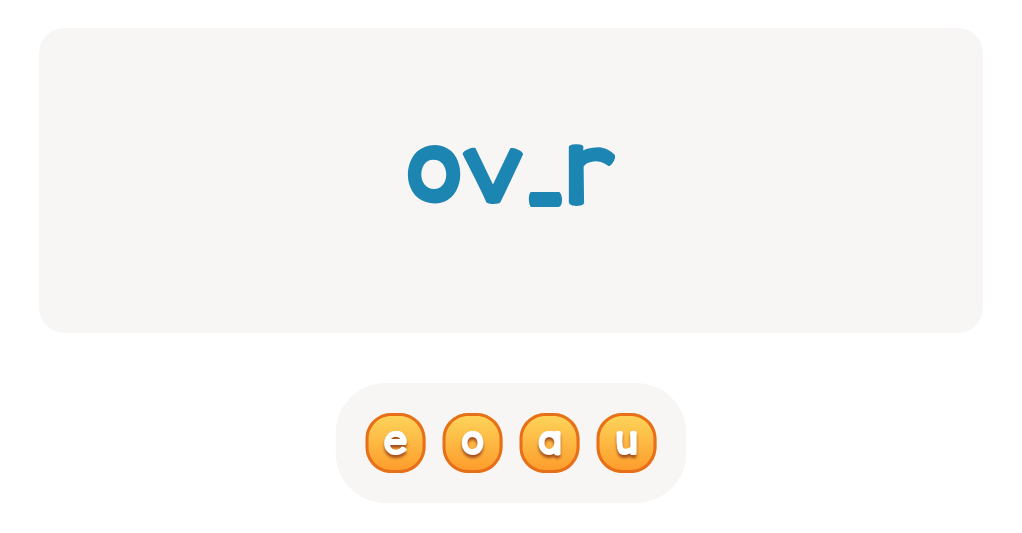
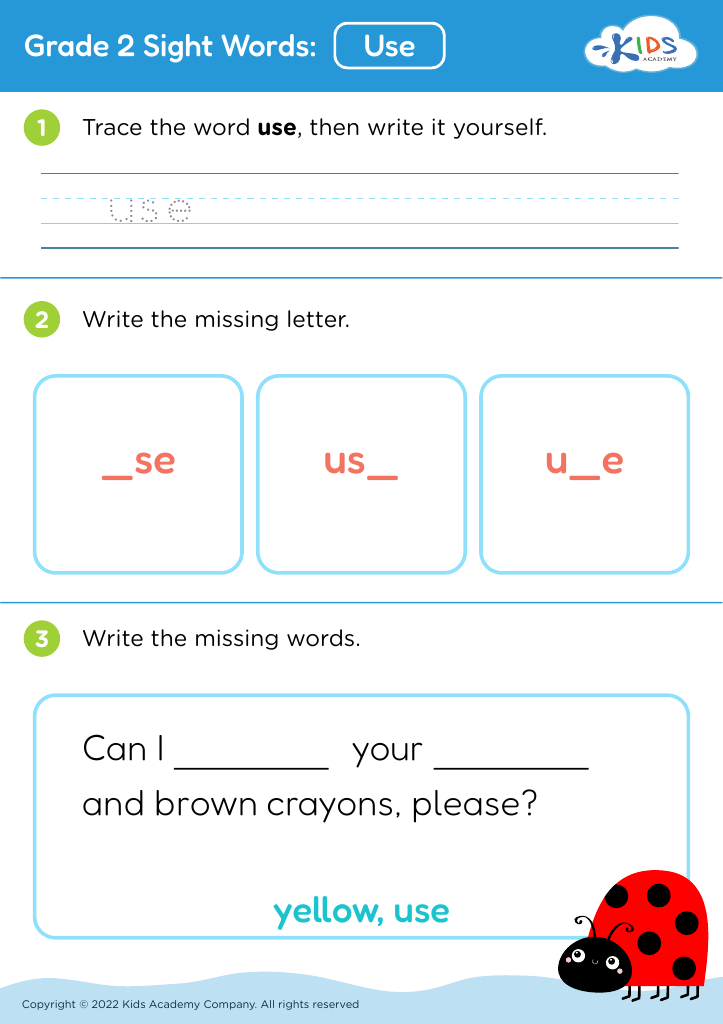
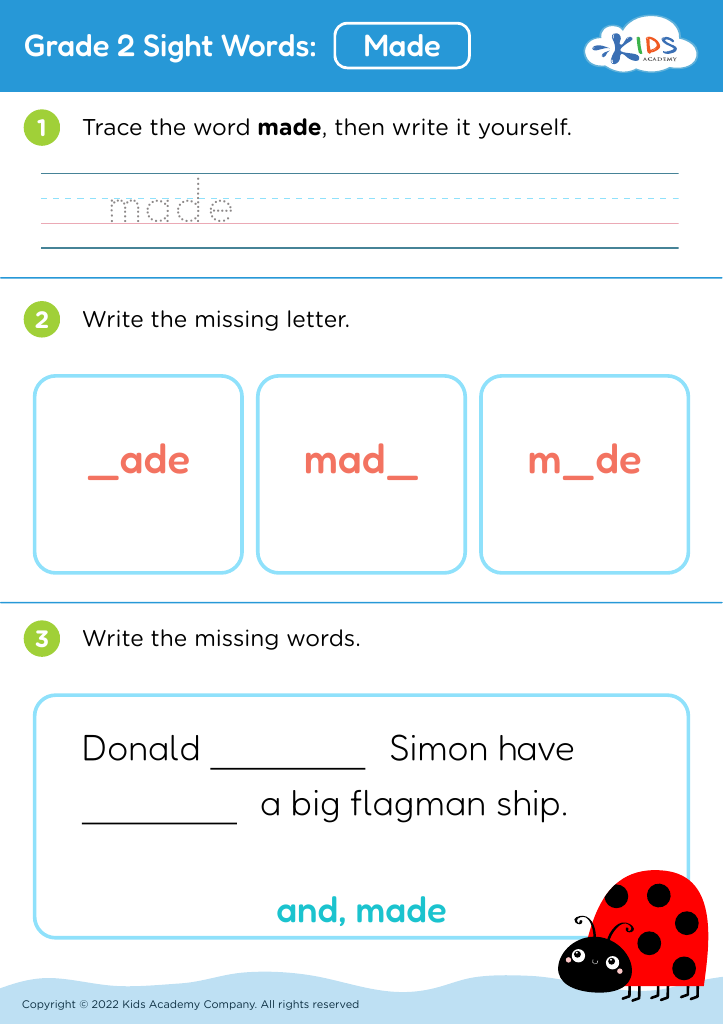
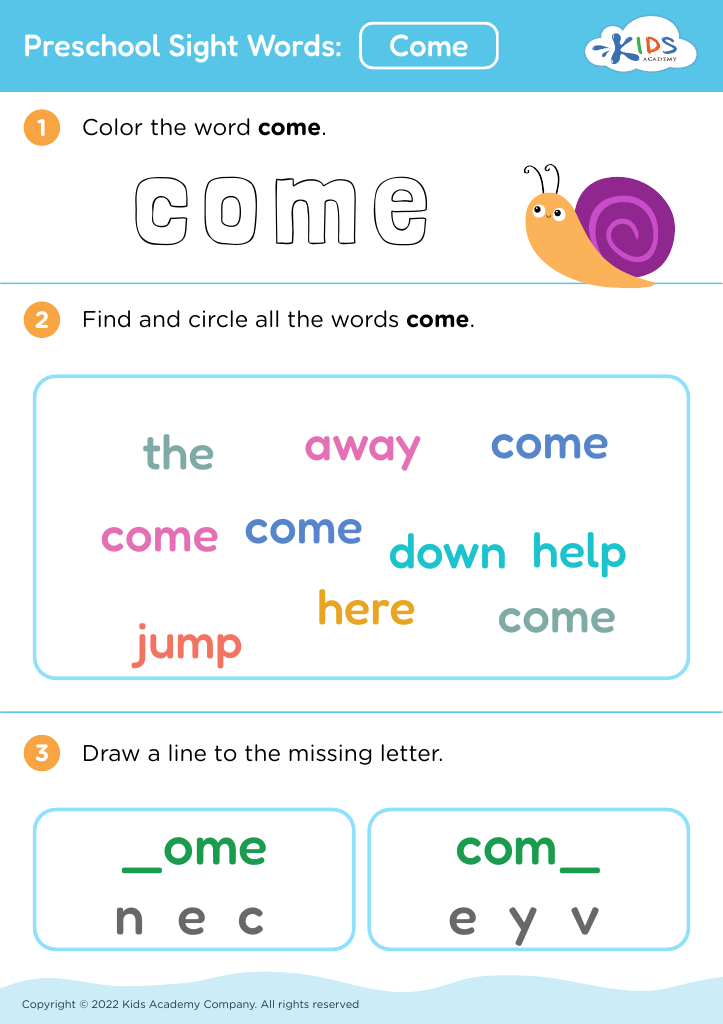
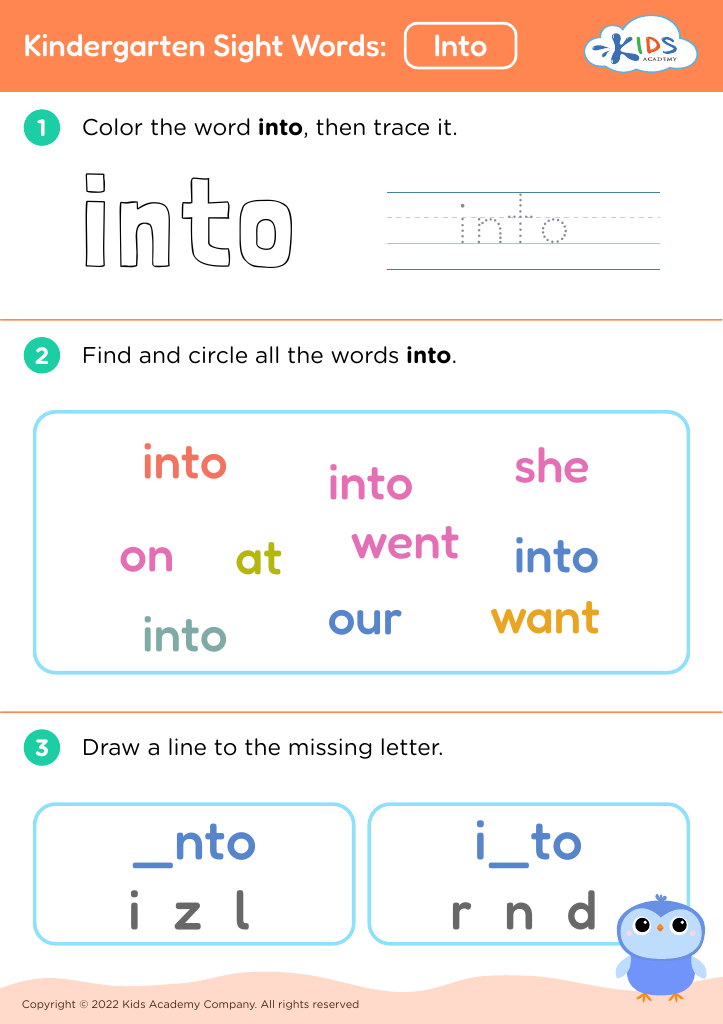








Recognizing patterns in sight words is crucial for children aged 5-7, primarily because it lays the foundation for reading fluency and comprehension. Sight words are the most frequently used words in the English language, and mastery of these words allows young readers to recognize them instantly, facilitating smoother reading rather than halt-and-start decoding.
For parents and teachers, supporting children in identifying these patterns can significantly enhance their literacy skills. Many sight words share common characteristics, such as similar endings or syllable structures, which help children group words and make educated guesses during reading. By fostering this recognition, caregivers can create a more engaging and less frustrating learning experience.
Moreover, understanding patterns empowers children to build their vocabulary and confidence as readers. When students see a pattern, they can often predict new words or recreate sentences, engaging them further in their reading journeys.
Encouraging the recognition of patterns in sight words enriches instructional methods, promotes a love for reading, and supports the development of essential decision-making skills—making it a vital focus for educators and parents alike. Ultimately, prioritizing this aspect of literacy education ensures children achieve a solid foundation for academic success.