Vocabulary enhancement Sight Words Worksheets for Ages 5-7
6 filtered results
-
From - To
Our Vocabulary Enhancement Sight Words Worksheets for ages 5-7 are expertly designed to bolster your child's reading skills. These engaging, child-friendly worksheets focus on essential sight words to improve their vocabulary, reading fluency, and comprehension. Perfect for young learners, these printables offer a range of fun activities, from word recognition to simple sentences, making learning both effective and enjoyable. With clear instructions and delightful illustrations, children stay motivated to practice, keeping them ahead of the curve. Give your child the gift of confident reading and expansive vocabulary with our thoughtfully crafted sight words worksheets.
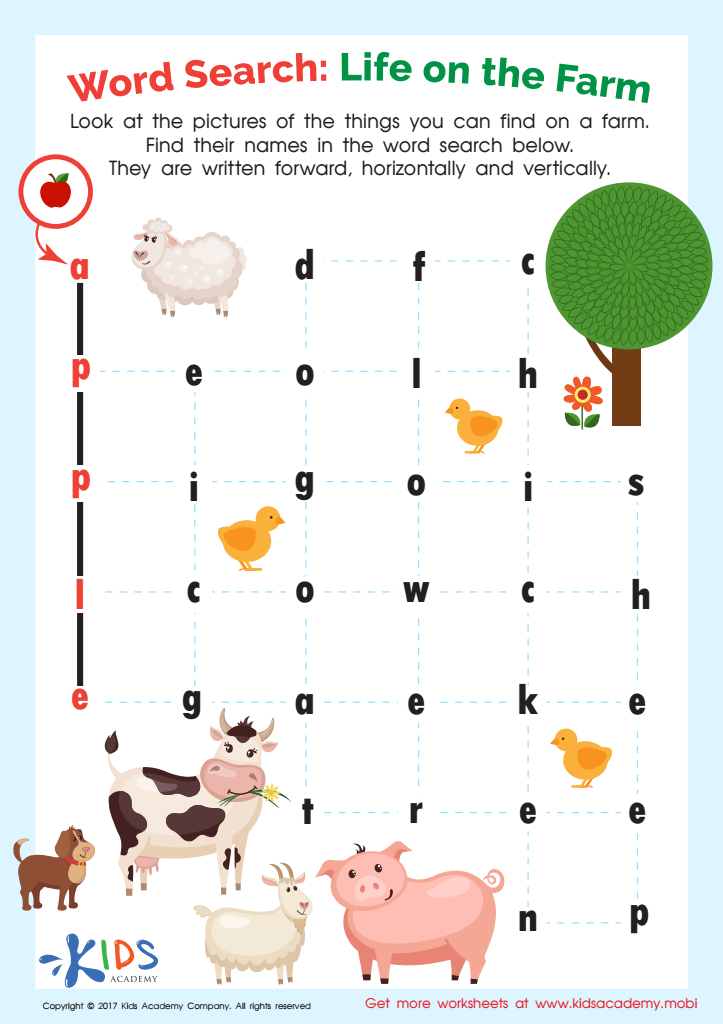
Word Search Puzzles Worksheet
 Assign to My Students




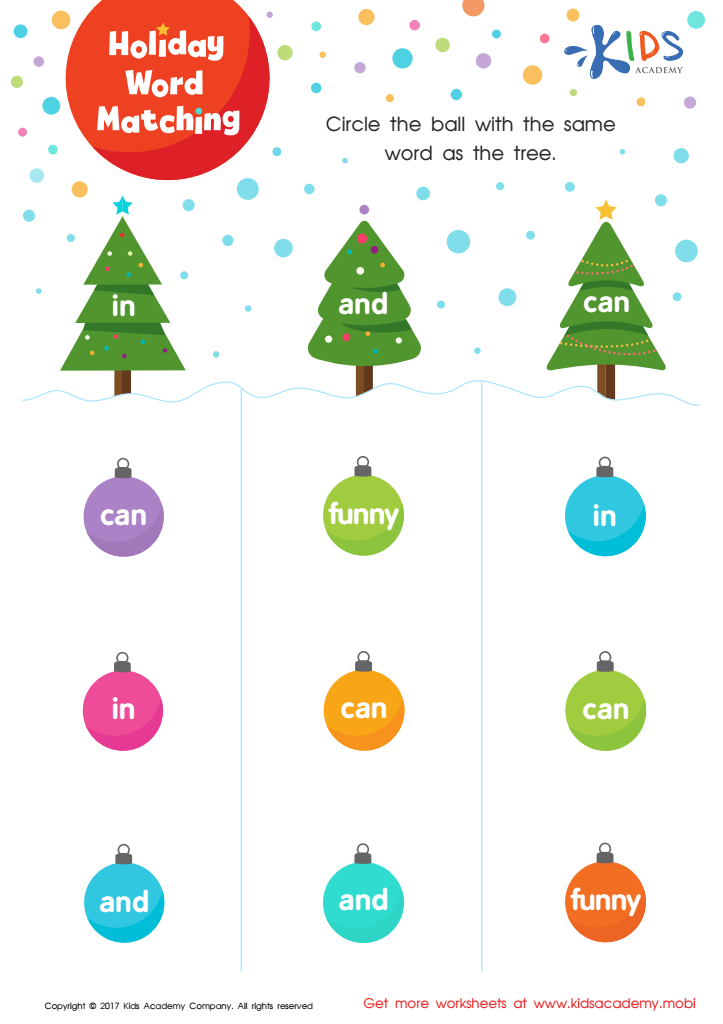
Holiday Word Matching Worksheet
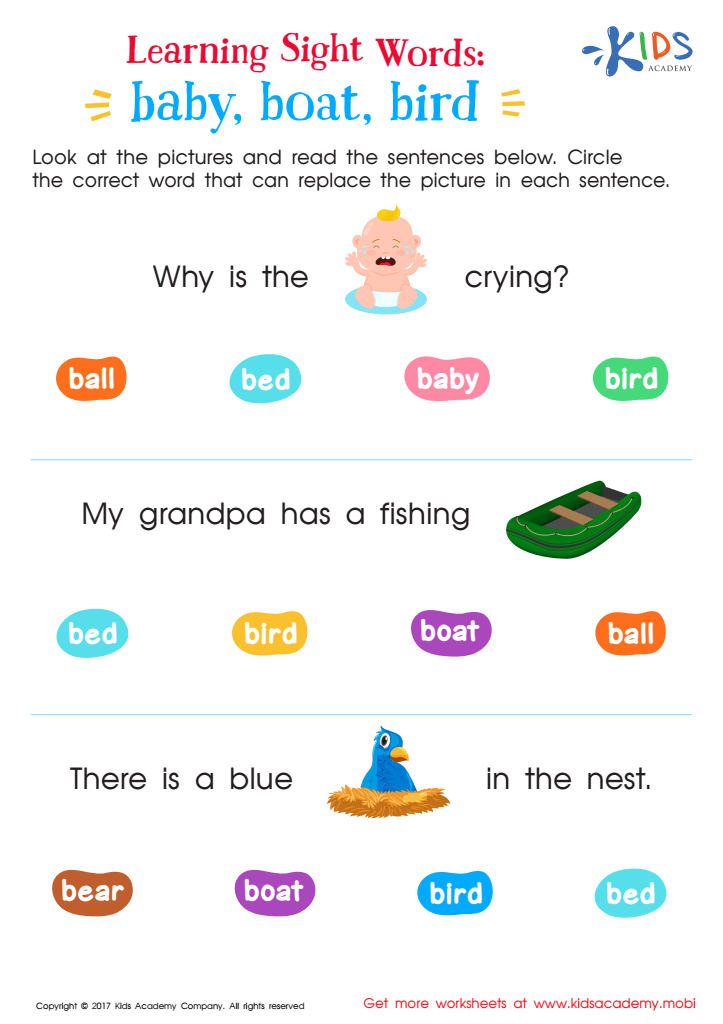
Baby, Boat, Bird Worksheet Sight Words Worksheet
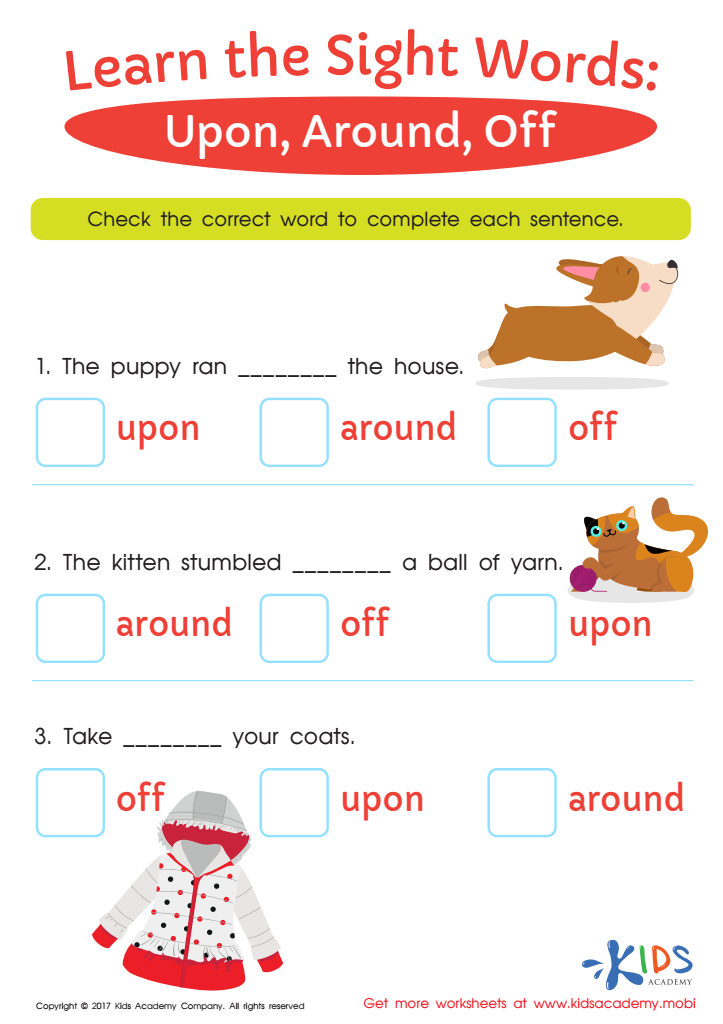
Upon, Around, Off Sight Words Worksheet
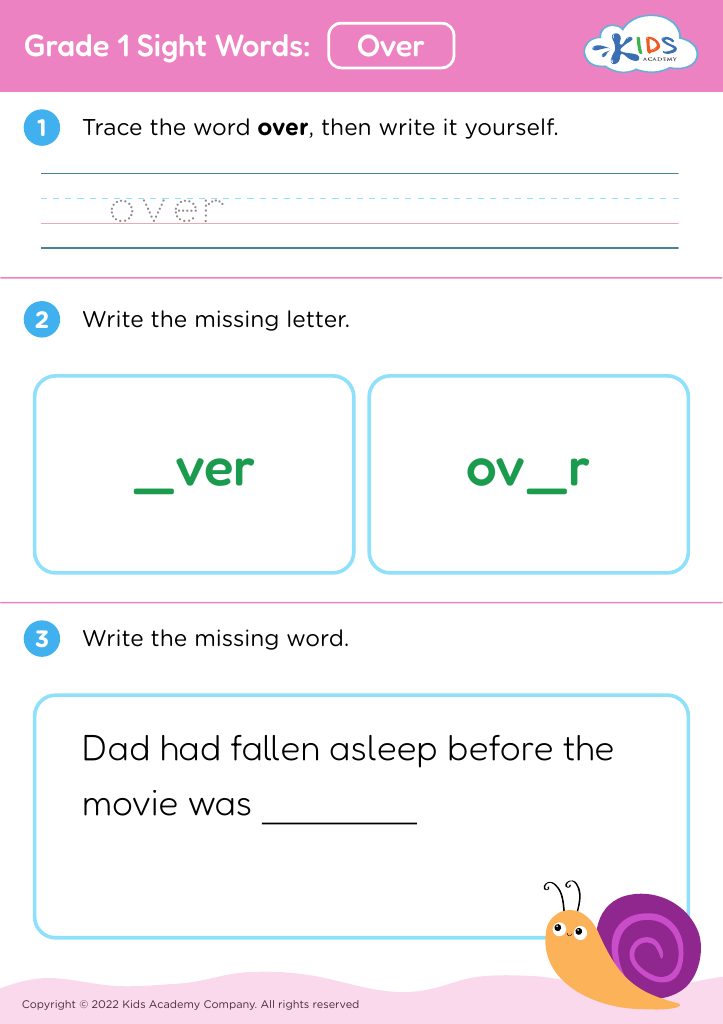
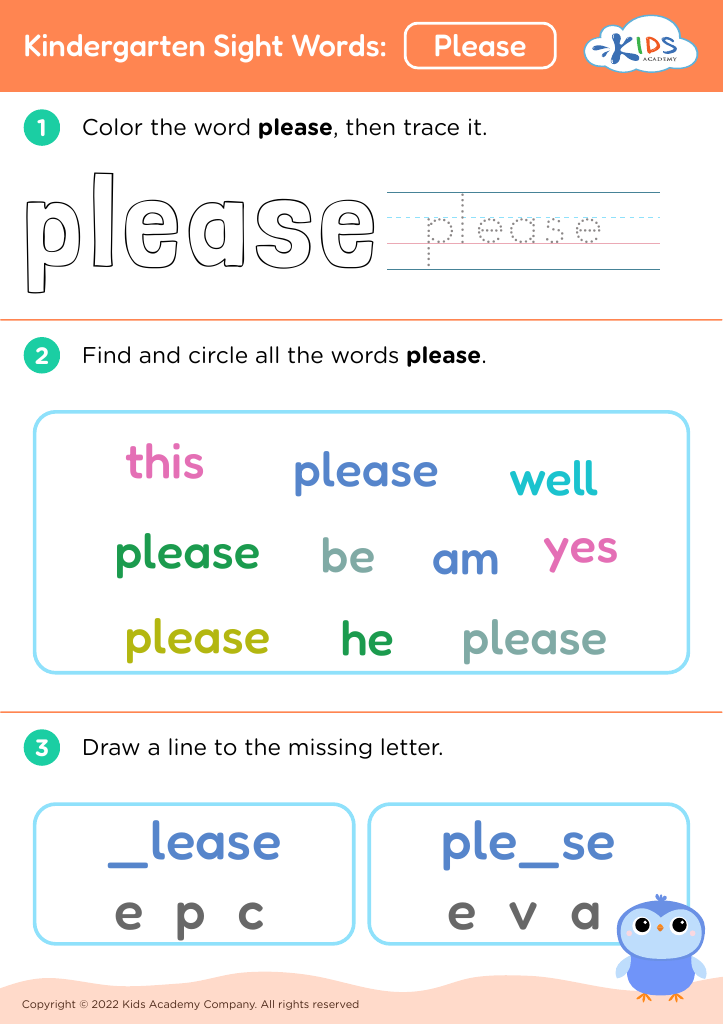





.jpg)


Vocabulary enhancement and sight word recognition are foundational elements in the early stages of literacy development for children aged 5-7. Children who have a robust vocabulary and can effortlessly recognize sight words are better equipped to understand and engage with texts, fostering a love for reading that can last a lifetime.
Sight words, which are frequently used words that children are encouraged to recognize by sight rather than sound out, form a significant part of everyday reading and writing. Being able to instantly recognize these words helps children read more fluently and with greater comprehension, reducing the cognitive load required to decode each word. This fluency allows them to focus on understanding the text as a whole, improving their overall reading experience.
Moreover, vocabulary enhancement at this stage not only bolsters reading skills but also supports language development. A broad vocabulary allows children to express themselves more clearly and effectively, benefiting both their oral and written communication skills.
For parents and teachers, investing time in vocabulary and sight word activities can provide children with essential tools for academic success. Engaging in interactive and playful learning methods, such as flashcards, word games, and reading together, fosters a supportive and enriching learning environment. Overall, focusing on these aspects of literacy equips children with the skills they need for future educational achievements and effective communication.