
Understanding forces Science Worksheets for Ages 5-7
3 filtered results
Difficulty Level
Grade
Age
-
From - To
Subject
Activity
Standards
Introduce young learners to the fascinating world of physics with our "Understanding Forces" science worksheets, designed for ages 5-7. These interactive worksheets will make learning about basic forces such as push, pull, and gravity engaging and accessible. Packed with a variety of hands-on activities and colorful illustrations, these resources encourage kids to explore how objects move and interact. Perfect for both classroom and home use, our worksheets align with key learning outcomes, fostering critical thinking and scientific curiosity in your young explorers. Help them build a strong foundation in science with tools that make learning fun and effective.
Favorites
With answer key
Interactive
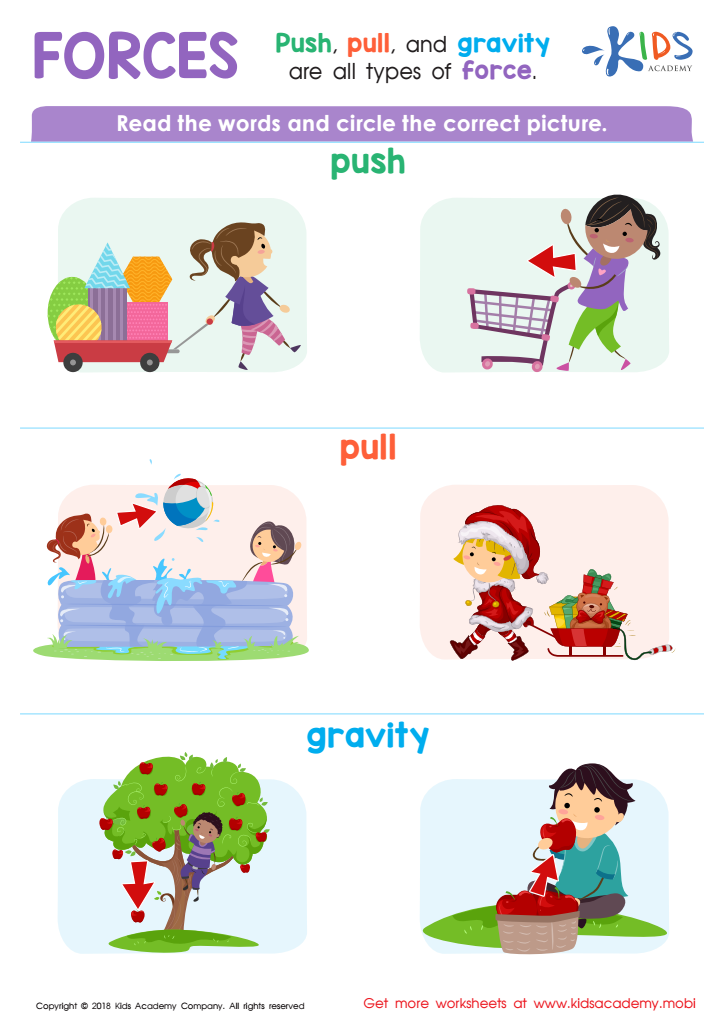
Forces Worksheet
Teach your child about forces! Ask them to identify which of six pictures shows push, pull or gravity. Read the words beside each picture and have them circle the correct one. It's a great way to learn about forces; push, pull and gravity!
 Assign to My Students
Forces Worksheet
Worksheet
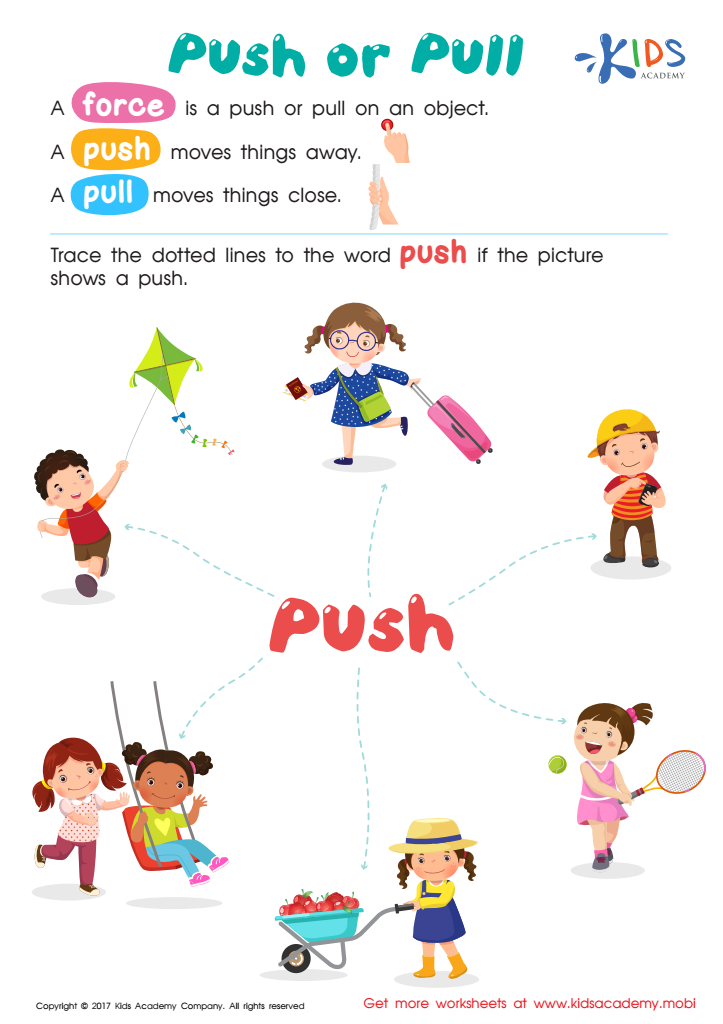
Push or Pull Worksheet
and which involve pulling! With this fun worksheet, your child will learn about force and its simple application in everyday activities. Get them started with Push or Pull! (80 words)
Push or Pull Worksheet
Worksheet
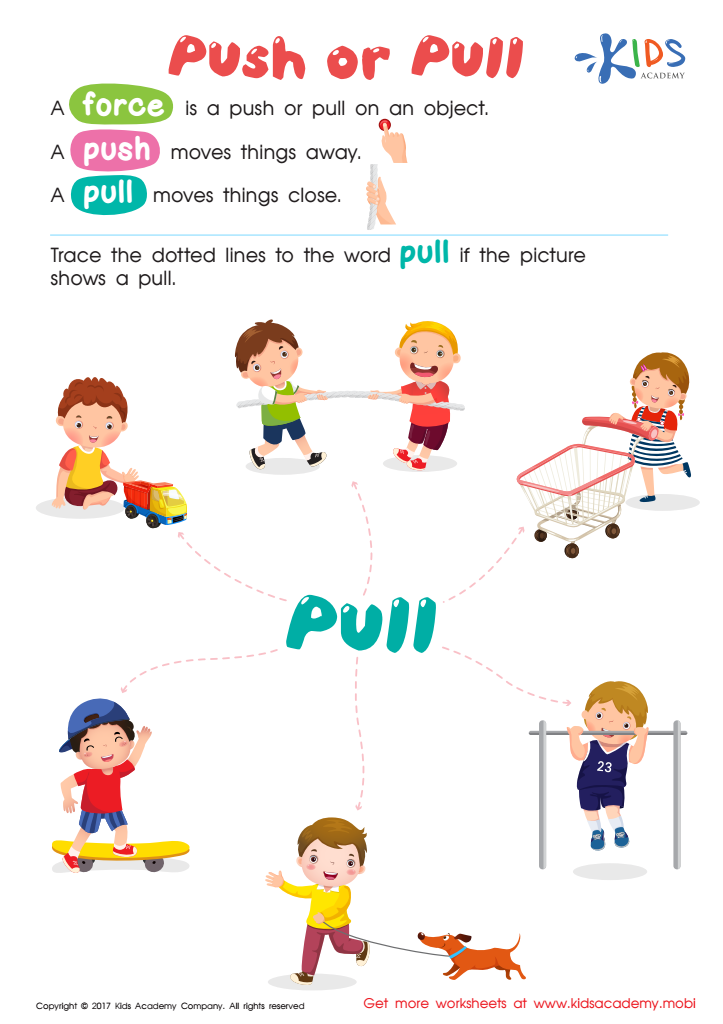
Pull or Push Worksheet
With this fun worksheet, they'll explore physics by sorting objects into categories according to their mode of motion. It's a great way to get them interested in science.
Pull or Push Worksheet
Worksheet
Join Kids Academy for Free
Who is primarily going to use this learning content?







Understanding forces in science, even at an early age, lays a critical foundation for children's cognitive development and curiosity about the world. For ages 5-7, learning about forces—like pushes, pulls, gravity, and friction—encourages hands-on, experiential learning that aligns well with their natural inclination to explore and ask questions.
For parents and teachers, fostering an interest in these concepts early on nurtures problem-solving skills and logical reasoning. When children interact with these fundamental ideas, they begin to see patterns and establish cause-and-effect relationships, which are crucial for higher-order thinking. Manipulating objects, watching things fall, and experiencing different kinds of movement introduces basic principles of physics that seamlessly blend play and education.
Moreover, understanding forces helps in developing motor skills and spatial awareness. Activities like building simple machines, rolling balls, or pushing toy cars are not merely playful; they are key educational experiences that reinforce comprehension of motion and energy.
Encouraging an early appreciation for science strengthens skills in observation, experimentation, and drawing conclusions. This forms an essential base for future scientific inquiry and nurtures a lifelong curiosity. For both parents and educators, emphasizing these concepts ensures children grow with a solid understanding of their environment, sparking innovative thinking and fostering a love for learning.







