Knowledge application Physical Science Worksheets for Ages 5-7
3 filtered results
-
From - To
Unlock the world of physical science for young learners with our "Knowledge Application Physical Science Worksheets for Ages 5-7." These engaging, age-appropriate worksheets help children grasp key concepts in a fun and interactive way. Explore topics like matter, energy, motion, and simple machines, fostering curiosity and critical thinking. Each worksheet is designed to build foundational science skills, enhance understanding through hands-on activities, and prepare students for more advanced learning. Perfect for classroom use or at-home enrichment, our worksheets make science both accessible and enjoyable for early grade students. Start their scientific journey today!
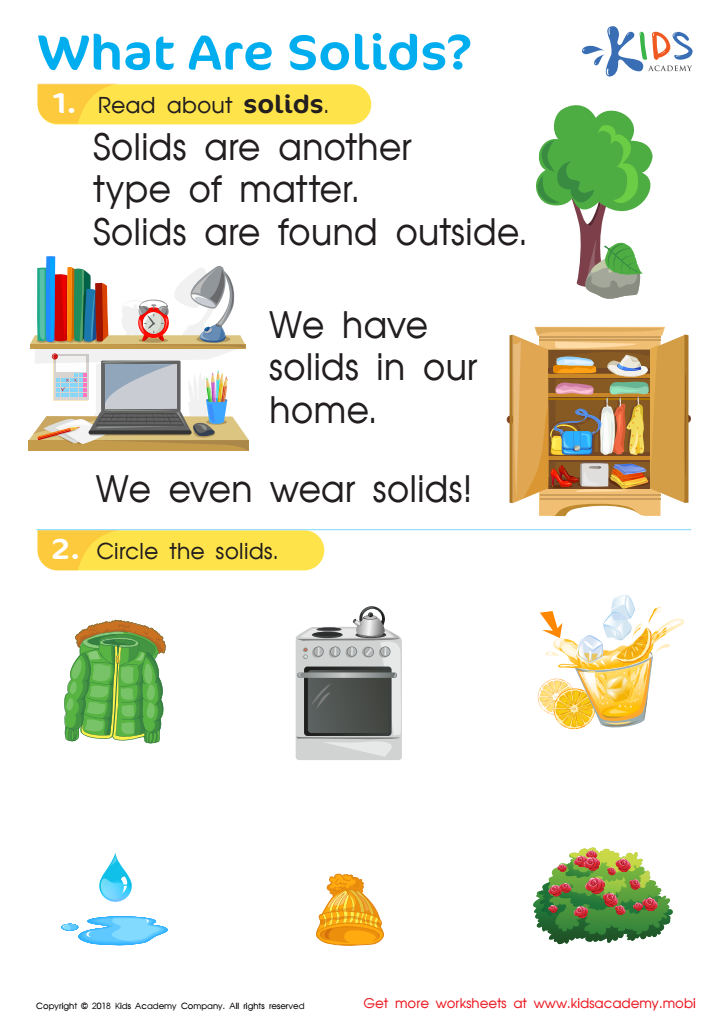
What Are Solids? Worksheet
 Assign to My Students
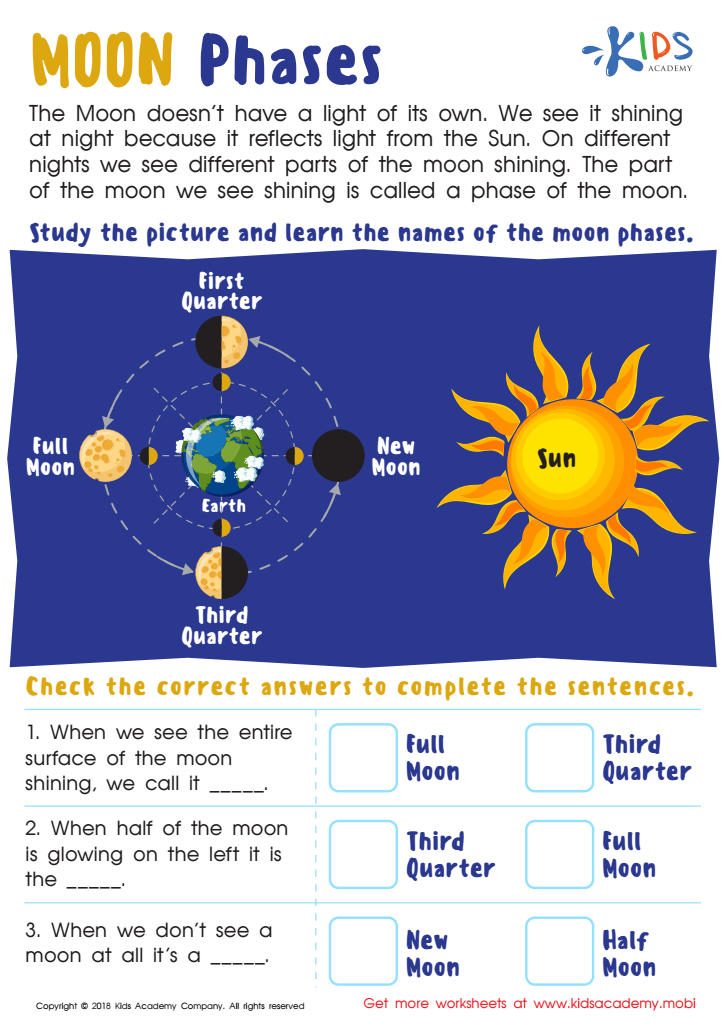
Moon Phases Worksheet
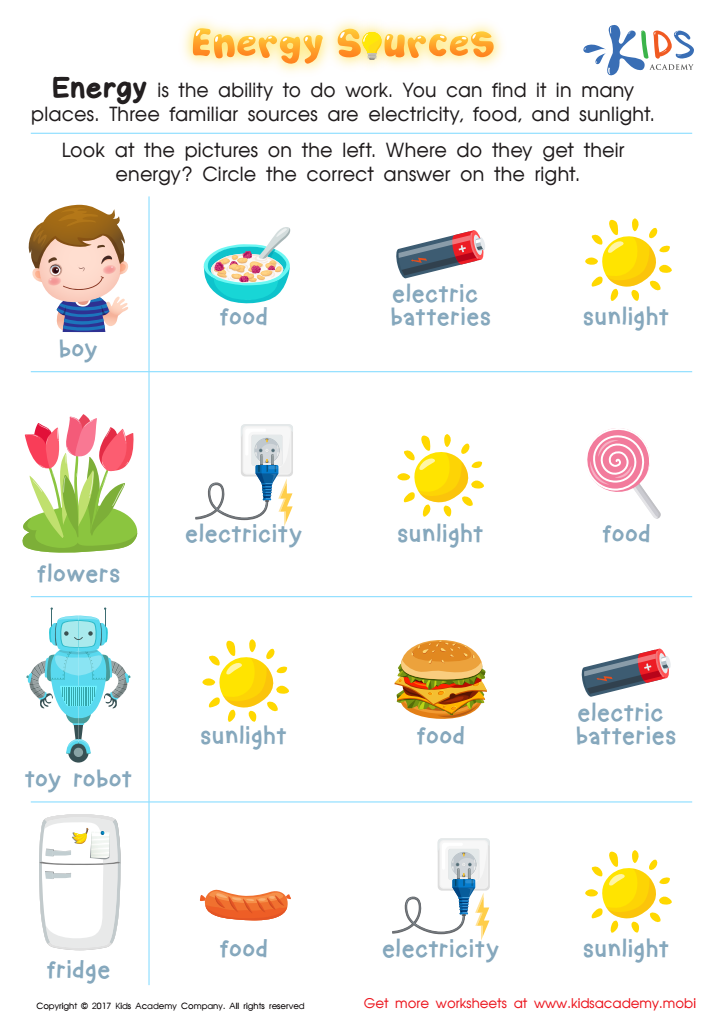
Energy Sources Printable







Parents and teachers should prioritize the application of physical science knowledge for children ages 5-7 because it lays essential groundwork for their future learning and development. At this formative stage, children are naturally curious and eager to explore their surroundings, making it an ideal time to introduce fundamental scientific concepts.
Engaging with physical science helps young learners develop critical thinking and problem-solving skills. Simple experiments and hands-on activities enable them to observe, question, and understand basic principles such as gravity, motion, and energy. This not only makes learning fun but also encourages deeper cognitive development.
Additionally, early exposure to physical science can foster a lifelong interest in STEM (Science, Technology, Engineering, Mathematics) fields. Understanding how the world works ignites curiosity and innovation, essential traits in an increasingly technology-driven society.
For parents, participating in science activities strengthens the bond with their children and supports a cohesive learning environment. For teachers, incorporating physical science into the curriculum aligns with educational standards and meets developmental milestones, preparing students for more complex topics in later grades.
Ultimately, investing time in physical science education during these early years equips children with the foundational skills and enthusiasm needed for academic success and contributes to their overall growth.







