Spatial awareness Physical Science Worksheets for Ages 5-7
4 filtered results
-
From - To
Enhance your child's spatial awareness with our engaging Physical Science worksheets designed for ages 5-7! These interactive activities encourage children to explore concepts such as position, direction, and distance in a fun and educational manner. Featuring vibrant illustrations and age-appropriate challenges, our worksheets help young learners develop critical skills needed for success in future science studies. Perfect for both classroom and at-home learning, these resources aim to foster curiosity and critical thinking. Download now and watch your child gain confidence as they master essential spatial understanding through play-based learning! Discover a world of fun with our expertly crafted worksheets today!
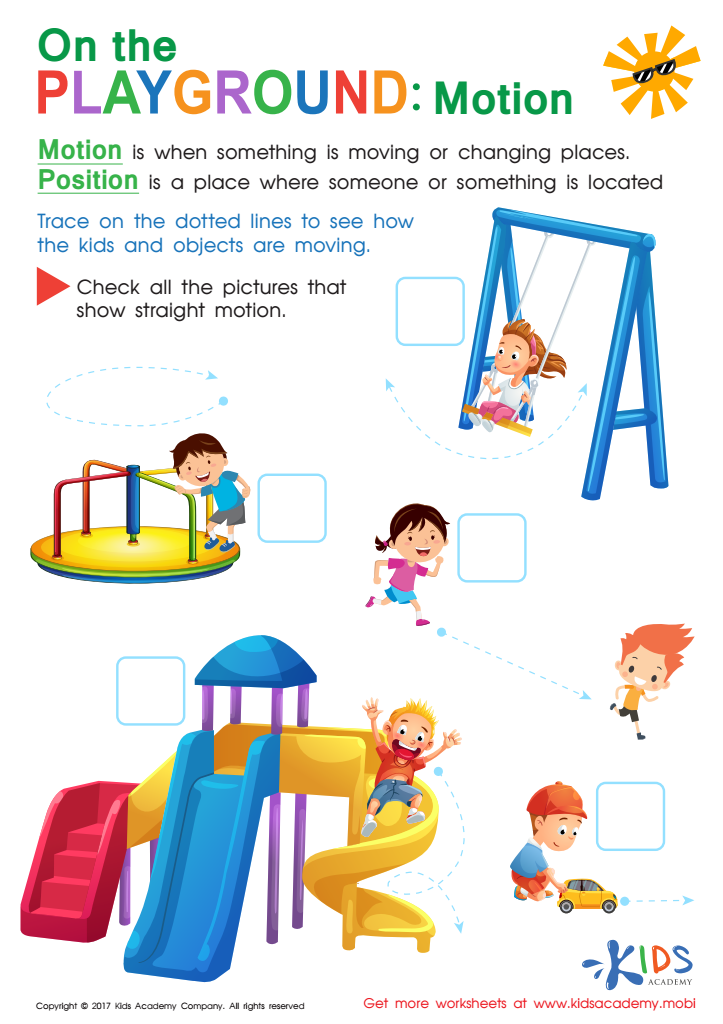
Position and Motion Worksheet
 Assign to My Students
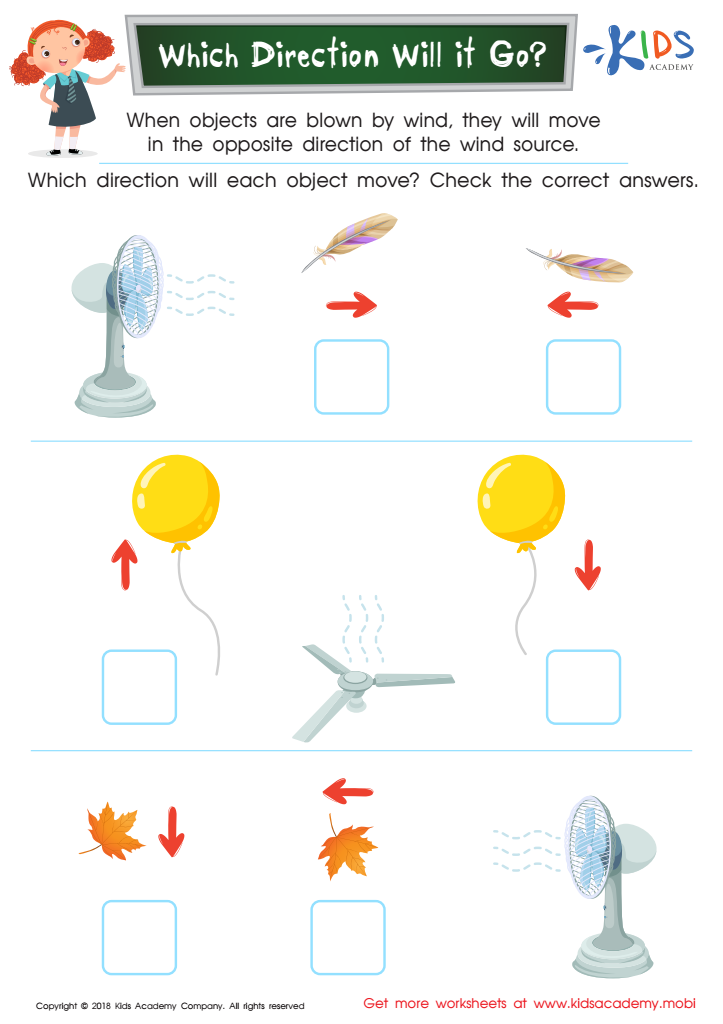
Which Direction Will it Go? Worksheet
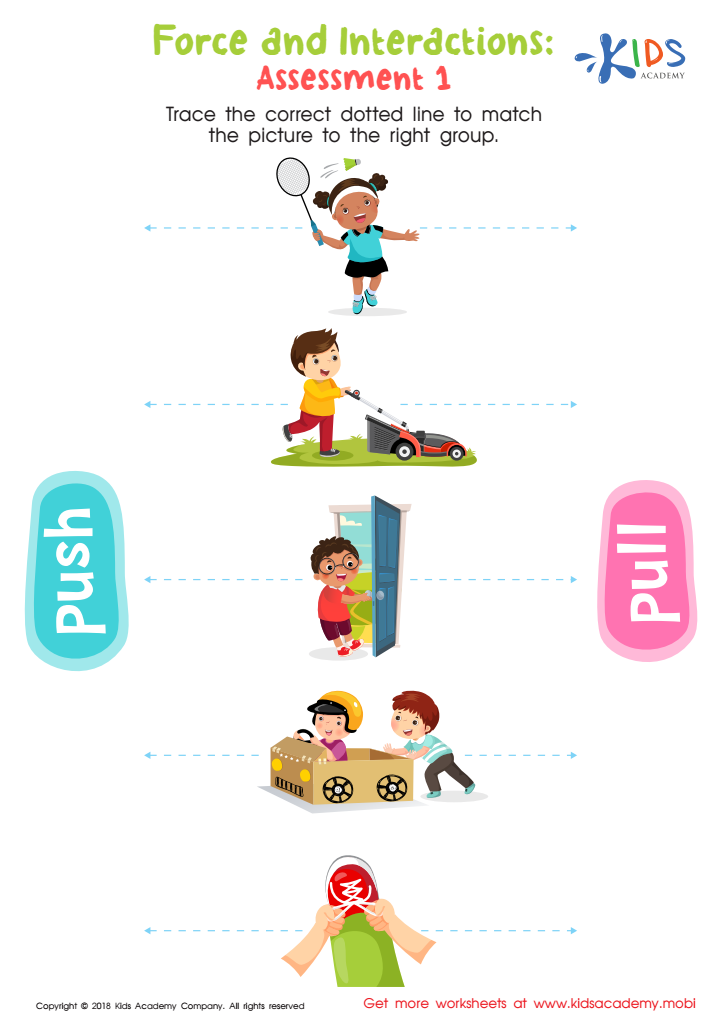
Force and Interactions: Assessment 2 Worksheet
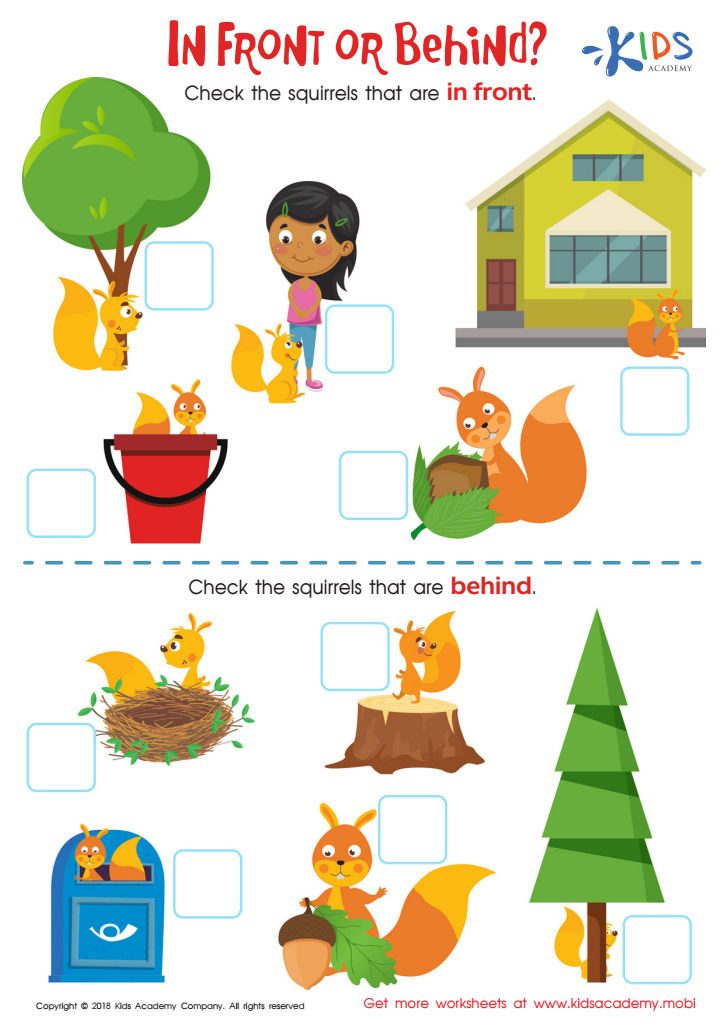
In Front or Behind: Part 2 Worksheet





Spatial awareness is a crucial aspect of physical science, especially for children ages 5-7. During these formative years, young learners are actively engaging with their environment and developing essential cognitive skills. Understanding spatial relationships helps children comprehend concepts like distance, size, direction, and movement. For parents and teachers, fostering spatial awareness can enhance learning in multiple areas, including mathematics and geometry, where they will need to visualize shapes and understand spatial reasoning.
Promoting spatial awareness through play and structured activities—like building with blocks or navigating mazes—encourages creativity and problem-solving. It also contributes to language development as children learn to describe positions, movements, and relationships. Furthermore, kids who have strong spatial skills are more likely to excel in STEM (science, technology, engineering, and math) fields later on, setting a foundation for future academic success.
Incorporating spatial awareness into daily learning activities helps children build confidence and independence. It transforms physical science lessons into engaging, hands-on experiences that resonate with young minds, making learning both enjoyable and memorable. By focusing on spatial skills, parents and teachers can play a pivotal role in shaping a child's holistic development, nurturing critical thinkers and innovators for the future.







