Understanding light sources Physical Science Worksheets for Ages 5-7
4 filtered results
-
From - To
"Understanding Light Sources Physical Science Worksheets for Ages 5-7" helps young learners explore and comprehend the primary sources of light around them. These engaging, printable worksheets are designed to make the learning process fun and interactive by incorporating colorful illustrations and simple exercises. Perfect for classroom or home use, they help children identify natural and artificial light sources, sparking curiosity and foundational knowledge in physical science. Tailored for ages 5-7, these worksheets reinforce key concepts while developing observational skills and critical thinking, ensuring a well-rounded early science education. Dive into the fascinating world of light with these educational activities!
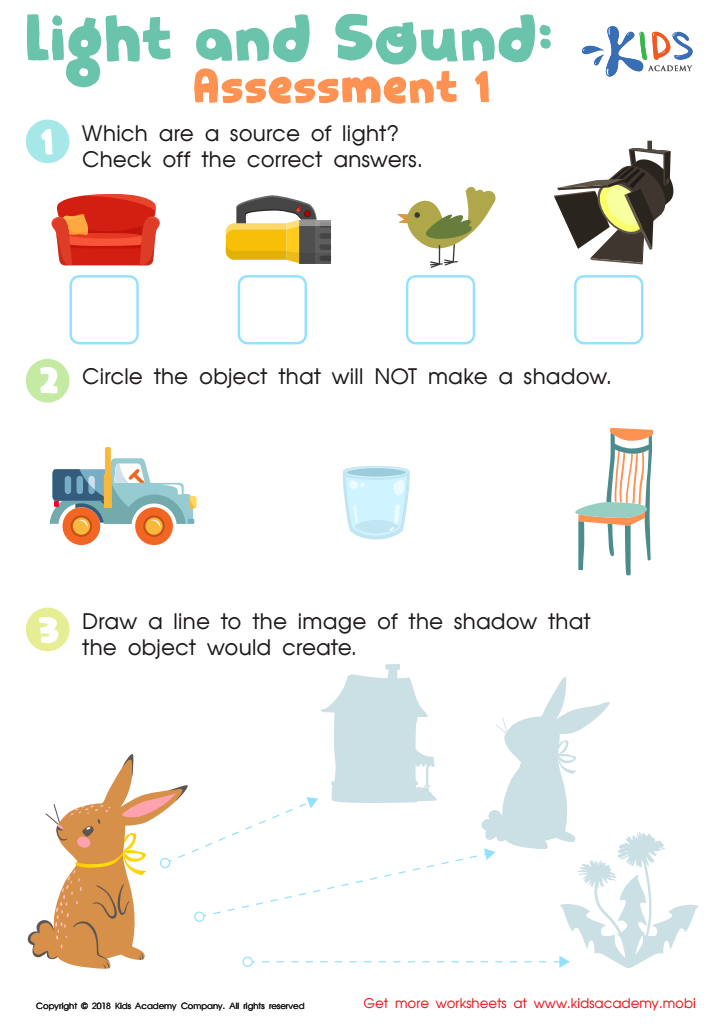
Light and Sound: Assessment 1 Worksheet
 Assign to My Students
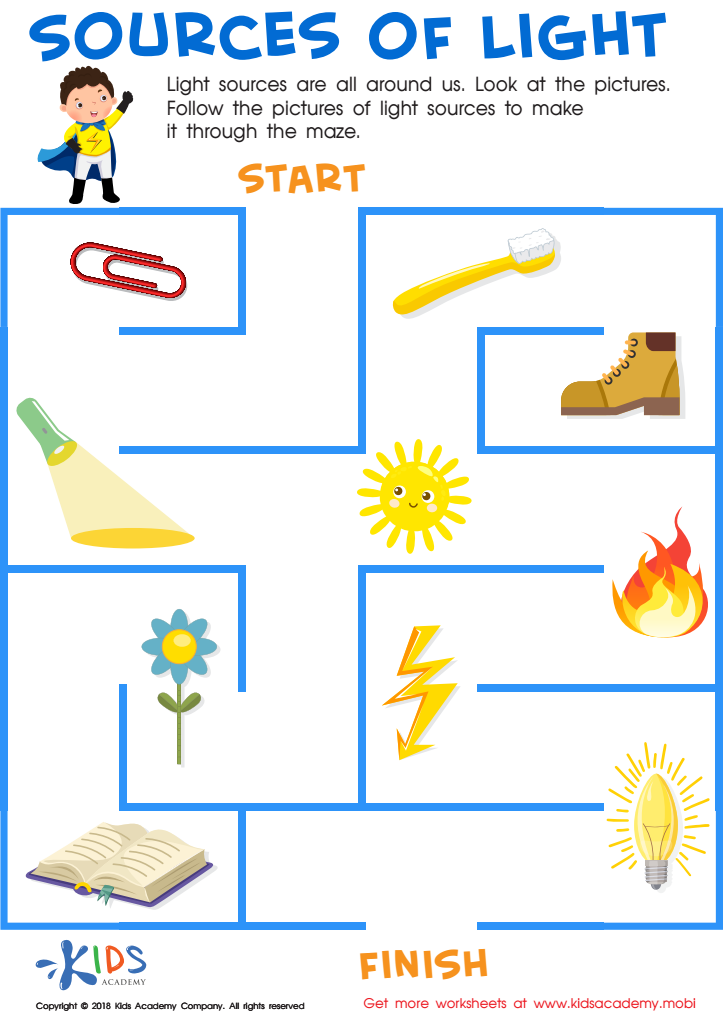
Sources of Light Worksheet
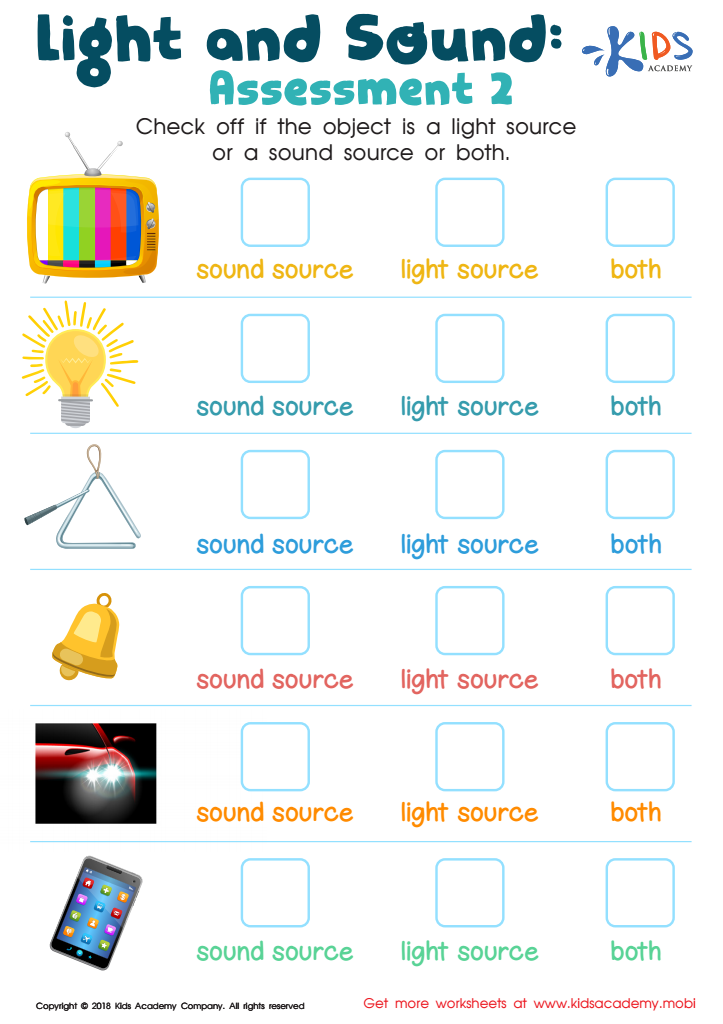
Light and Sound: Assessment 2 Worksheet
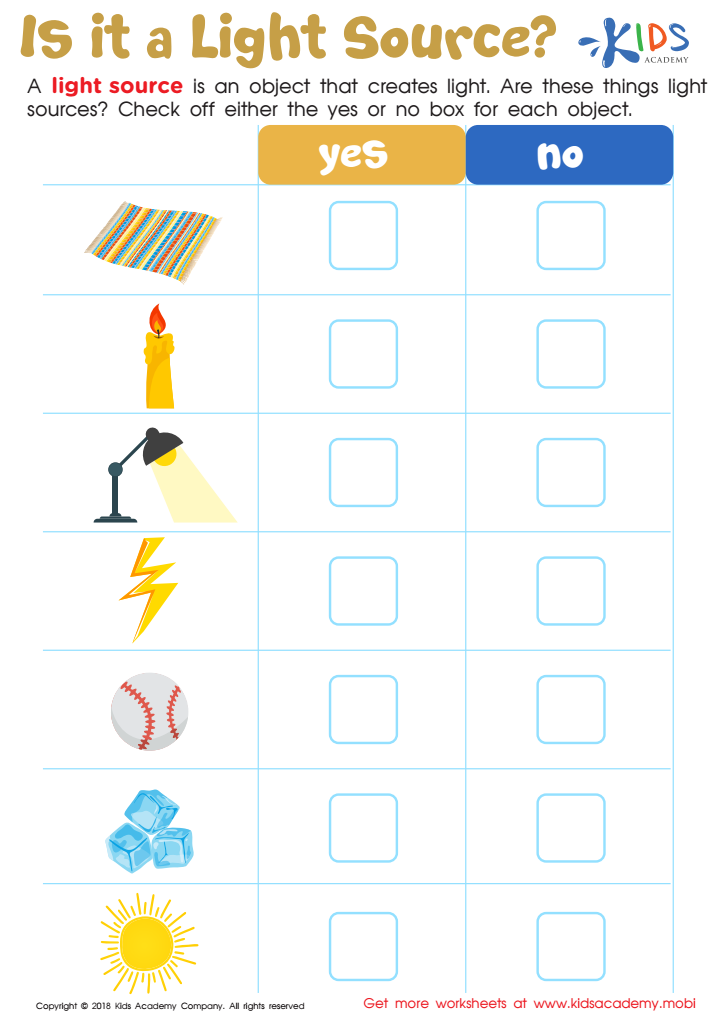
Is It a Light Source? Worksheet






Understanding light sources in physical science is crucial for young children, ages 5-7, because it lays the foundation for future scientific learning and curiosity. At this formative age, children are naturally curious about the world around them. Parents and teachers play a vital role in nurturing this curiosity by introducing basic concepts in an accessible and engaging manner.
Learning about light sources helps children distinguish between natural light, like the Sun, and artificial light, such as lamps and flashlights. This understanding contributes to their comprehension of day-night cycles, weather patterns, and the importance of sunlight for plants and human health. Furthermore, hands-on experiments with light can enhance fine motor skills and cognitive development. Observing how light behaves—how it can be reflected, refracted, and absorbed—can make abstract concepts more tangible and foster critical thinking skills.
Incorporating lessons on light sources into early education also promotes safety awareness. Children conditioned to recognize sources of light are better at navigating their environments and understanding precautions, like not staring directly at the Sun or being aware of lighting during power outages.
Thus, parents and teachers who engage children in learning about light sources help cultivate an early interest in science, encourage inquisitiveness, and equip young learners with practical knowledge that benefits their everyday lives.







