Categorization skills Plants and Animals Worksheets for Ages 5-7
5 filtered results
-
From - To
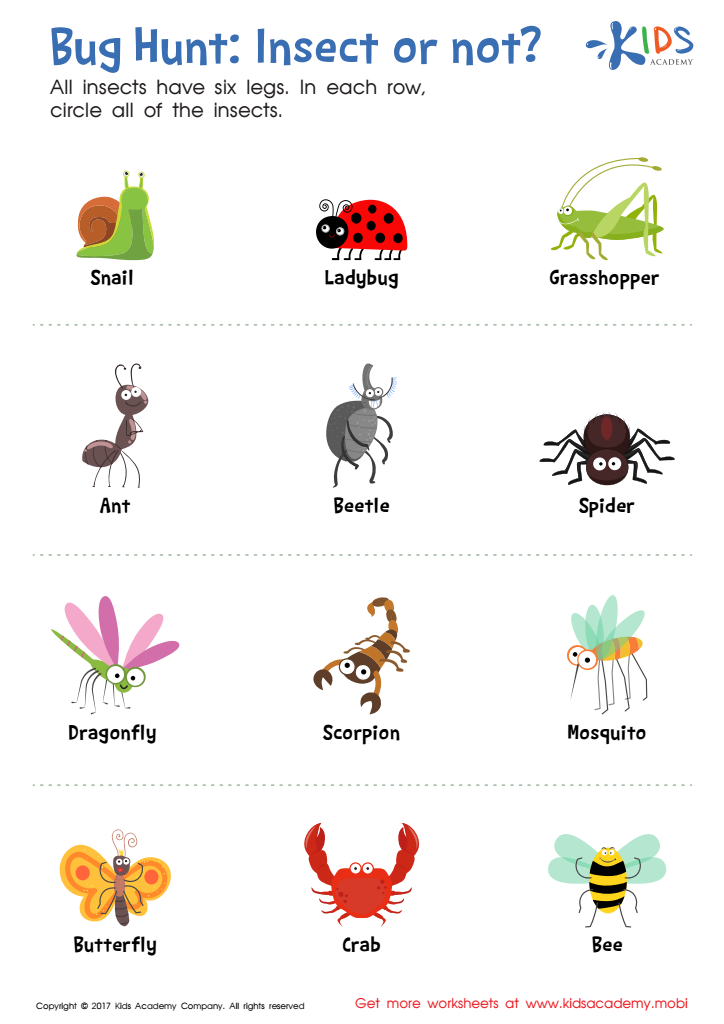
Explore our engaging categorization skills worksheets focused on plants and animals, specially designed for children aged 5-7. These fun and interactive activities help young learners identify, classify, and understand the differences and similarities among various living things. Through vibrant illustrations and age-appropriate tasks, your child will develop critical thinking skills and enhance their knowledge of the natural world. These worksheets provide an effective way for kids to learn to sort and group animals and plants, fostering a deeper appreciation for science. Download and print these resources to inspire curiosity and learning in your child's educational journey today!
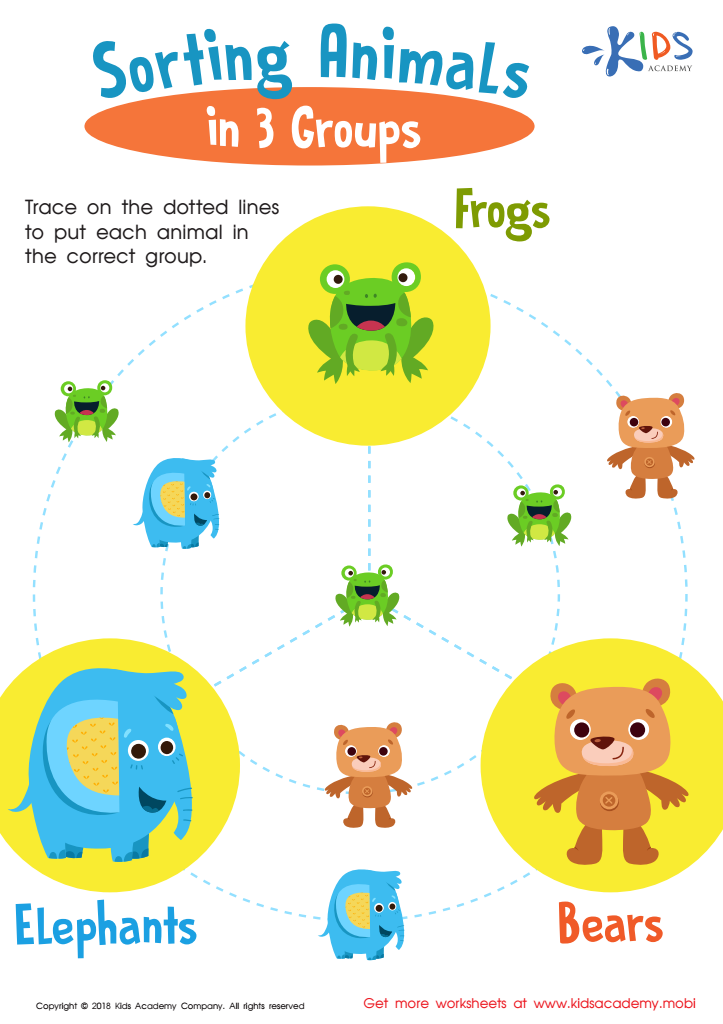
Sorting Animals in 3 Groups Worksheet
 Assign to My Students
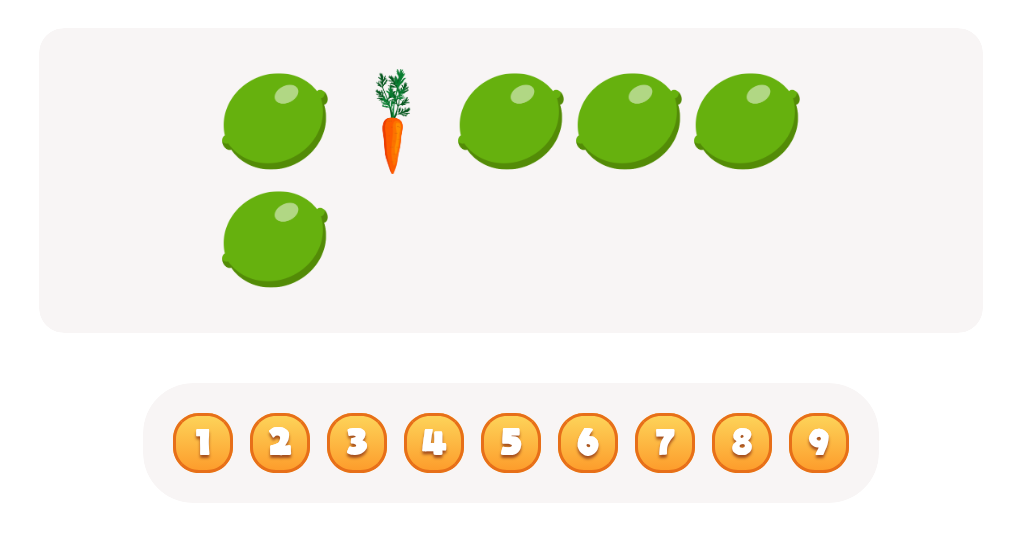

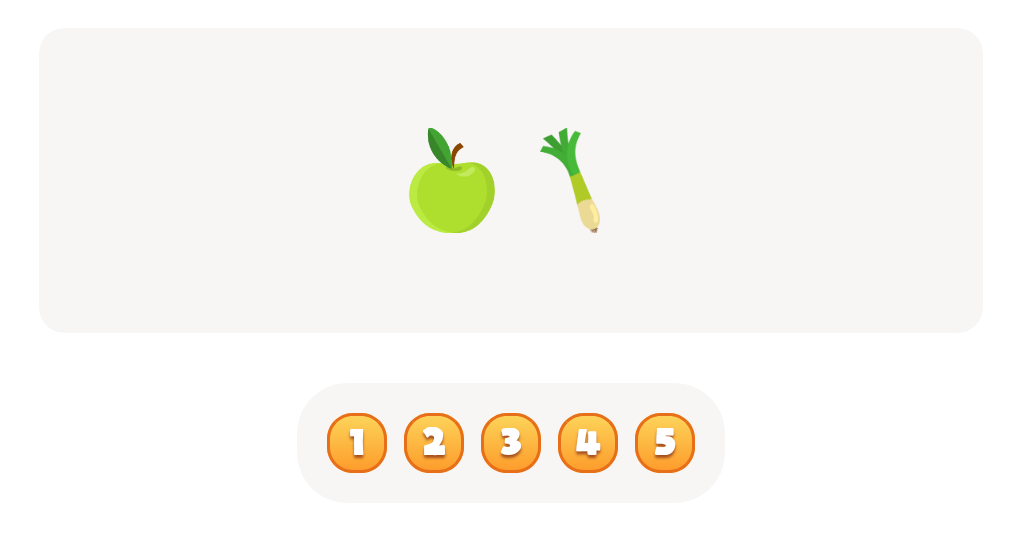
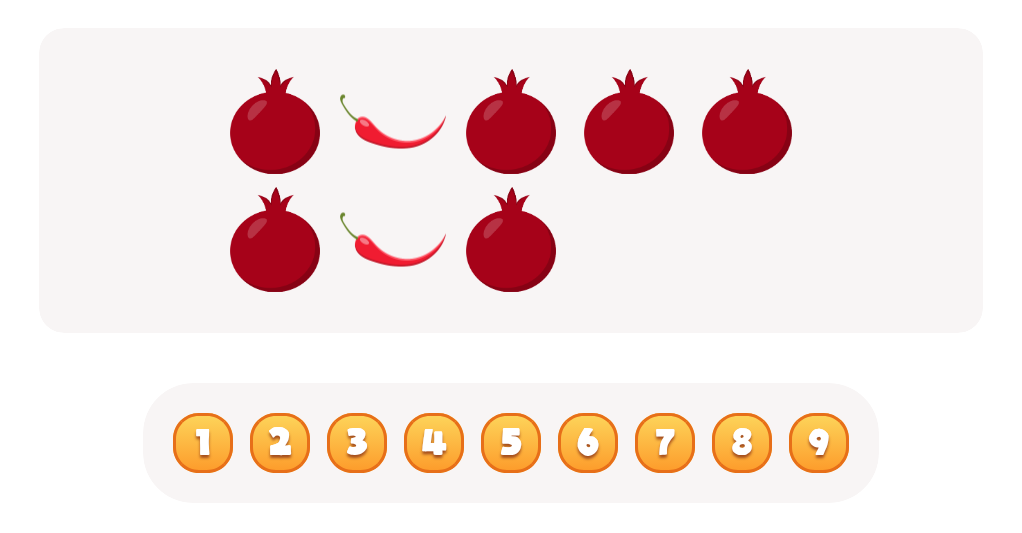
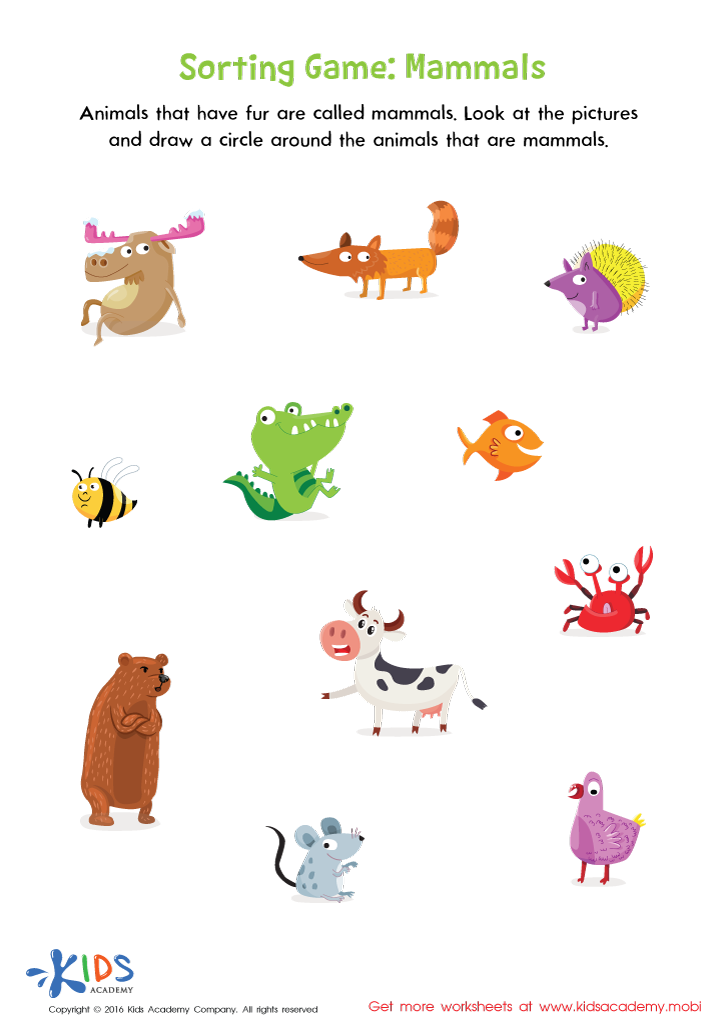
Mammals Sorting Worksheet
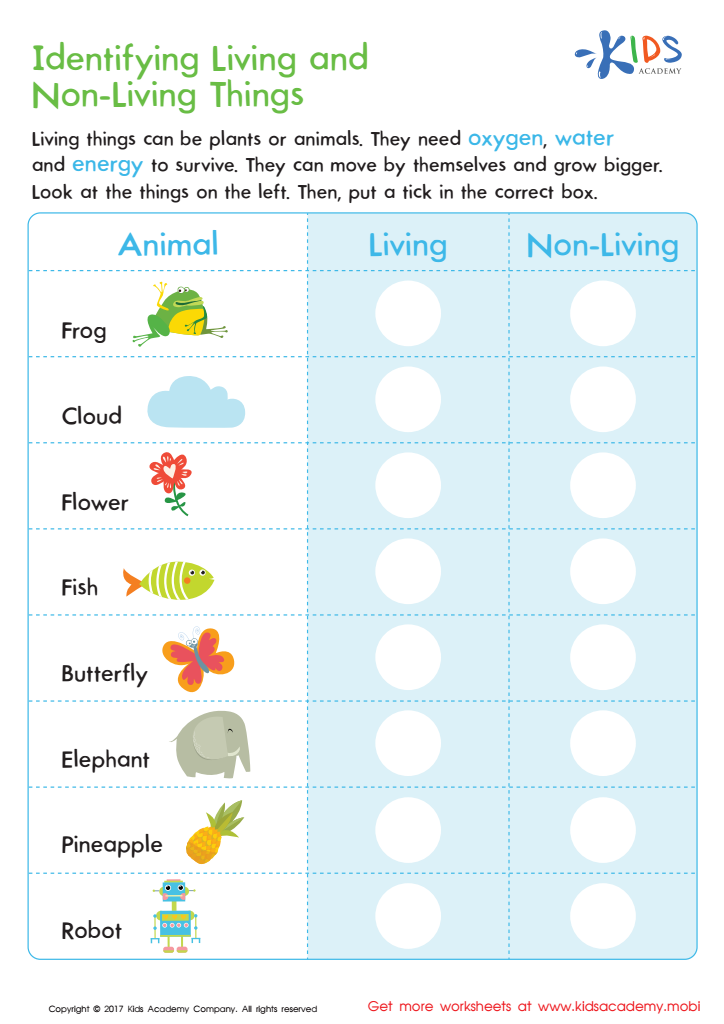
Identifying Living or Non–living Worksheet
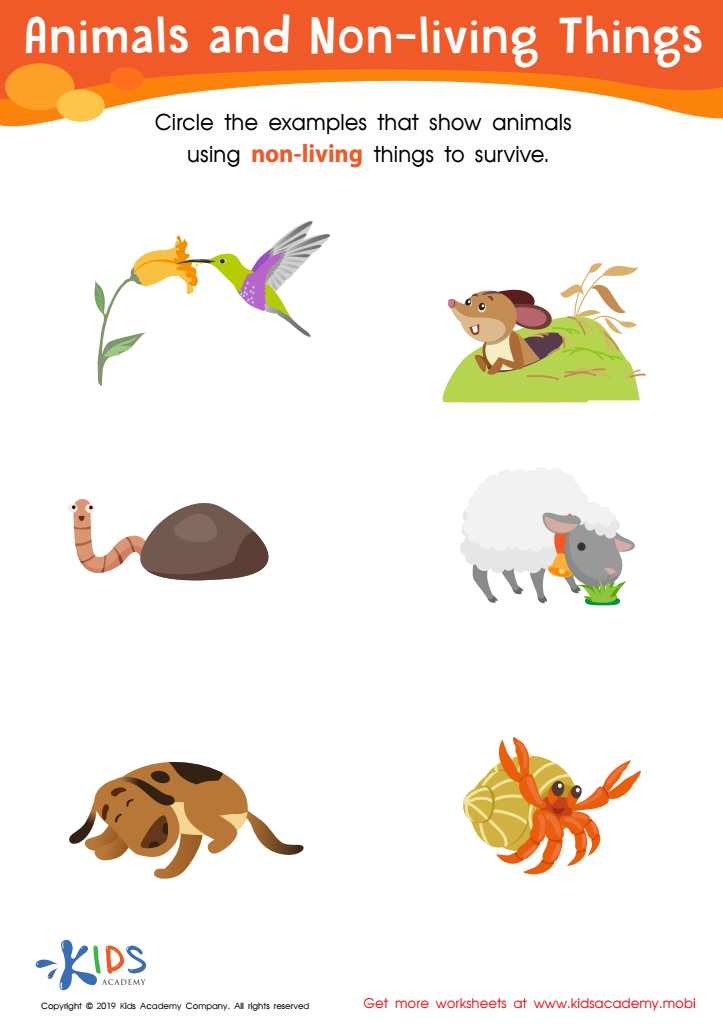
Animals and Non-Living Things Worksheet








Categorization skills in early childhood education, particularly in relation to plants and animals, are crucial for several reasons. First, these skills help children develop critical thinking and observational abilities. By grouping and distinguishing between various species, children learn to identify similarities and differences, fostering analytical thinking and reinforcing their understanding of the natural world.
Moreover, learning to categorize plants and animals enhances vocabulary and language development. As children name and describe different groups, they expand their knowledge of words and concepts related to biology and the environment. This not only enriches their verbal skills but also encourages scientific literacy from an early age.
Additionally, early exposure to categorization encourages curiosity and a love for learning. When children engage in hands-on activities involving plants and animals, such as nature walks or garden projects, they connect their lessons to real-life experiences, which can ignite a lifelong passion for science and the environment.
Finally, understanding categorization lays the groundwork for more advanced topics in biology and ecology. For parents and teachers, nurturing these foundational skills supports holistic development, preparing children for future academic success and cultivating responsible, environmentally-conscious citizens.








