
Understanding laws Governance and Civics Worksheets for Ages 5-7
3 filtered results
Difficulty Level
Grade
Age
-
From - To
Subject
Activity
Standards
Welcome to our "Understanding Laws, Governance, and Civics Worksheets" for children aged 5-7! This engaging resource is designed to introduce young learners to the fundamental concepts of law and governance through fun and interactive worksheets. Our activities encourage kids to explore the importance of rules, the role of leaders, and how communities function. Each worksheet promotes critical thinking, enhances vocabulary, and fosters civic awareness, making learning enjoyable. Ideal for home or classroom use, these worksheets help lay the foundation for responsible citizenship. Dive into the world of governance with our thoughtfully crafted materials that stimulate curiosity and encourage dialogue about laws in a fun way!
Favorites
With answer key
Interactive
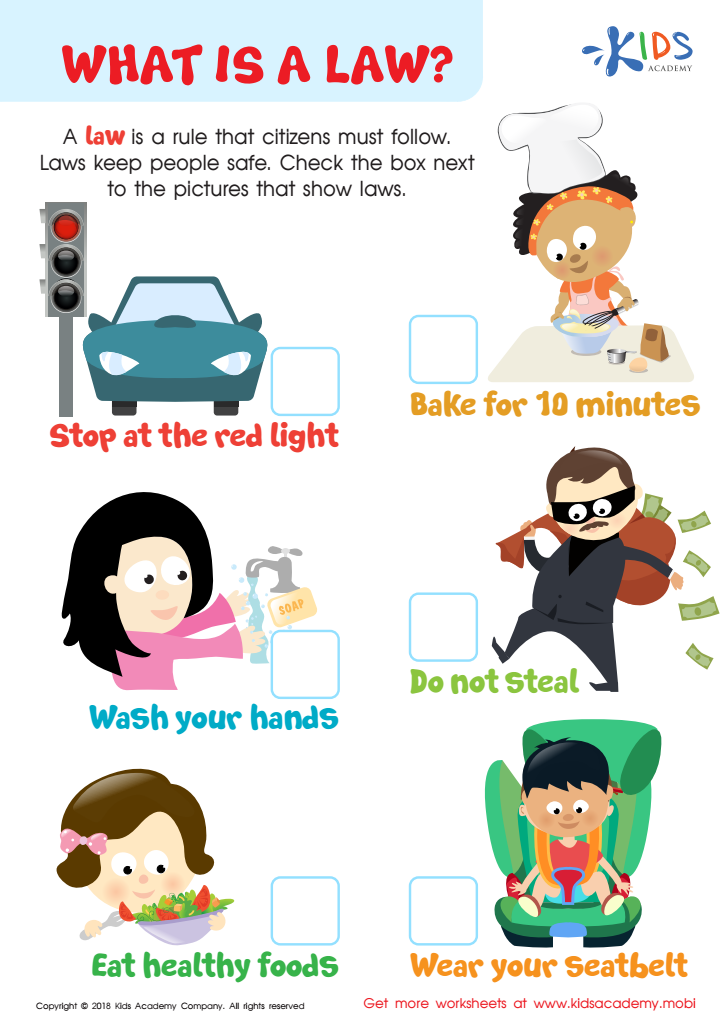
What is a Law? Worksheet
Encourage your students to think about the laws they abide by - at home, school, and the playground. Explain the importance of laws in keeping us safe, then ask them to check the box next to the pictures depicting different laws in a worksheet.
 Assign to My Students
What is a Law? Worksheet
Worksheet
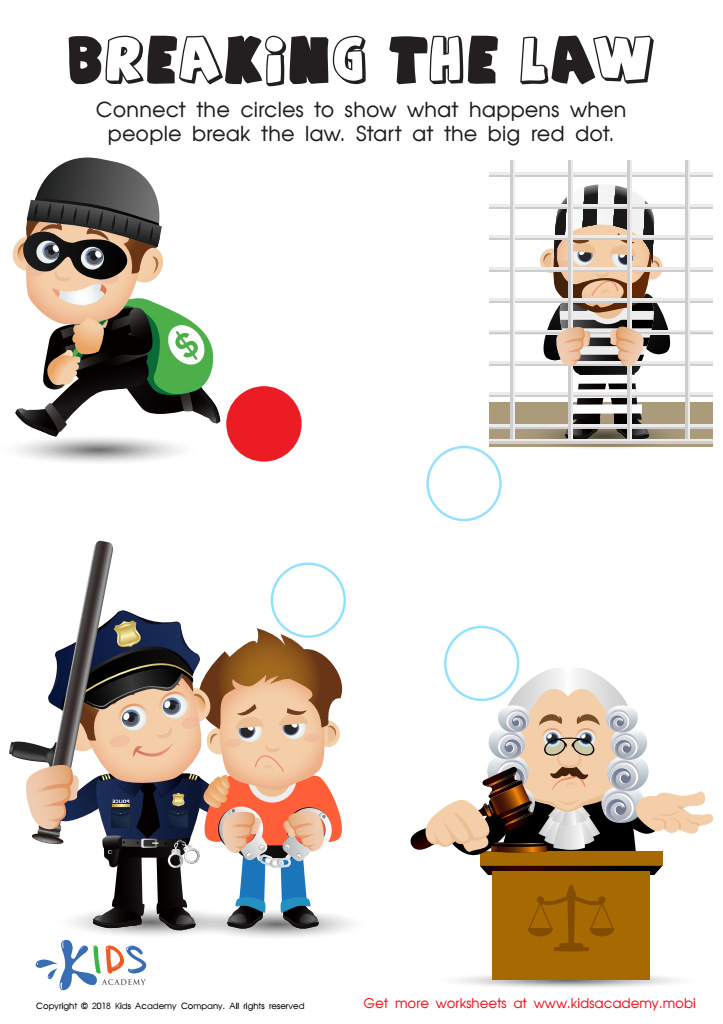
Breaking the Law Worksheet
Explain to your child why people go to jail. Show them this worksheet; it illustrates the stages a criminal goes through from breaking the law to receiving their punishment. Guide them in connecting the circles from the big red dot. Finish with a discussion on why it's important to follow the law.
Breaking the Law Worksheet
Worksheet
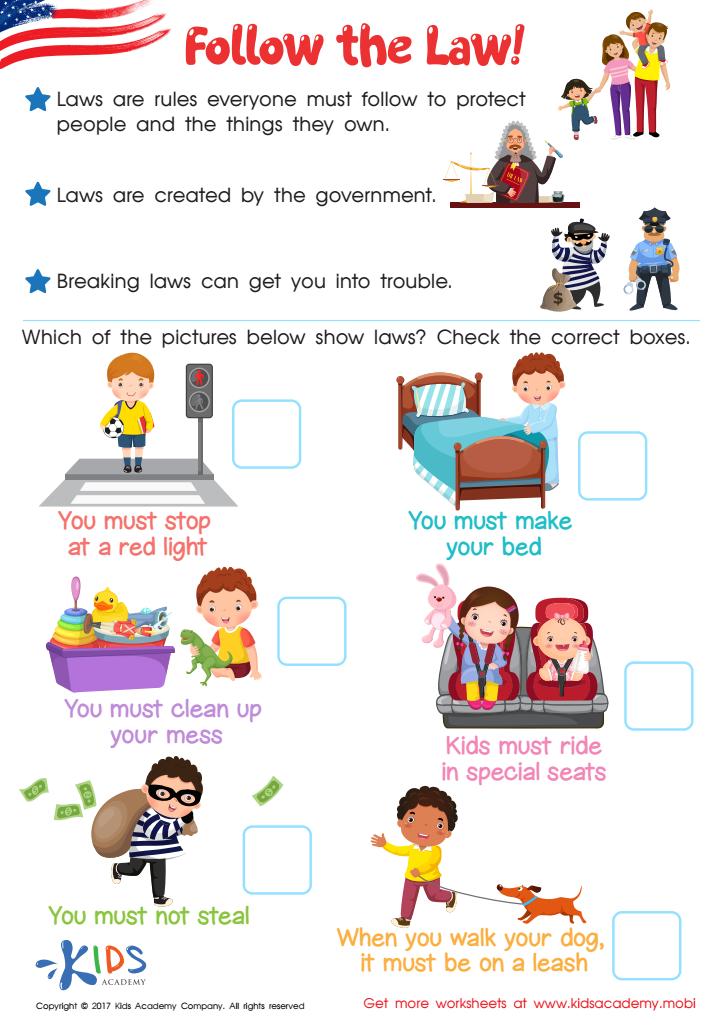
Follow the Law Worksheet
Kids should understand the difference between laws and household rules. Worksheets for 2nd grade review these differences, teaching kids more about life in their community. Breaking the law can lead to harsh consequences, so understanding the rules of home and public spaces is essential.
Follow the Law Worksheet
Worksheet
Join Kids Academy for Free
Who is primarily going to use this learning content?


Understanding laws, governance, and civics at a young age is essential for children, as it lays the foundation for responsible citizenship and critical thinking. For parents and teachers, nurturing this understanding is crucial for several reasons.
Firstly, it equips children with the knowledge of their rights and responsibilities. By grasping basic concepts like fairness, justice, and community roles, they learn how to navigate social interactions and address conflicts constructively. This knowledge encourages respect for others and fosters empathy.
Secondly, early exposure to civic education fosters curiosity about their world. Children learn about their community, local government, and the importance of participation, paving the way for future engagement in civic activities, such as voting and community service.
Moreover, understanding governance helps children develop decision-making skills. They learn about rules and the importance of following them, which can lead to better self-discipline and accountability.
Finally, discussing these topics in a supportive environment encourages open dialogue, allowing children to feel comfortable expressing their thoughts and asking questions. This engagement cultivates lifelong learners who are informed, active participants in their communities. By prioritizing civics education, parents and teachers actively contribute to developing responsible, informed citizens of tomorrow.








