
Understanding prefixes Grammar Worksheets for Ages 5-7
4 filtered results
Difficulty Level
Grade
Age
-
From - To
Subject
Activity
Standards
Enhance your child's language skills with our "Understanding Prefixes" grammar worksheets, specially designed for ages 5-7! These engaging, child-friendly activities introduce young learners to the concept of prefixes, helping them discover how these letter additions alter the meaning of words. Our worksheets include colorful illustrations and simple exercises that make learning fun and interactive. Perfect for early grade teachers and parents, these resources foster creativity and critical thinking while building vocabulary. Empower your little ones to become more confident readers and writers by exploring the exciting world of prefixes! Download our worksheets today and watch their skills flourish!
Favorites
With answer key
Interactive
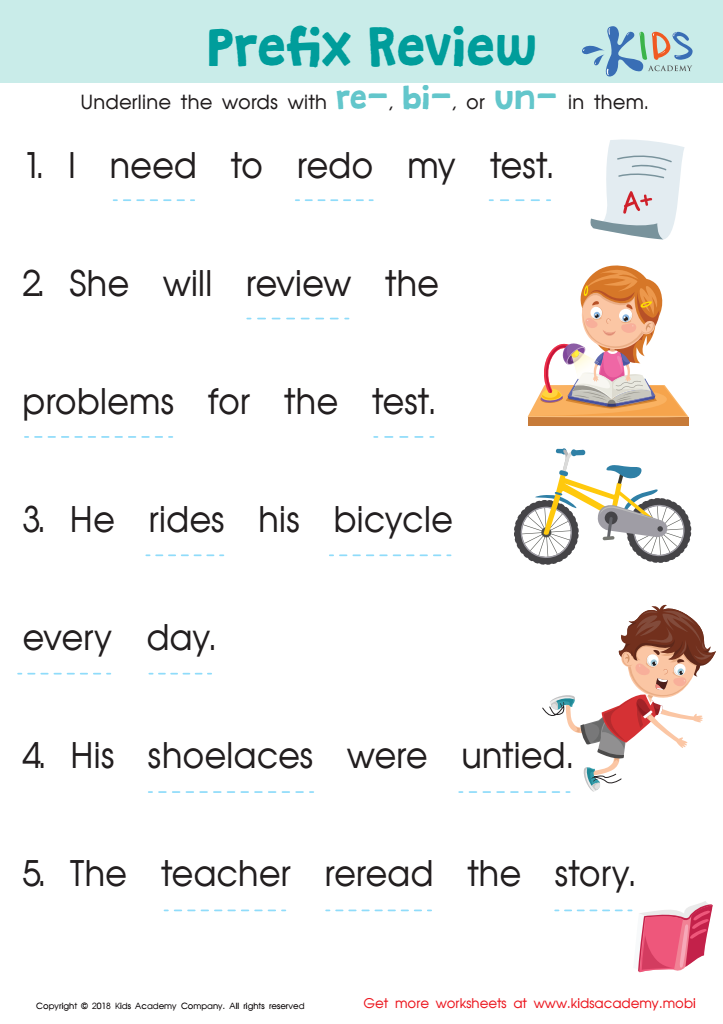
Prefix Review Worksheet
Learning prefixes is key for effective communication. Help your child master re-, bi-, and un- with a Kids Academy worksheet. Ask them to go through each sentence, underlining words with one of the prefixes. This will help them appreciate how prefixes alter the meaning of a root word.
 Assign to My Students
Prefix Review Worksheet
Worksheet
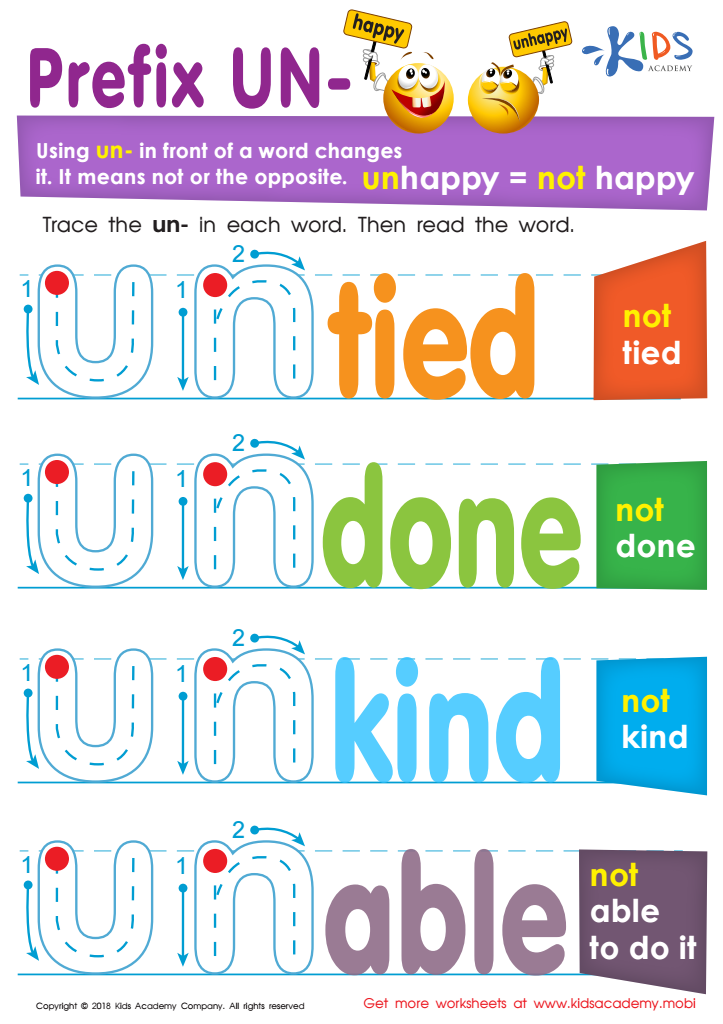
Prefix Un- Worksheet
Help your child understand the concept of adding "un-" to the front of words by giving examples such as "unhappy" (not happy) and "unserious" (not serious). Guide them in tracing the "un-" in each word and read it aloud together.
Prefix Un- Worksheet
Worksheet
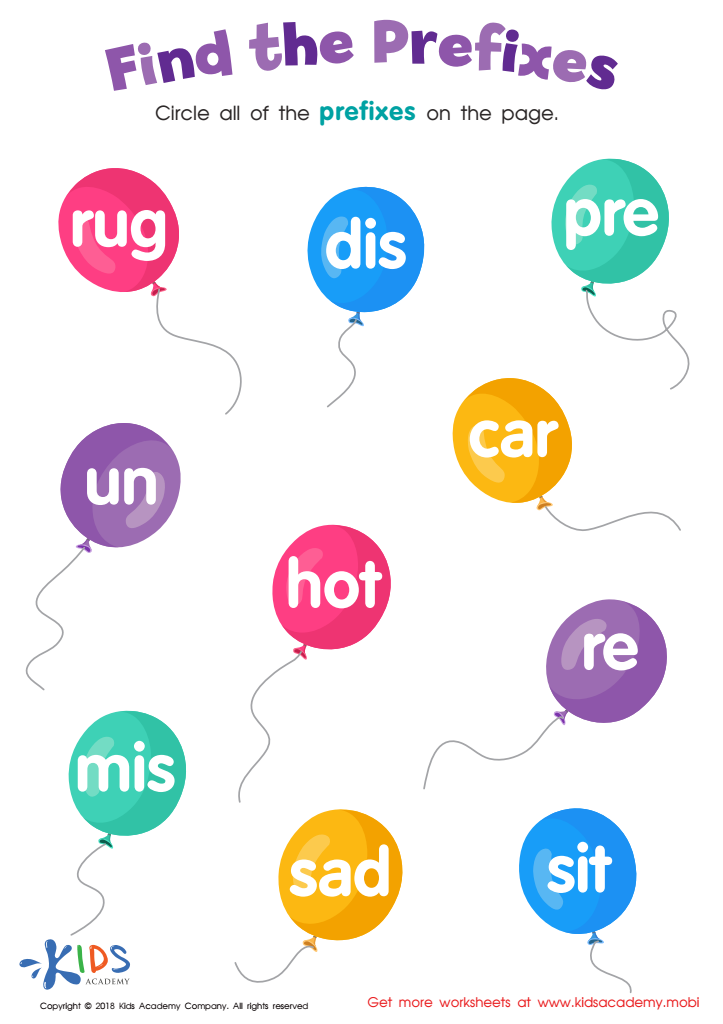
Reading: Find the Prefixes Worksheet
Students are asked to circle all prefixes on this worksheet and brainstorm a list of words that have them. It's a great tool for teaching vocabulary and helps students understand new and unfamiliar words by recognizing how prefixes change meaning.
Reading: Find the Prefixes Worksheet
Worksheet
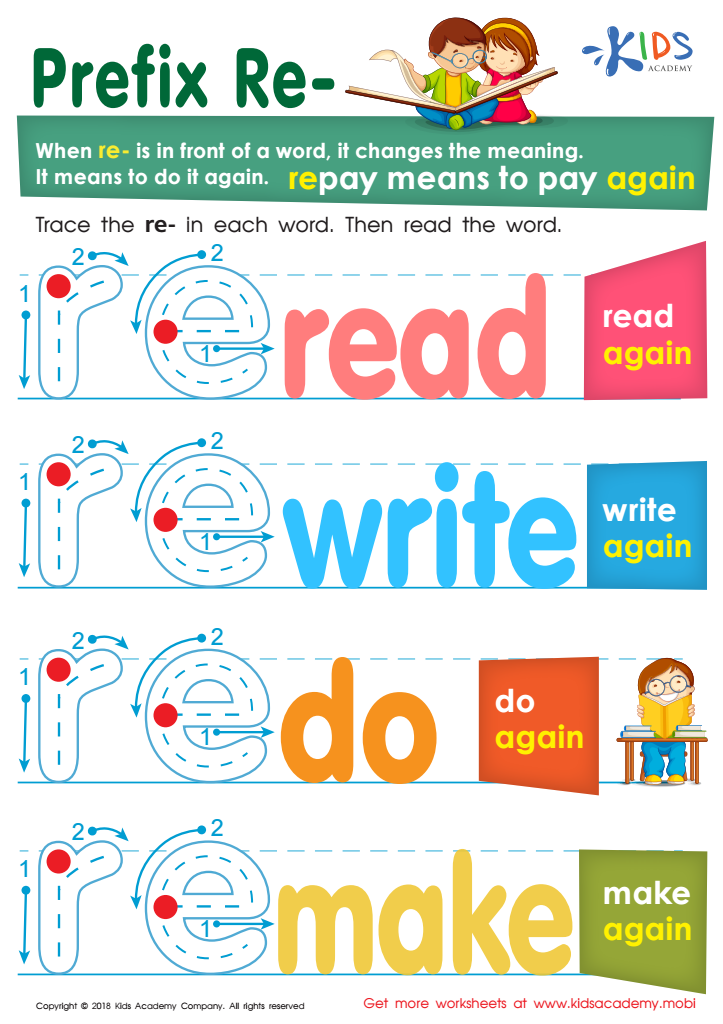
Prefix Re- Worksheet
Give your child examples of the re- prefix such as repay, restart, et cetera. Hold their hand and trace the re- in each word. Read the word aloud together and explain how it changes the meaning to 'to do again'. This worksheet will help your child see the re- prefix in action.
Prefix Re- Worksheet
Worksheet
Join Kids Academy for Free
Who is primarily going to use this learning content?



.jpg)



Understanding prefixes is crucial for children ages 5-7 as it lays the foundational skills for language development and literacy. During these formative years, children are actively building their vocabulary and comprehension. Prefixes, which are added to the beginning of root words to modify their meanings, help enhance this vocabulary. For example, knowing that "un-" means "not" can help children understand words like "unhappy" or "unstable," expanding their ability to make sense of language.
When parents and teachers actively teach prefixes, they not only improve children's word recognition but also promote critical thinking as learners begin to decode and analyze new words independently. This leads to enhanced reading skills, enabling students to tackle increasingly complex texts with confidence.
Additionally, understanding prefixes supports children's writing abilities. As they become more aware of how prefixes tweak meaning, they can express their thoughts with greater precision. Ultimately, caring about prefixes means nurturing a child's overall communication skills, paving the way for academic success and giving them tools critical for effective interaction in a world increasingly reliant on language. Engagement in this area fosters a love for words, boosts self-esteem, and encourages lifelong learning habits. Parents and teachers play vital roles in this development journey.








