
Logical thinking Writing Worksheets for Ages 5-7
4 filtered results
Difficulty Level
Grade
Age
-
From - To
Subject
Activity
Standards
Introduce your child to logical thinking with our engaging Writing Worksheets for Ages 5-7. Designed by education experts, these fun and interactive worksheets help young learners develop critical thinking skills and enhance their problem-solving abilities. Each activity encourages children to organize their thoughts, make connections, and express their ideas clearly through writing. Perfect for home or classroom use, our worksheets provide a strong foundation for future academic success. Spark your child's curiosity and intellect with our Logical Thinking Writing Worksheets, and watch them grow into confident, independent thinkers! Download now from Kids Academy.
Favorites
With answer key
Interactive
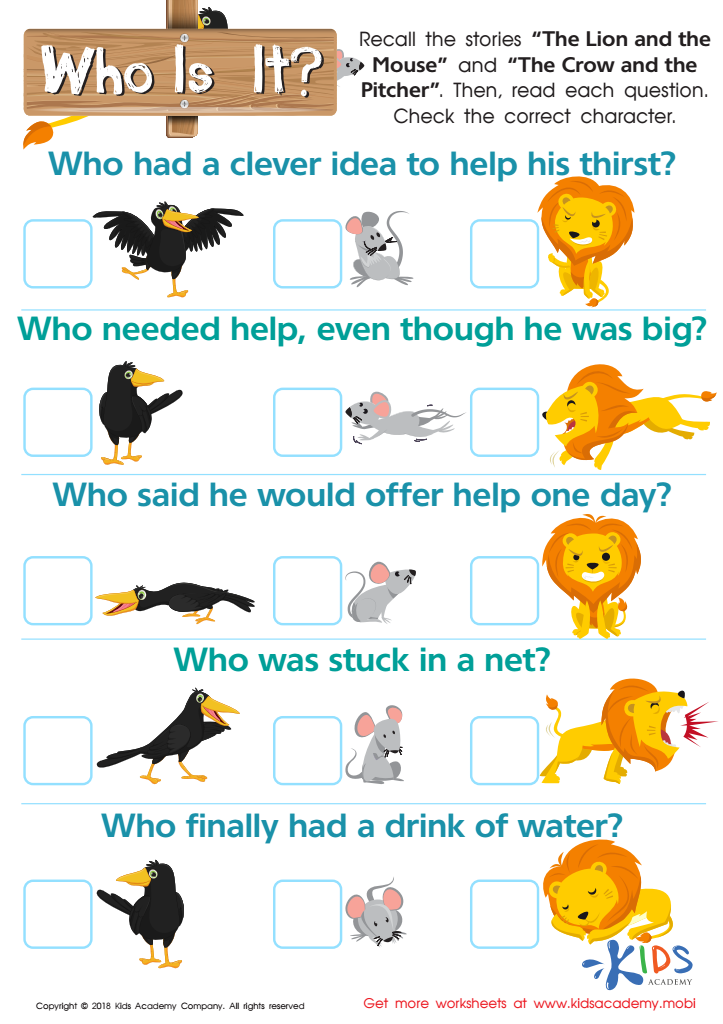
Who Is It? Worksheet
This worksheet helps students recall details from The Crow and the Pitcher and The Lion and the Mouse stories. Students will answer questions about the characters' actions. Use it to assess their understanding of both stories, as this is a key comprehension skill.
 Assign to My Students
Who Is It? Worksheet
Worksheet
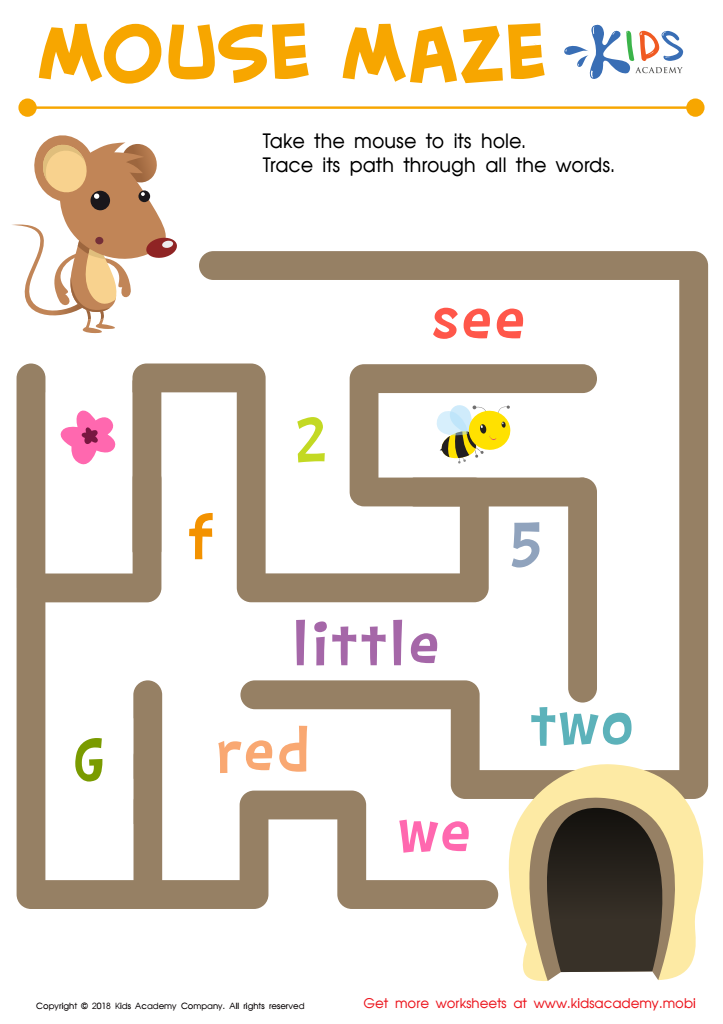
Find Words Mouse Maze Worksheet
Help your child identify words and guide the mouse home! Ask them to point out the colorful animal on the worksheet, then take their hand and show them how to trace the path, going through all the words in the maze to get the mouse back to its hole.
Find Words Mouse Maze Worksheet
Worksheet
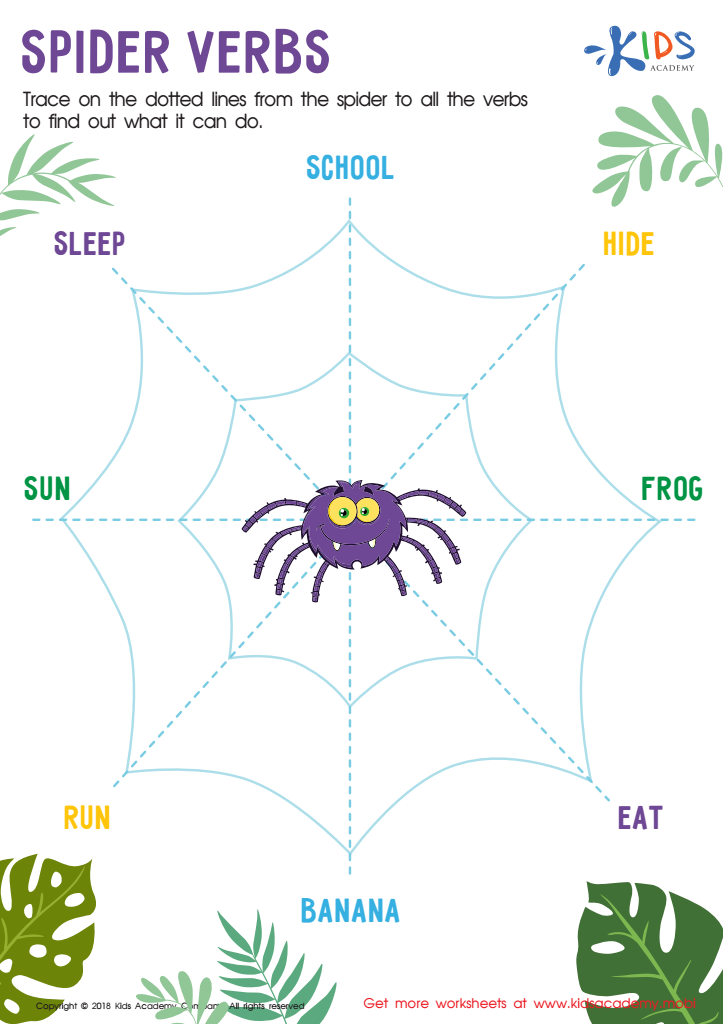
Spider Verbs Worksheet
Verbs are action words. Examples: run, play, talk. Show your child this tracing sheet for them to learn about verbs. Ask them to trace the dotted lines from the spider to the words that are verbs. These words are what the spider can do.
Spider Verbs Worksheet
Worksheet
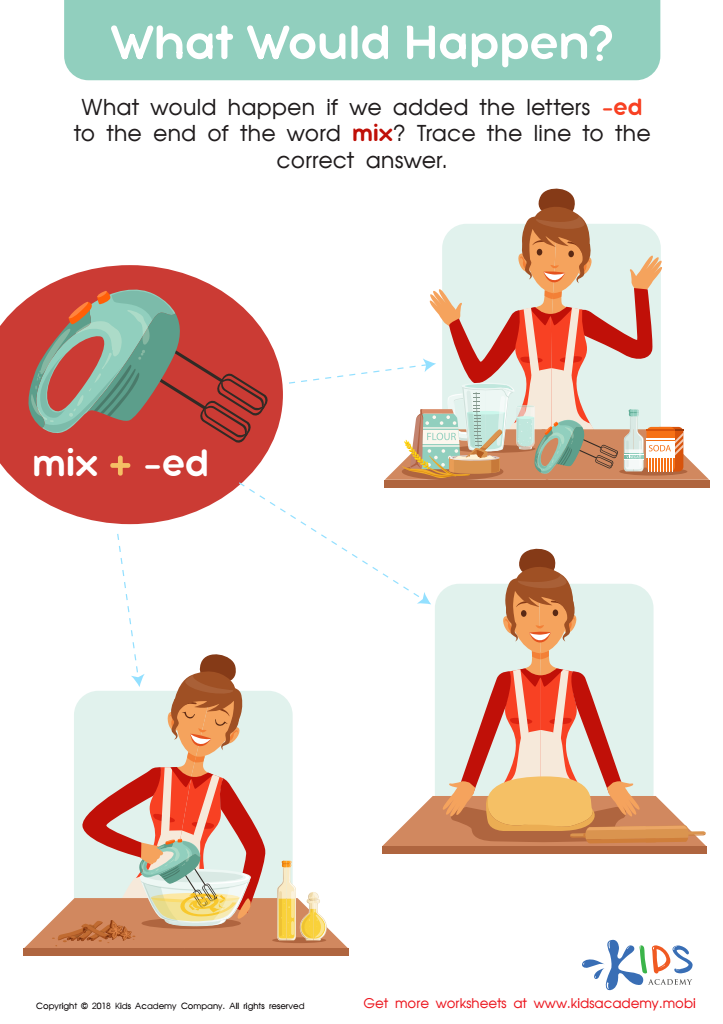
What Would Happen? Worksheet
Are your kids struggling with tenses? Use this worksheet to help them. See what they know by asking them to add '-ed' to the end of 'mix'. Guide them through the tracing sheet as they look for the correct answer.
What Would Happen? Worksheet
Worksheet
Join Kids Academy for Free
Who is primarily going to use this learning content?








Logical thinking is essential for young children because it forms the foundation for future learning and problem-solving abilities. At ages 5-7, children are at a critical stage in cognitive development where their brains are particularly receptive to new ideas and ways of thinking. Encouraging logical thinking through writing helps improve their reasoning skills, both in academic settings and real-life situations.
When children begin to express their thoughts coherently in written form, they learn to structure their ideas logically. This experience not only enhances their writing abilities but also supports reading comprehension, as they start understanding the importance of story structure, cause and effect, and sequence of events. It also builds critical thinking skills, enabling them to evaluate information, make decisions, and understand consequences.
Moreover, logical writing tasks enable children to tackle mathematical word problems better by teaching them to break down larger problems into smaller, manageable parts. By fostering a habit of logical organization in writing, teachers leave children better equipped to understand complex concepts later in life across all subjects.
Engaged parents and teachers who encourage logical thinking in writing contribute significantly to a child's overall intellectual growth. These formative years are a time of immense potential, making early emphasis on logical writing a crucial step in holistic education.








