Noun identification Writing Worksheets for Ages 5-7
8 filtered results
-
From - To
Discover our engaging Noun Identification Writing Worksheets, designed specifically for children ages 5 to 7. These worksheets aim to enhance young learners' writing and comprehension skills by focusing on identifying nouns in various contexts. Each worksheet features fun activities that challenge kids to spot and categorize different types of nouns, from people to places and things. Interactive exercises encourage creativity, making learning enjoyable and effective. Perfect for classroom use or at-home practice, these resources provide valuable skill-building opportunities that lay the foundation for future writing success. Start helping your child develop essential language skills today with our thoughtfully crafted worksheets!
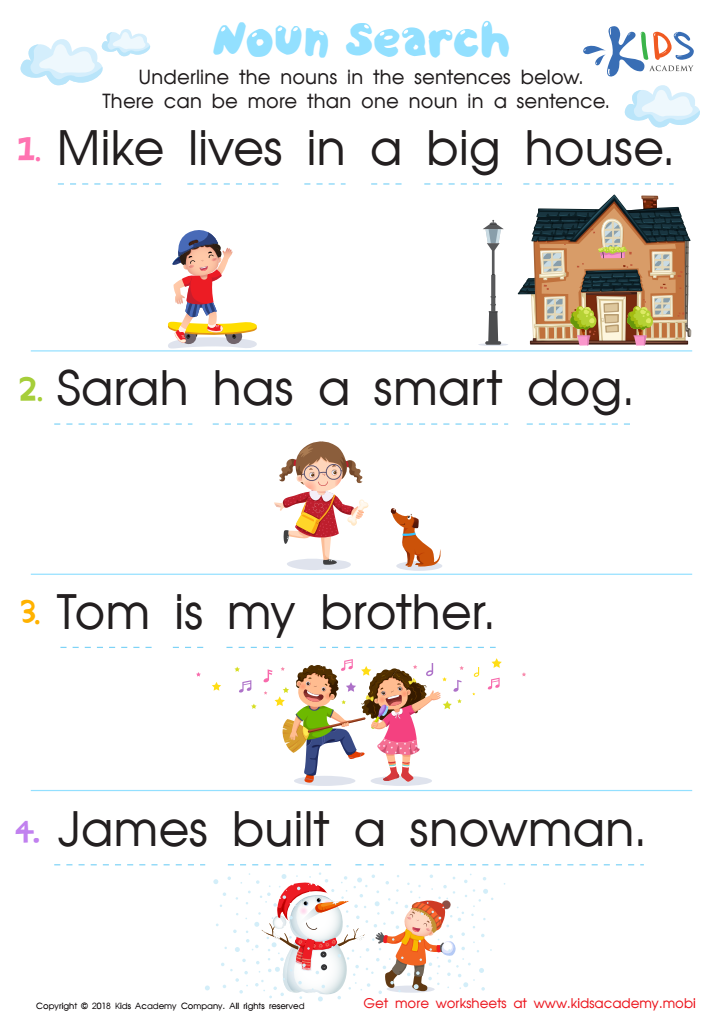
Noun Search Worksheet
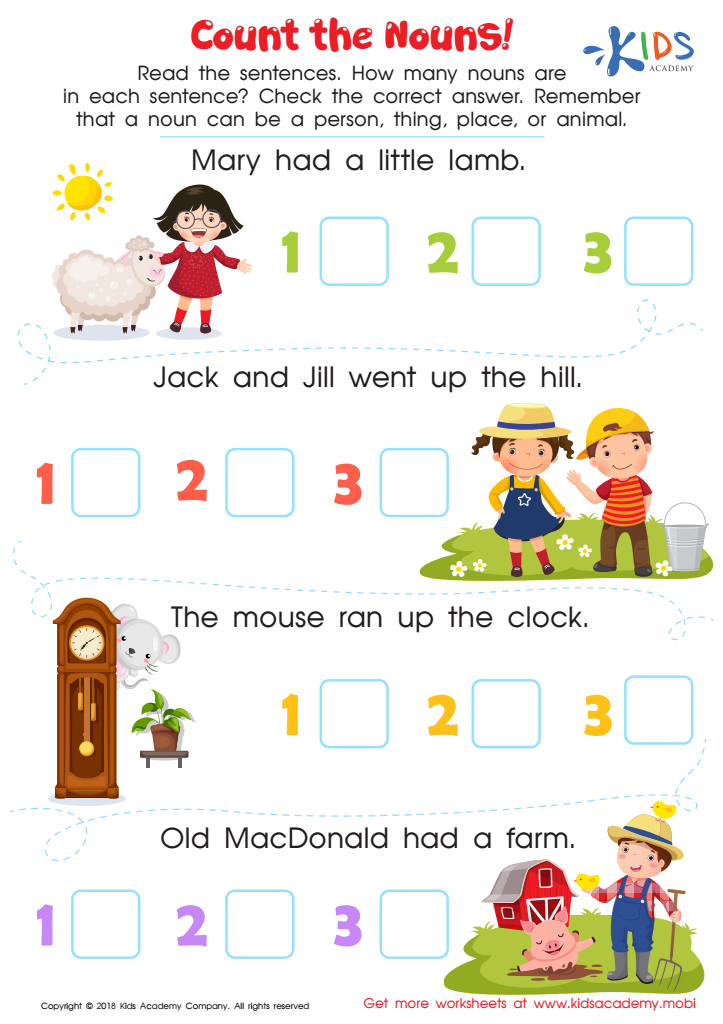
Count the Nouns Worksheet
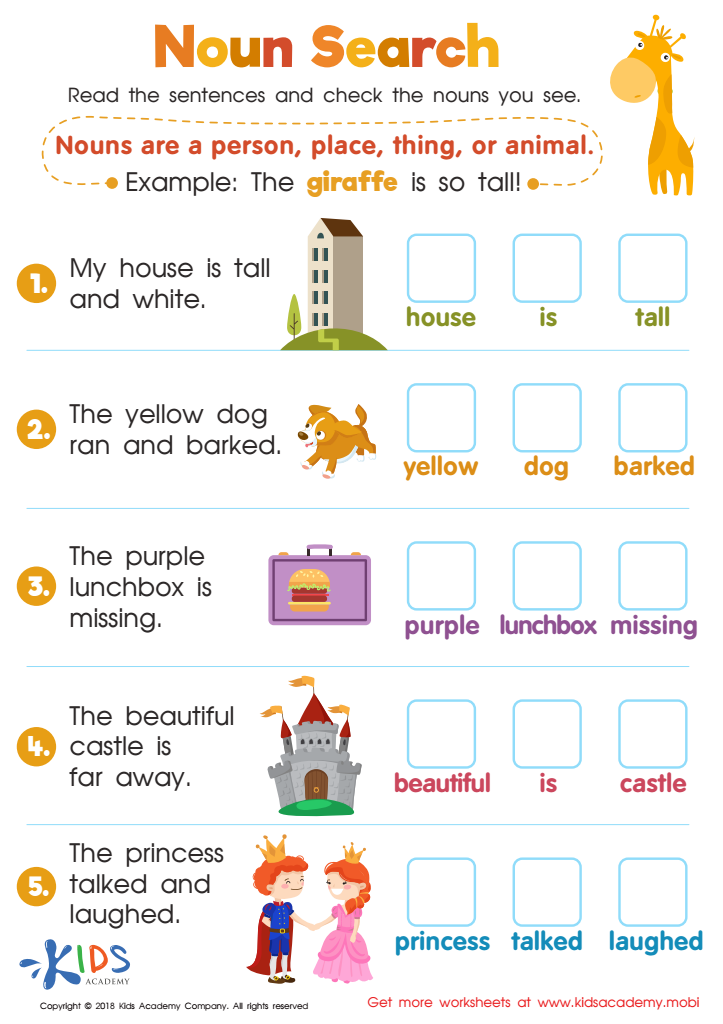
Noun Search Worksheet
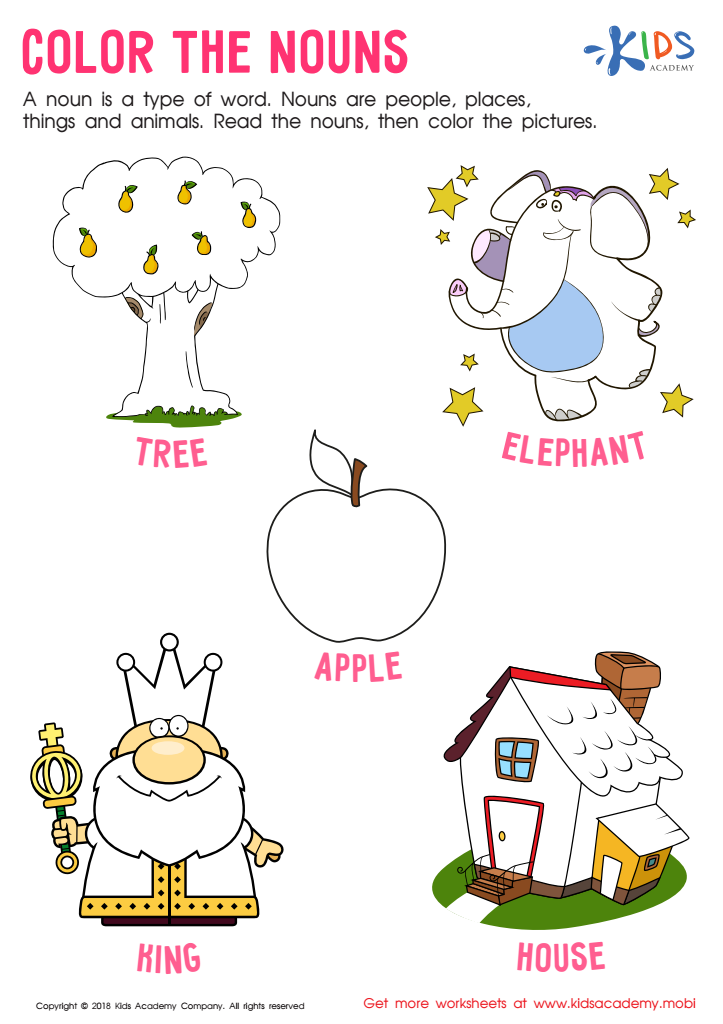
Color the Nouns Worksheet
 Assign to My Students
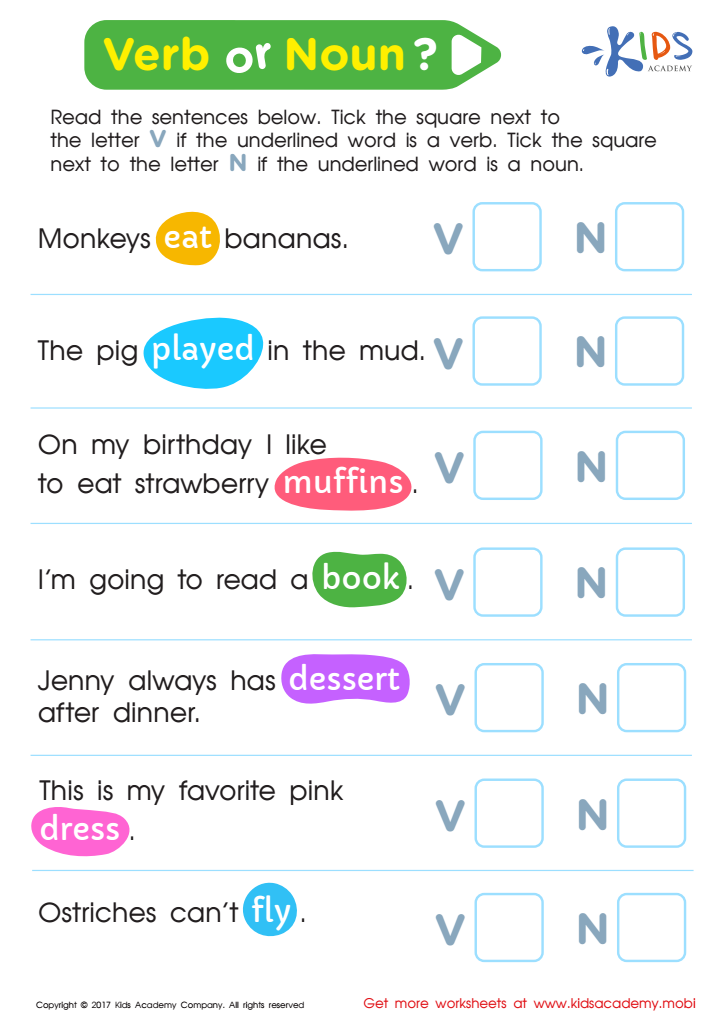
Verb or Noun Worksheet
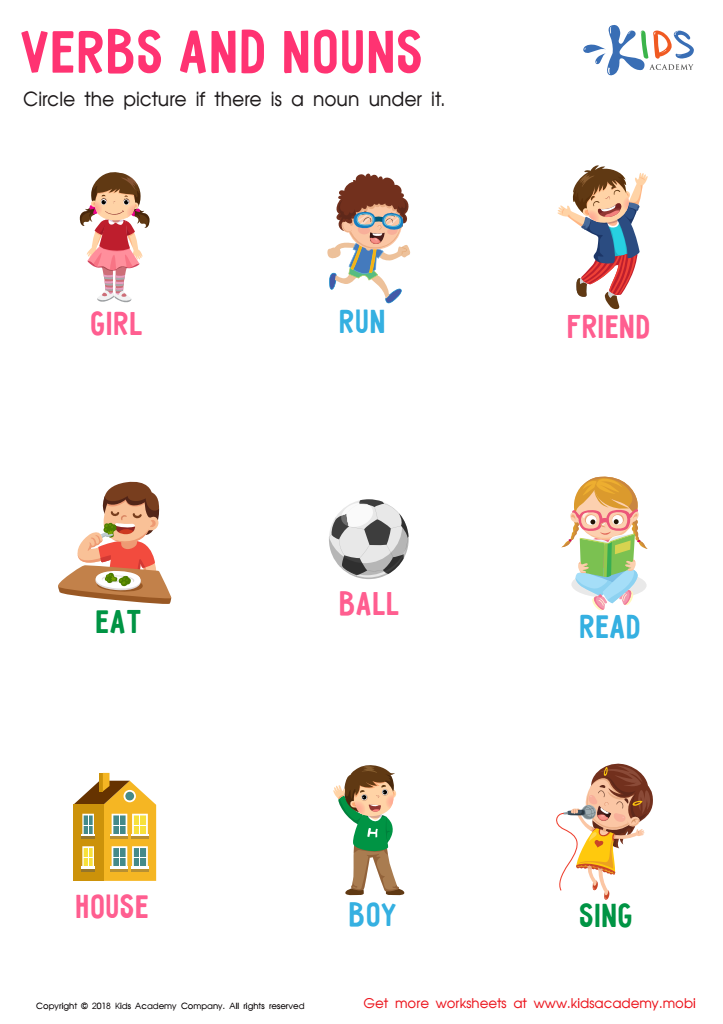
Verbs and Nouns Worksheet
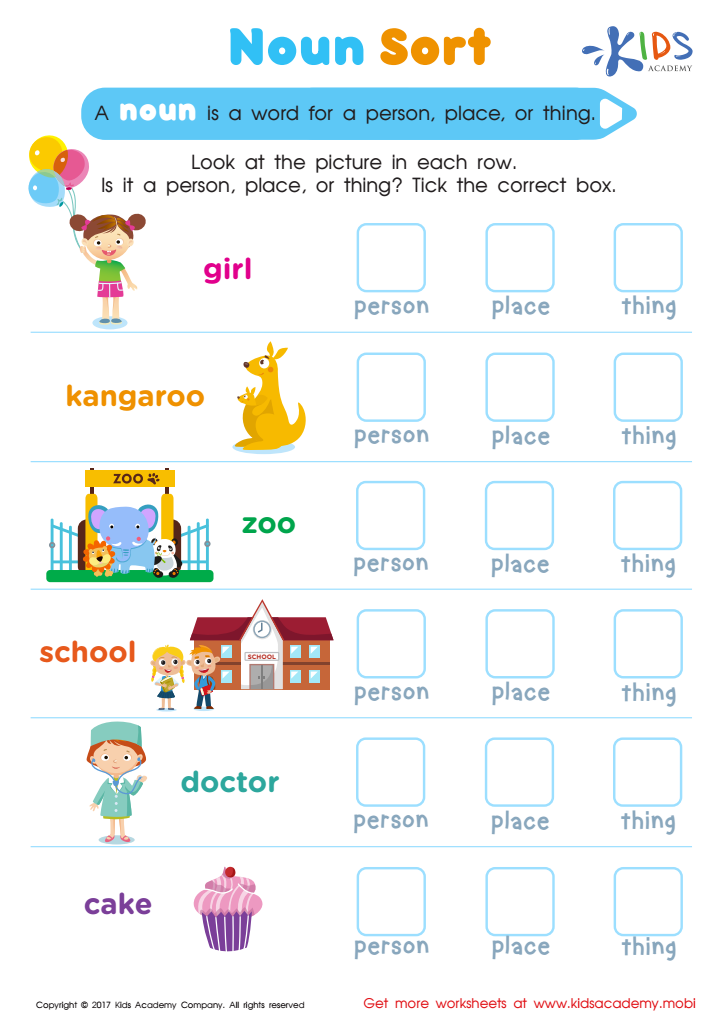
Noun Sort Printable
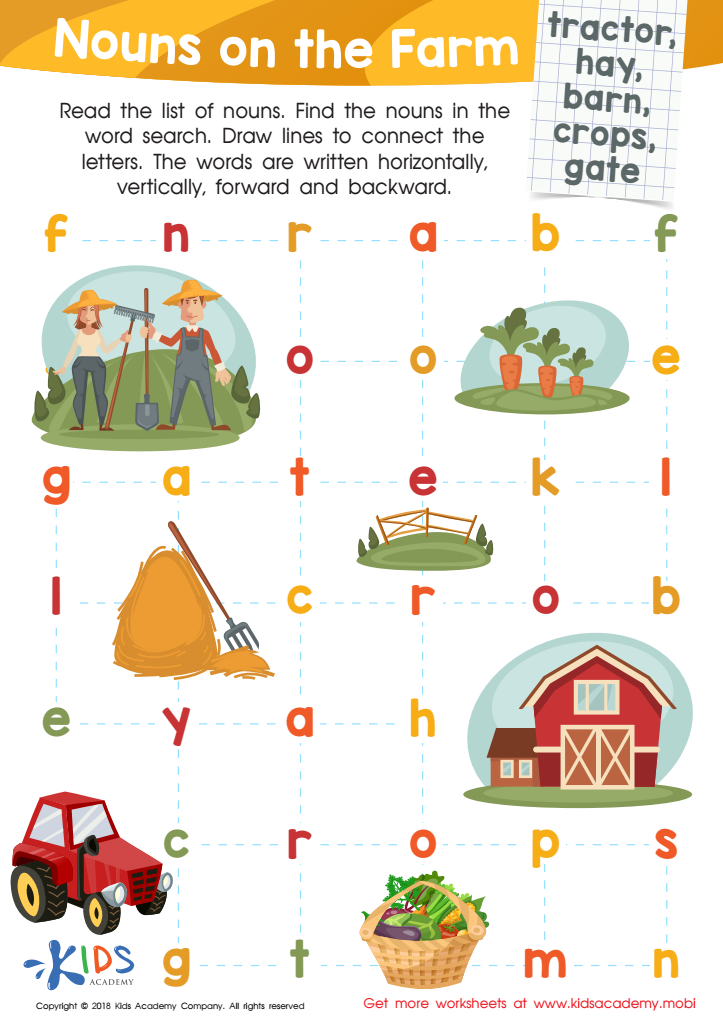
Nouns on the Farm Worksheet







Noun identification is a foundational skill crucial for early literacy, making it essential for parents and teachers to prioritize this aspect of learning for children aged 5-7. Nouns are the building blocks of language; they name people, places, things, and ideas, enabling children to communicate effectively. By mastering noun identification, children enhance their vocabulary, which is integral for reading comprehension and expressing themselves in writing.
Recognizing nouns helps children understand sentence structure, facilitating their transition from oral communication to written expression. This skill lays the groundwork for more advanced writing abilities as they progress through school. Moreover, engaging in noun identification activities can be fun and interactive, helping to foster a love for language and improve their overall academic confidence.
Furthermore, parents and teachers can support this learning through reminiscing about everyday experiences—encouraging discussions about objects in their environment, characters in stories, and drawing creativity from the world around them. This approach not only solidifies comprehension but also builds strong home-school connections, reinforcing the child’s learning journey. By caring about noun identification, adults play a key role in fostering their children’s language skills, setting them up for future success in both literacy and communication.








