Punctuation understanding Writing Worksheets for Ages 5-7
4 filtered results
-
From - To
Discover our engaging Punctuation Understanding Writing Worksheets designed specifically for ages 5-7! These fun and interactive worksheets help young learners grasp essential punctuation concepts, including periods, commas, question marks, and exclamation points. By incorporating colorful illustrations and relatable exercises, children develop their writing skills while mastering the art of punctuation. Perfect for home study or classroom use, our worksheets promote critical thinking and encourage creativity in writing. Enhance your child's literacy abilities with our carefully crafted resources, ensuring they build a strong foundation in punctuation that will benefit them throughout their educational journey. Explore our materials today and spark your child's love of writing!
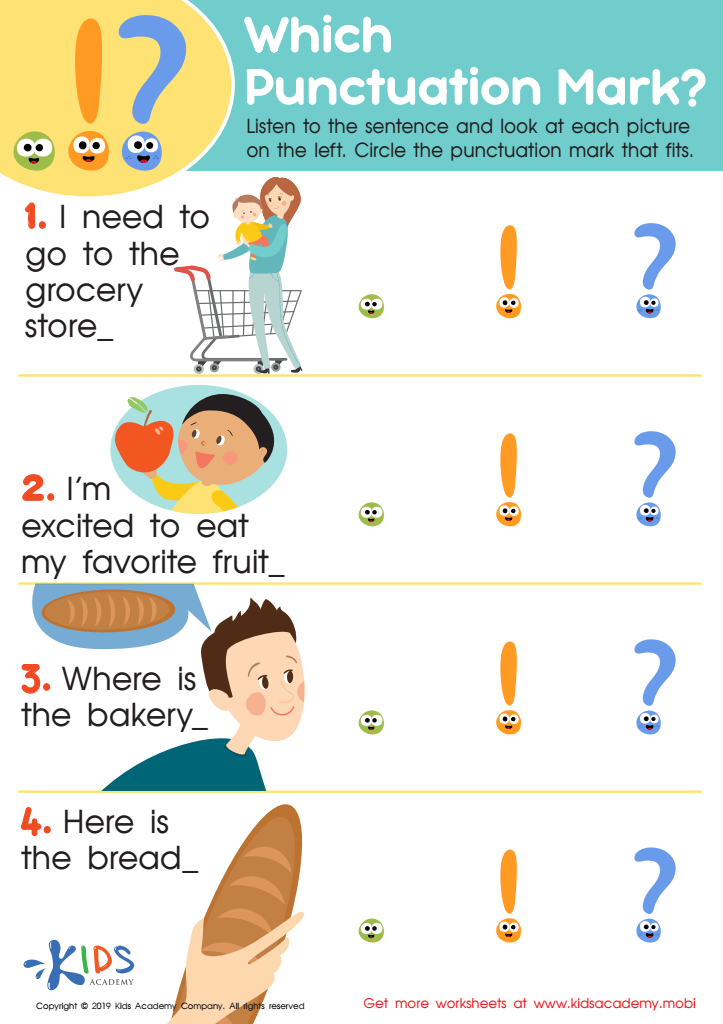
Which Punctuation Mark Worksheet
 Assign to My Students
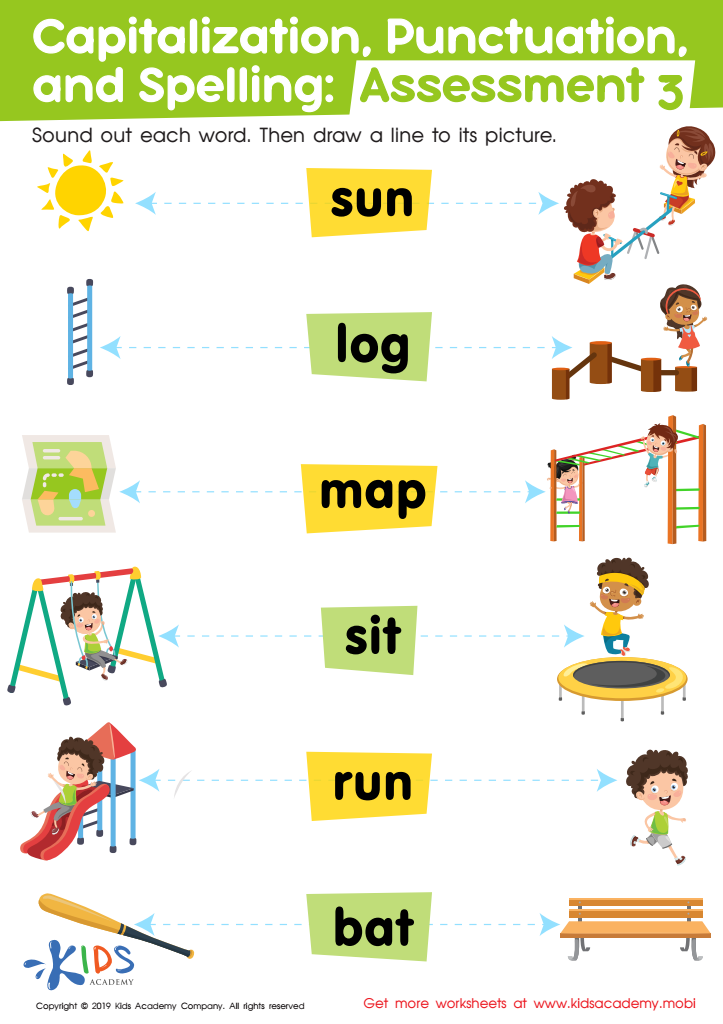
Capitalization. Punctuation. Spelling. Assessment 3 Worksheet
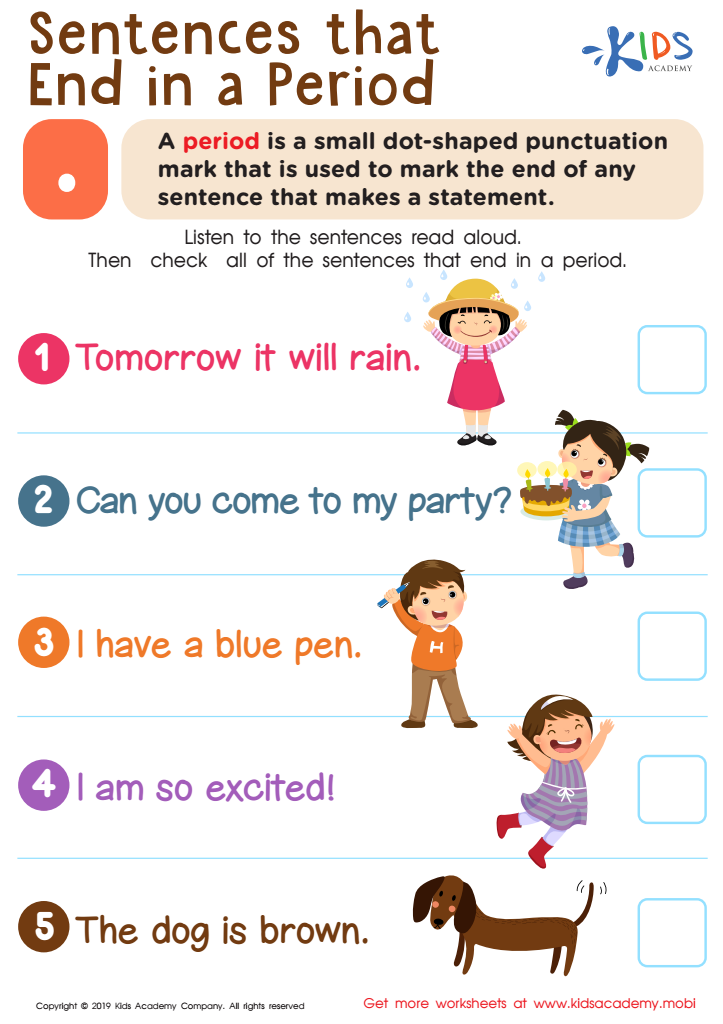
Sentences That End in a Period Worksheet
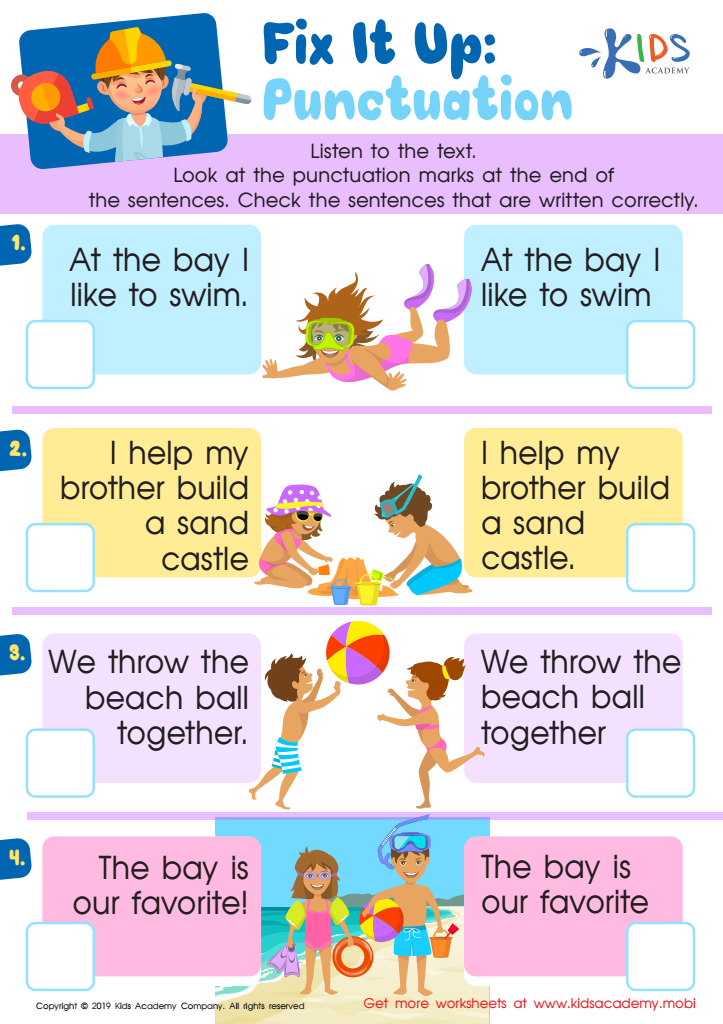
Fix Punctuation Worksheet




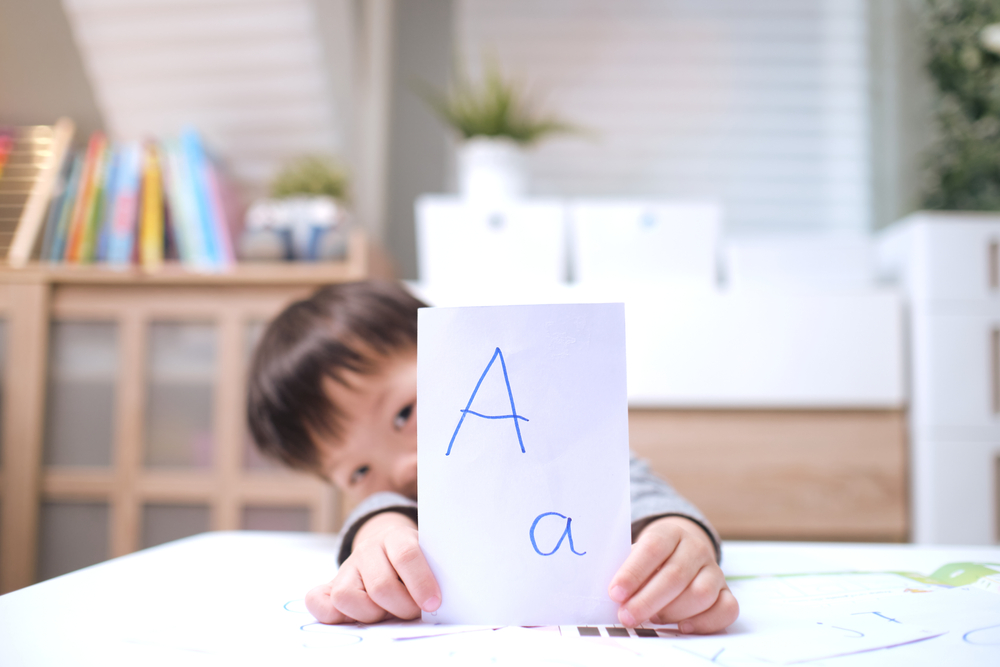



Punctuation understanding is crucial for young writers aged 5-7 as it lays the foundation for effective communication. At this age, children begin to express their thoughts and ideas in written form, and punctuation serves as the roadmap for guiding readers through their writing. Correct punctuation helps convey meaning, distinguishes between different types of sentences, and clarifies the writer's intent.
Moreover, mastering punctuation boosts children’s confidence. When young learners can utilize commas, periods, question marks, and exclamation points correctly, they can better articulate their emotions and engage readers. This ability fosters a greater love for writing and reading, enhancing literacy development.
Additionally, parents and teachers play an essential role in supporting this understanding. By emphasizing the importance of punctuation through playful activities and guidance, they can transform what might seem like rigid rules into fun learning experiences. Celebrating small victories in punctuation use encourages children to explore their voices further, nurturing their creativity.
Ultimately, an early grasp of punctuation not only fuels academic success but also equips children with the tools for effective storytelling, fostering their abilities to express themselves clearly throughout their educational journey and beyond.








