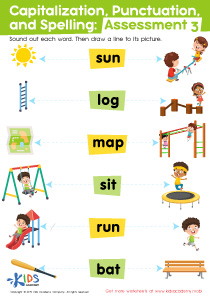
Sentence comprehension Writing Worksheets for Ages 5-7
6 filtered results
Difficulty Level
Grade
Age
-
From - To
Subject
Activity
Standards
Unlock the world of literacy for your young learners with our Sentence Comprehension Writing Worksheets tailored for ages 5-7. These engaging and educational worksheets by Kids Academy are designed to enhance early reading and writing skills, fostering a deeper understanding of sentence structure. Each activity encourages children to read, comprehend, and construct sentences, building a solid foundation for fluent reading and effective communication. Perfect for classroom use or at-home learning, our worksheets make mastering sentence comprehension interactive and fun. Boost your child's confidence and enthusiasm for reading and writing with these essential educational resources.
Favorites
With answer key
Interactive
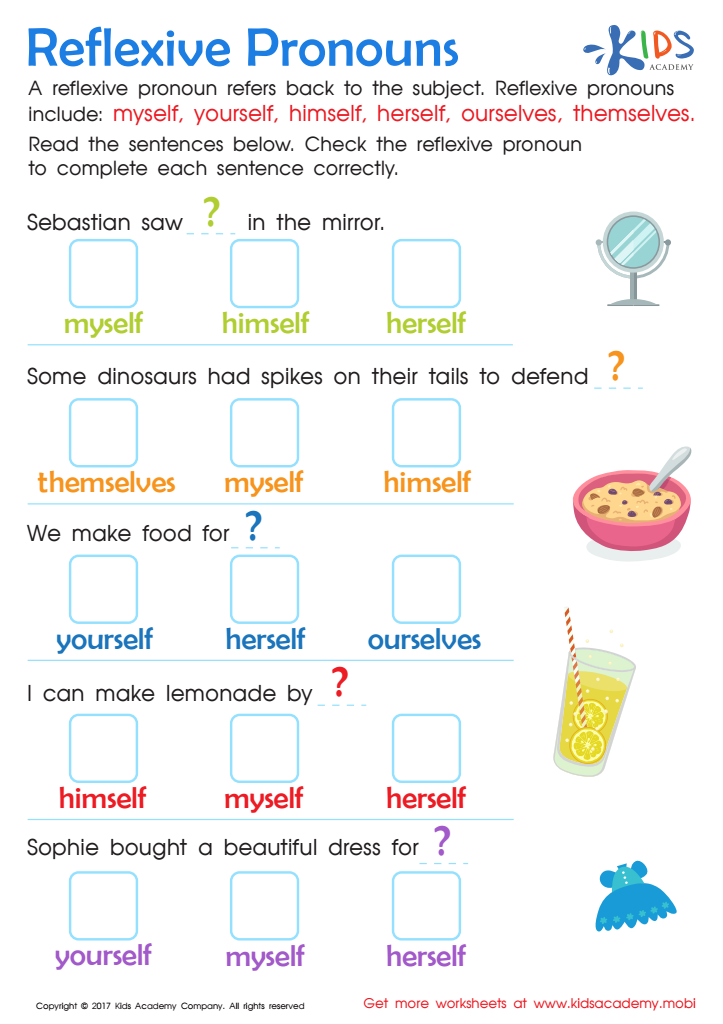
Reflexive Pronouns Worksheet
The 2nd grade reflexive pronouns worksheet by Kids Academy offers clear explanations and fun activities to help master reflexive pronouns.
Kids Academy's 2nd grade reflexive pronouns worksheet has everything you need to brush up on reflexive pronouns. It includes a brief explanation and fun activities with sentences and pictures to check your understanding. Master reflexive pronoun usage in no time!
 Assign to My Students
Reflexive Pronouns Worksheet
Worksheet
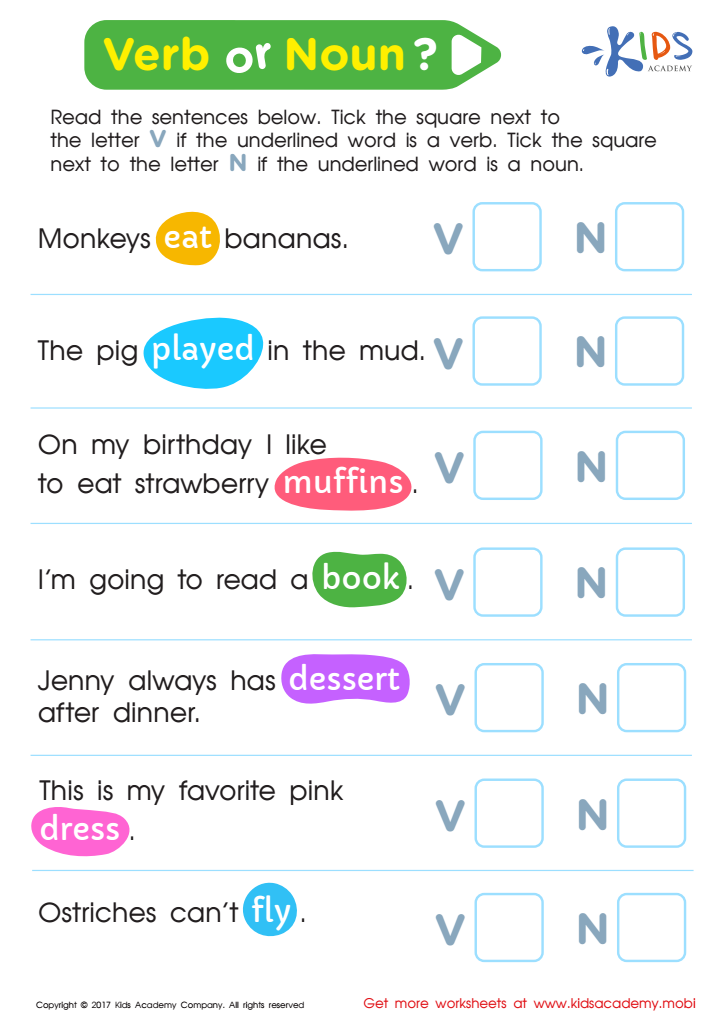
Verb or Noun Worksheet
This worksheet will help your child identify verbs and nouns quickly. With colorful highlights and simple sentences, they'll master parts of speech in no time! Get ahead of the game with this incredible worksheet.
Verb or Noun Worksheet
Worksheet
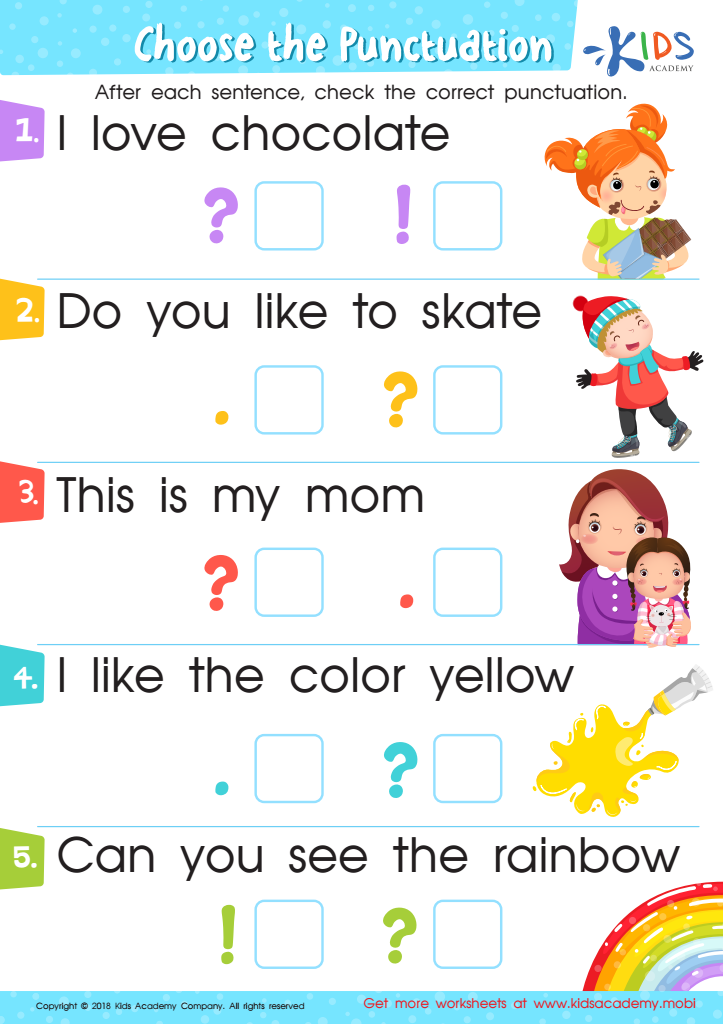
Choose the Punctuation: Assessment Worksheet
Does your child know punctuations? Found at the end of words, they signify the tone of the sentence. Ask them which punctuations they use daily. With your little one, look at a worksheet. Read each sentence aloud and ask them to identify the two punctuations given. Instruct them to choose the correct one. 80 words.
Choose the Punctuation: Assessment Worksheet
Worksheet
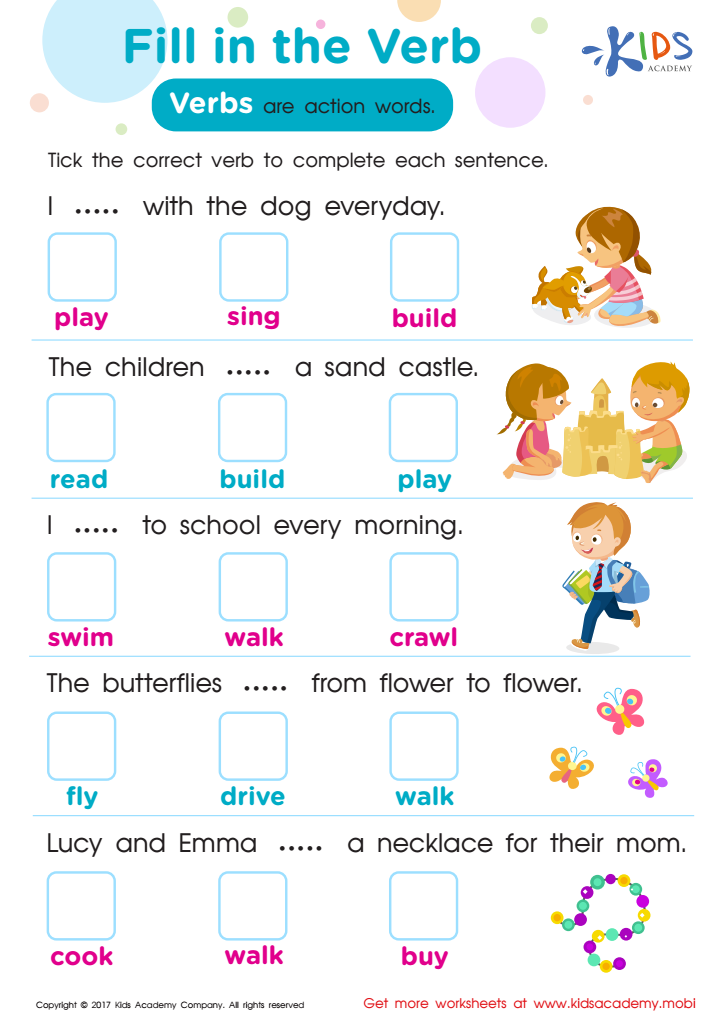
Fill in the Verb Printable
Help your child learn about verbs with this fun worksheet! Colorful images prompt them to fill in the verb, helping build their writing skills. It's a great way to make learning enjoyable.
Fill in the Verb Printable
Worksheet
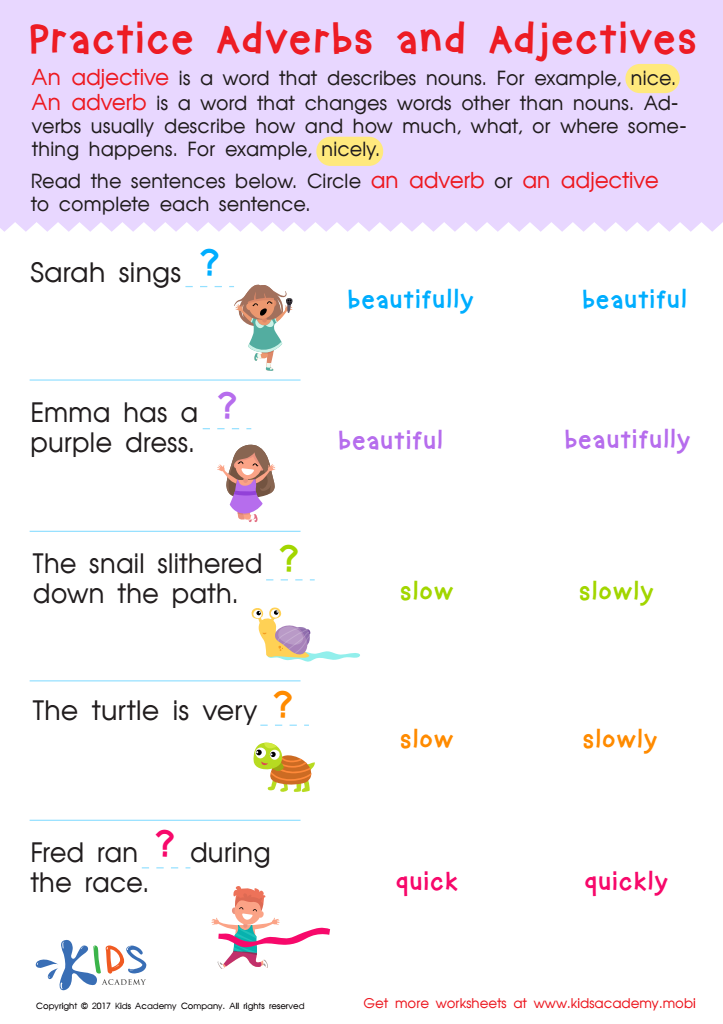
Adverbs and Adjectives Worksheet
Kids Academy's PDF worksheet on Adjectives and Adverbs explains how to use them and offers practice sentences. Children must circle the adjective or adverb to complete each sentence. Maximize their knowledge with this fun and informative exercise!
Adverbs and Adjectives Worksheet
Worksheet
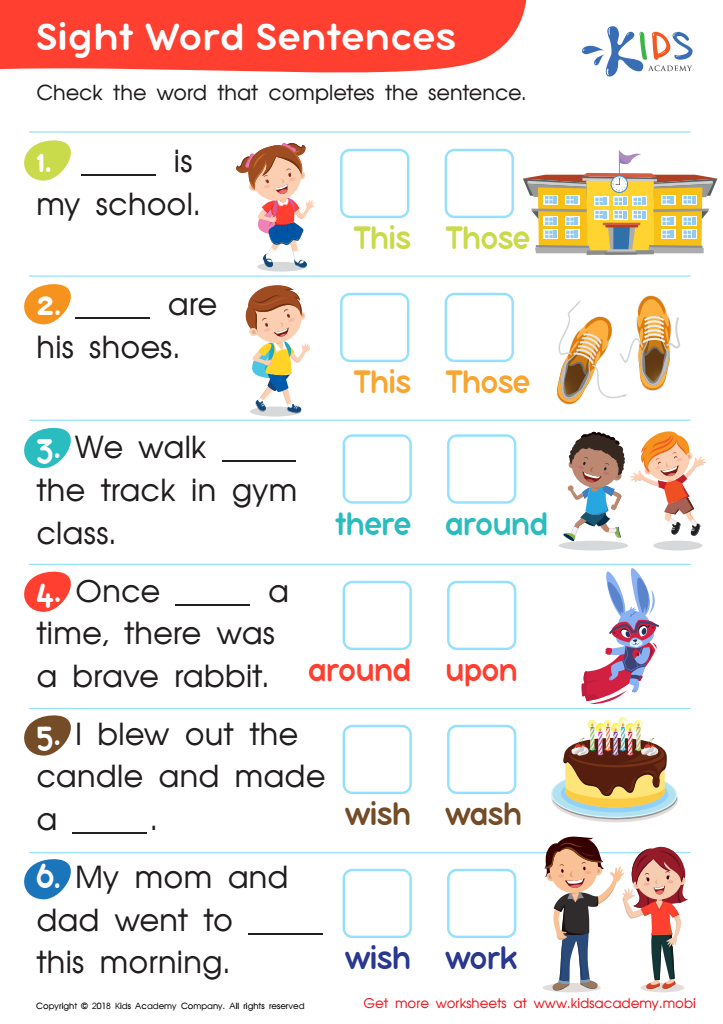
Sight Word Sentences Worksheet
Improve reading fluency! Have students fill in the blank with the correct sight word to complete sentences. Sight words are often tricky to decode - they don't follow phonics or spelling rules. To read smoothly, young learners must know them by memory. Use this printable and help kids master their sight words!
Sight Word Sentences Worksheet
Worksheet
Join Kids Academy for Free
Who is primarily going to use this learning content?








Sentence comprehension and writing skills are foundational components of early literacy development, and parents and teachers should place significant emphasis on these areas for children ages 5-7. At this formative stage, children transition from recognizing individual letters and words to constructing phrases and sentences that convey meaning. Strong sentence comprehension enables children to understand stories, follow instructions, and express their thoughts clearly.
The ability to write coherent sentences empowers children to communicate effectively, enhancing their academic performance across subjects. Writing contributes to critical thinking and creativity, fostering a child's ability to narrate, describe, and argue their perspectives. Engaging in sentence writing exercises also aids fine motor skill development, as children practice holding pencils and forming letters.
Furthermore, early mastery of sentence comprehension and writing can boost a child’s confidence and enthusiasm for learning. Children who struggle in these areas might experience frustration and a lack of motivation, which can affect their overall attitude towards schoolwork.
Therefore, investing time and effort in cultivating these skills can yield long-term benefits, setting a strong foundation for advanced literacy skills and academic success. Both educators and parents can support this development by encouraging reading, providing writing opportunities, and offering constructive feedback, thus ensuring children have the tools they need to thrive.