Spatial awareness Writing Worksheets for Ages 5-7
3 filtered results
-
From - To
Enhance your child's writing skills with our specially designed Spatial Awareness Writing Worksheets for ages 5-7. These engaging worksheets help young learners develop crucial spatial reasoning and fine motor skills, ensuring they understand the relationships between objects in space. Each activity encourages kids to practice writing letters and words within specific boundaries, fostering better handwriting and layout comprehension. Perfect for early grade students, our worksheets make learning spatial concepts fun and interactive, paving the way for academic success. Discover a world where writing becomes an enjoyable experience at Kids Academy.
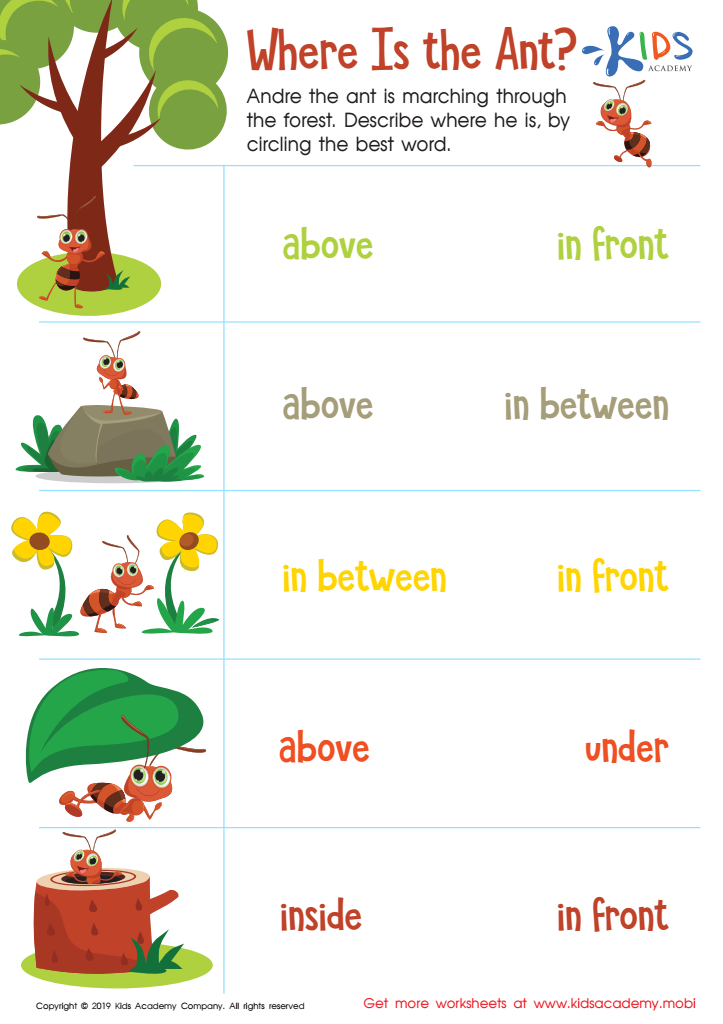
Where Is the Ant? Worksheet
 Assign to My Students
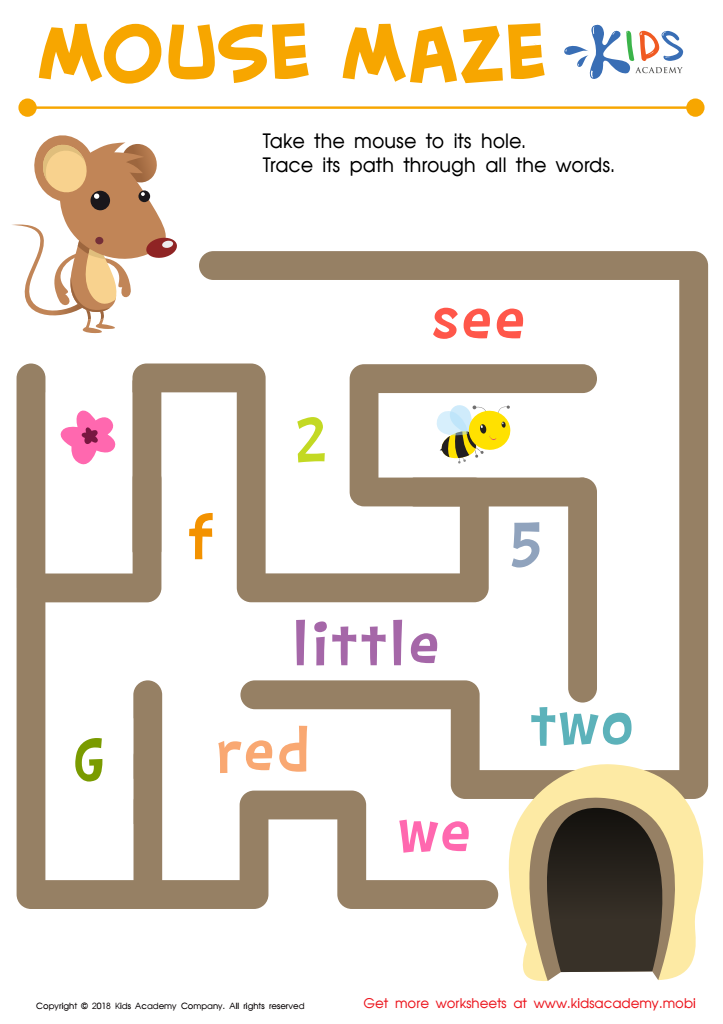
Find Words Mouse Maze Worksheet
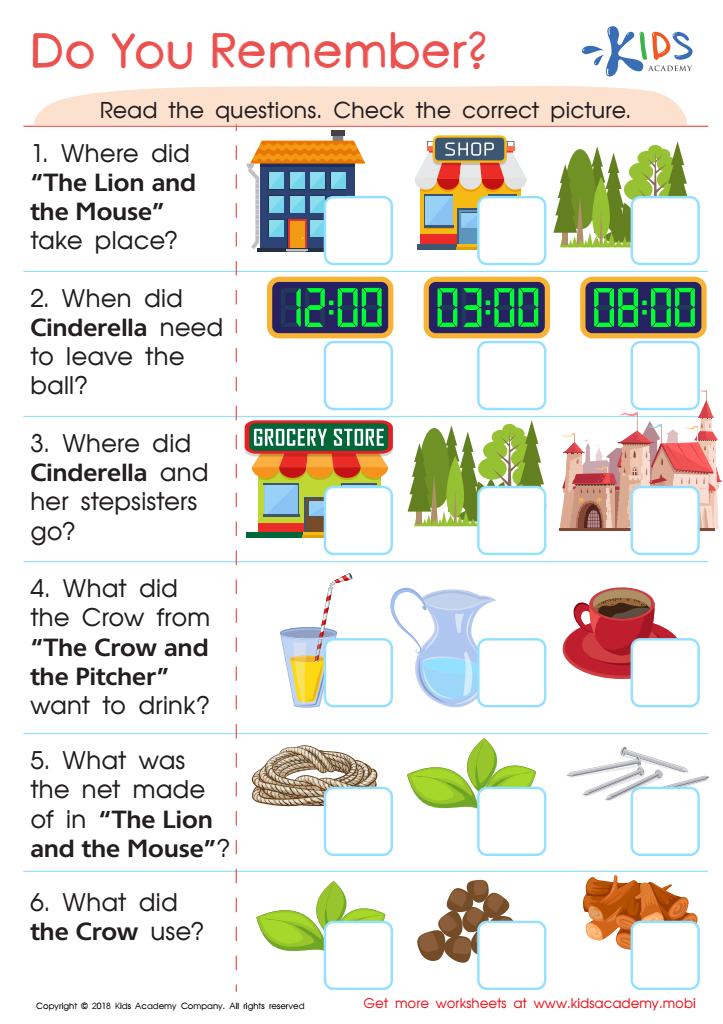
Do You Remember? Worksheet








Spatial awareness is a fundamental aspect of early childhood development that significantly impacts both academic and everyday activities. For children ages 5-7, developing strong spatial awareness skills is crucial in their ability to interact with the world intelligently and confidently.
Teachers and parents should prioritize spatial awareness because it directly affects handwriting and other fine motor skills. When young children understand spatial concepts like "left," "right," "up," and "down," they are better equipped to correctly form letters and organize their thoughts on a page. This competency in writing, in turn, supports literacy and fosters a smooth learning trajectory in reading and other subjects.
Moreover, spatial awareness bolsters mathematical understanding by helping young learners grasp concepts such as shapes, sizes, volumes, and spatial relationships. For instance, knowing the difference between "over" and "under" or "near" and "far" lays the groundwork for more complex problem-solving skills later on.
Beyond academics, spatial awareness is crucial for everyday activities like navigating playgrounds, understanding personal space, and even following directions. Enhancing a child’s spatial awareness can improve their sense of independence and safety in both structured environments and free play.
In essence, focusing on spatial awareness during the early years affords children a set of pivotal skills that support their educational development and everyday life, making it an area deserving and requiring intentional attention from both parents and teachers.








