
Letter recognition Tracing Words Worksheets for Ages 5-7
3 filtered results
Difficulty Level
Grade
Age
-
From - To
Subject
Activity
Standards
Discover our engaging Letter Recognition Tracing Words Worksheets designed specifically for children aged 5-7! These printable resources help young learners develop essential literacy skills by enhancing their letter recognition and writing abilities. Each worksheet features fun and colorful designs that capture children's attention while guiding them through the tracing process. With various difficulty levels, your child will build confidence as they recognize and write both uppercase and lowercase letters. Perfect for home or classroom settings, our worksheets encourage a love for learning and support early education goals. Download these valuable tools today to nurture your child's reading and writing skills!
Favorites
With answer key
Interactive
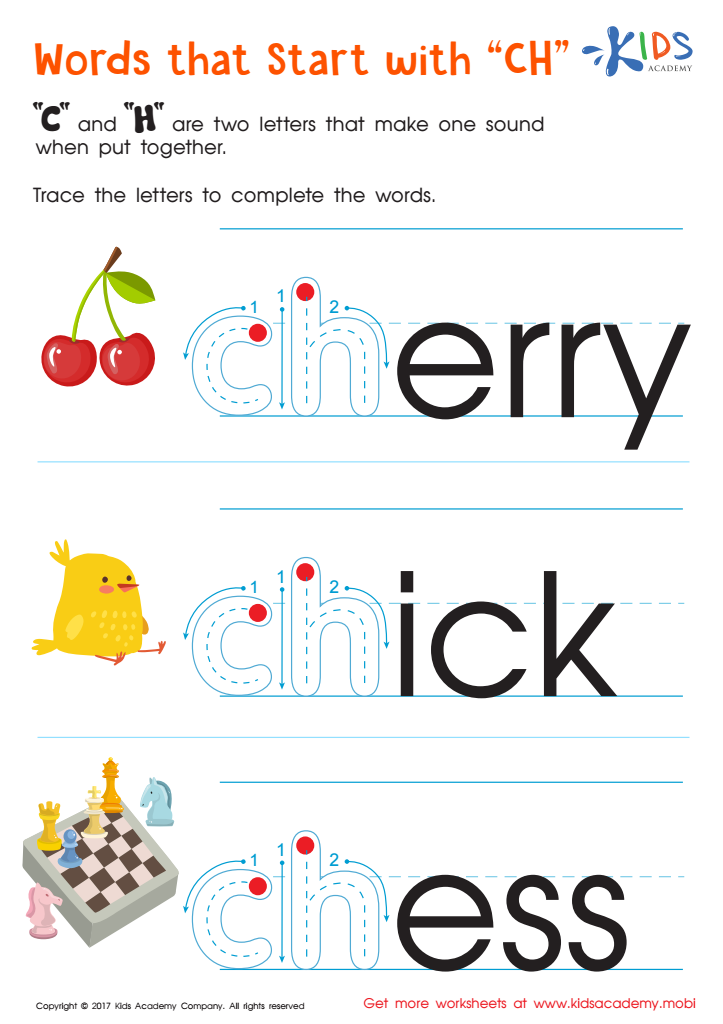
Words That Start with "ch" Spelling Worksheet
With Kids Academy, learning phonics and spelling has never been easier.
Kids Academy's "ch" tracing worksheet makes it easy for your little one to learn phonics and spelling. It features cute, brightly colored images to help them trace familiar words, making learning fun and enjoyable.
 Assign to My Students
Words That Start with "ch" Spelling Worksheet
Worksheet
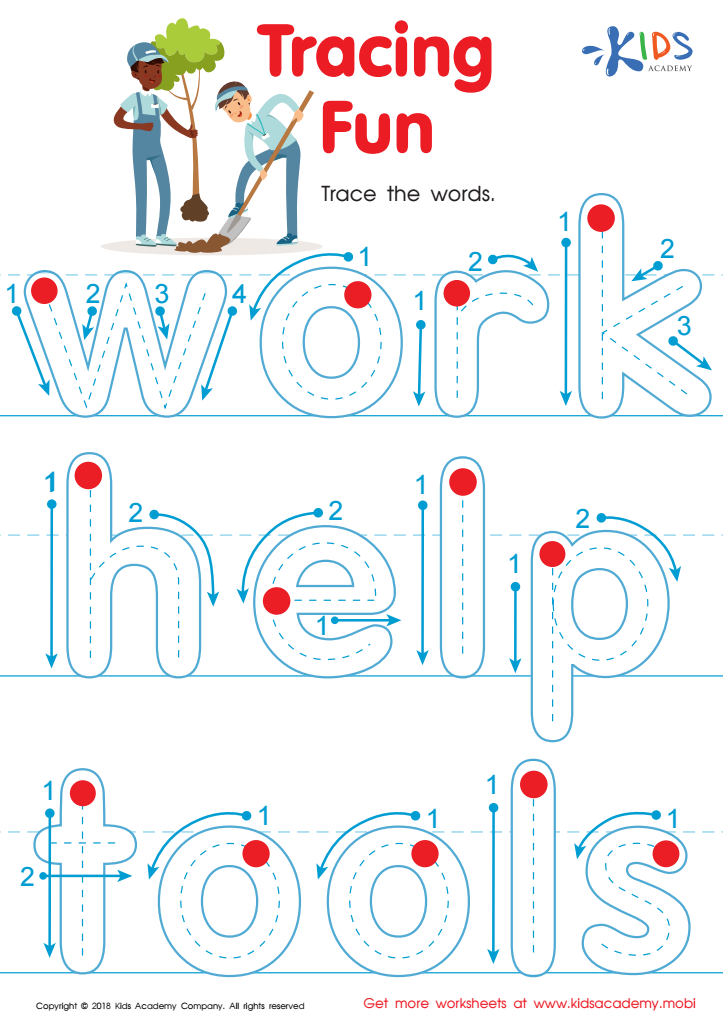
Tracing Fun Worksheet
Believe it or not, good handwriting helps with reading! Starting at the top left and writing legibly builds reading skills. This free worksheet helps little learners practice basic sight words. Red dots show them where to start and the words provide reinforcement without them realising. An enjoyable way to boost their reading and writing.
Tracing Fun Worksheet
Worksheet
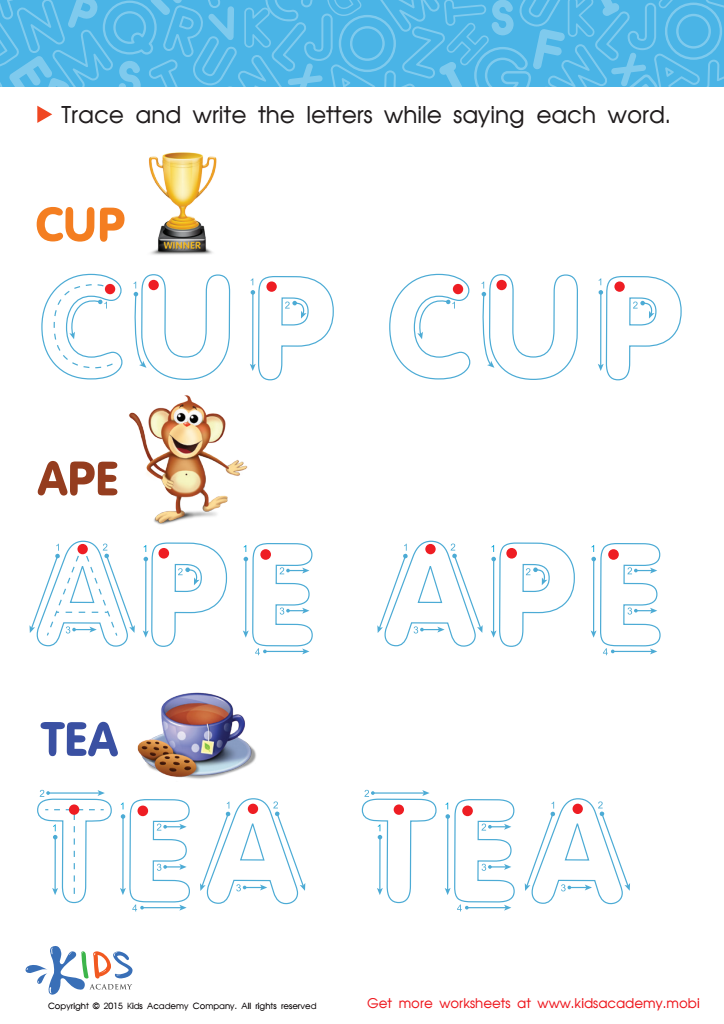
A Cup, an Ape and Tea Spelling Worksheet
Check out Kids Academy's new English vocab worksheet! You'll find three lines with three words each. Practice your pronunciation and writing by writing them one by one. We have more free spelling word worksheets on our website, so download and practice today!
A Cup, an Ape and Tea Spelling Worksheet
Worksheet
Join Kids Academy for Free
Who is primarily going to use this learning content?








Letter recognition and tracing words are fundamental skills foundational to literacy development for children aged 5-7. This crucial phase in a child's educational journey builds the groundwork for reading, writing, and phonemic awareness. Parents and teachers should prioritize these practices for several reasons.
Firstly, letter recognition helps children quickly identify letters and their associated sounds, which is vital for decoding words. Engaging in tracing activities reinforces fine motor skills, helping develop the dexterity needed for writing. This combined approach enhances a child's confidence in their ability to communicate.
Additionally, mastering letter recognition and tracing words helps cultivate a love for reading and writing. As children become proficient in recognizing letters and forming words, they are more likely to engage with books and express themselves in writing.
Moreover, these activities provide opportunities for parents and teachers to engage with children, fostering positive relationships and communication about learning experiences. By making letter recognition and tracing fun through games and interactive exercises, adults can excite children about literacy.
In essence, prioritizing letter recognition and tracing not only equips young learners with essential skills but also enriches their educational experiences, helping them thrive in their early academic journey.








