
Fine motor development Alphabet Worksheets for Ages 5-8
3 filtered results
Difficulty Level
Grade
Age
-
From - To
Subject
Activity
Standards
Discover our engaging Fine Motor Development Alphabet Worksheets designed for children aged 5-8! These worksheets are a fun and effective way to help young learners enhance their fine motor skills while mastering the alphabet. With a variety of activities, including tracing letters, coloring, and cutting exercises, each worksheet provides an opportunity for children to strengthen their hand-eye coordination and dexterity. Perfect for reinforcing letter recognition and writing skills, our resources support early childhood education at home or in the classroom. Download our worksheets today and watch your child thrive as they learn through play and creativity!
Favorites
With answer key
Interactive
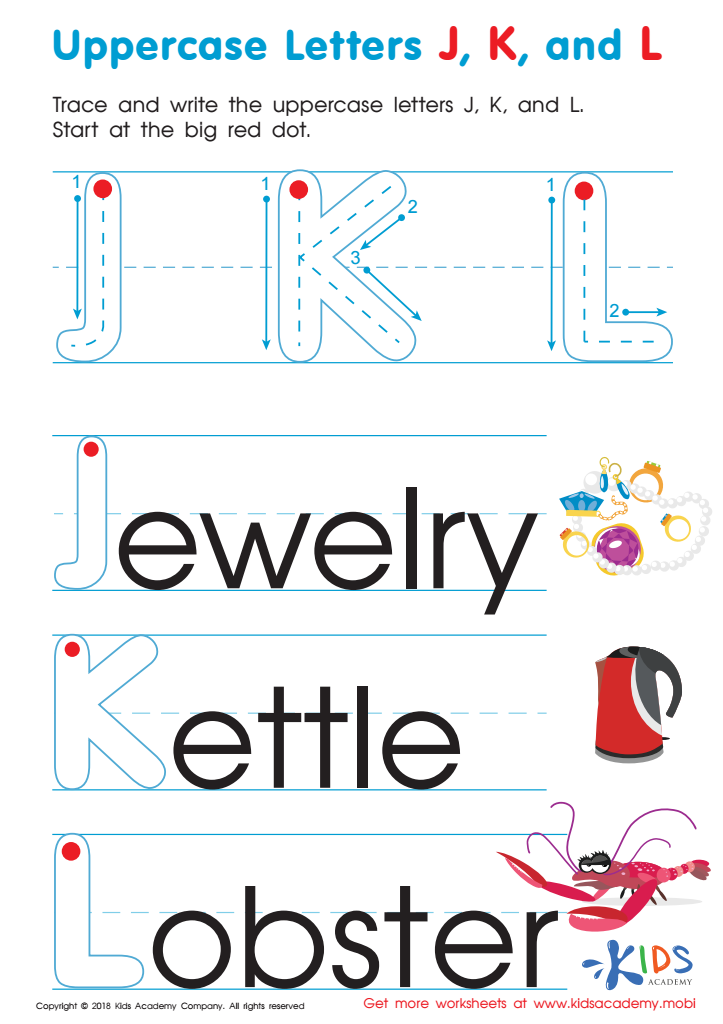
Uppercase Letters J, K, and L Worksheet
Jewelry, kettle and lobster share a common trait: their names start with J, K and L, 3 letter neighbors found in the middle of the alphabet. This traceable worksheet helps kids learn letter sounds and practice writing. Arrows and tracing lines make it easy to form neat pencil strokes. Red dot shows where kids should start. Perfect for preschoolers and kindergarteners!
 Assign to My Students
Uppercase Letters J, K, and L Worksheet
Worksheet
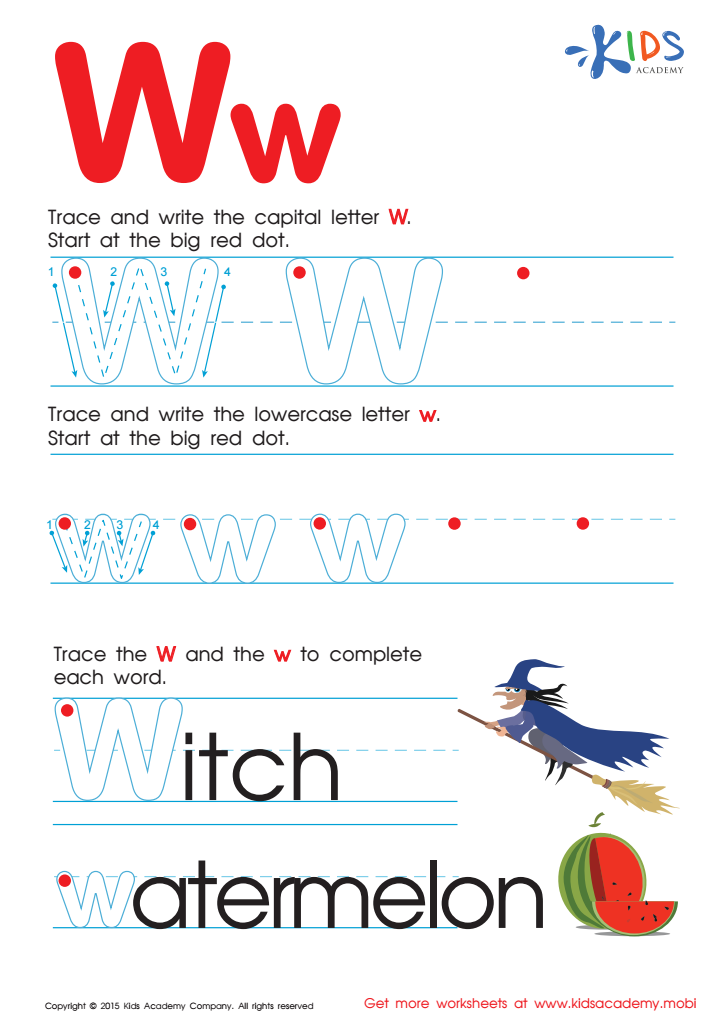
Letter W Tracing Page
Trace and write the capital and lowercase letter W with this free letter tracing worksheet by Kids Academy. Complete the words "Witch" (capital) and "watermelon" (lowercase). Check out our other kindergarten alphabet worksheets!
Letter W Tracing Page
Worksheet
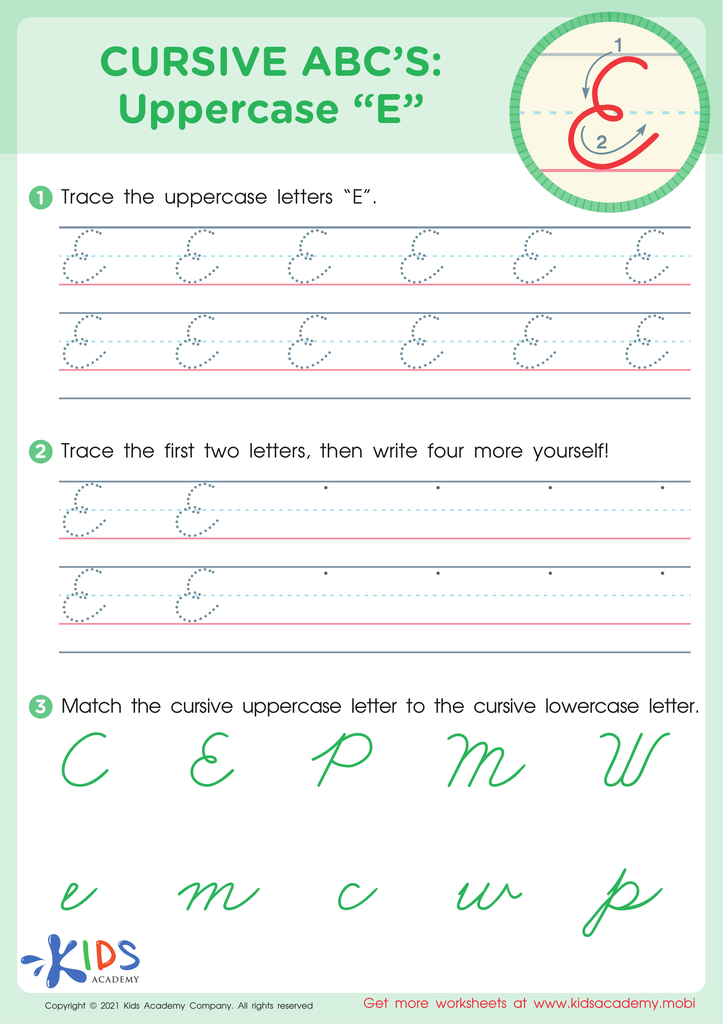
Cursive ABCs: Uppercase E
Ask your child if they can identify the letter 'E' and give examples. Each letter is unique, so provide coaching. Have them trace cursive 'E' to become familiar and boost confidence. Then, ask them to write it on their own.
Cursive ABCs: Uppercase E
Worksheet
Join Kids Academy for Free
Who is primarily going to use this learning content?








Fine motor development is crucial for children aged 5 to 8 as it directly influences their ability to perform everyday tasks and academic skills, particularly in writing. During this developmental stage, children refine the small muscles in their hands and fingers, enabling them to write the alphabet, use scissors, and manipulate small objects. Mastery of fine motor skills positively impacts a child's handwriting, making it clearer and more legible, which is vital for effective communication and academic performance.
Moreover, fine motor skills support overall cognitive development. Activities that enhance these skills, such as practicing letter formation or engaging in arts and crafts, foster creativity and problem-solving abilities. They also contribute to a child's sense of independence and confidence as they master intricate tasks.
Teachers and parents should prioritize fine motor activities to create a strong foundation for future academic success. Encouraging practices like tracing letters, engaging in puzzles, or playing with construction toys can facilitate development in a fun and engaging manner. Ultimately, recognizing the importance of fine motor skills in these formative years will lead to well-rounded, capable children ready to tackle both academic and everyday challenges efficiently.







