
Matching skills Alphabet Worksheets for Ages 5-8
3 filtered results
Difficulty Level
Grade
Age
-
From - To
Subject
Activity
Standards
Boost your child's learning with our Matching Skills Alphabet Worksheets designed for ages 5-8! These engaging, printable worksheets help children enhance their letter recognition and improve memory skills through fun activities and games. By matching uppercase and lowercase letters, kids not only learn the alphabet but also develop critical cognitive abilities to boost their literacy foundation. Perfect for teachers, parents, and homeschoolers, these fun and interactive resources offer a delightful way for children to practice their matching skills while building confidence in their reading journey! Download today and watch your child's skills flourish as they explore the world of letters!
Favorites
With answer key
Interactive
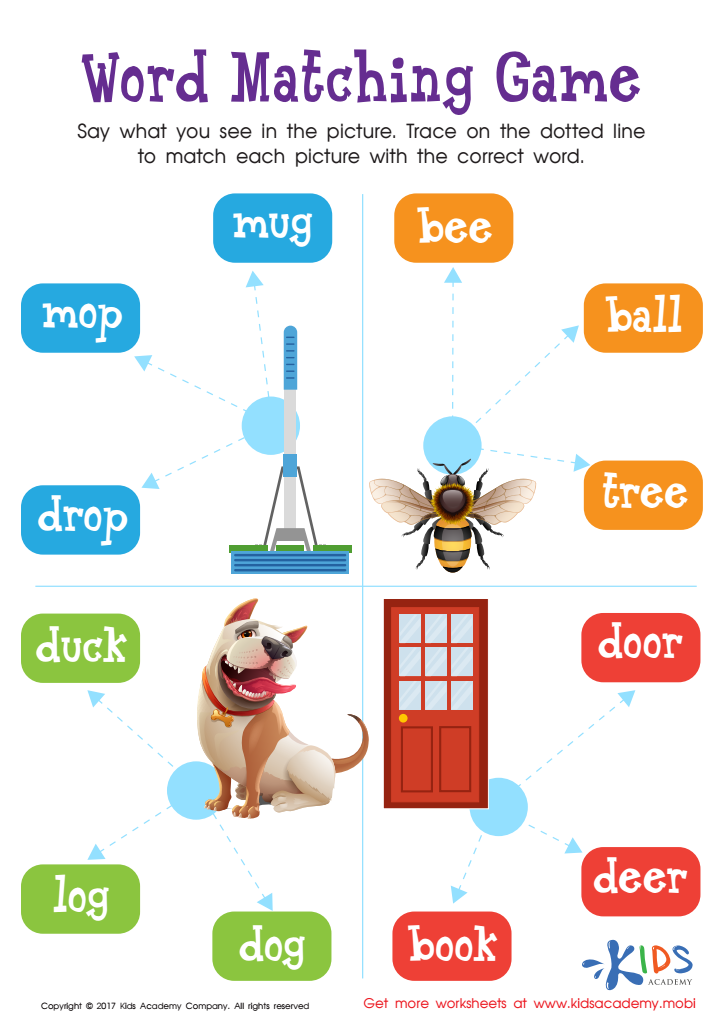
Word Matching Game Worksheet
Help your early reader develop prereading skills with this fun matching worksheet! Visual cues help them learn sight words, decode words in word families, and identify phonetic patterns. They'll practice discerning sounds past initial consonants while saying the name of the picture and finding the matching word - and reading at the same time!
 Assign to My Students
Word Matching Game Worksheet
Worksheet
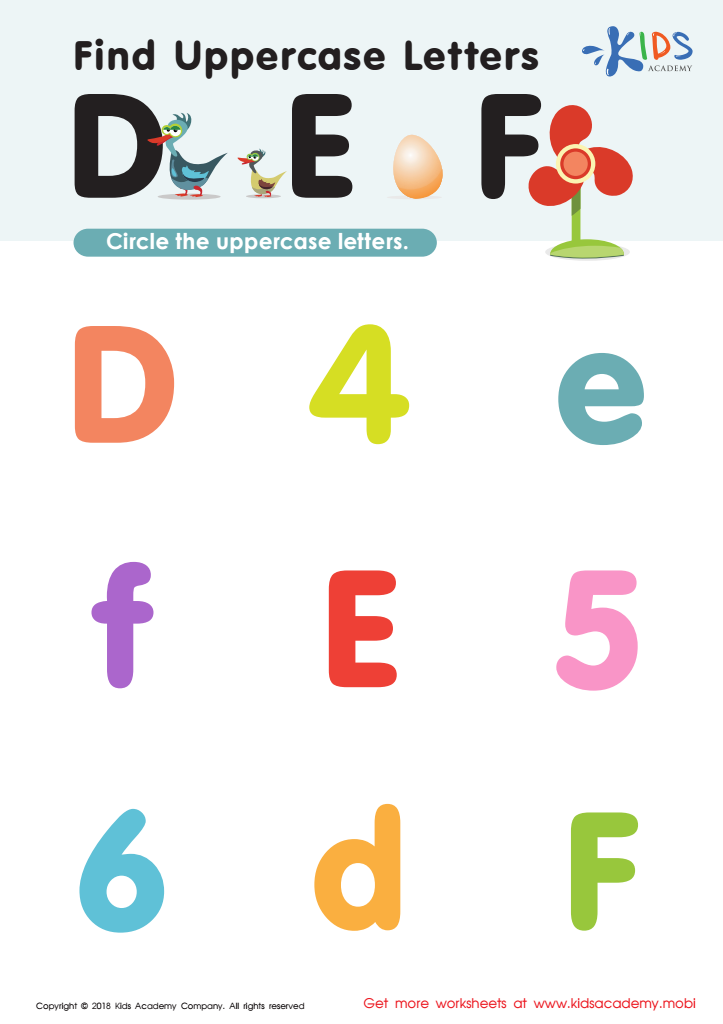
Find Uppercase Letters D, E, and F Worksheet
Follow the duckling and mom to find the capital letters D, E and F on this fun alphabet worksheet! Kids learn to read and recognize letters, while differentiating them from numbers. For extra challenge, don't let the numbers fool them. The pictures above remind them of each letter's sound. Have fun and get letter-savvy!
Find Uppercase Letters D, E, and F Worksheet
Worksheet
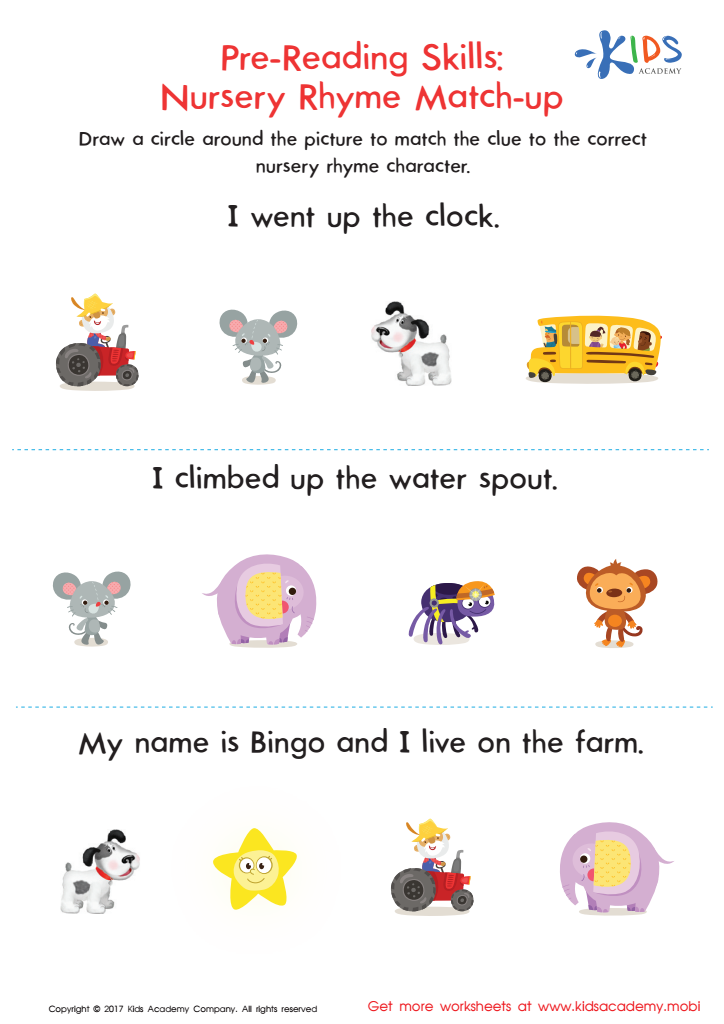
Nursery Rhyme Match–Up Worksheet
This worksheet helps kids build pre-reading skills using stories they know and love! By connecting with prior knowledge, kids can develop ideas about characters and set the stage for reading strategies.
Nursery Rhyme Match–Up Worksheet
Worksheet
Join Kids Academy for Free
Who is primarily going to use this learning content?







Parents and teachers should prioritize matching skills, particularly for the alphabet, for children ages 5-8 because these skills lay the foundational groundwork for literacy and cognitive development. Mastering the alphabet is not just about recognizing letters; it involves linking uppercase and lowercase letters, identifying sounds, and developing early spelling skills. By fostering strong matching skills, children enhance their ability to comprehend language, improve their reading fluency, and build confidence in their communication abilities.
In addition, matching activities promote critical thinking and problem-solving skills as children learn to associate sounds with letters and recognize similarities and differences. These cognitive practices contribute to broader academic readiness and engage children in interactive learning experiences, making the process enjoyable and effective.
Furthermore, strong alphabet recognition and matching correlate with later success in reading and writing. Children who excel in these early skills are more likely to enjoy reading, leading to a lifelong appreciation for literature. For parents and teachers, investing time in engaging matching activities cultivates a supportive environment for learning, ultimately preparing children for more complex literacy tasks as they advance in their education. Thus, prioritizing matching skills for the alphabet is crucial for holistic development in young learners.







