Word identification Long Vowels Worksheets for Ages 5-8
3 filtered results
-
From - To
Unlock the power of long vowel sounds with our engaging Word Identification Long Vowels Worksheets designed specifically for children aged 5-8. These worksheets provide an interactive way for young learners to master long vowel recognition through a variety of fun and educational activities. By focusing on word identification, students will enhance their reading skills while exploring phonics and language development. Each worksheet is thoughtfully crafted to entertain and educate, ensuring that learning remains enjoyable. With a mix of exercises, including matching, fill-in-the-blanks, and creative writing, our resources make it easy for educators and parents to support their children’s literacy journey.
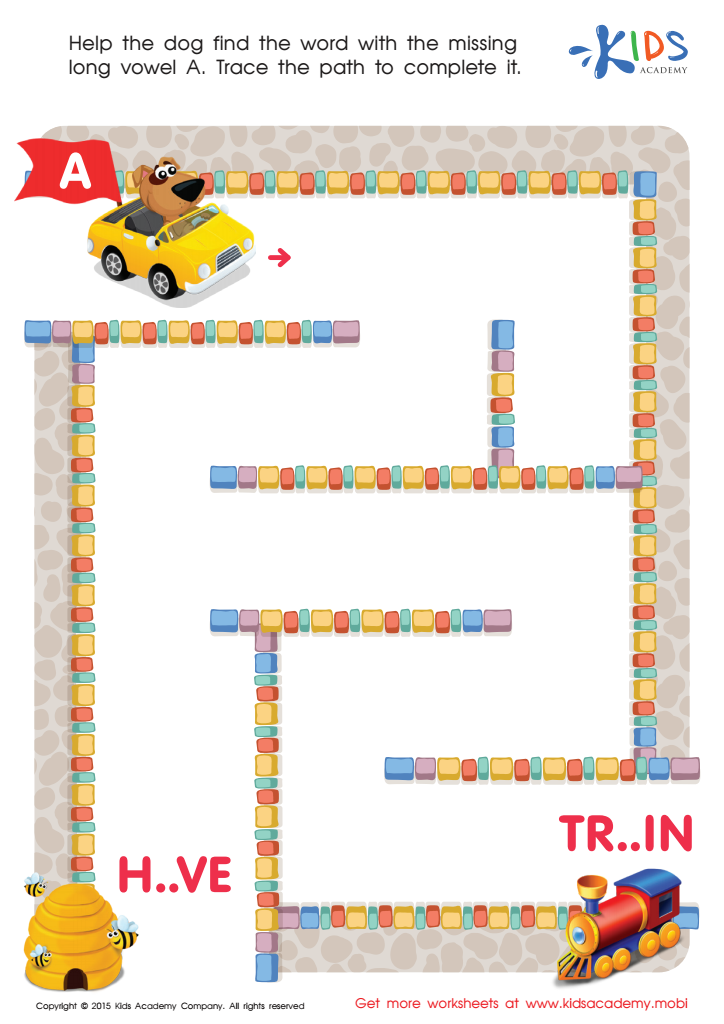
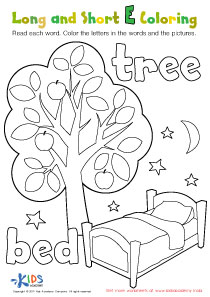
Long Vowel Sound A Worksheet
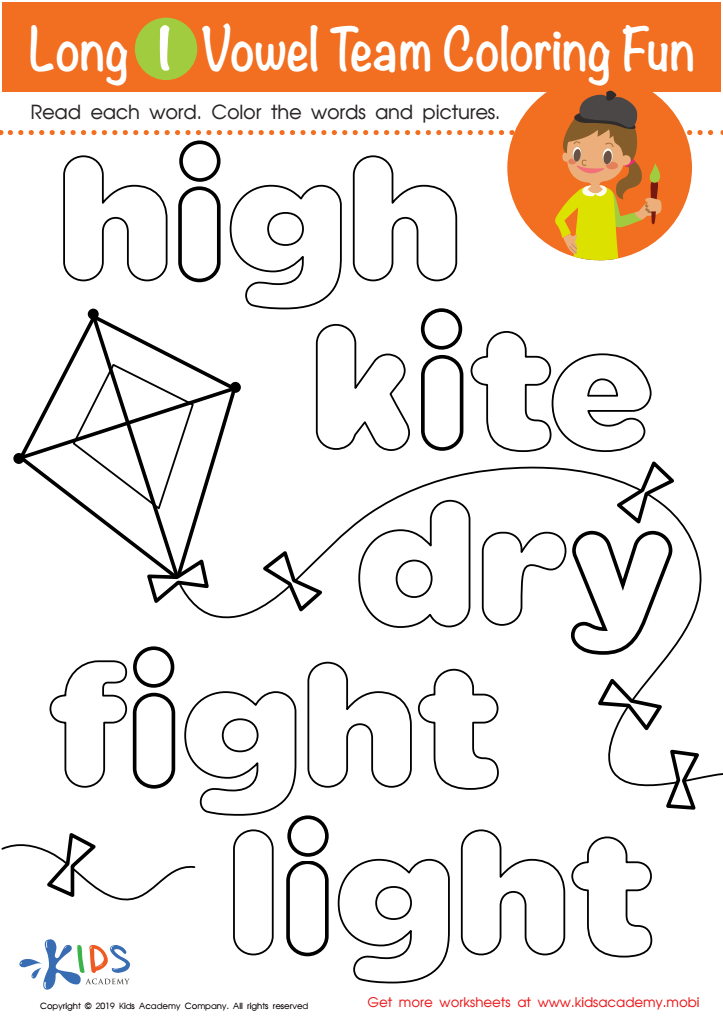
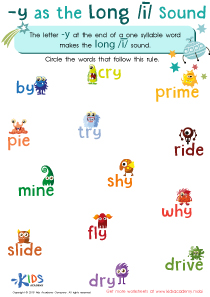
Long I Vowel Team Coloring Worksheet
 Assign to My Students
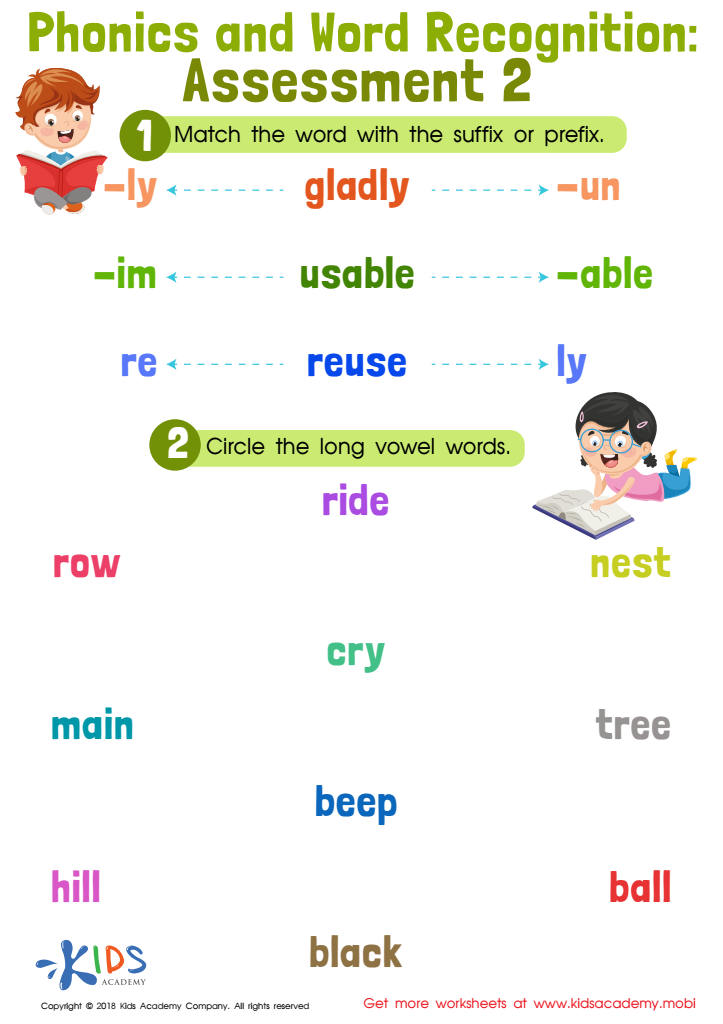
Phonics and Word Recognition: Assessment 2



Parents and teachers should prioritize long vowel word identification for children ages 5-8 because it is foundational for reading fluency and comprehension. During this critical period in their literacy development, children start to discover patterns in language. Recognizing long vowels (e.g., "a" in "cake" or "i" in "bike") helps learners decode more complex words, enhancing their ability to tackle unfamiliar texts.
Proficiency in long vowel identification not only aids in reading but also fosters confidence in young learners. When students can easily read words featuring long vowels, they experience a sense of accomplishment that motivates them to engage with reading more enthusiastically. This solid foundation leads to improved vocabulary skills, as children begin to encounter and use a wider array of words.
Moreover, educators can integrate long vowel identification into diverse learning activities—such as games, songs, and hands-on exercises—that make learning enjoyable. This approach encourages phonemic awareness and gives children tools to express themselves clearly. As literacy is essential for success in all academic areas, mastering long vowel sounds and words will also equip students with essential skills that contribute to lifelong learning. Thus, nurturing long vowel recognition is crucial for fostering well-rounded, capable readers.