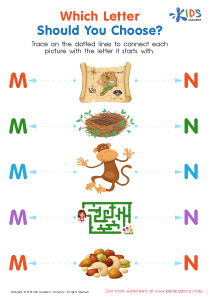
Letter recognition Lowercase/Small Letters Worksheets for Ages 5-8
11 filtered results
-
From - To
Enhance your child's literacy skills with our engaging Lowercase Letter Recognition Worksheets, designed for ages 5-8. These interactive worksheets provide a fun and educational way for young learners to familiarize themselves with small letters. Kids will practice identifying, tracing, and writing lowercase letters through colorful activities that capture their interest. Our resource supports essential skills such as phonics, vocabulary development, and early reading comprehension. Perfect for both classroom use and home learning, these worksheets ensure a well-rounded approach to mastering lowercase letters. Dive into a world of learning and watch your child thrive with our specially crafted worksheets!
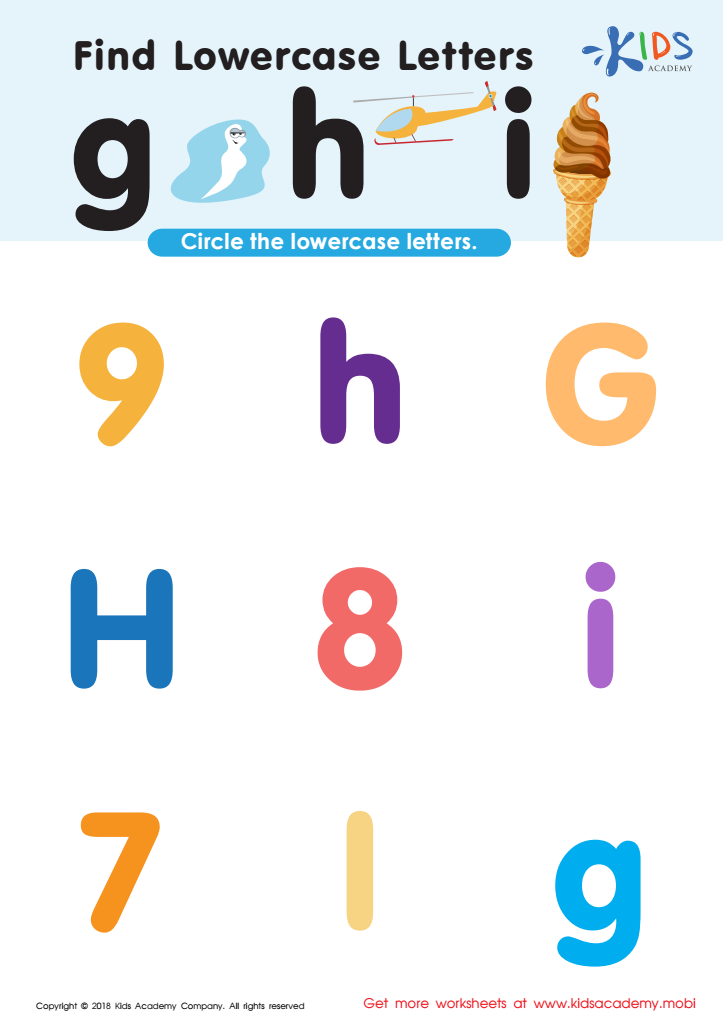
Find Lowercase Letters g h i Worksheet
 Assign to My Students
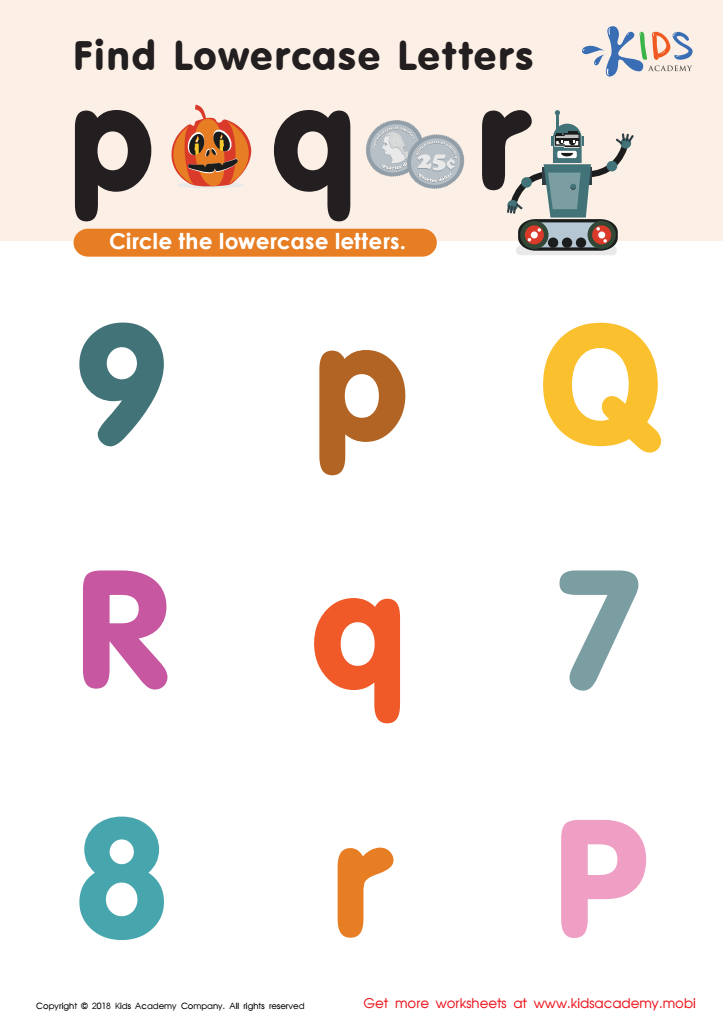
Find lowercase Letters p q r Worksheet
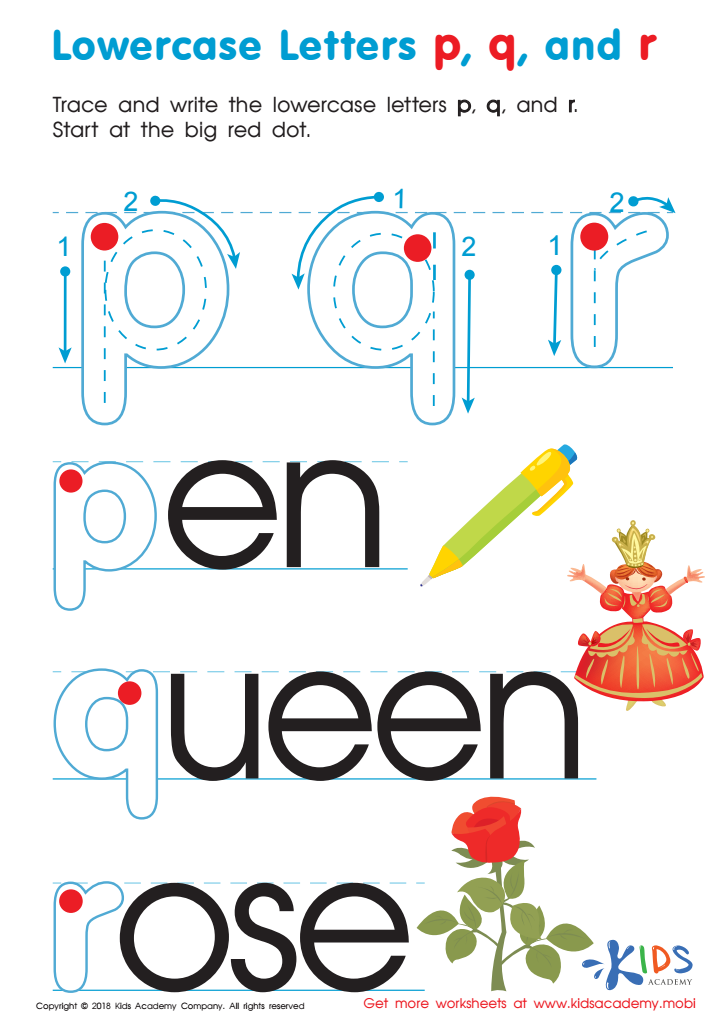
Lowercase Letters p q r Worksheet
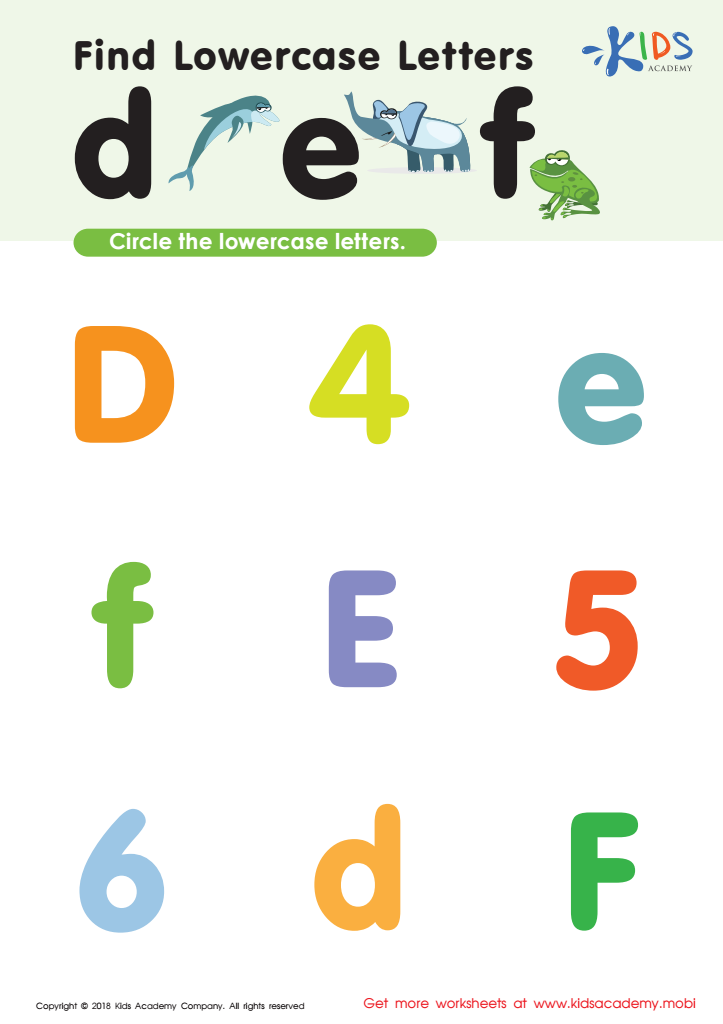
Find Lowercase Letters d e f Worksheet
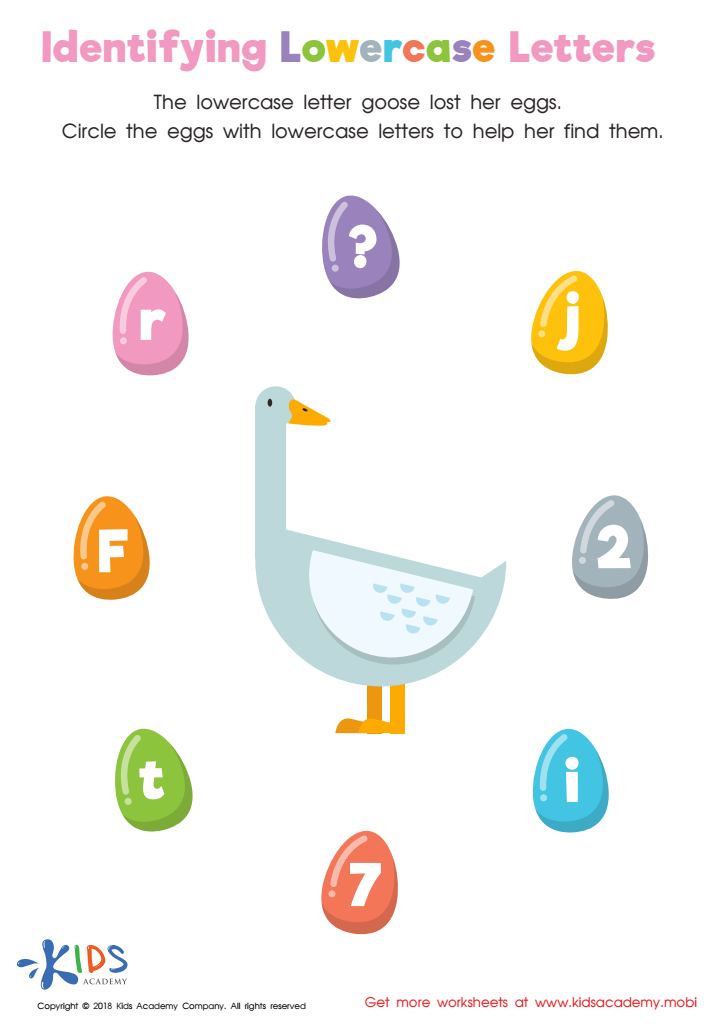
Identifying Lowercase Letters Worksheet
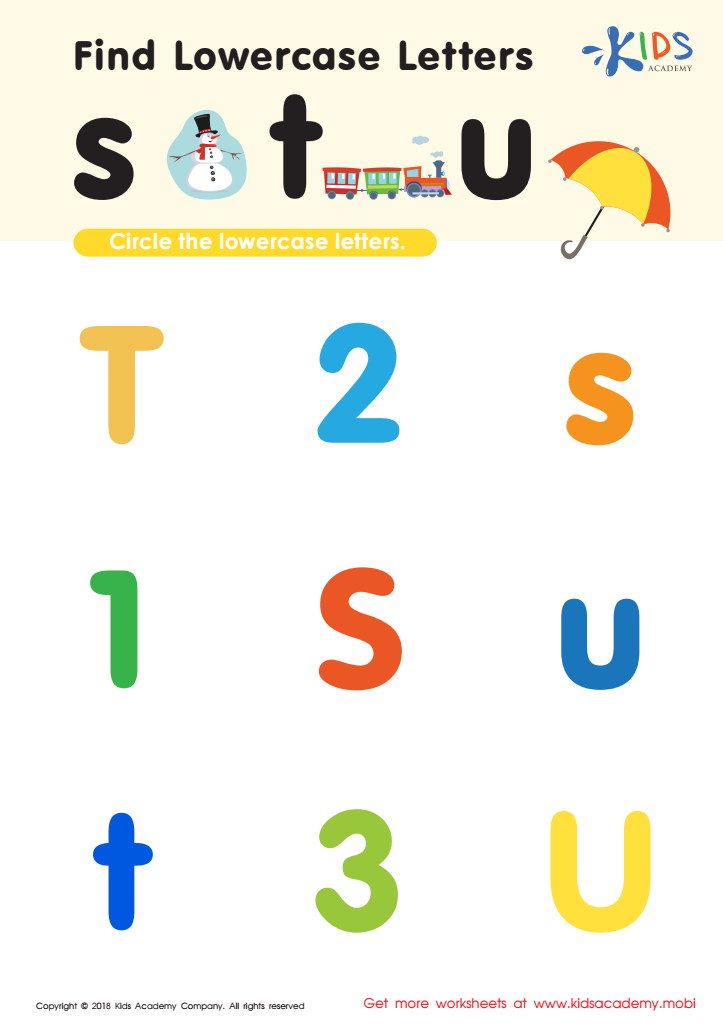
Find lowercase Letters s t u Worksheet
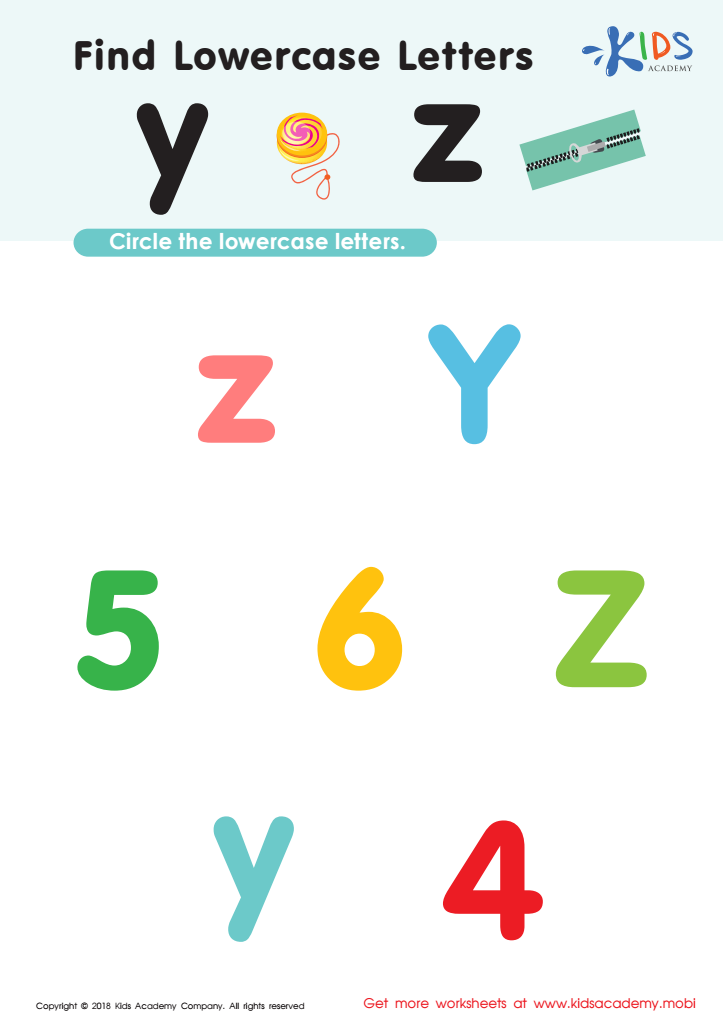
Find Lowercase Letters y z Worksheet
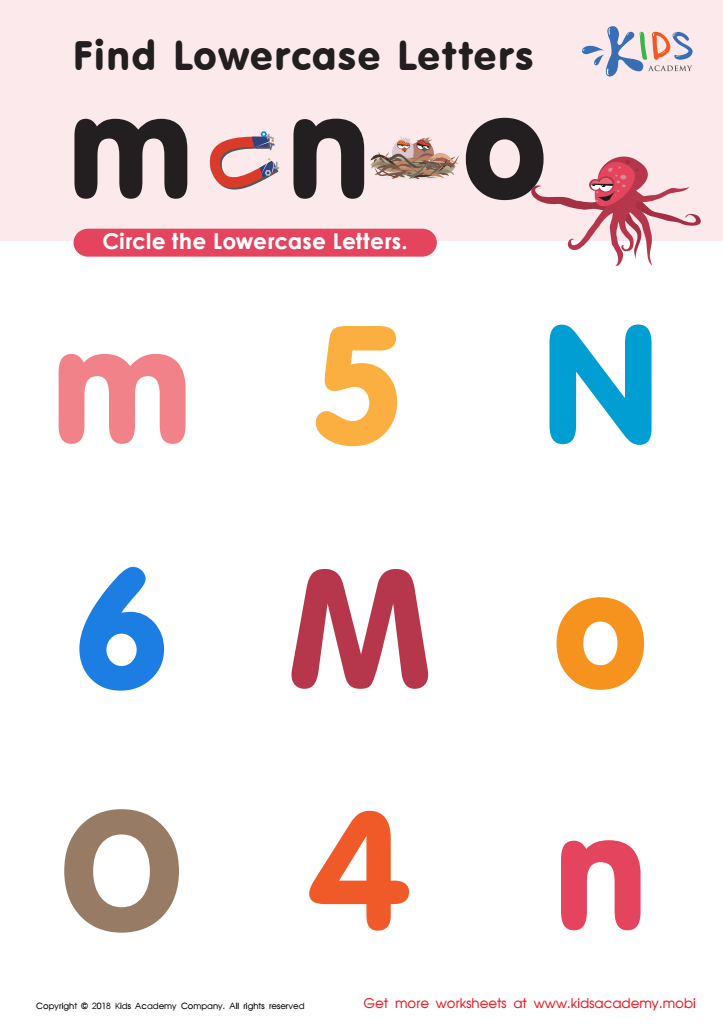
Find Lowercase Letters m n o Worksheet
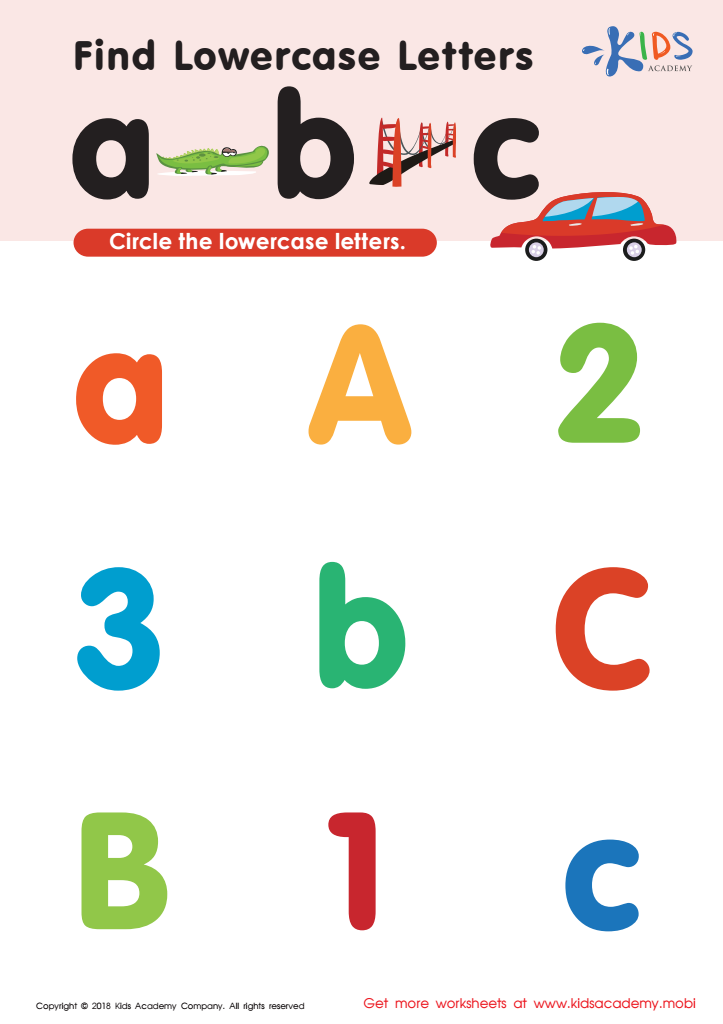
Find lowercase letters a b c Worksheet
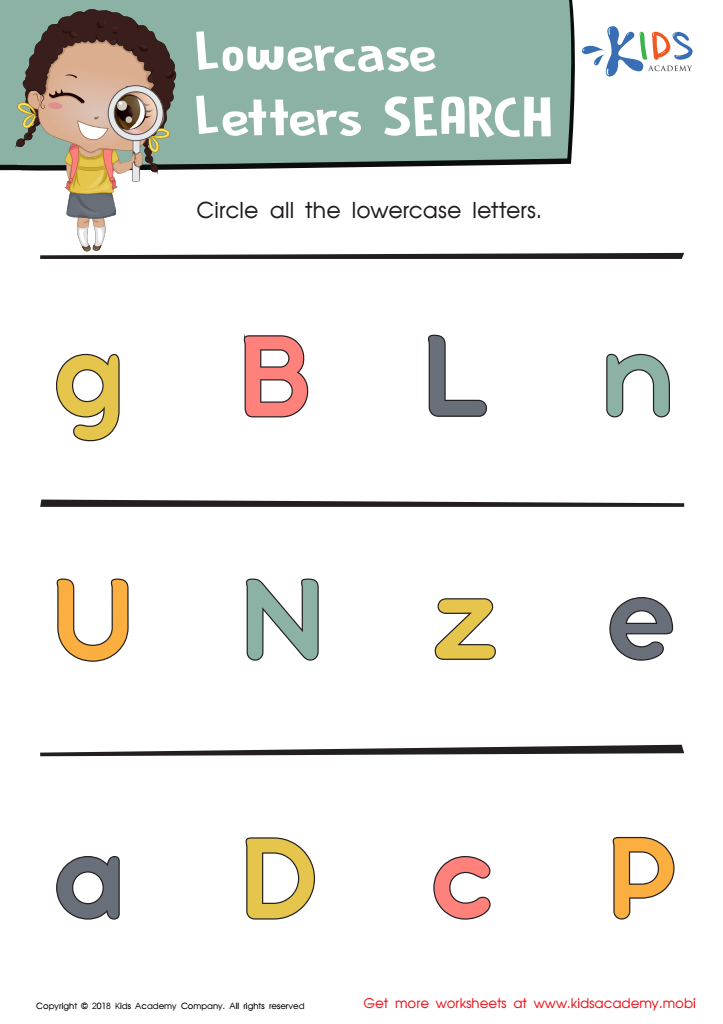
Lowercase Letters Search: Assessment Worksheet
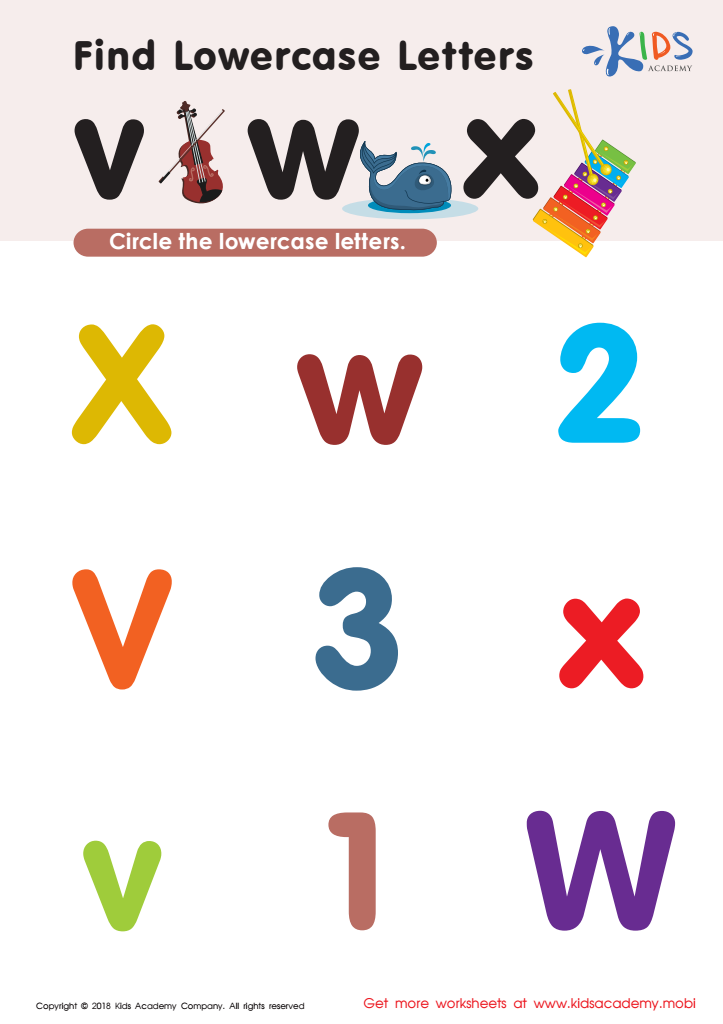
Find Lowercase Letters v w x Worksheet


Letter recognition, especially lowercase letters, is a foundational skill crucial for young learners aged 5-8. It serves as the building block for literacy development, impacting students' ability to read and write effectively. When children recognize lowercase letters, they can decode words more easily since most printed text in books and classrooms primarily utilizes lowercase formatting.
Understanding lowercase letters also enhances phonemic awareness, helping children develop the ability to connect sounds to letters. This skill is vital for early reading competence and spelling. Moreover, it encourages independent writing, fostering confidence in children as they learn to express their thoughts and ideas on paper.
Educators and parents play an essential role in facilitating this skill by creating engaging activities that promote letter recognition. This involvement not only supports academic growth but also nurtures a love for reading and writing, laying the groundwork for lifelong learning. Additionally, recognizing that lowercase letters are often used in everyday contexts helps kids make real-world connections, further enhancing their comprehension.
In summary, focusing on lowercase letter recognition is vital for academic success in early education, supporting essential reading, writing, and communication skills that impact future learning trajectories.