Rhyming skills development Phonics Worksheets for Ages 5-8
5 filtered results
-
From - To
Enhance your child's phonics and rhyming skills with our engaging worksheets designed for ages 5-8! Our rhyming skills development worksheets are perfect for young learners, promoting phonemic awareness through fun activities that captivate their imagination. Each worksheet includes vibrant illustrations and interactive exercises that encourage kids to identify, create, and complete rhymes, making learning enjoyable. These resources not only support essential learning but also boost vocabulary and enhance reading fluency. Ideal for teachers and parents alike, our worksheets help ensure your child develops a strong foundation in rhymes, paving the way for a successful literacy journey. Explore our collection today!
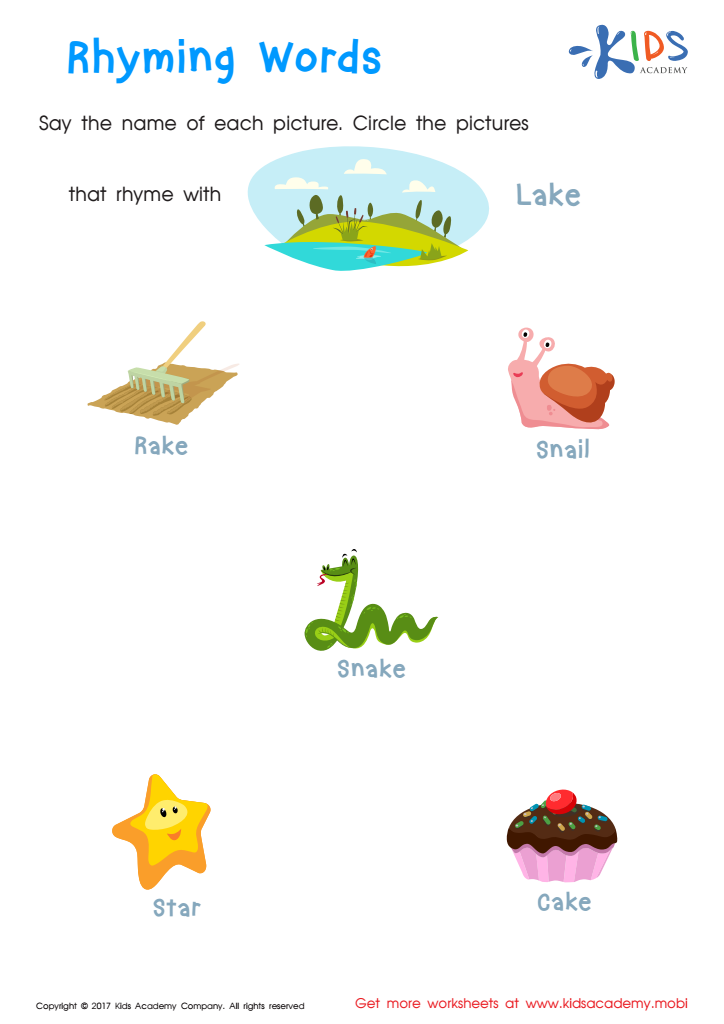
Rhyming Words Rhyming Worksheet
 Assign to My Students
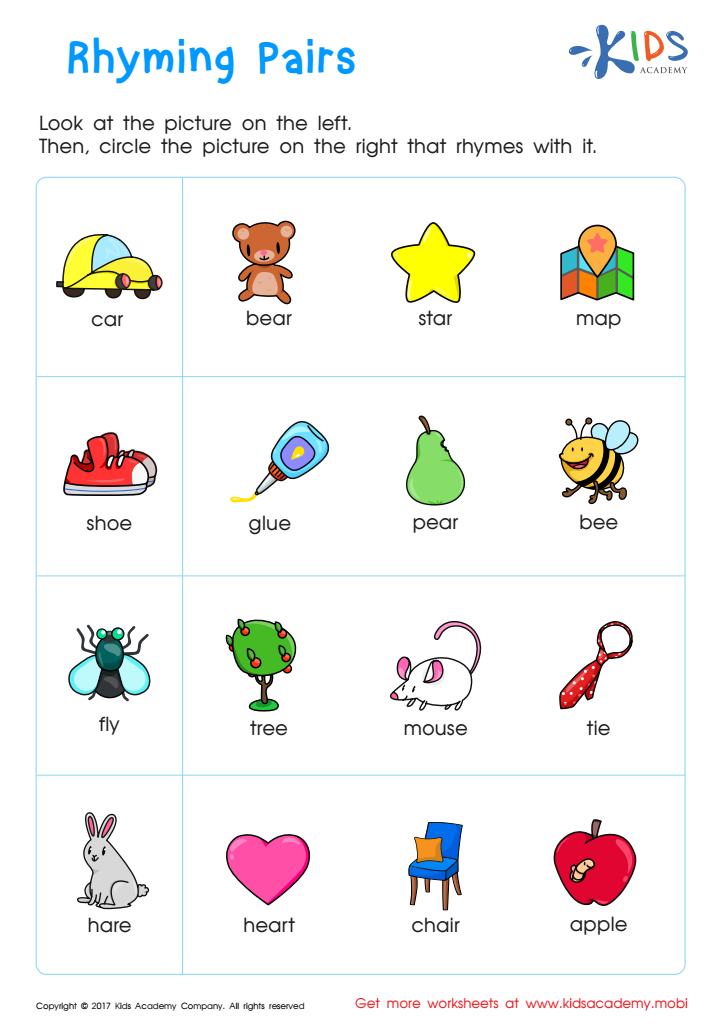
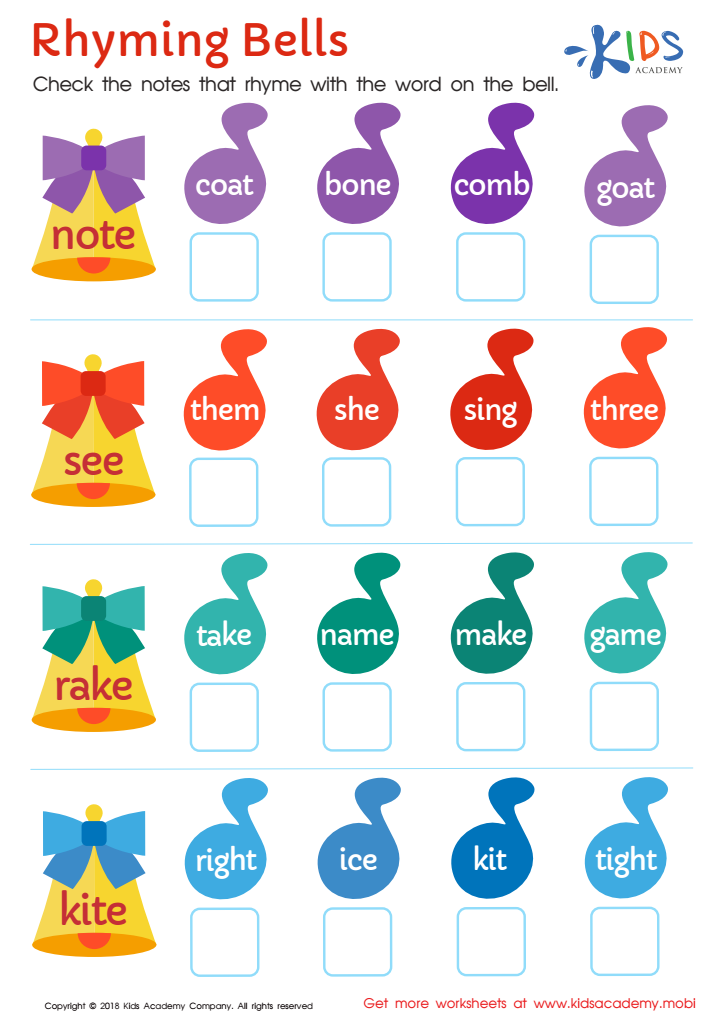
Rhyming Bells Worksheet
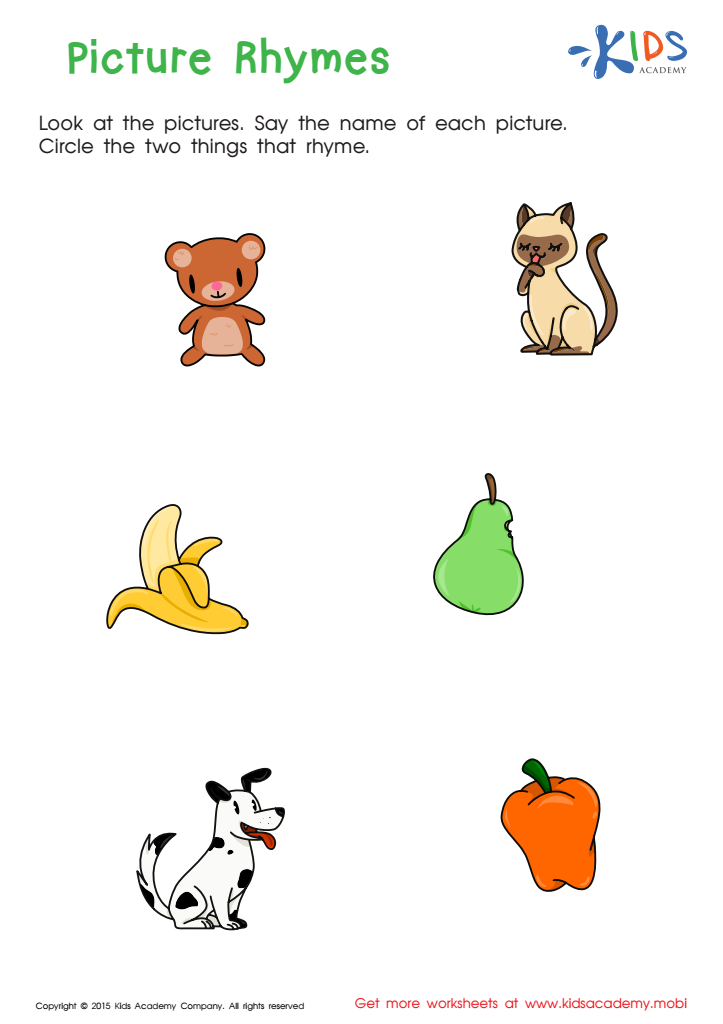
First Words: Picture Rhymes Worksheet
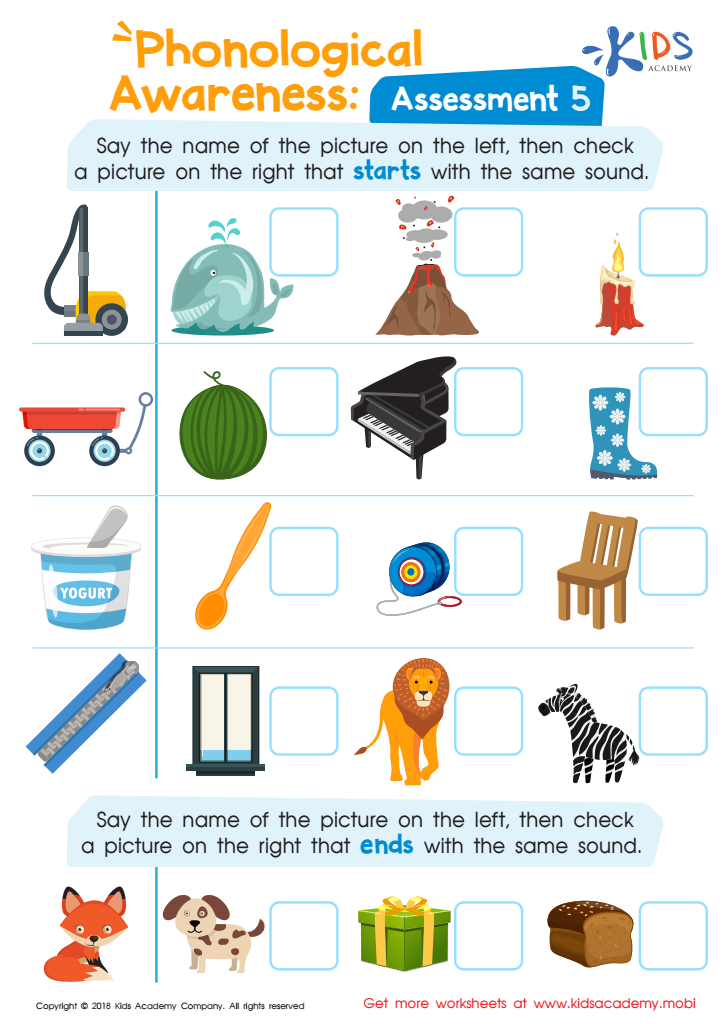
Phonological Awareness: Assessment 5 Worksheet








Rhyming skills development is crucial for children aged 5-8 as it lays the foundation for early literacy, particularly in phonics. By recognizing and producing rhymes, children enhance their phonemic awareness—an essential skill for decoding words when reading. This skill helps them understand how language works, as they learn to identify similar sounds in words, which assists in spelling and word recognition.
Moreover, engaging with rhymes can make learning fun and enjoyable, promoting a positive attitude towards reading and language. When children encounter rhyming books and activities, they are more likely to develop an interest in storytelling and written expression.
Furthermore, rhyming enhances listening and memory skills, as children must pay close attention to sounds and patterns. These cognitive skills contribute to overall literacy development and shape future reading comprehension abilities. Teachers and parents can promote rhyming through songs, poems, and playful rhyming games, fostering a supportive and engaging learning environment.
Finally, rhyming activities are often interactive, allowing for social interaction and cooperative learning, which can strengthen relationships and foster a love for reading and literacy within the community. Thus, investing in rhyming skills is vital for a child's educational growth and lifelong learning journey.







