Sound identification Phonics Worksheets for Ages 5-8
4 filtered results
-
From - To
Explore our engaging Sound Identification Phonics Worksheets for kids aged 5-8! Designed to enhance early literacy skills, these worksheets help young learners recognize and differentiate sounds in words. With fun activities and illustrations, children will practice identifying phonetic sounds, building their vocabulary, and strengthening their reading foundations. Our resources cater to diverse learning styles, ensuring that every child enjoys the phonics journey. Perfect for classroom use or at-home learning, these worksheets are a great way to support your child's development in a fun, interactive way. Start boosting your child’s phonics skills today with our delightful sound identification worksheets!
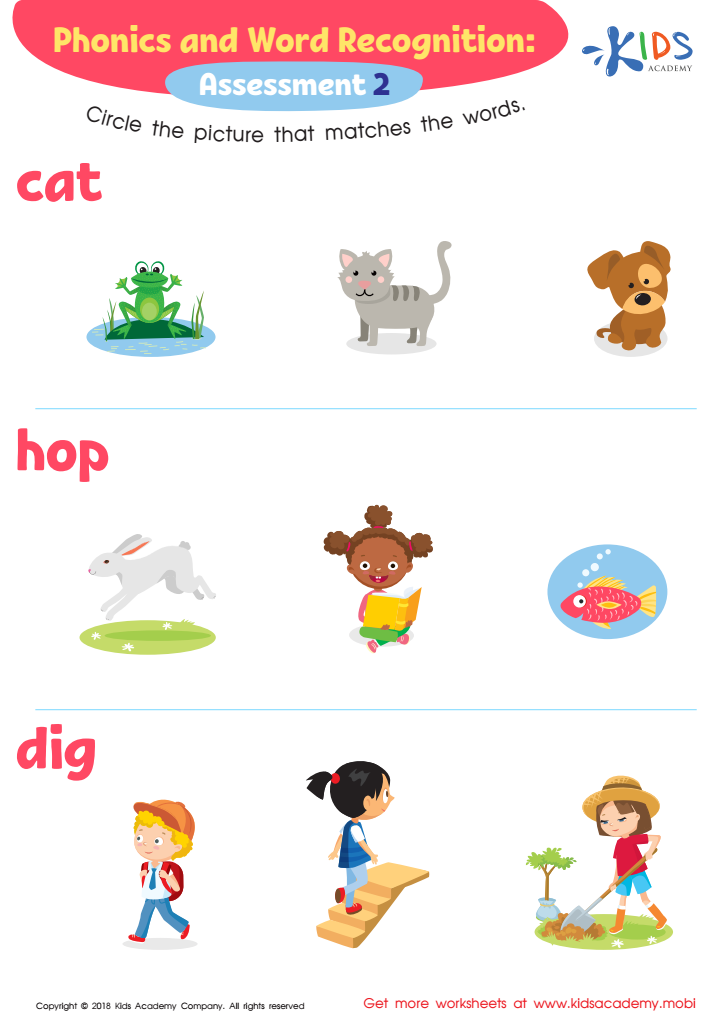
Phonological Awareness: Assessment 2 ELA Worksheet
 Assign to My Students
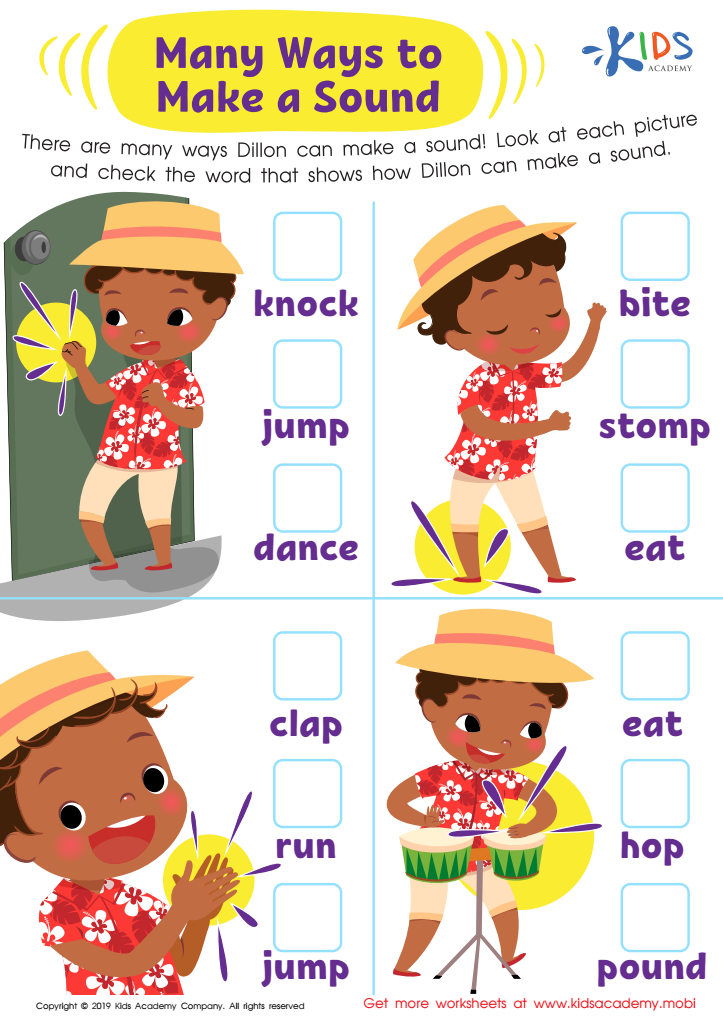
Many Ways to Make a Sound Worksheet
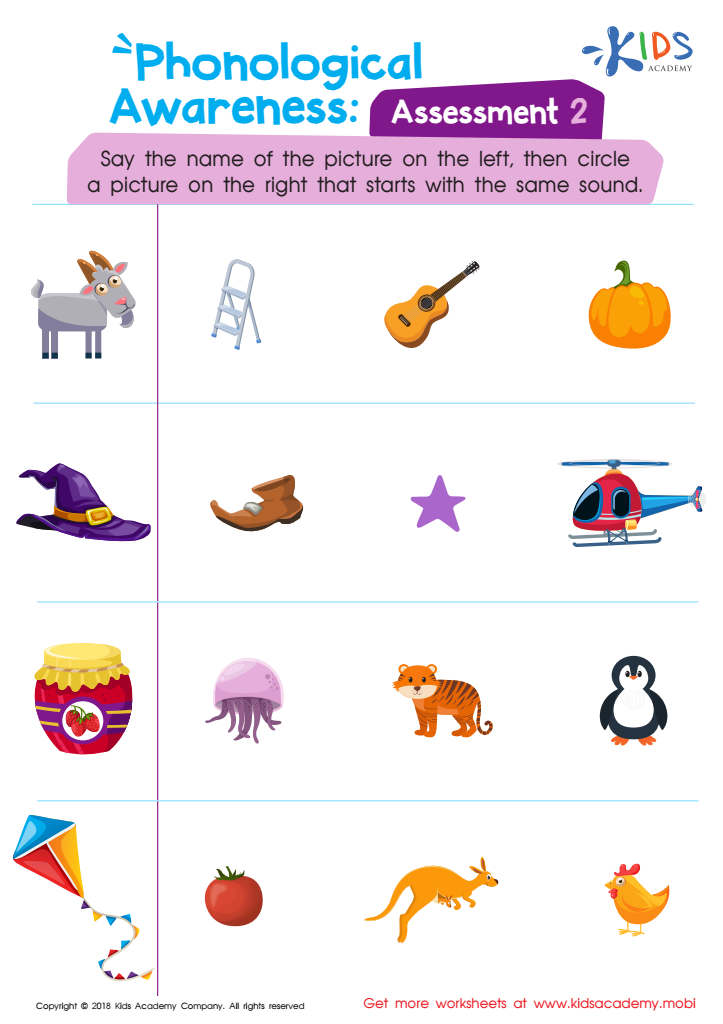
Phonological Awareness: Assessment 2 Worksheet
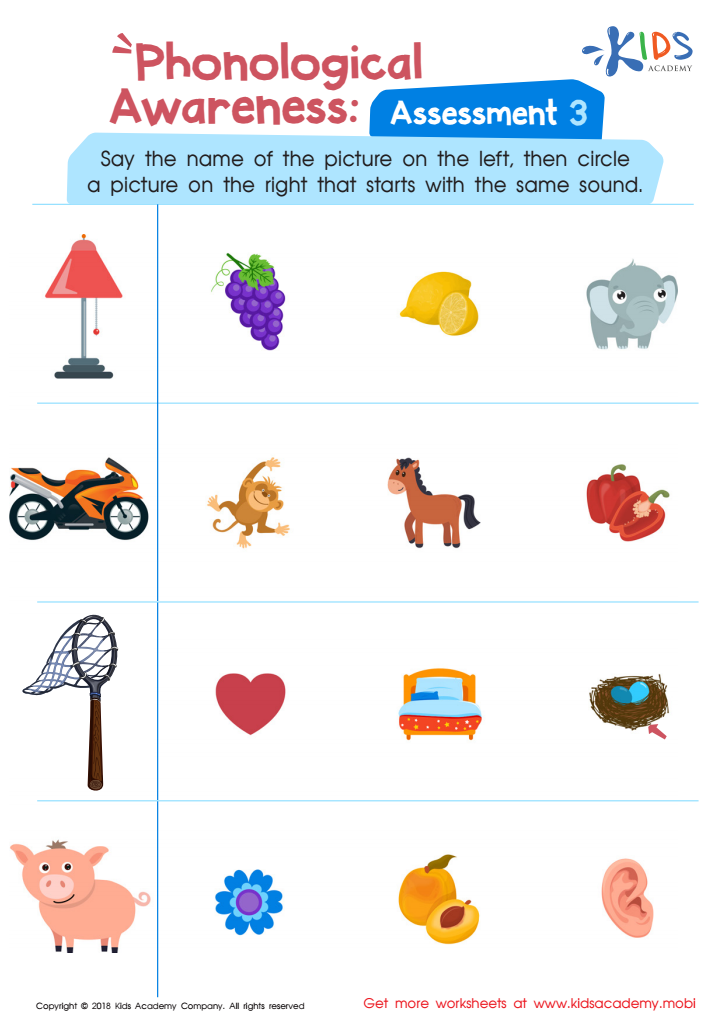
Phonological Awareness: Assessment 3 Worksheet








Sound identification phonics is crucial for children aged 5-8 as it forms the foundation of their reading and writing skills. During these formative years, children develop essential literacy components that influence their academic success and overall communication abilities. By recognizing sounds and understanding how they map onto written letters, children become proficient in decoding words, which in turn boosts their comprehension skills.
Parents and teachers should be particularly invested in sound identification phonics because early intervention can significantly aid in preventing future literacy challenges. Engaging children in sound identification activities cultivates their phonemic awareness— the ability to hear, identify, and manipulate sounds in spoken words. This skill is fundamental for spelling, reading fluency, and ultimately, confidence in their learning.
Moreover, sound identification phonics encourages active participation and critical thinking, fulfilling not just academic goals but fostering a love for reading. When children grasp the connection between sounds and letters, they experience greater independence while exploring texts.
In summary, supporting sound identification phonics in young learners is vital for cultivating proficient readers and writers while fostering their self-esteem, interest in literature, and overall literary abilities for years to come.







