Reading comprehension Vowel Team Worksheets for Ages 5-8
9 filtered results
-
From - To
Enhance your child's reading skills with our engaging Vowel Team Worksheets, designed specifically for ages 5-8. These worksheets help young learners master vowel teams, improving their understanding of phonics and reading comprehension. Through fun exercises and colorful illustrations, children will practice identifying vowel combinations and blending sounds, which are essential for reading fluency. Our resources support effective learning while keeping kids motivated and entertained. Suitable for both classroom and home use, these worksheets encourage independent learning and build essential literacy skills for early readers. Foster a love for reading early on with our interactive and educational materials!
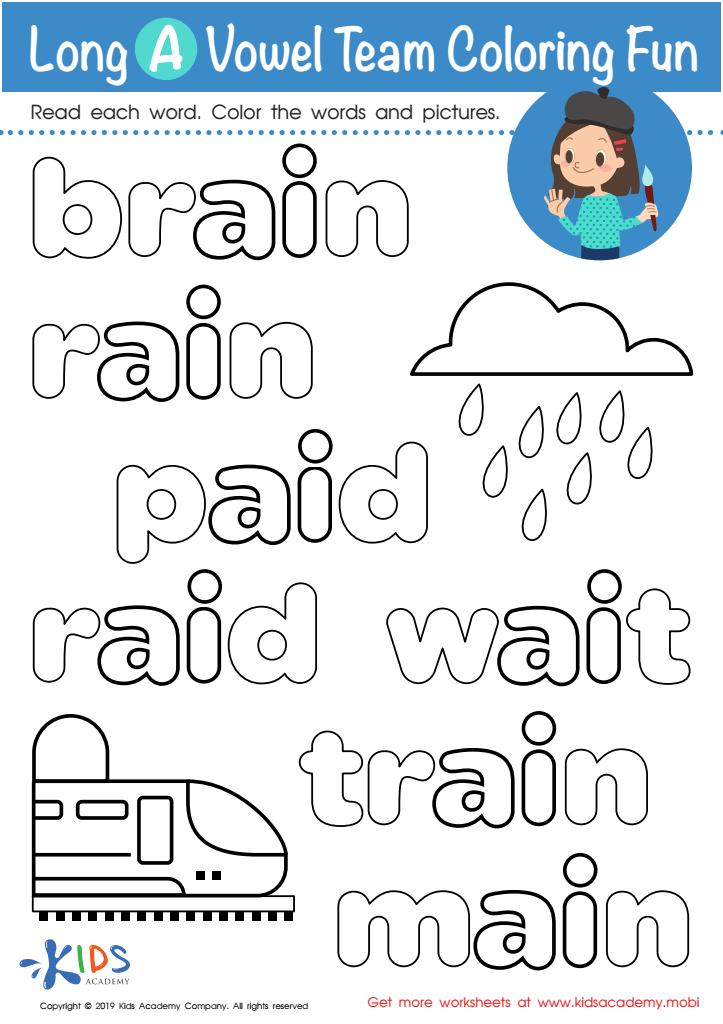
Long A Vowel Team Coloring Fun Worksheet
 Assign to My Students
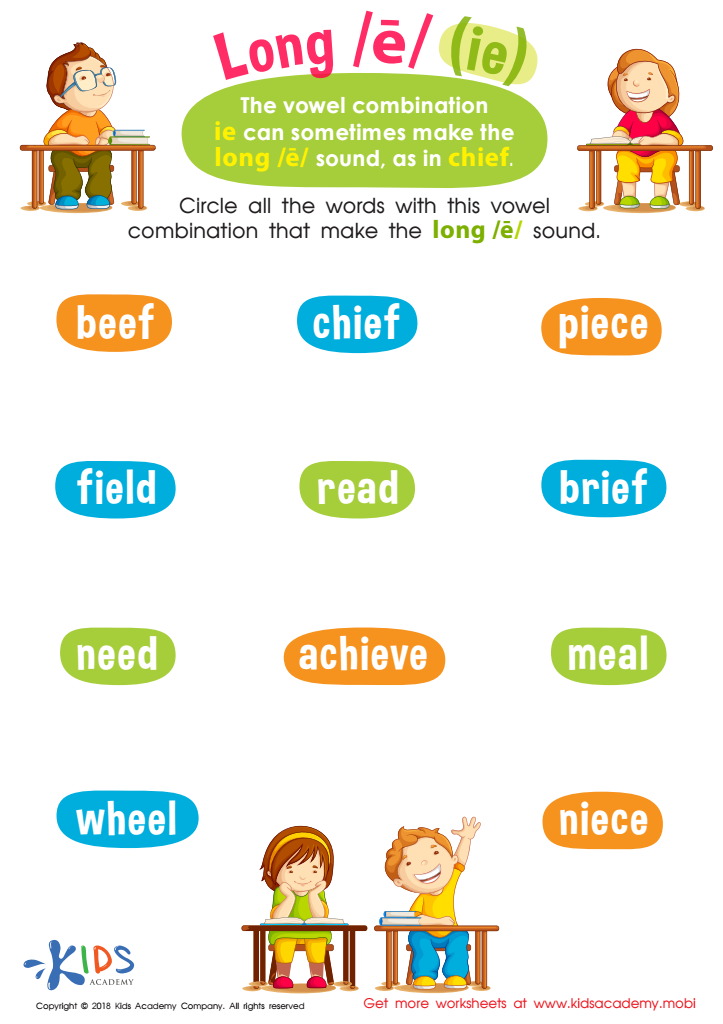
Reading: Long E and IE Worksheet
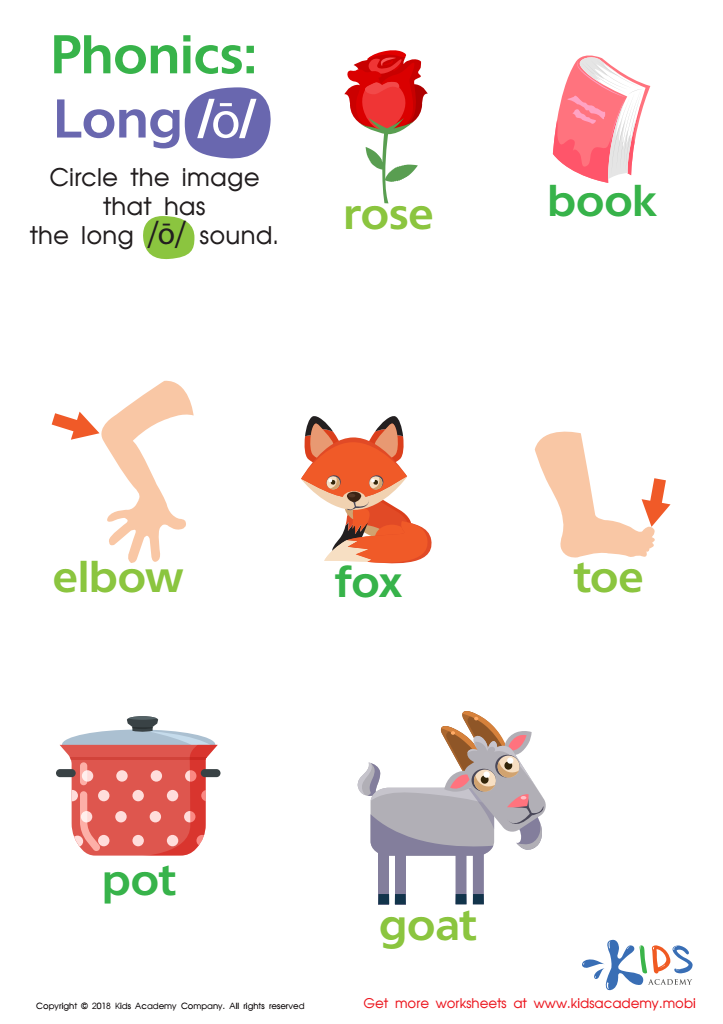
Phonics Long O Reading Worksheet
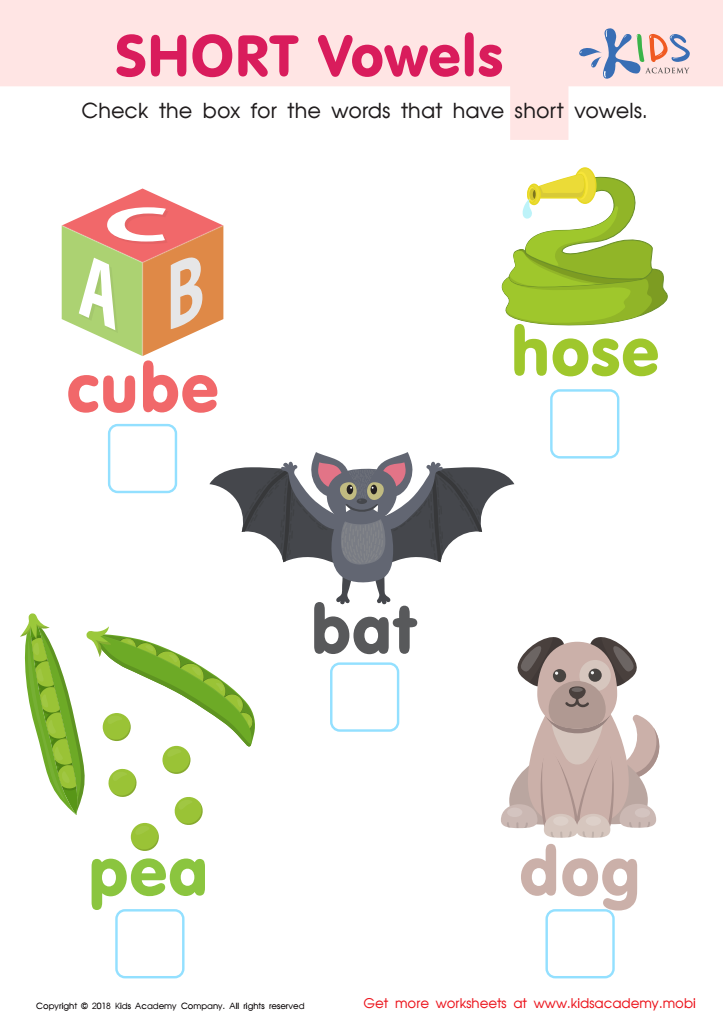
short vowels Worksheet
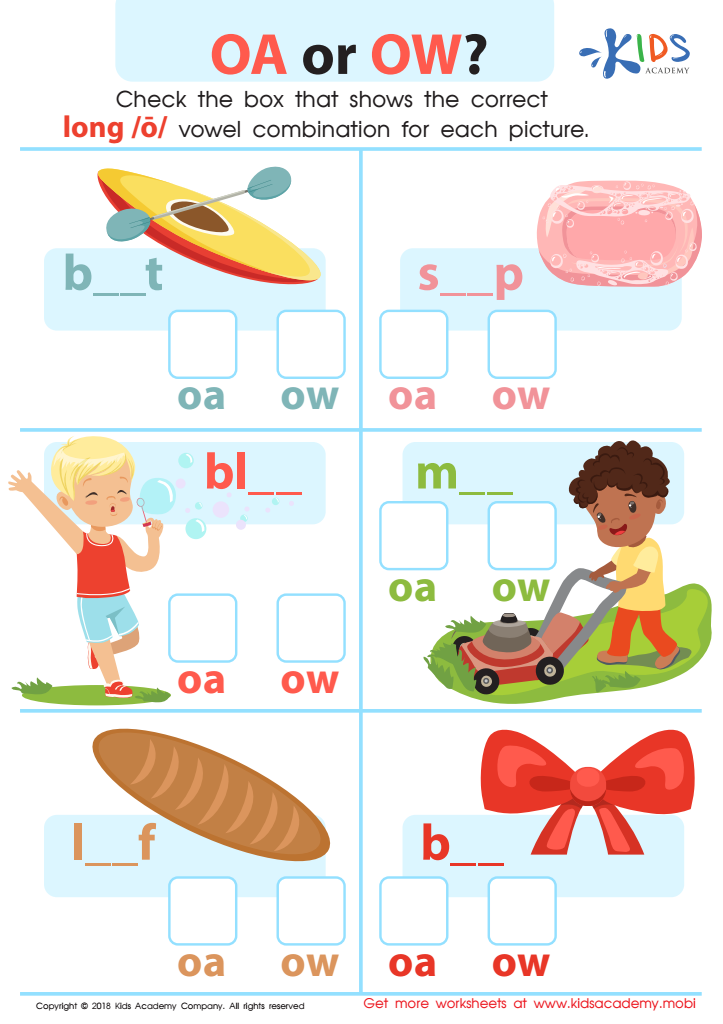
Reading: OA or OW Worksheet
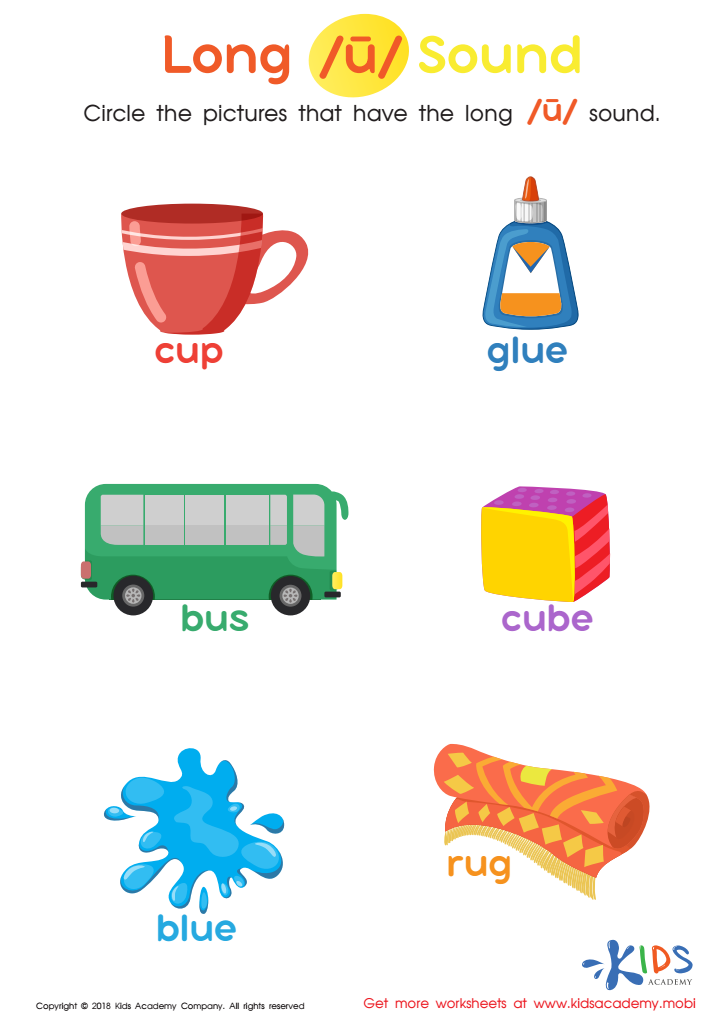
Long «u» Sound Worksheet
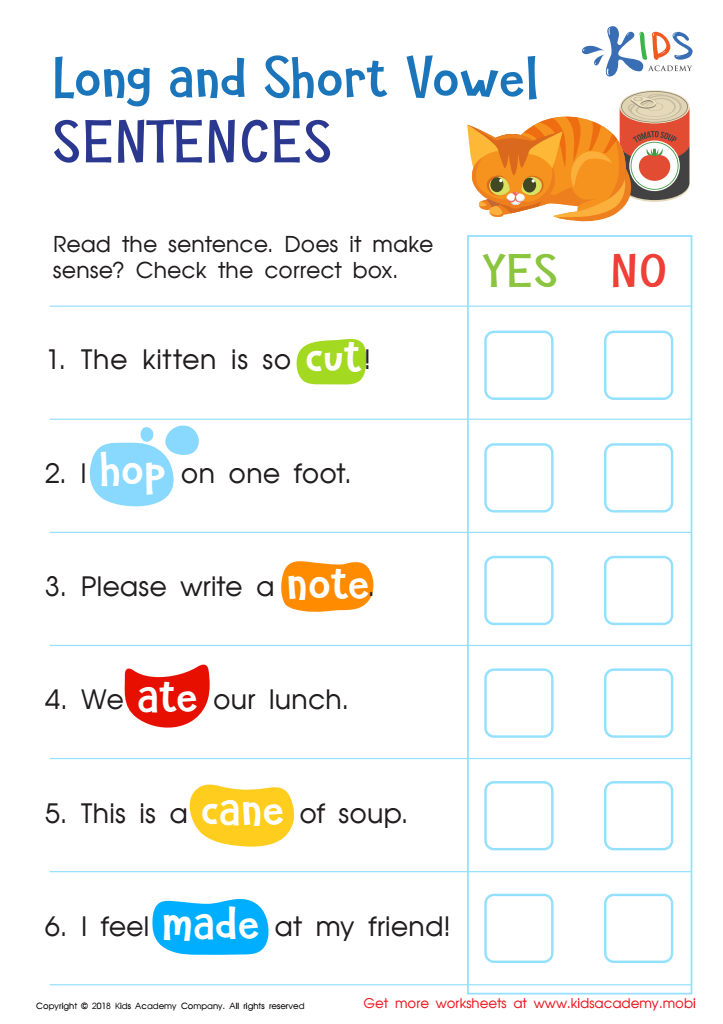
Long and Short Vowel Sentences: Assessment Worksheet

Long and Short E Worksheet
Assign to My Students
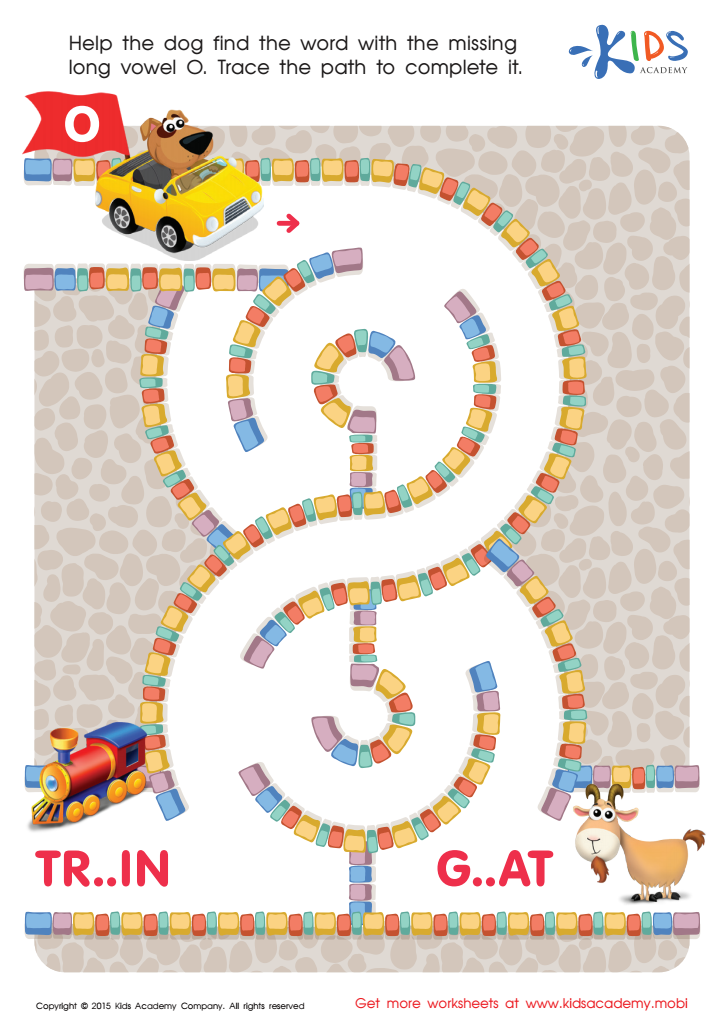
Long Vowel Sound O Worksheet



Reading comprehension is a critical skill for children ages 5-8, and understanding vowel teams plays a significant role in developing this ability. Vowel teams are combinations of two or more vowels that work together to create a specific sound, such as "ea" in "beach" or "ai" in "rain." By mastering these patterns, young learners can advance their decoding skills, enabling them to read more fluently and confidently.
For parents and teachers, emphasizing vowel teams contributes to building a strong foundation for reading. It not only helps to improve pronunciation and spelling but also enhances vocabulary acquisition. With improved comprehension of vowel teams, children are more likely to tackle complex texts as they progress in their education, fostering a love of reading that supports overall academic success.
Furthermore, targeted instruction in vowel teams can address diverse learning styles and needs, making reading instruction more inclusive. Engaging activities and games around vowel teams can also make learning fun and motivating, keeping children interested in reading.
Ultimately, helping children understand vowel teams can lead to improved reading comprehension. This success not only sets the stage for future learning but also instills lasting confidence in their literacy skills, both critical for lifelong learning and communication.