Animal identification Worksheets for Ages 5-8 - Page 3
52 filtered results
-
From - To
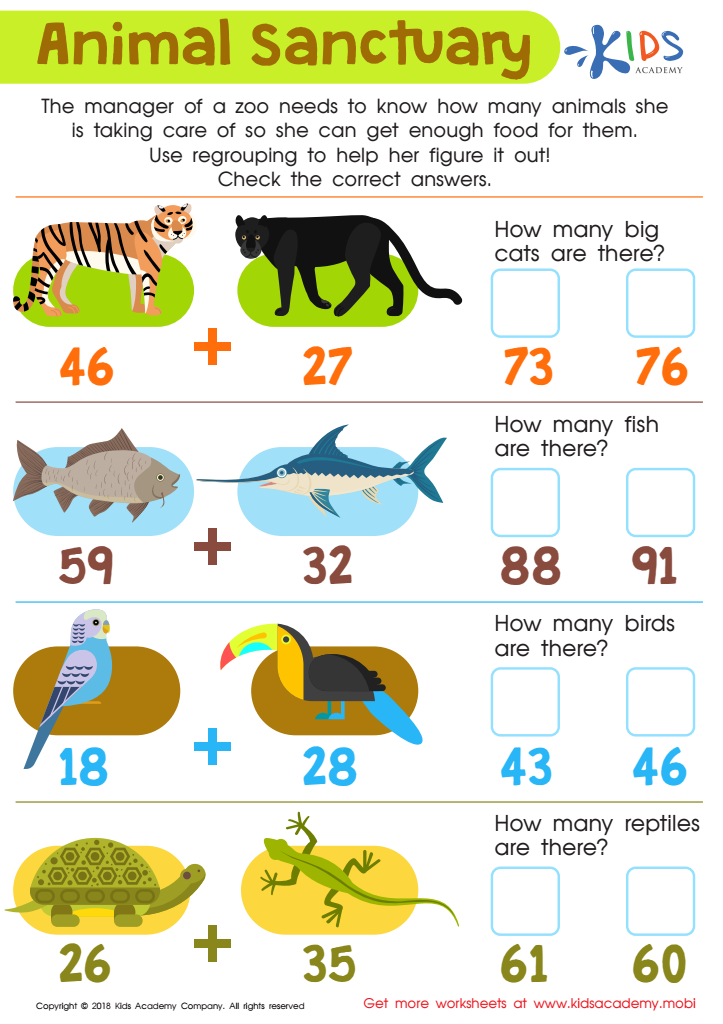
Animal Sanctuary Worksheet
 Assign to My Students







Parents and teachers should care about animal identification for children ages 5-8 because it plays a critical role in their overall development and education. Learning to identify animals fosters curiosity and a sense of wonder about the natural world, which can encourage a lifelong interest in science and conservation. It enhances observational skills, as children learn to notice and appreciate the differences and similarities between species. These skills are foundational to understanding classification, a key component in science education.
Moreover, animal identification can be an engaging way to teach other subjects. For instance, when learning about habitats, food chains, or ecosystems, knowing different animals adds depth and context to the lessons. It also builds vocabulary and language skills, as naming and describing animals involves learning new words and concepts. Social-emotionally, it encourages empathy and respect for living creatures, fostering compassion and responsible behavior towards the environment.
Interactive activities such as nature walks, visiting zoos, or using educational apps can make learning about animals a fun and memorable experience. Ultimately, introducing children to animal identification is not just about knowing different species but also about cultivating informed, curious, and empathetic individuals. Caring for this aspect of education can lead to meaningful and enriching learning experiences for young learners.








