
Basic measurement skills Worksheets for Ages 5-8
4 filtered results
Difficulty Level
Grade
Age
-
From - To
Subject
Activity
Standards
Explore our collection of basic measurement skills worksheets designed specifically for children aged 5-8! These engaging, age-appropriate resources help young learners grasp essential concepts like length, weight, and volume through fun activities. By using relatable objects and hands-on experiences, students will enhance their understanding of measurements while developing critical thinking and problem-solving skills. Our worksheets feature colorful illustrations and exciting challenges that keep kids motivated and eager to learn. Perfect for classroom use or at-home practice, these worksheets support foundational math skills that lay the groundwork for future learning. Start your measurement adventure today!
Favorites
With answer key
Interactive
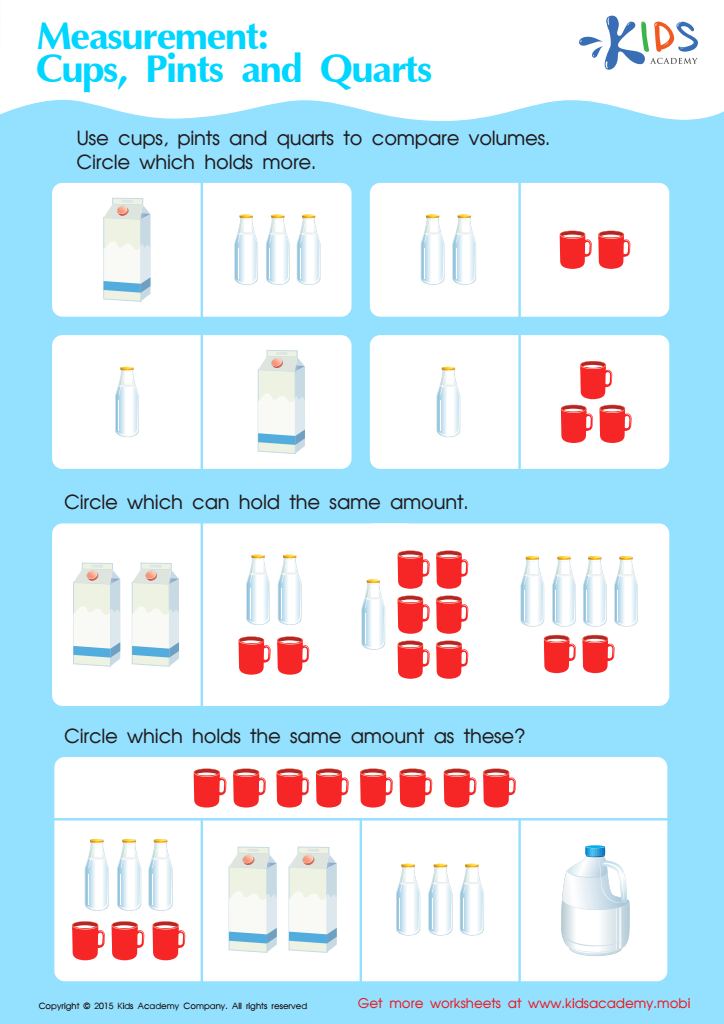
Measurement: Compare Volumes Worksheet
Compare volumes with Kids Academy and have fun! (80 words)
Practice measuring with Kids Academy and have fun! Compare volumes in pictures and circle which holds more. Keep learning with free math worksheets available on our website. Enjoy the process and have fun!
 Assign to My Students
Measurement: Compare Volumes Worksheet
Worksheet
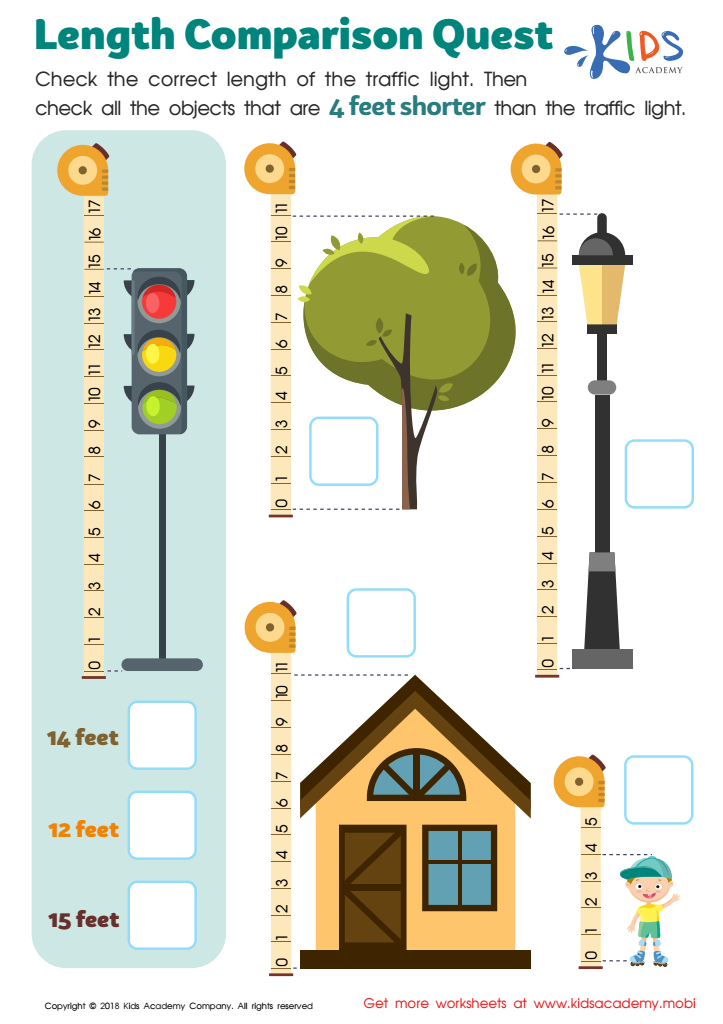
Length Comparison Quest Worksheet
Knowing measurement tools and how to use them is just the start. To be proficient, your kid must be able to accurately compare objects and their lengths. With the 'Length Comparison Quest' worksheet, they will check the correct length of the traffic light in the picture and then compare other objects to it, marking those that measure 4 feet shorter.
Length Comparison Quest Worksheet
Worksheet
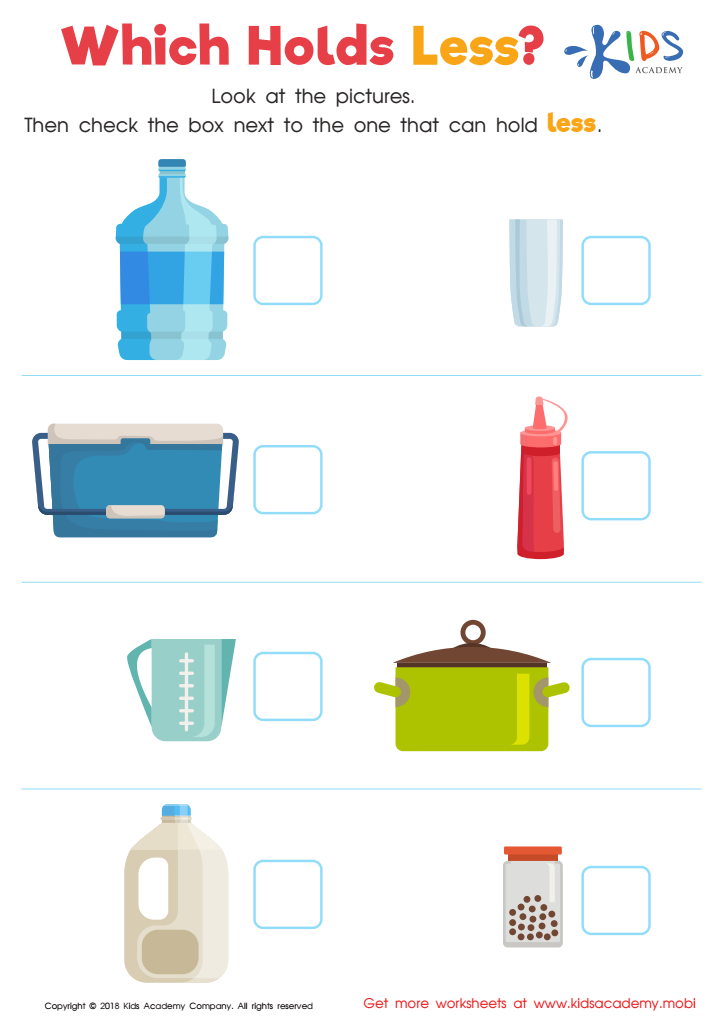
Which Holds Less? Worksheet
Students may find it hard to grasp volume without a visual aid. This free, downloadable worksheet helps with understanding by providing pictures of familiar objects. It allows students to practice comparing volumes and deciding which container holds less. It's a great introduction before they move onto using greater than and less than symbols.
Which Holds Less? Worksheet
Worksheet
Join Kids Academy for Free
Who is primarily going to use this learning content?





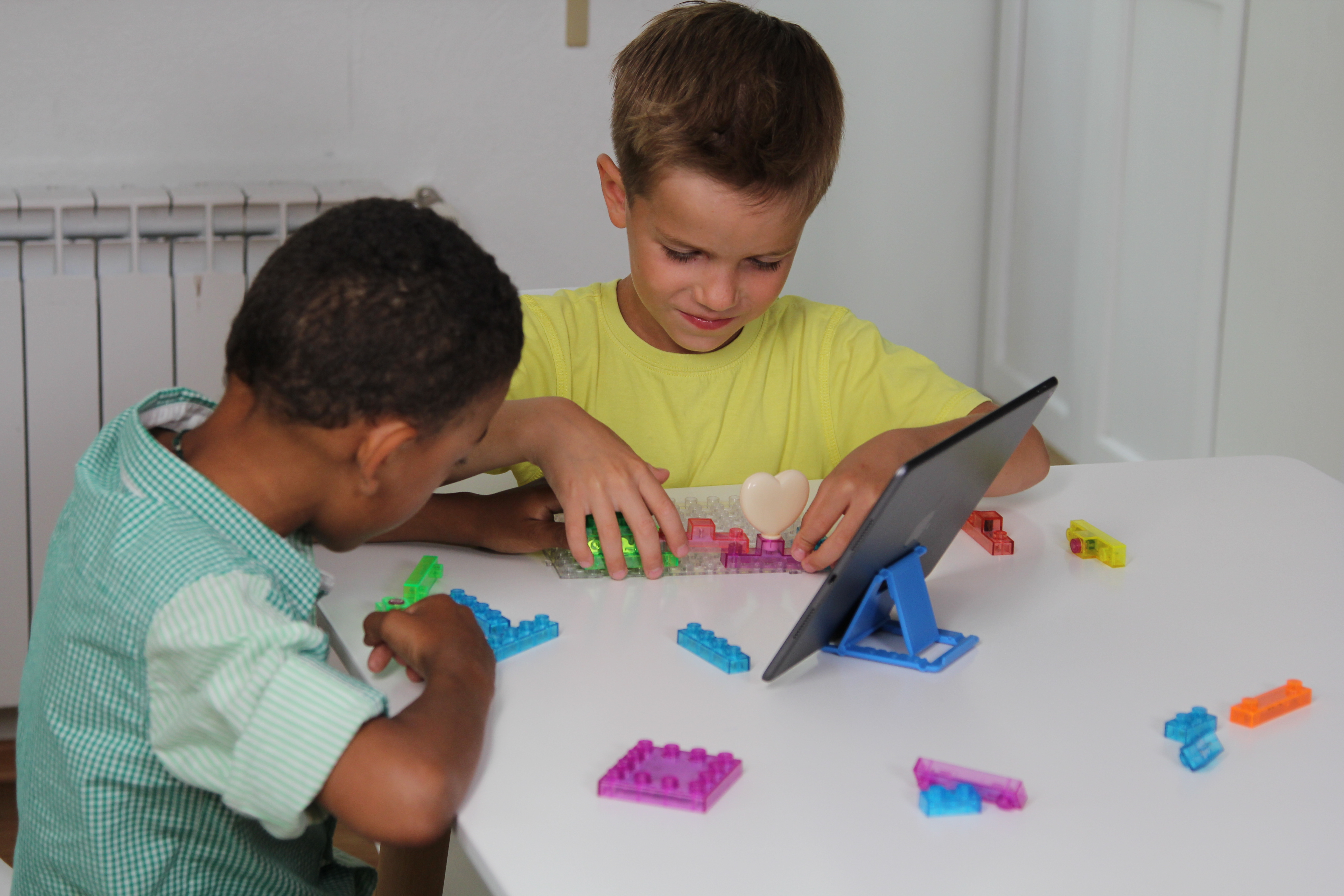
Basic measurement skills are crucial for children aged 5-8, forming foundational building blocks for numerous academic subjects and everyday life applications. At this stage, children are naturally curious and eager to learn about the world around them. Learning measurement helps enhance their spatial awareness, critical thinking, and problem-solving abilities as they engage in hands-on activities.
From measuring ingredients for cooking to understanding the length of objects with rulers, grasping measurement concepts fosters mathematical reasoning and measurement vocabulary. It also cultivates persistence, as children often face challenges when trying to represent and compare different sizes, weights, and volumes.
Additionally, encouraging measurement skills early supports cross-curricular connections with science, art, and geography. For example, understanding temperature, time, or distance can enhance comprehension in various subjects and increase a child’s overall cognitive development.
Teachers and parents play an instrumental role in nurturing these skills through interactive and fun learning experiences, like cooking, outdoor activities, or crafting. By fostering essential measurement skills, adults are equipping children with lifelong competencies that enhance their academic performance and everyday functional skills, ultimately leading to more successful and confident learners.








