
Developing research skills Worksheets for Ages 5-8
5 filtered results
Difficulty Level
Grade
Age
-
From - To
Subject
Activity
Standards
Discover our engaging "Developing Research Skills Worksheets" designed specifically for children aged 5-8. These worksheets promote critical thinking, problem-solving, and information literacy through fun, age-appropriate activities. Kids will explore topics like gathering information, analyzing sources, and articulating findings, all while honing their investigative skills. Our resources encourage creative exploration and independent learning, making research accessible and enjoyable for young learners. With various engaging exercises, children will build a strong foundation in research skills, setting the stage for academic success. Perfect for both classrooms and at home, our worksheets foster inquisitive minds and a love for knowledge. Download now to inspire your little researchers!
Favorites
With answer key
Interactive
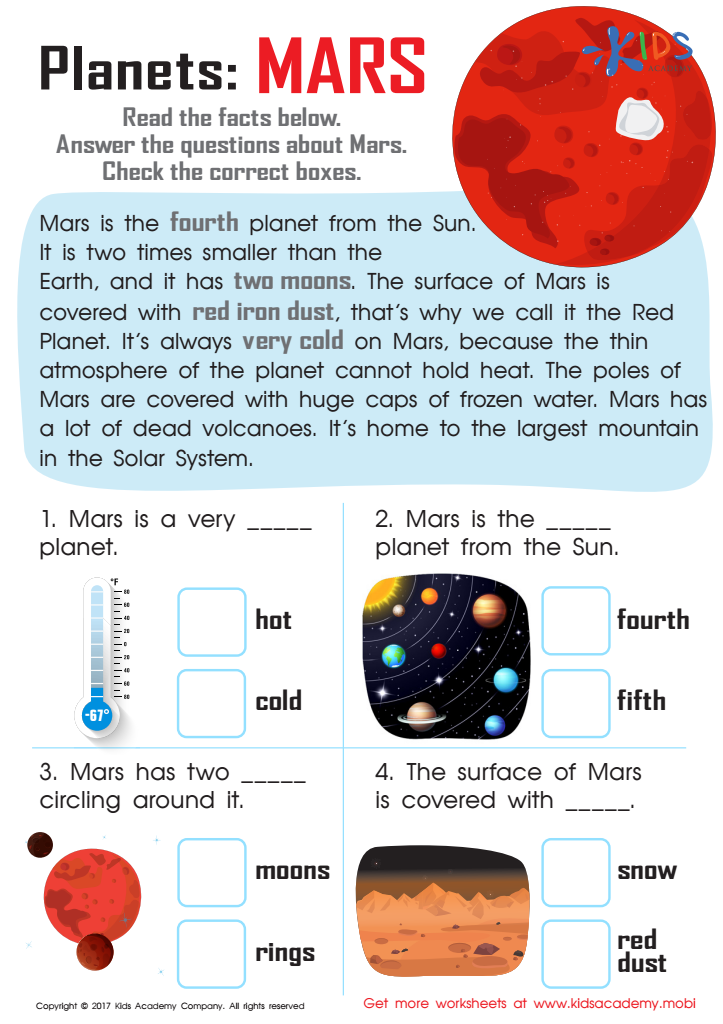
Mars Fact Printable Worksheet
Want to learn about Mars? Get this fun printable worksheet - it's packed with information about the red planet. Discover facts about its temperature, terrain and position in the solar system. It's a great way for kids to explore the wonders of our universe.
 Assign to My Students
Mars Fact Printable Worksheet
Worksheet
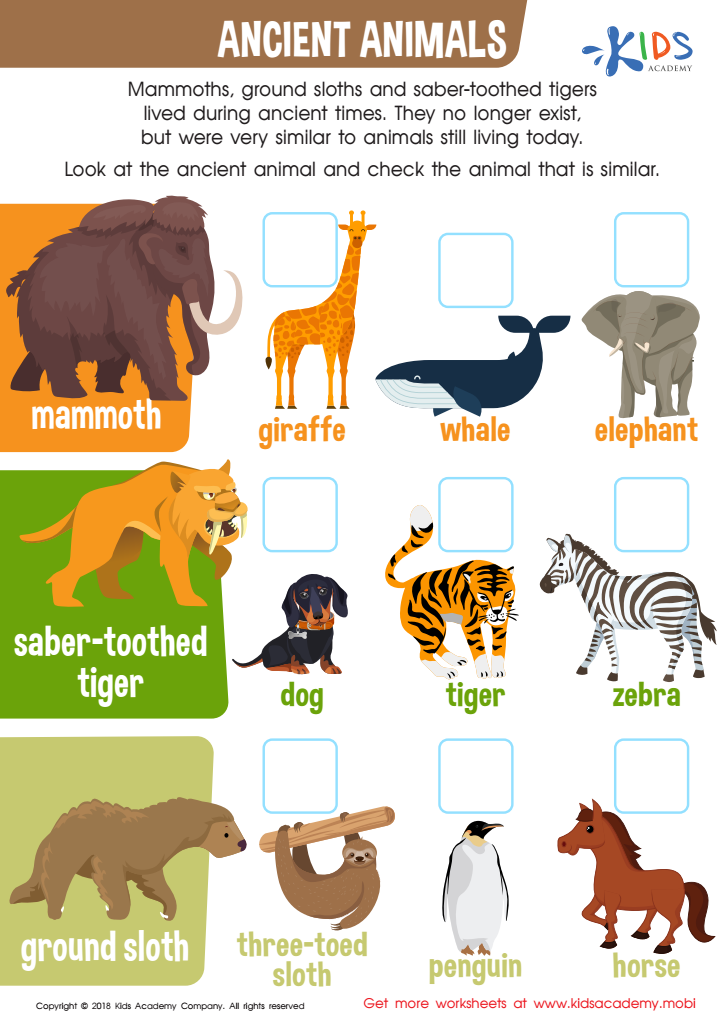
Ancient Animals Worksheet
Kids can explore prehistoric days with a fun, downloadable worksheet. They'll look at pictures of ancient animals like mammoths, ground sloths and saber-toothed tigers and then choose the animal of today that most closely resembles their ancestor. Through this sheet, they can make connections between today's animals and the past.
Ancient Animals Worksheet
Worksheet
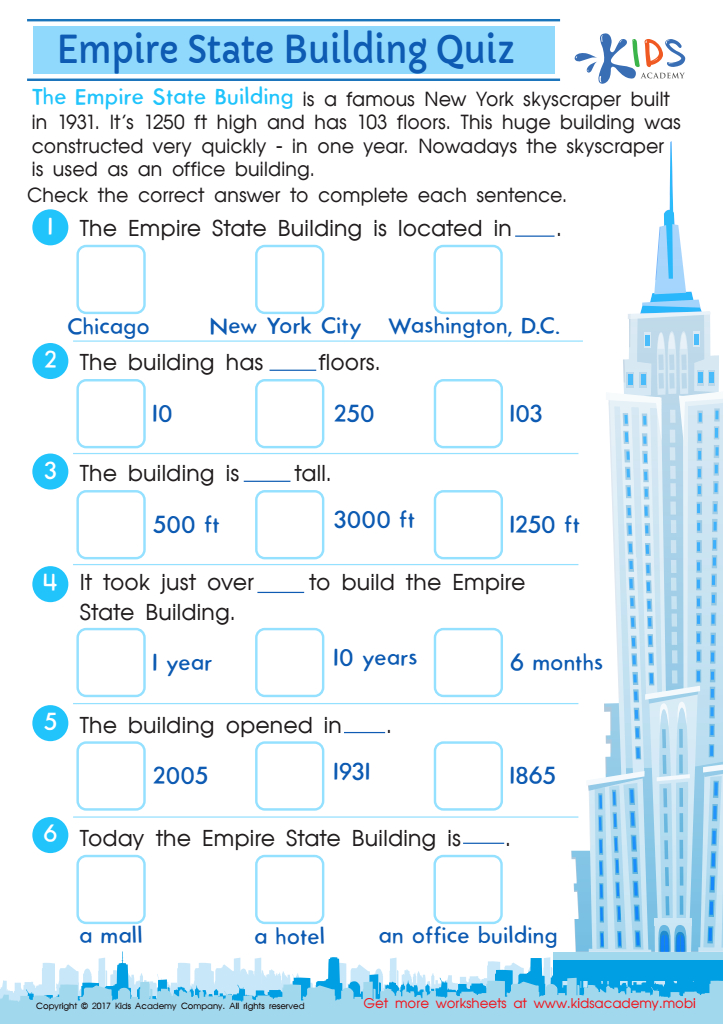
Empire State Building Printable Worksheet
Take a trip to NYC and explore the Empire State Building with this free printable worksheet. Kids will have fun learning about this famous American landmark and its facts. Make national symbols more engaging with this exciting PDF worksheet!
Empire State Building Printable Worksheet
Worksheet
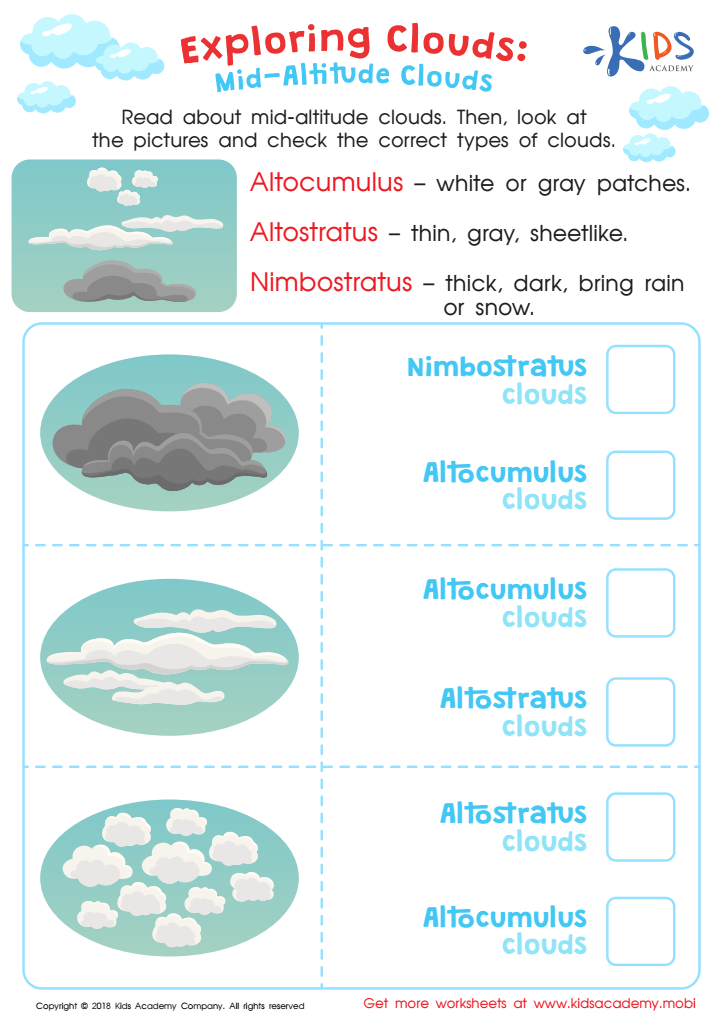
Exploring Clouds: Mid-altitude Clouds Worksheet
Kaitlin keeps a weather journal. Encourage your kid to do the same after completing this worksheet. Go through Kaitlin's journal with your kid, and discuss the weather for each day. Read the questions about her journal and check the correct answers.
Exploring Clouds: Mid-altitude Clouds Worksheet
Worksheet
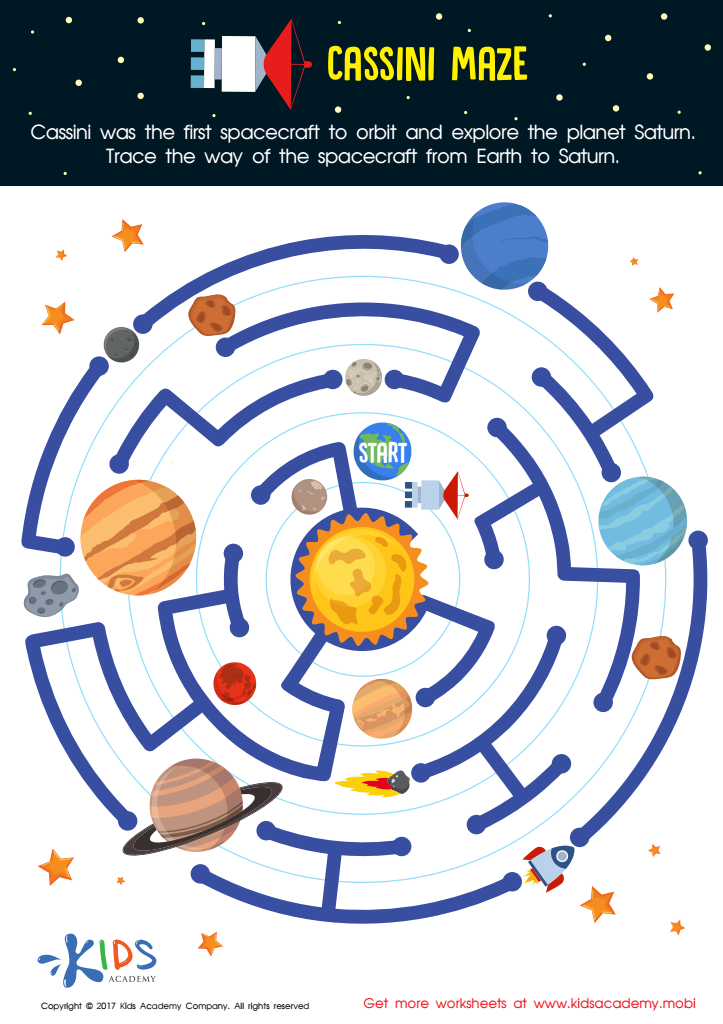
Cassini Printable Worksheet
Solve the Cassini maze and blast off to Saturn! Your child will love learning about the first spacecraft to orbit this beloved planet while navigating the tricky maze to find it.
Cassini Printable Worksheet
Worksheet
Join Kids Academy for Free
Who is primarily going to use this learning content?





Developing research skills in children ages 5-8 is crucial for fostering their curiosity and encouraging critical thinking. At this stage, children are naturally inquisitive, and teaching them how to seek out information can channel this curiosity productively. By nurturing research skills early on, parents and teachers help children learn to ask questions, explore topics, and find answers, which builds a foundation for lifelong learning.
Moreover, research skills enhance literacy and comprehension. Children learn to navigate various sources, whether books, websites, or even interviews with family members, which promotes reading and information synthesis. These skills also introduce them to technology and digital literacy in a safe, structured way.
Additionally, fostering research skills supports creativity and problem-solving. As children investigate different subjects, they develop the ability to think independently, enabling them to articulate ideas and opinions confidently. This empowerment leads to greater self-esteem and communication abilities.
Ultimately, instilling research skills in young learners equips them with essential tools for academic success and responsible citizenship in a rapidly evolving world. By prioritizing these skills, parents and teachers can cultivate a generation of informed, engaged learners who are proactive in their search for knowledge.








