Develops counting skills Worksheets for Ages 5-8
3 filtered results
-
From - To
Unlock your child's potential with our engaging Counting Skills Worksheets, designed specifically for ages 5 to 8! These interactive resources are perfect for early learners, helping them master counting and develop essential math skills through fun activities. With a variety of worksheets that include visual aids, numbers, and playful themes, children can practice counting objects, identifying numbers, and understanding the concept of addition. Our carefully crafted materials not only make learning enjoyable but also enhance your child's confidence in math. Explore our collection today and support your child's journey towards becoming a counting whiz while laying the foundation for future mathematical success!
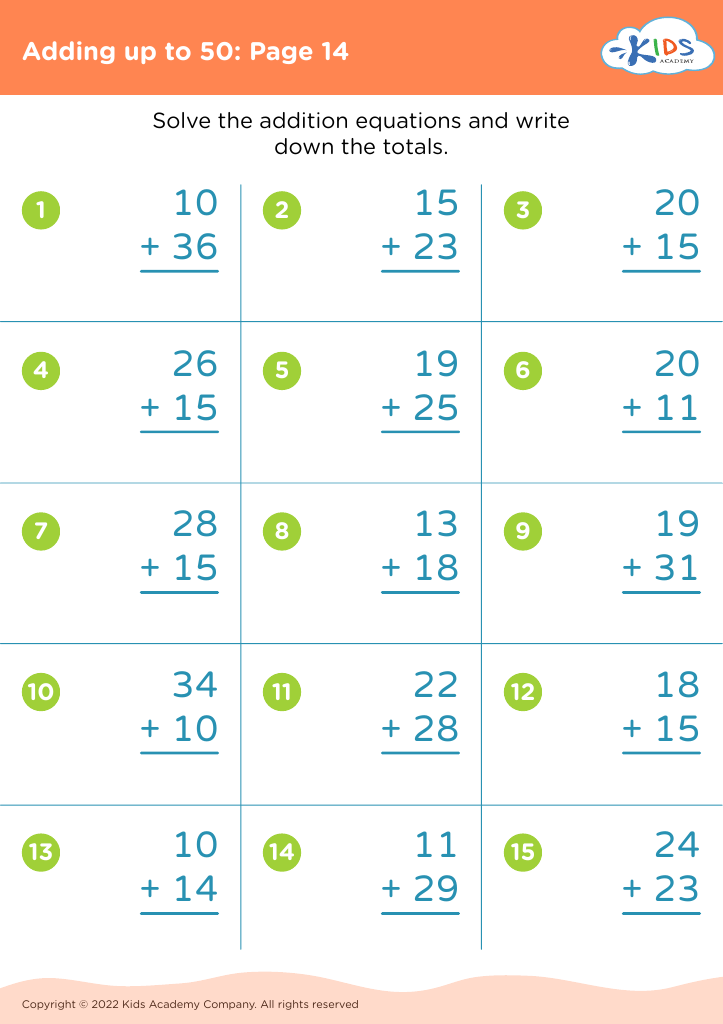








Developing counting skills for children aged 5-8 is crucial for their overall cognitive and academic growth. At this stage, children are building foundational math concepts that form the basis for more complex problem-solving in the future. Mastering counting helps them understand number sequences, addition, and subtraction, which are vital skills in everyday life and academic success.
Moreover, counting supports essential cognitive development, enhancing memory and attention span. When children practice counting, they engage critical thinking skills, learning to recognize patterns and make connections between numbers. This lays the groundwork for future subjects, such as math, science, and even reading, as many literacy concepts are rooted in numerical understanding.
Teachers and parents play an essential role in fostering these skills through enjoyable and engaging methods. Introducing games, counting songs, and hands-on activities can make learning fun and relatable, encouraging a positive attitude towards math. Furthermore, the development of social skills occurs as children collaborate with peers in group counting activities, enhancing communication and teamwork abilities.
Overall, nurturing counting skills is integral to promoting resilience, curiosity, and a love for learning, empowering children to succeed academically and in life long after they leave the classroom.








