Differentiating push/pull Worksheets for Ages 5-8
3 filtered results
-
From - To
Discover our engaging Differentiating Push/Pull Worksheets designed specifically for children ages 5-8! These worksheets promote essential learning and critical thinking skills by encouraging young learners to differentiate between push and pull forces. Each worksheet features fun visuals and age-appropriate activities, making it easy for educators to cater to diverse learning needs. With options for varying skill levels, educators can effectively support children with differing abilities while fostering a love for science exploration through interactive learning. Perfect for enhancing classroom activities or at-home learning, our worksheets provide a seamless way to instill foundational concepts in young minds. Get started today!
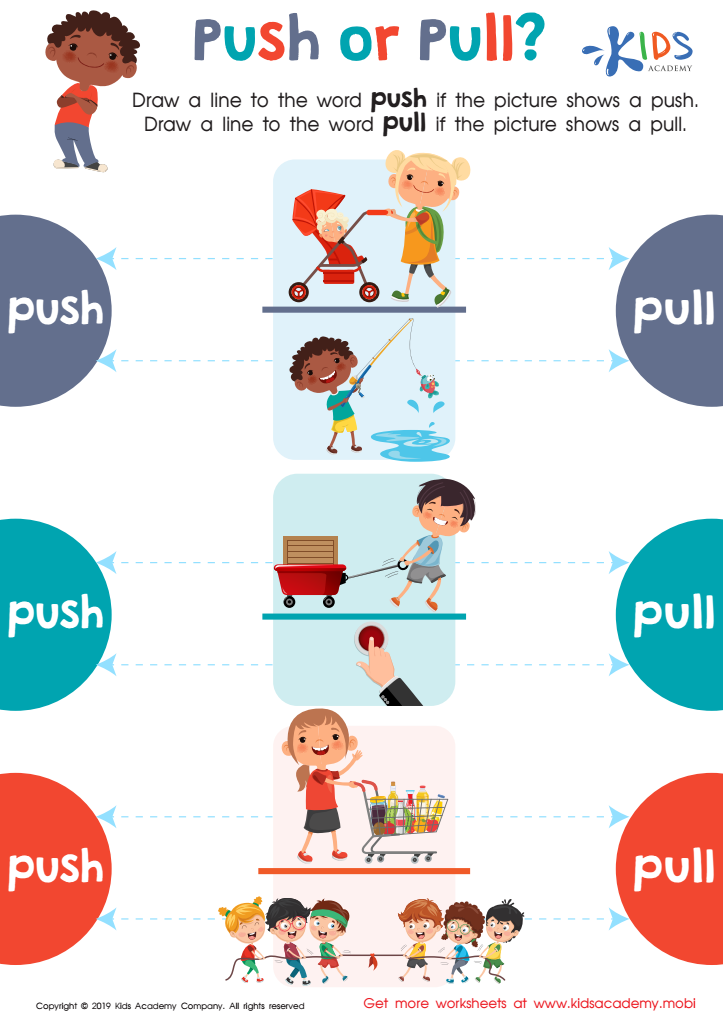
Push or Pull? Worksheet
 Assign to My Students
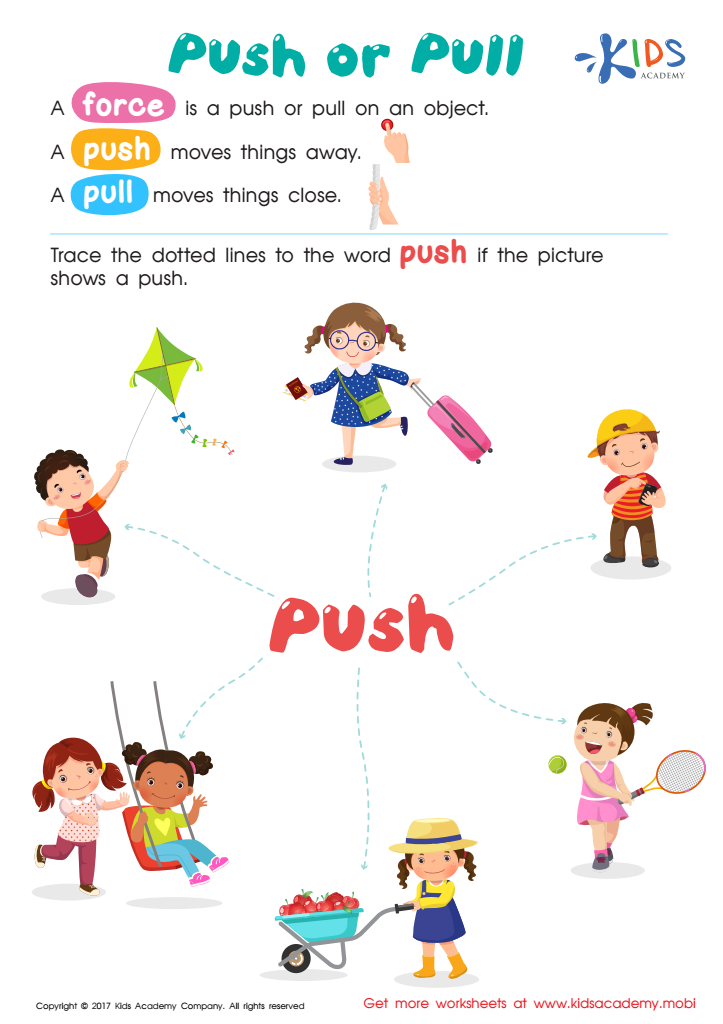
Push or Pull Worksheet
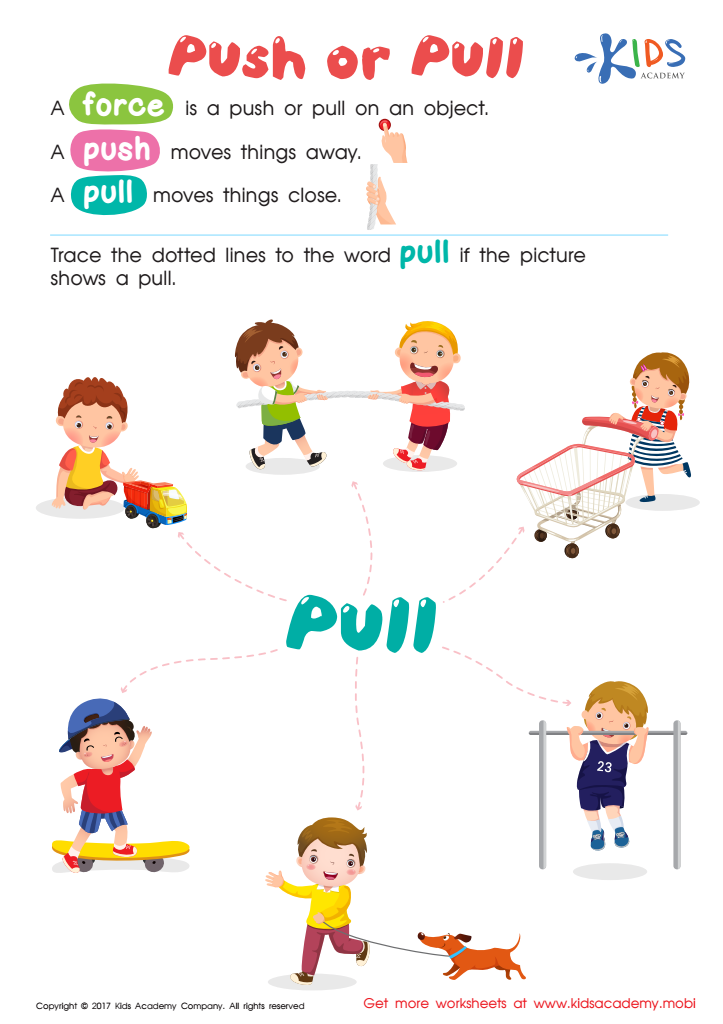
Pull or Push Worksheet






.jpg)
Differentiating push/pull strategies in early education is essential for fostering a conducive learning environment for children ages 5-8. At this age, learners exhibit varied developmental stages, learning styles, and interests, which can significantly influence their academic performance and engagement. Push strategies involve structured, teacher-directed activities, while pull strategies support student-centered, hands-on learning. By understanding and implementing both approaches, educators and parents can address individual needs, allowing children to thrive.
Parents and teachers should care because differentiated instruction helps in reducing frustration for struggling students and promotes challenge for advanced learners, ensuring that all children are appropriately supported. It nurtures a growth mindset by cultivating a love for learning; children become more motivated to explore subjects at their own pace.
Moreover, using differentiated methods encourages critical thinking, creativity, and collaboration, skills vital for success in a rapidly changing world. By creating inclusive and adaptable learning experiences, we equip students with the confidence and skills needed beyond the classroom. Overall, differentiating instruction through push/pull methods ensures that every child feels valued and understood, laying a strong foundation for lifelong learning.








