Enhancing Counting Skills Worksheets for Ages 5-8 - Page 2
29 filtered results
-
From - To
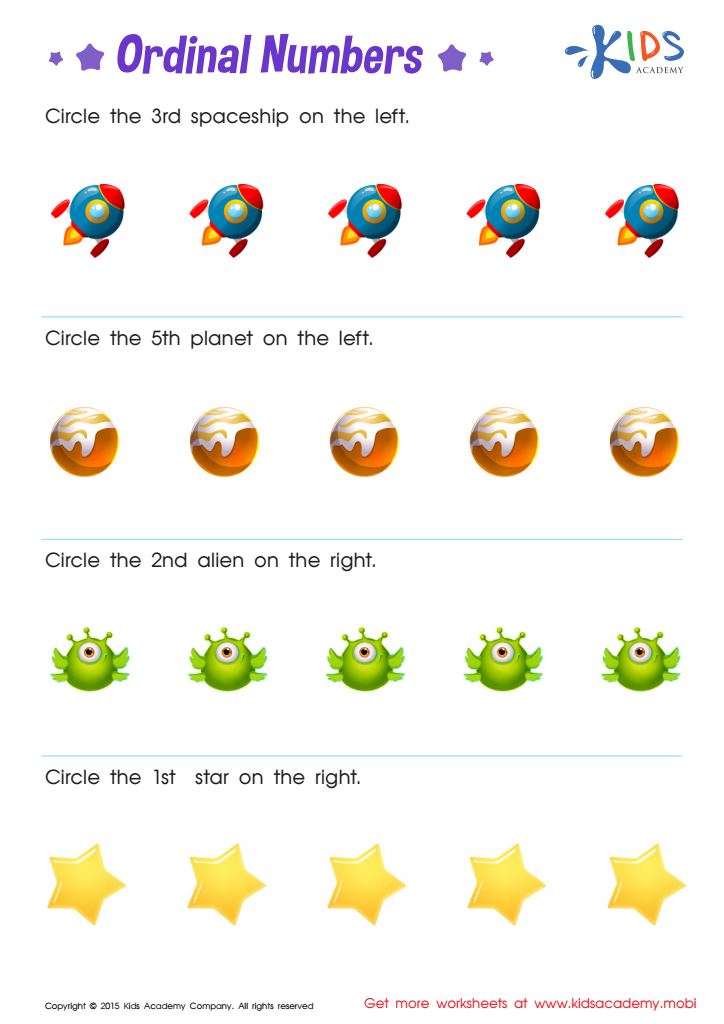
Ordinal Numbers: Space Ordinals Worksheet
 Assign to My Students
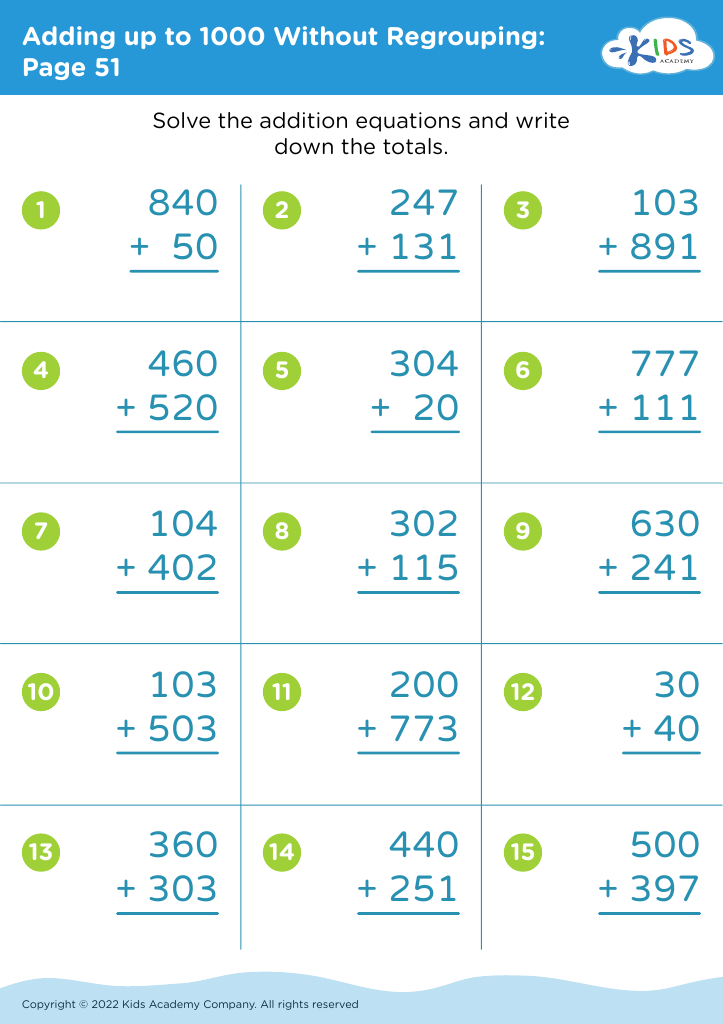
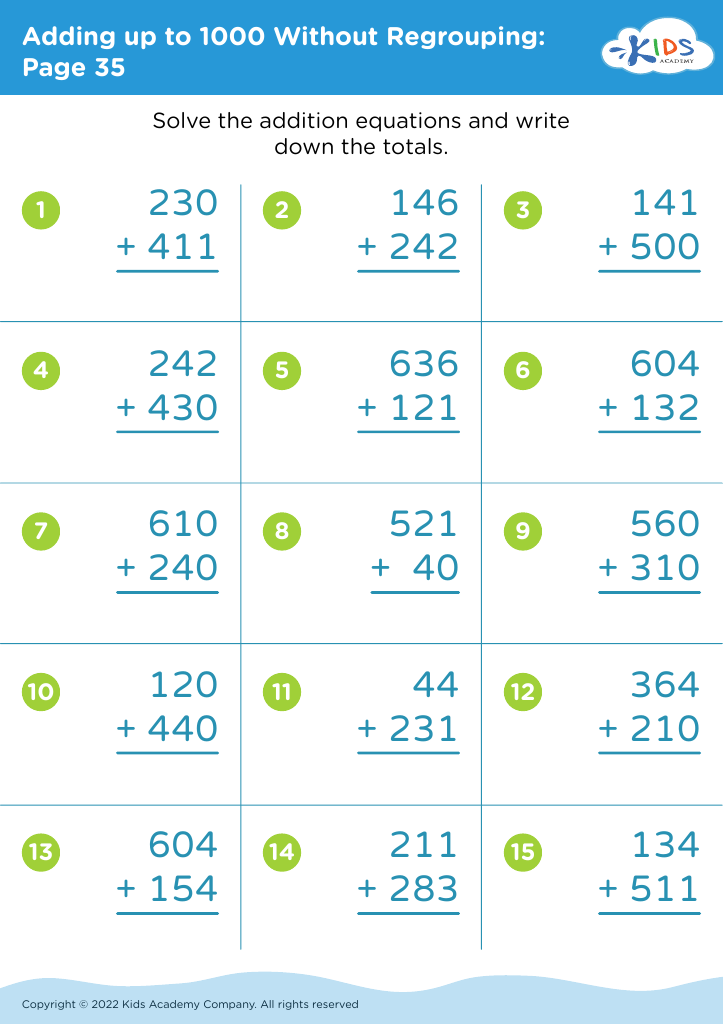
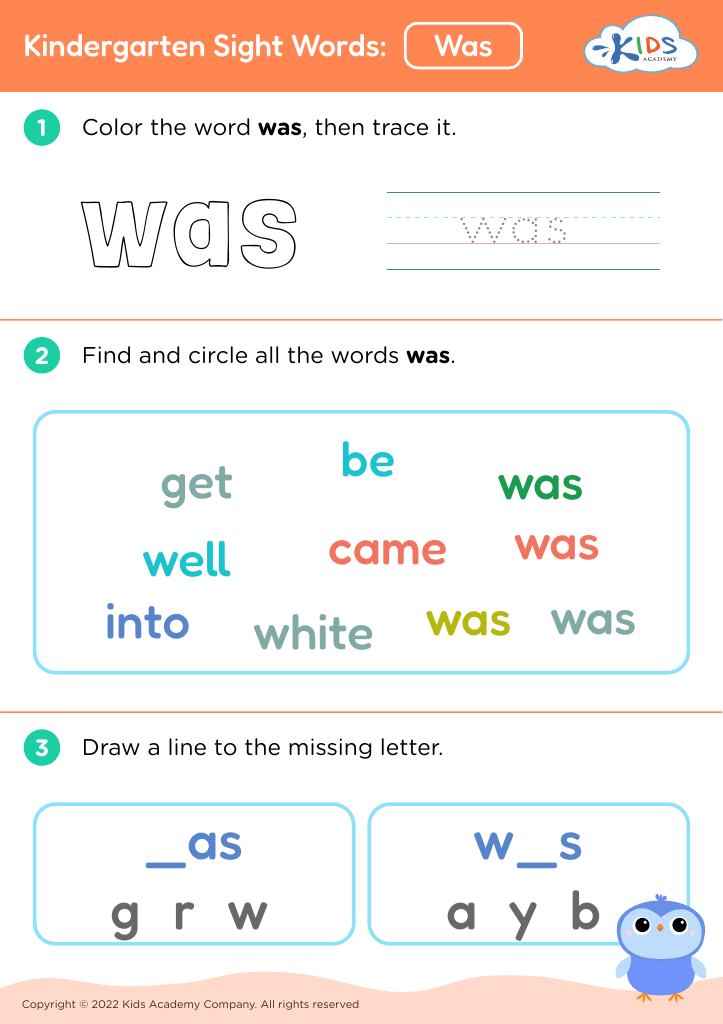






Enhancing counting skills for children aged 5-8 is crucial for their overall mathematical development and understanding of the world around them. At this foundational stage, children establish early numeracy concepts that serve as building blocks for future math learning. Strong counting skills support not only mathematics but also cognitive development, fostering critical thinking and problem-solving abilities critical for academic success.
Parents and teachers should care about enhancing these skills because children who master counting at an early age are more likely to excel in more complex mathematical operations later on. Counting teaches children to recognize patterns, understand quantities, and develop number sense, which are essential for everyday tasks and more advanced math topics.
Furthermore, engaging children in counting activities can make learning fun and interactive, promoting a positive attitude towards math. Incorporating simple counting games, rhythm activities, and everyday counting scenarios encourages cooperation and enhances social skills.
By prioritizing counting skills, parents and teachers set a solid foundation for lifelong learning, paving the way for future academic achievement and enabling children to connect mathematical concepts to their daily lives. Investing in these early skills is essential for their growth and confidence in math-related endeavors.








