Fine motor skills development Worksheets for Ages 5-8 - Page 2
27 filtered results
-
From - To
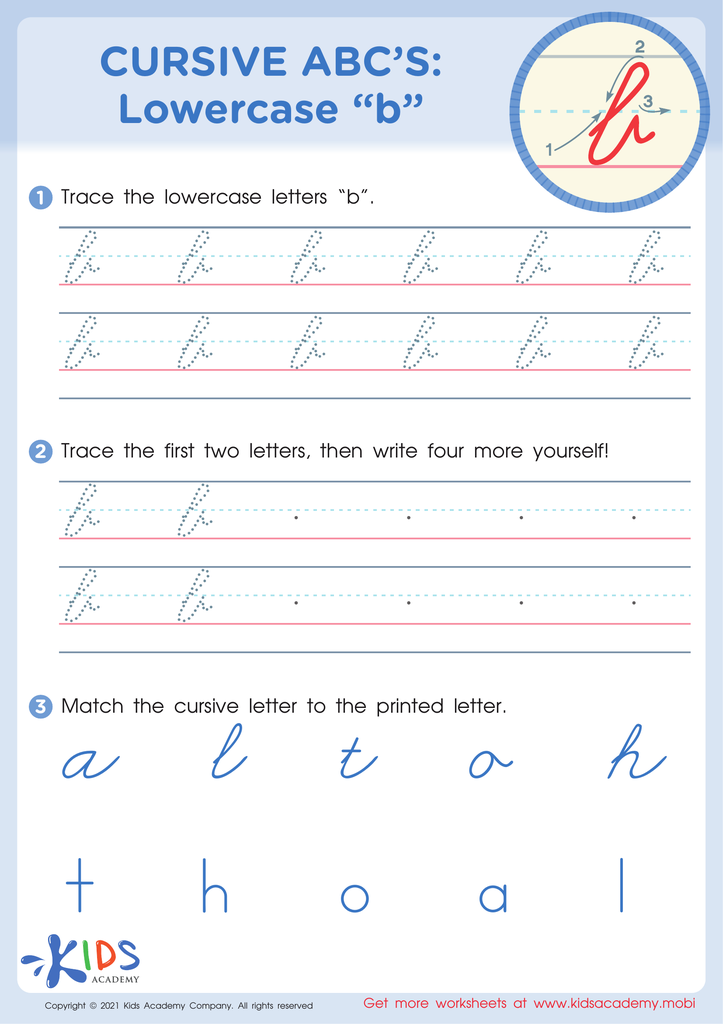
Cursive ABCs: Lowercase b
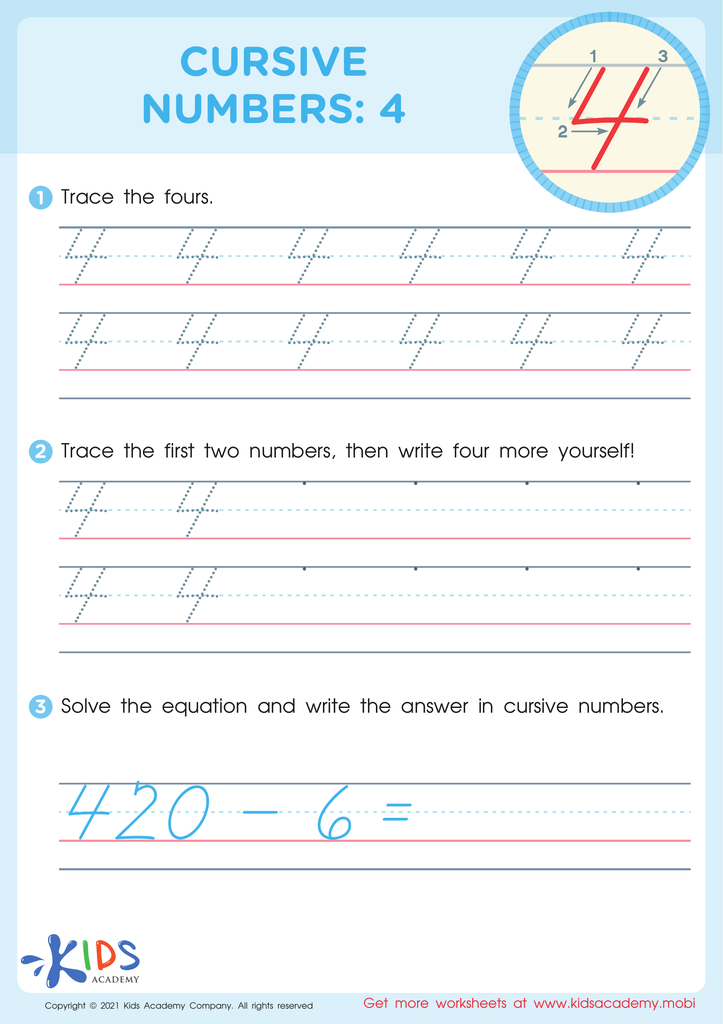
Cursive Numbers: 4 Worksheet







Fine motor skills development is crucial for children aged 5-8 because these skills form the foundation for many essential activities and cognitive abilities that children need both currently and throughout their lives. Fine motor skills involve the coordination of small muscles in the hands and fingers, which are necessary for tasks such as writing, cutting with scissors, buttoning, and tying shoelaces. Mastery of these skills fosters a child's independence, as they become more proficient in self-care tasks. Additionally, good fine motor skills directly influence academic performance. For instance, writing legibly and efficiently can significantly impact a child’s ability to express ideas and learn school subjects like language arts and mathematics.
Furthermore, developing fine motor skills also enhances hand-eye coordination, attention to detail, and cognitive planning, which are invaluable across various aspects of a child's life, from playing musical instruments to participating in sports. Flaws in these fundamental skills can lead to frustration, decreased self-esteem, and reluctance in learning activities. Hence, by focusing on and nurturing fine motor skills, parents and teachers lay the groundwork for a child's comprehensive cognitive, physical, and emotional development, ensuring they are well-prepared to tackle the more complex challenges of learning and daily living as they grow.








