Graph reading skills Worksheets for Ages 5-8
3 filtered results
-
From - To
Enhance your child's understanding of graph reading with our engaging worksheets designed for ages 5-8. These resources introduce young learners to essential visual skills, helping them interpret data through charts, pictograms, and bar graphs. Our user-friendly worksheets promote critical thinking while making learning fun and interactive. Perfect for both classroom and home use, they provide valuable practice in reading scales, identifying trends, and answering questions based on visual information. Foster your child's analytical abilities and set them on a path to mathematics mastery with our delightful graph reading skills worksheets—designed to inspire curiosity and confidence in young learners!
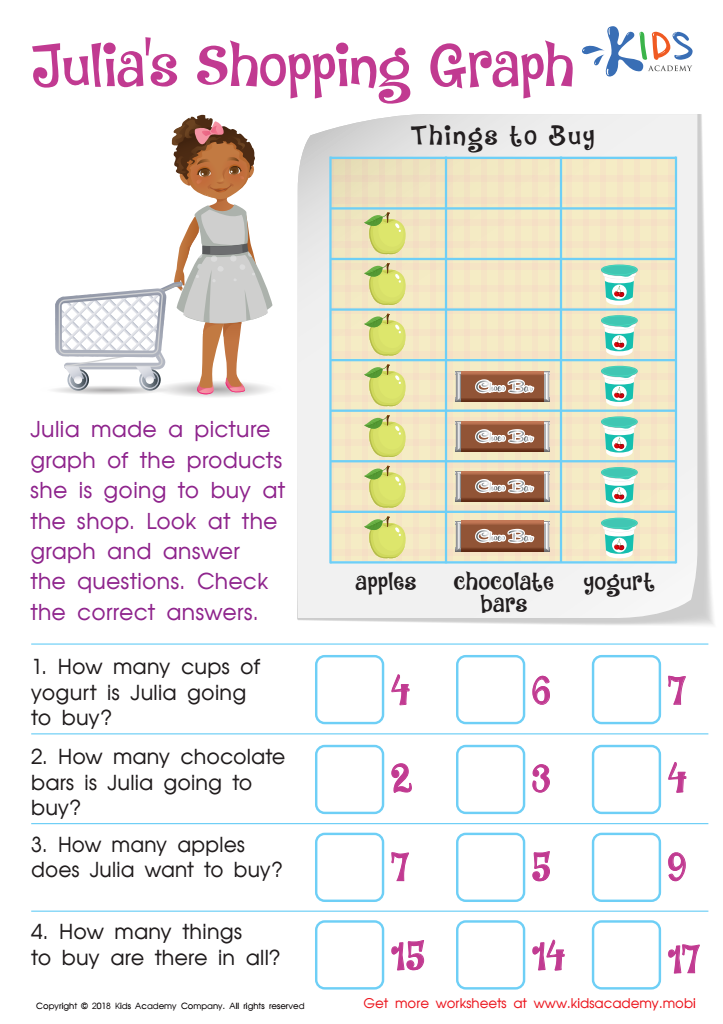
Julia's Shopping Graph Worksheet
 Assign to My Students
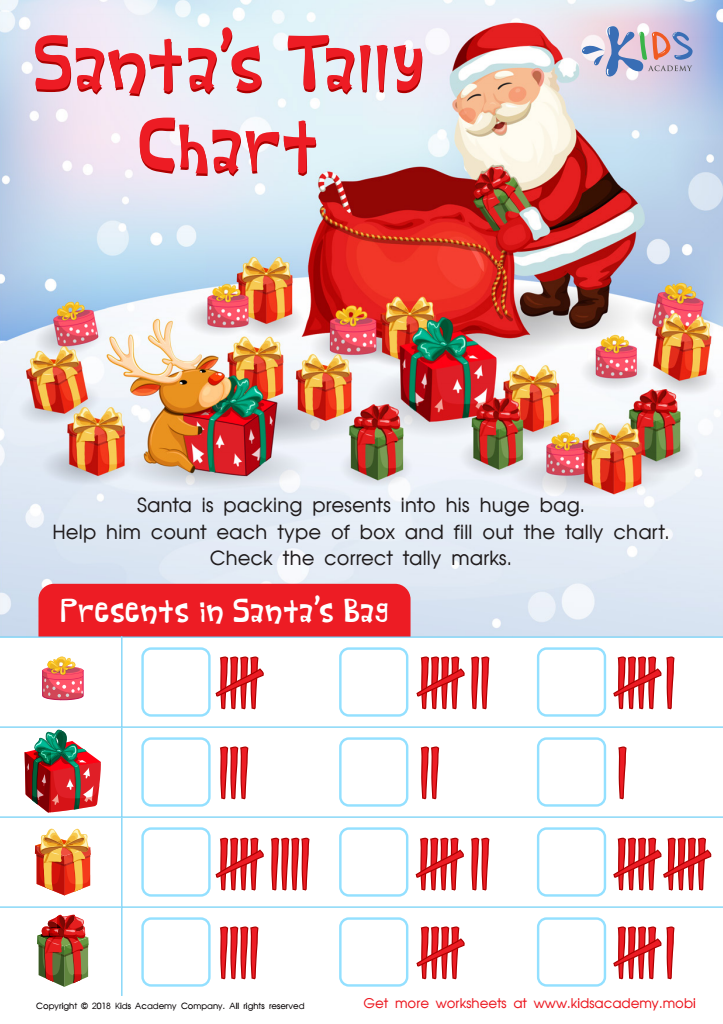
Santa Tally Chart Worksheet
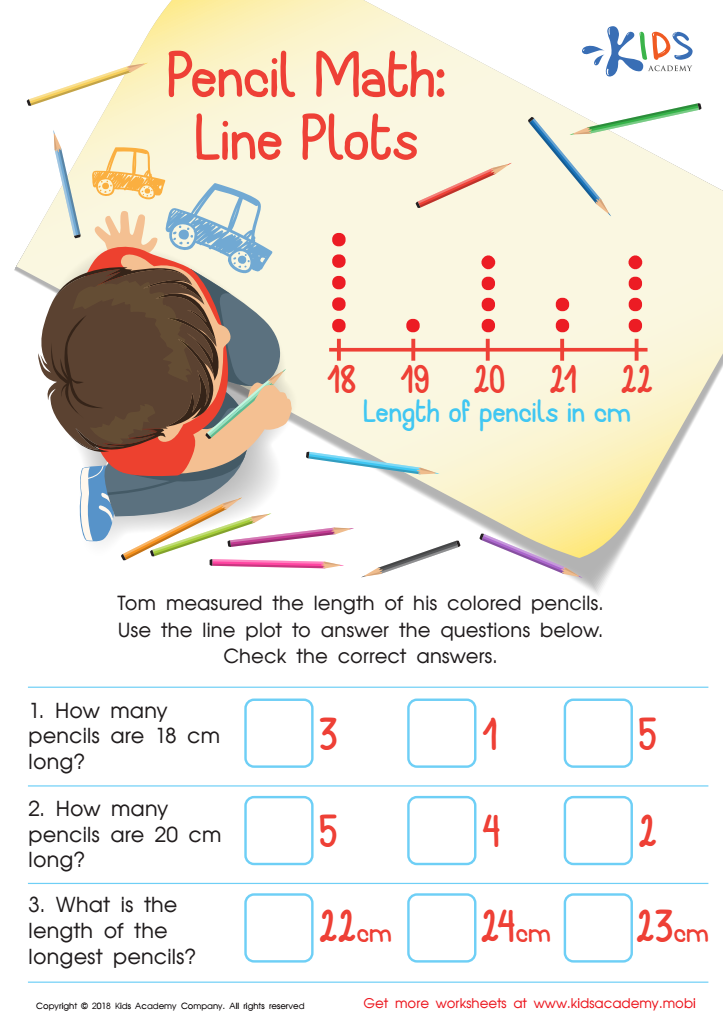
Pencil Math: Line Plots Worksheet








Graph reading skills are crucial for children aged 5-8 as they lay the foundation for critical thinking and data interpretation in a visually-focused world. At this age, children are developing their ability to understand and analyze information, and graphs serve as excellent tools for fostering these skills.
First, graph reading enhances mathematical understanding, helping children make connections between numbers and their real-world applications. For instance, when children learn to read simple bar graphs or line plots, they start to understand concepts of comparison, quantity, and trends, building their numeracy skills.
Second, graph reading encourages cognitive development. By interpreting visual data, children cultivate analytical skills that promote logical thinking. They learn to ask questions, make predictions, and derive conclusions based on graph-based information.
Finally, fostering graph reading skills instills confidence in children when they encounter data in various contexts, whether in school assignments or everyday life. As they become familiar with graphs, their motivation to engage with subjects like science and social studies increases, ultimately preparing them for more complex academic challenges later on.
By prioritizing graph reading skills, parents and teachers equip children with essential tools for lifelong learning and informed decision-making.








