
Improve handwriting skills Worksheets for Ages 5-8
3 filtered results
Difficulty Level
Grade
Age
-
From - To
Subject
Activity
Standards
Elevate your child's handwriting skills with our engaging worksheets designed for ages 5-8! Our resources focus on enhancing letter formation, spacing, and overall penmanship through fun activities. Each worksheet is tailored to keep young learners motivated, fostering a love for writing while building confidence. From tracing letters to practicing words, these exercises cater to various skill levels, making them ideal for both beginners and those looking to refine their abilities. Watch as your child transforms their handwriting, making learning enjoyable and effective. Start inspiring beautiful writing today with our easily accessible printable worksheets!
Favorites
With answer key
Interactive
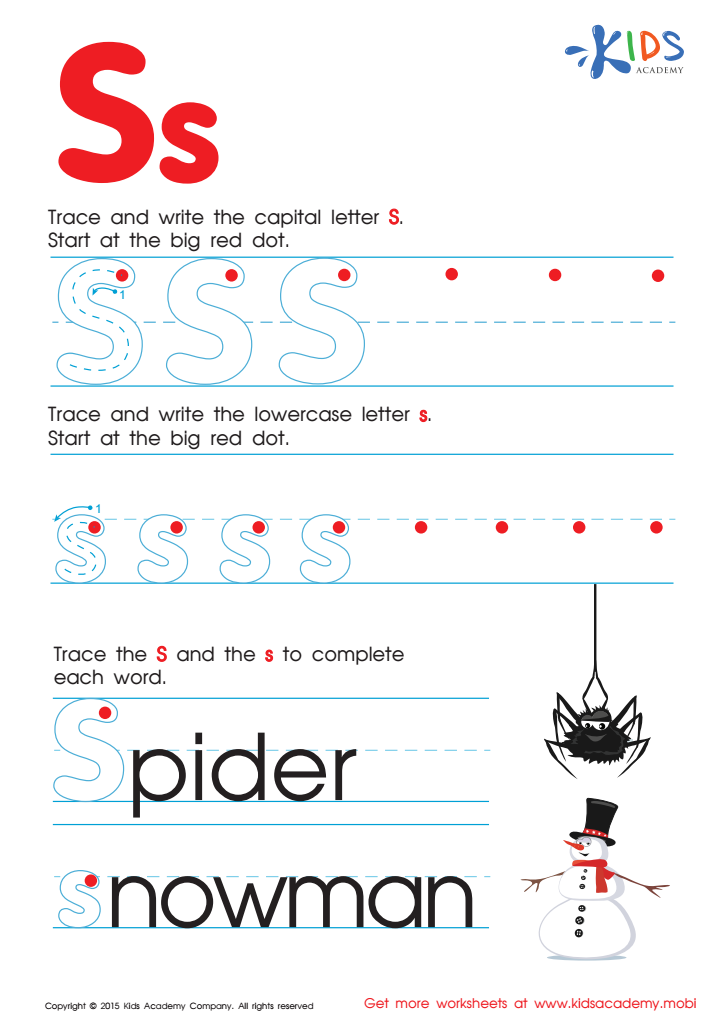
Letter S Tracing Page
Trace and write the capital and lowercase "S" on this ABC worksheet for kindergarten. Start with the big red dot and be careful. When you finish, help the spider and snowman in the pictures restore their words with the capital and lowercase letters. Continue learning the alphabet with Kids Academy.
 Assign to My Students
Letter S Tracing Page
Worksheet
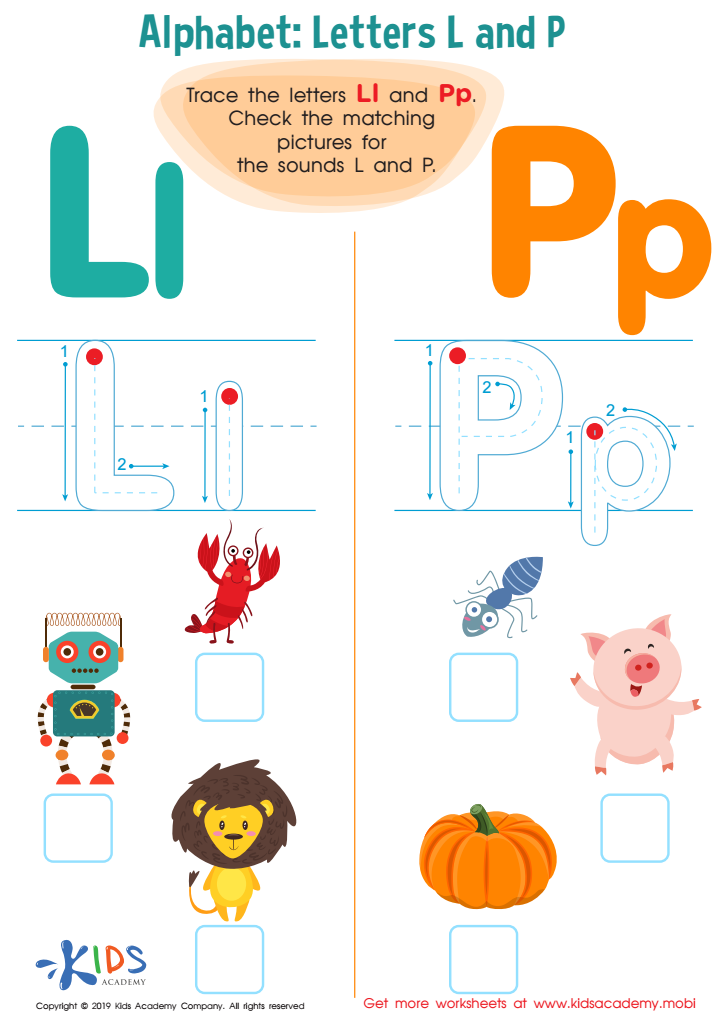
Letter L and P Tracing Worksheet
This traceable worksheet can motivate your students to learn and practice core skills. They'll trace the letters 'L' and 'P' and identify the pictures next to them. With this exercise, they'll unlock their learning abilities and excel in the subject!
Letter L and P Tracing Worksheet
Worksheet
Join Kids Academy for Free
Who is primarily going to use this learning content?








Improving handwriting skills for children aged 5-8 is crucial for several reasons. First, developing neat and legible handwriting lays a strong foundation for academic success. As this age group transitions from learning to write to writing to learn, clear handwriting becomes essential for complete communication of their ideas in both written assignments and assessments.
Second, good handwriting fosters confidence. Children often experience pride when they produce work that is the best representation of their thoughts and creativity. Poor handwriting, in contrast, can lead to frustration and a reluctance to engage in writing activities. This age is critical for cultivating a positive attitude toward writing, which impacts their overall motivation to perform academically.
Additionally, refining fine motor skills associated with handwriting can enhance other areas of learning and daily life activities. Coordination and dexterity developed through handwriting practice support various tasks, from drawing to later skills such as typing.
Finally, good handwriting is a life skill. In a world that remains reliant on handwriting for notes, forms, and personal communication, ensuring children possess this skill will benefit them throughout their lives. Hence, both parents and teachers play a pivotal role in fostering handwriting improvement during these formative years.








