Improving fine motor skills Worksheets for Ages 5-8
3 filtered results
-
From - To
Explore our engaging worksheets designed to enhance fine motor skills for children aged 5-8! Our collection features a variety of fun, interactive activities that encourage young learners to practice essential skills like gripping, cutting, and drawing. Perfect for home or classroom use, these worksheets help boost hand-eye coordination, dexterity, and concentration. With colorful illustrations and age-appropriate tasks, kids will stay motivated while honing their abilities. Ideal for parents and teachers alike, these resources support early development and pave the way for successful learning experiences. Download our worksheets today and watch your child thrive while having fun!


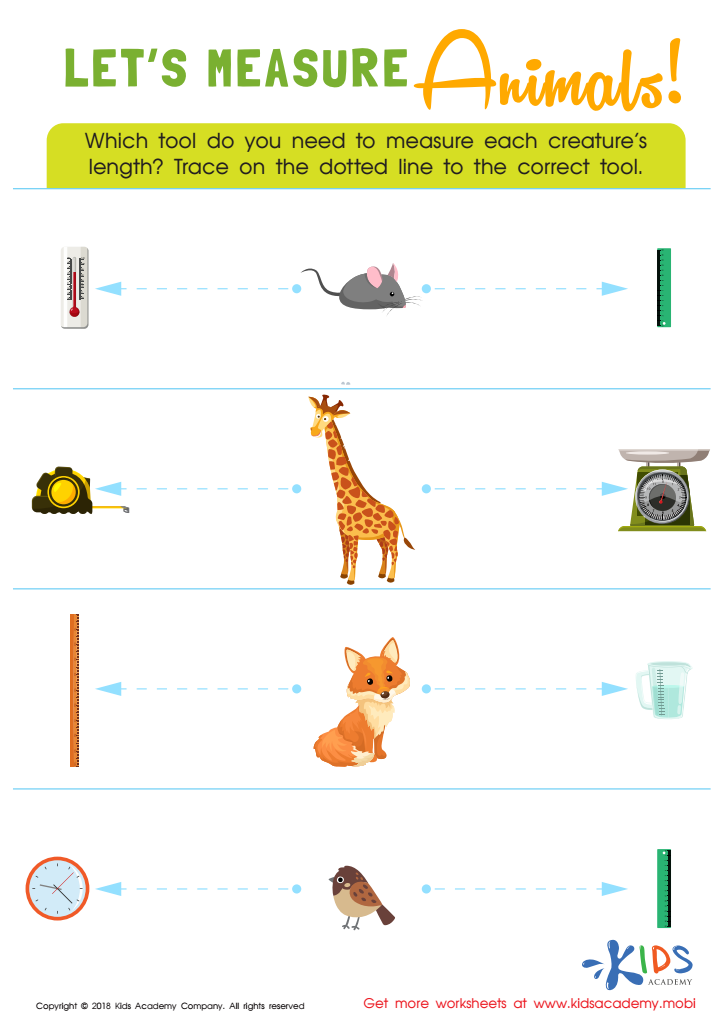
Let's Measure Animals! Worksheet
 Assign to My Students




.jpg)



Improving fine motor skills in children aged 5-8 is crucial for their overall development and academic success. These skills involve the small muscles in the hands and fingers, enabling tasks such as writing, drawing, and using tools. As children master fine motor skills, they gain greater control over their movements, enhancing their ability to complete everyday activities independently, such as buttoning shirts or tying shoelaces.
Furthermore, fine motor skills are essential for academic achievement. Effective handwriting, for instance, relies on well-developed fine motor abilities, which can impact a child's ability to express their thoughts clearly in written form. As children engage in art projects or hands-on activities, they also develop their creativity and problem-solving skills.
For parents and teachers, encouraging activities that promote fine motor development, such as crafting, puzzles, and interactive games, is vital. It can foster a child’s confidence and encourage a love for learning, setting a positive trajectory for future educational experiences. Additionally, strong fine motor skills can aid in social interactions, as many play activities require coordination and teamwork. By taking steps to support the development of fine motor skills, adults can play a pivotal role in nurturing well-rounded, capable children.








