
Logical reasoning development Worksheets for Ages 5-8
4 filtered results
Difficulty Level
Grade
Age
-
From - To
Subject
Activity
Standards
Unlock your child's potential with our engaging Logical Reasoning Development Worksheets designed for ages 5-8! These carefully crafted resources help young learners enhance critical thinking, problem-solving skills, and cognitive abilities through fun and interactive activities. Our worksheets incorporate puzzles, pattern recognition, and sequencing challenges that encourage kids to think creatively and independently. Ideal for at-home learning or classroom use, these worksheets cater to diverse learning styles and promote logical thinking in a playful manner. Equip your child with essential reasoning skills while they enjoy learning! Explore our collection today and boost their confidence in tackling logical challenges!
Favorites
With answer key
Interactive
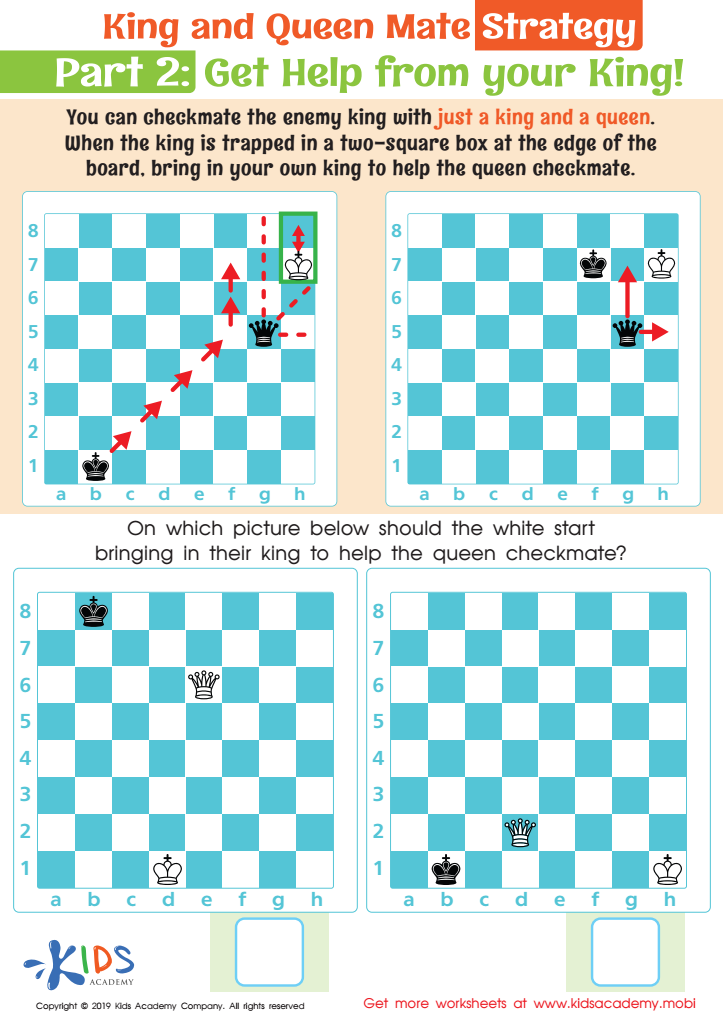
King and Queen Mate Strategy: Part 2 Worksheet
This worksheet helps your child learn to checkmate the opposing king with their king and queen. Descriptive sample boards show the strategy, and more boards help determine which one demonstrates how the king assists the queen.
 Assign to My Students
King and Queen Mate Strategy: Part 2 Worksheet
Worksheet
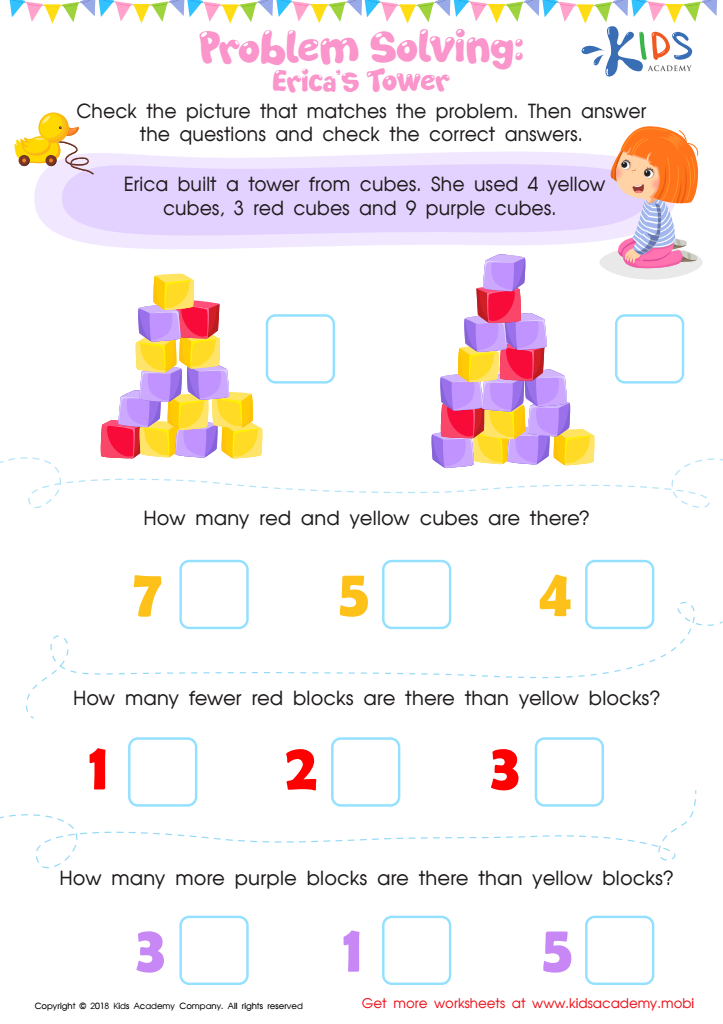
Problem Solving: Erica's Tower Worksheet
Sweet Erica needs your math student's help! Download the PDF worksheet and have your little math whiz read the word problems, match the pictures and solve basic addition/subtraction problems with two/three addends, minuends and subtrahends. They'll be having fun while strengthening their math fact skills!
Problem Solving: Erica's Tower Worksheet
Worksheet
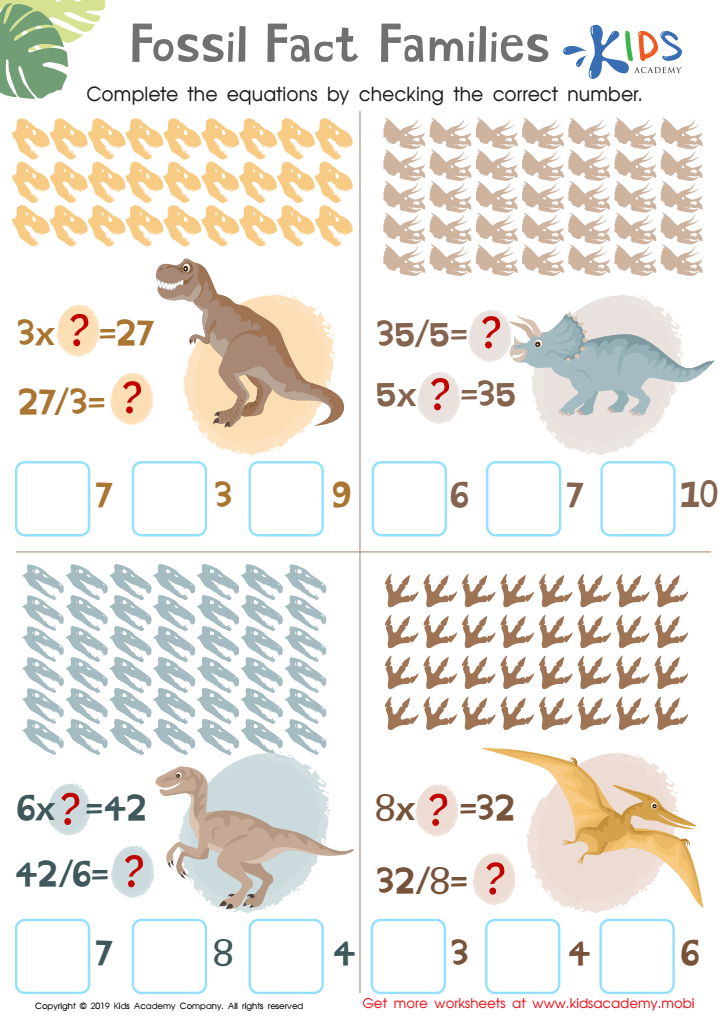
Fossil Fact Families Worksheet
Kids love dinosaurs, so why not learn about fact families with some fun prehistoric friends? This PDF worksheet uses picture arrays to help kids understand the relationships between multipliers and dividends. It helps them build automaticity with multiplication facts so they can quickly solve division problems and see the relationships between the two fact families.
Fossil Fact Families Worksheet
Worksheet
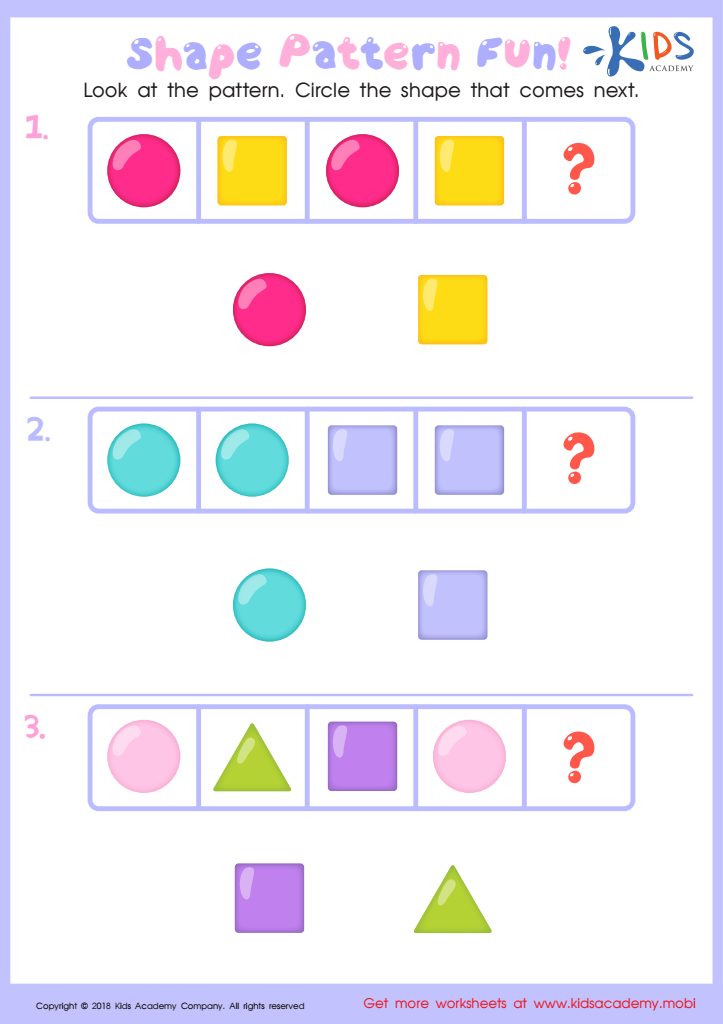
Shape Pattern Fun Worksheet
Challenge your kids to look at the pictures and identify colors, shapes and patterns. Ask them to circle the shapes that follow the sequence. See if they can spot the pattern and stick to it!
Shape Pattern Fun Worksheet
Worksheet
Join Kids Academy for Free
Who is primarily going to use this learning content?








Logical reasoning development in children aged 5-8 is crucial for several reasons, making it a key focus for both parents and teachers. At this young age, children are naturally curious and eager to explore their environment. By nurturing logical reasoning skills, parents and teachers help children develop critical thinking abilities that are foundational for problem-solving in everyday life and future academic success.
Engagement in logical reasoning activities enhances cognitive skills such as categorization, sequencing, and pattern recognition. These abilities are integral in subjects like math and science, fostering comprehension and analytical thinking. Additionally, logical reasoning supports social interactions as children begin to navigate relationships, enabling them to understand cause and effect, make predictions, and resolve conflicts more effectively.
Promoting logical reasoning also instills confidence in children as they learn to articulate their thoughts and decisions. It prepares them for a world that requires quick thinking and decision-making, paving the way for lifelong learning. Furthermore, fostering a strong logical reasoning foundation can reduce frustration in learning, encouraging persistence and resilience when facing challenges. In essence, nurturing these skills during formative years sets the stage for a child’s holistic development, shaping them into adaptable and capable individuals.








