Math comprehension Worksheets for Ages 5-8
5 filtered results
-
From - To
Discover engaging Math Comprehension Worksheets designed for children ages 5-8! Our collection includes fun exercises that strengthen essential math skills through interactive problems and real-life scenarios. Kids will learn to apply their math knowledge in understanding concepts such as addition, subtraction, patterns, and measurements. Each worksheet is thoughtfully crafted to promote critical thinking, encouraging young learners to solve problems and develop confidence in their math abilities. Ideal for home or classroom use, these worksheets make learning enjoyable while reinforcing key mathematical concepts. Dive into our resources and watch your child's math comprehension flourish as they explore the exciting world of numbers!
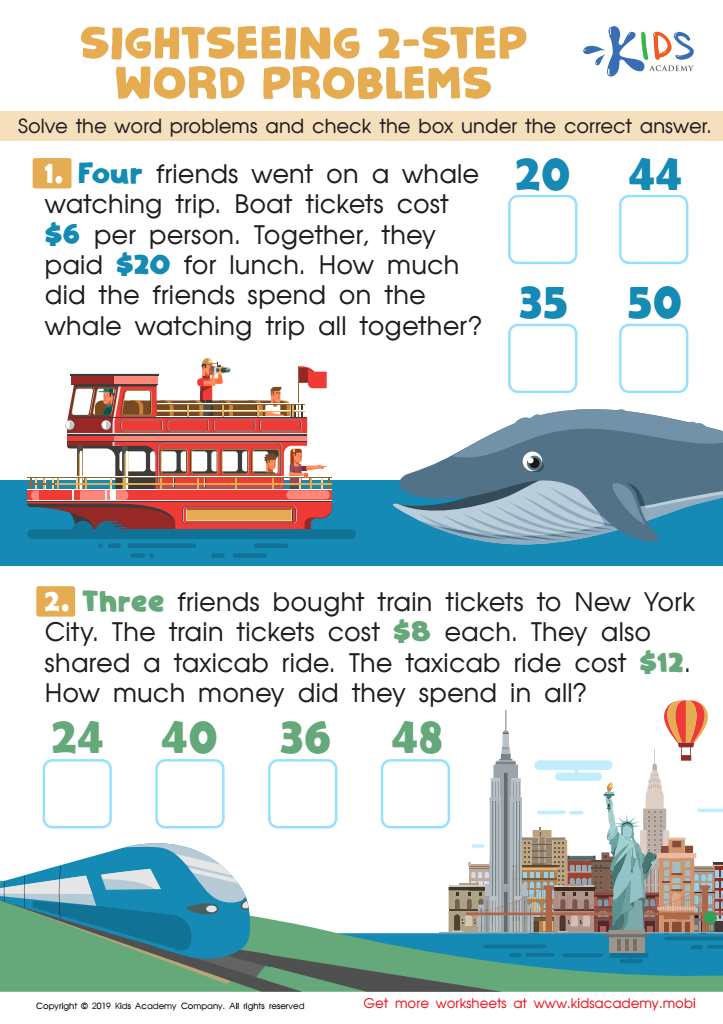
Sightseeing 2-Step Word Problems Worksheet
 Assign to My Students
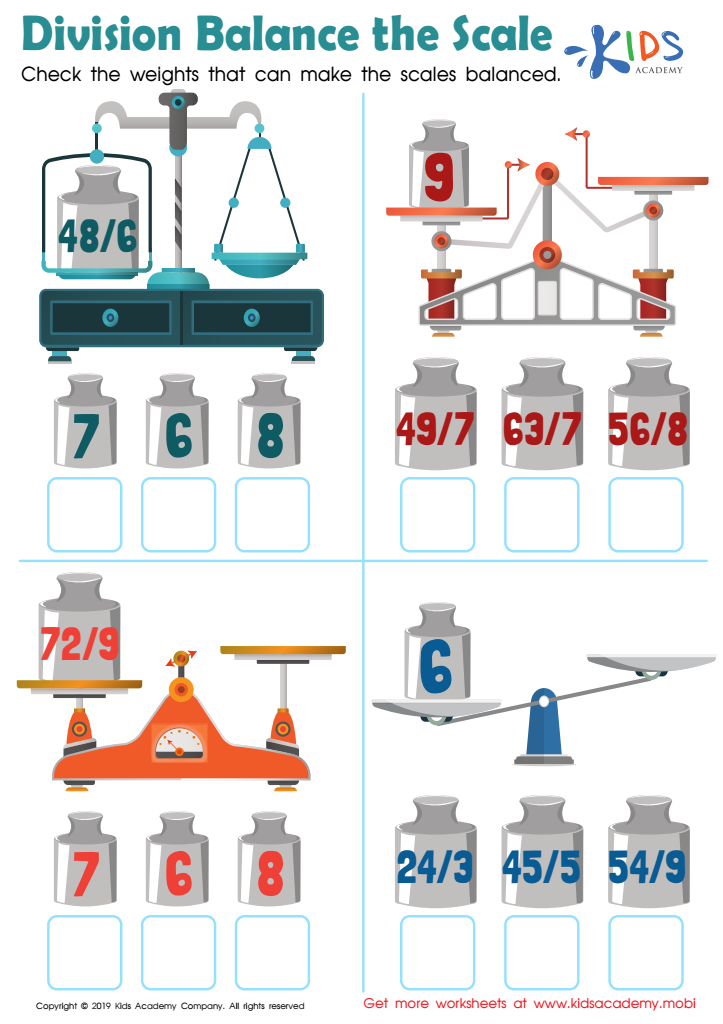
Division Balance the Scale Worksheet
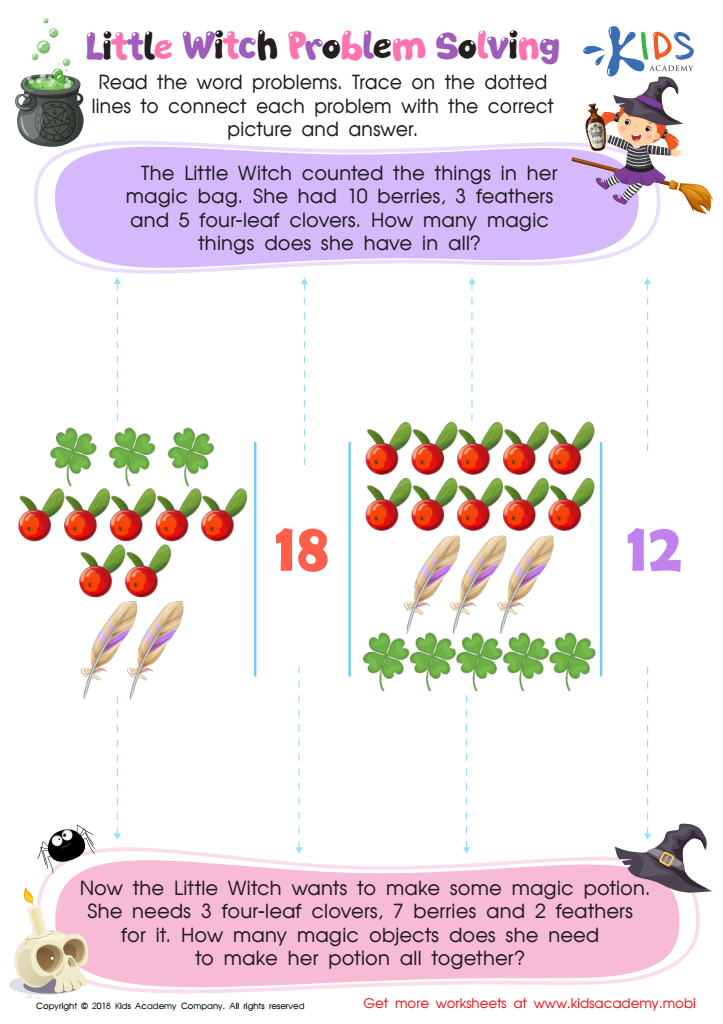
Little Witch Problem Solving Worksheet
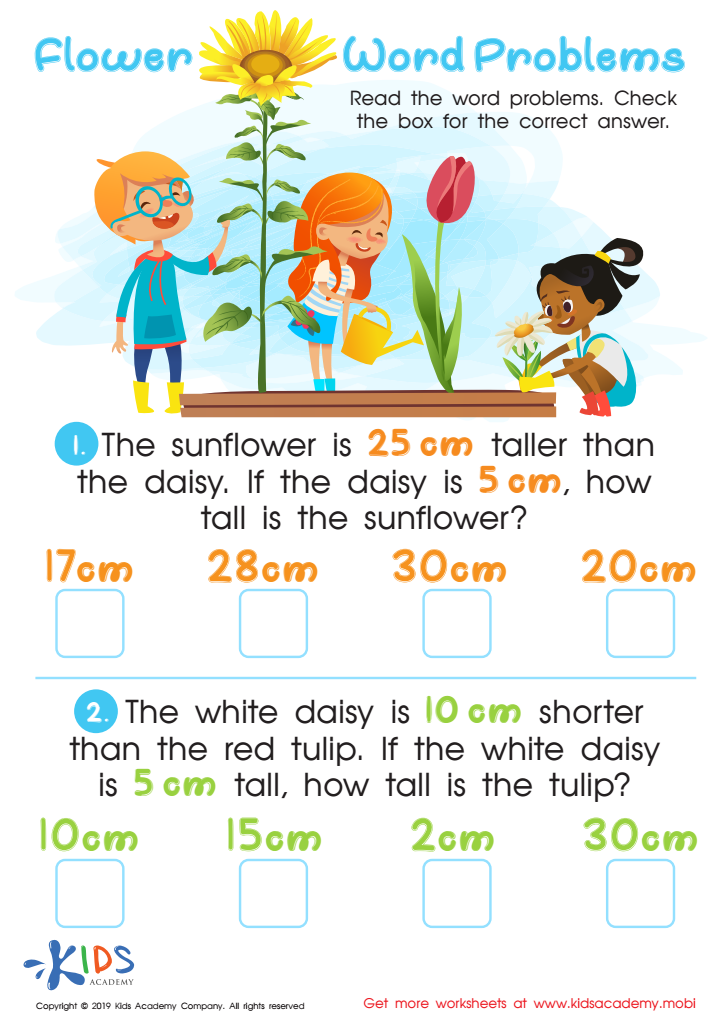
Flower Word Problems Worksheet







Math comprehension in children aged 5-8 is crucial for their overall academic development and future success. During these early years, foundational skills are built that set the stage for more complex mathematical concepts later on. When children grasp basic math functions like addition, subtraction, and understanding numbers, they gain the confidence to take on challenging problem-solving tasks.
Strong math comprehension enhances critical thinking and analytical skills, which are applicable across various subjects and real-life situations. Additionally, a solid foundation in math can contribute to improved performance in standardized tests, influencing future educational opportunities.
Moreover, math literacy is increasingly linked to 21st-century skills, such as technology proficiency and data analysis. In a world that is increasingly driven by data, children who understand math are better prepared for future career pathways, ensuring they can compete in a global marketplace.
For parents and teachers, fostering math comprehension can lead to reduced anxiety around math subjects, a common challenge for many children. Engaging children with fun and interactive math activities can create positive associations with the subject, laying the groundwork for lifelong learning and curiosity. Thus, prioritizing math comprehension in young learners is an investment in their cognitive and emotional growth.








