Math fluency development Worksheets for Ages 5-8
3 filtered results
-
From - To
Discover our engaging Math Fluency Development Worksheets designed specifically for children ages 5-8! These creative resources help young learners build essential math skills through fun activities, including addition, subtraction, and number recognition. Tailored to foster confidence and understanding, our worksheets cater to various learning styles, making math accessible and enjoyable. With colorful illustrations and interactive challenges, these worksheets encourage critical thinking and problem-solving in an exciting way. Perfect for both classroom settings and at-home learning, our materials are a valuable tool for nurturing a solid math foundation. Explore our collection today and watch your child thrive in math fluency!
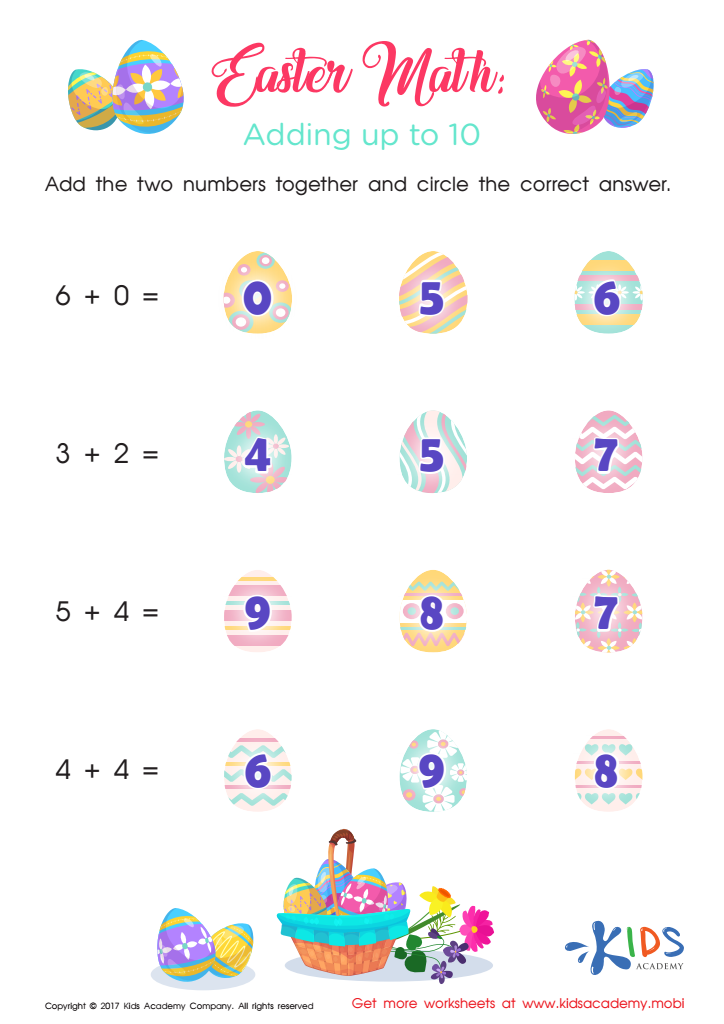
Addition Up To 10 Worksheet
 Assign to My Students
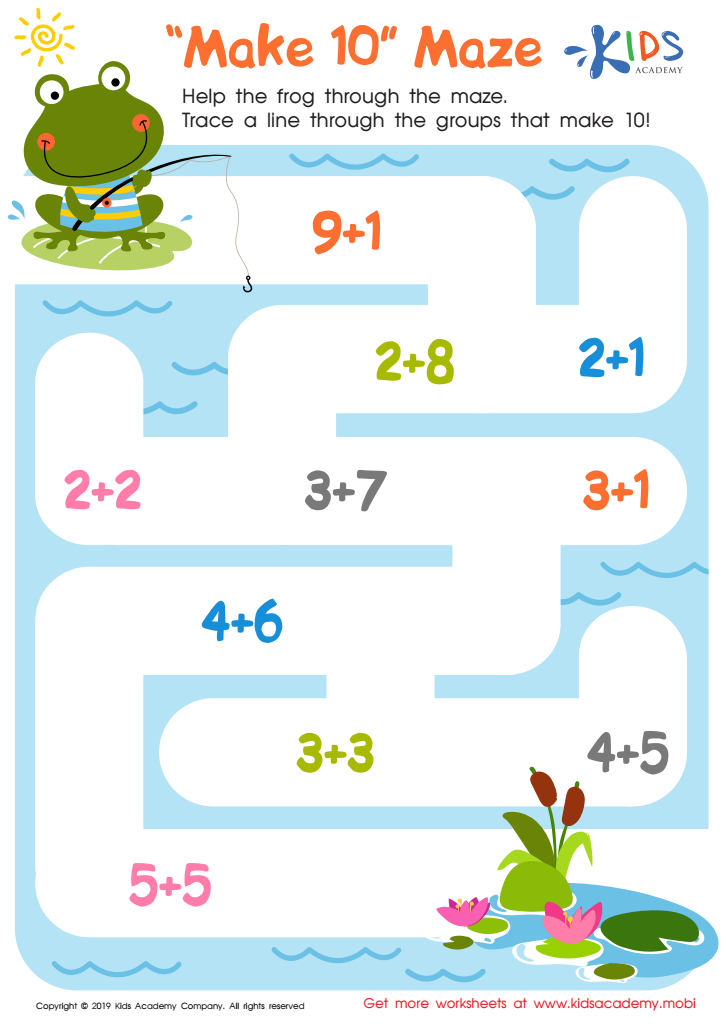
Make 10 Maze Worksheet
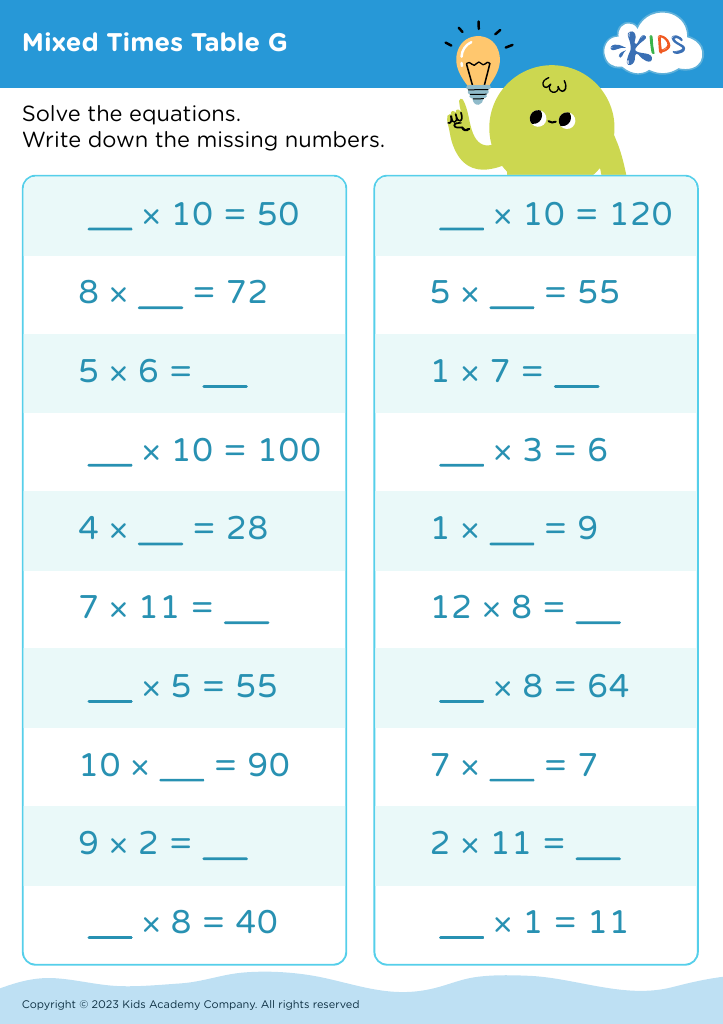








Math fluency development for children aged 5-8 is crucial for several reasons. First, this foundational stage sets the tone for a child's attitude toward mathematics and learning. When children build fluency in basic math concepts, such as addition and subtraction, they develop confidence and a positive mindset towards math as they progress through their education.
Additionally, fluency allows young learners to solve problems more efficiently. Children who are fluent in math can quickly recall basic facts, which helps them tackle complex problems in upper grades without being bogged down by basic calculations. This skill not only enhances their math ability but also their overall academic performance, as math is interwoven with subjects like science and economics.
Furthermore, early fluency can significantly affect long-term retention and understanding of math concepts. Children who struggle with basic skills may become disengaged and frustrated, leading to a negative impact on their educational journey. By supporting math fluency development at this critical stage, parents and teachers nurture essential skills that help pave the way for future learning, ensuring that children develop a deep understanding and appreciation for mathematics. Investing in these early experiences is foundational to lifelong learning and success in a global society increasingly driven by math and technology.








