Math skills improvement Worksheets for Ages 5-8
8 filtered results
-
From - To
Discover our engaging math skills improvement worksheets designed specifically for children ages 5-8! At Kids Academy, we provide a wide array of fun and interactive worksheets that help young learners master essential math concepts. From counting and addition to basic subtraction and pattern recognition, our resources foster essential skills while keeping kids entertained. Each worksheet features colorful illustrations and age-appropriate exercises that cater to diverse learning styles. Parents and teachers can easily print these worksheets to enhance classroom learning or at-home practice. Empower your child’s math journey and build their confidence with our expertly designed materials! Explore today for a brighter math future!
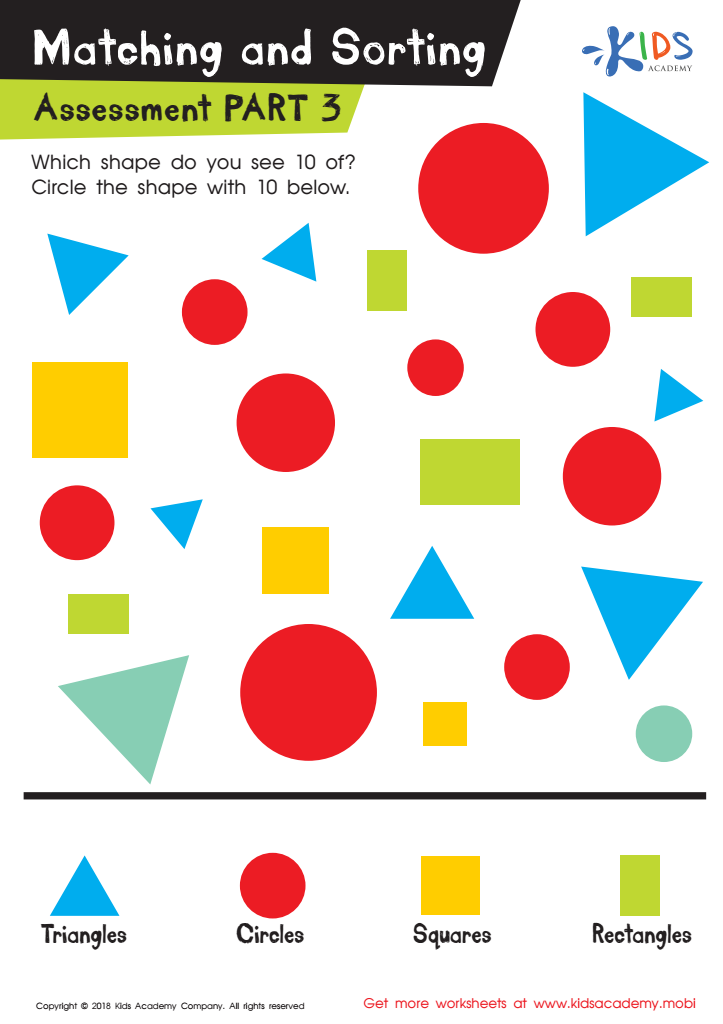
Matching and Sorting for Kindergarten: Assessment 3 Worksheet
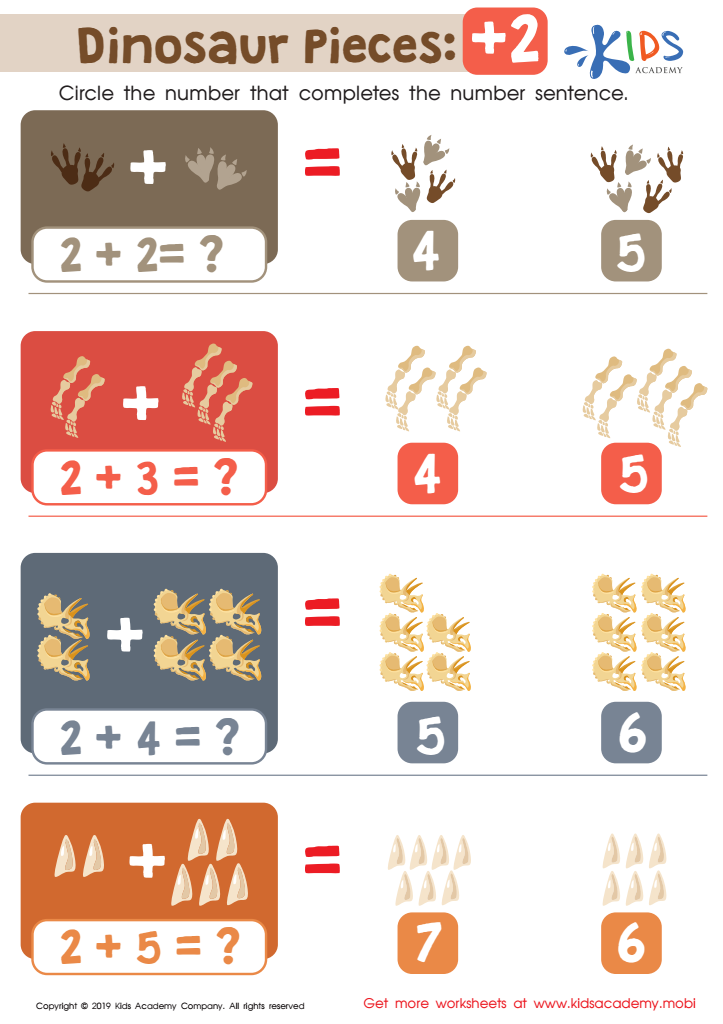
Dinosaur Pieces: +2 Worksheet
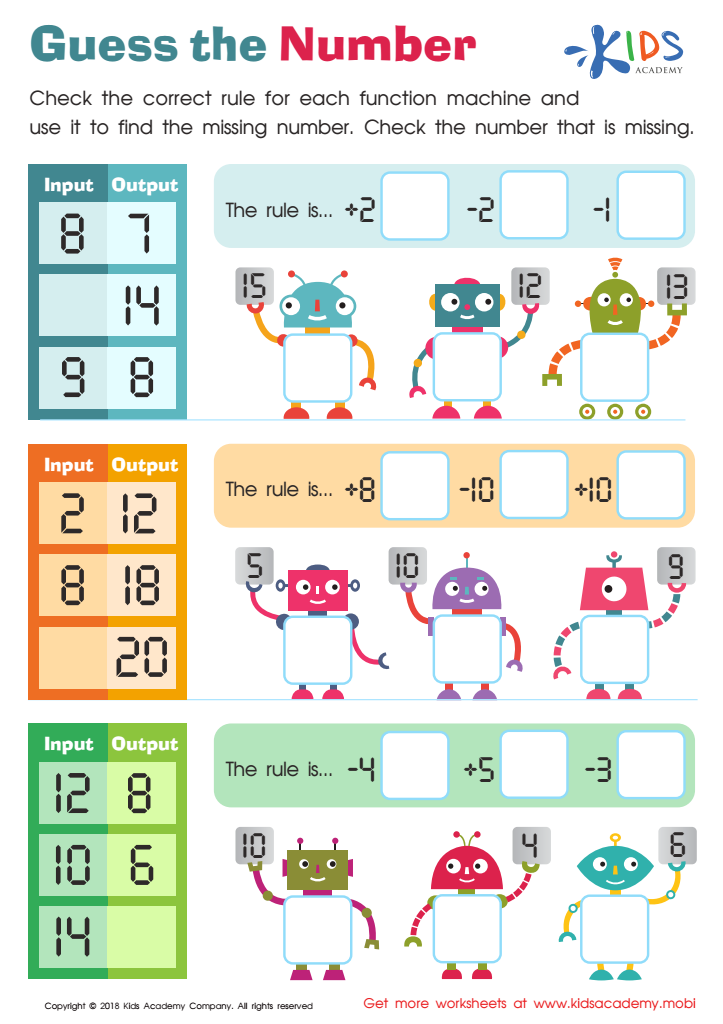
Guess the Number Worksheet
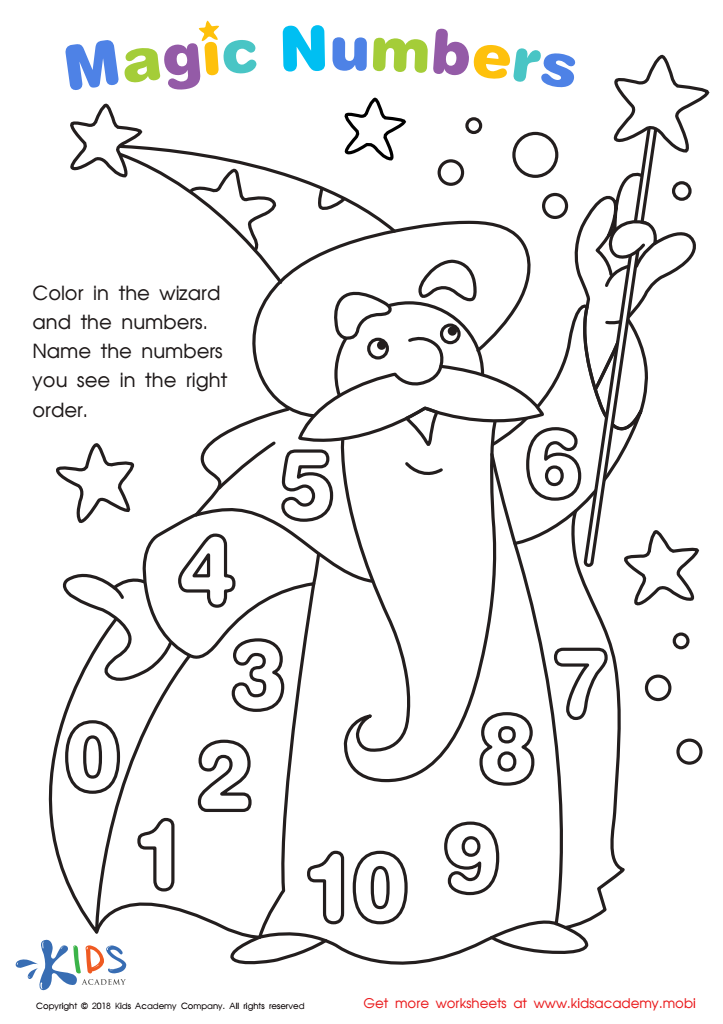
Magic Numbers Worksheet
 Assign to My Students
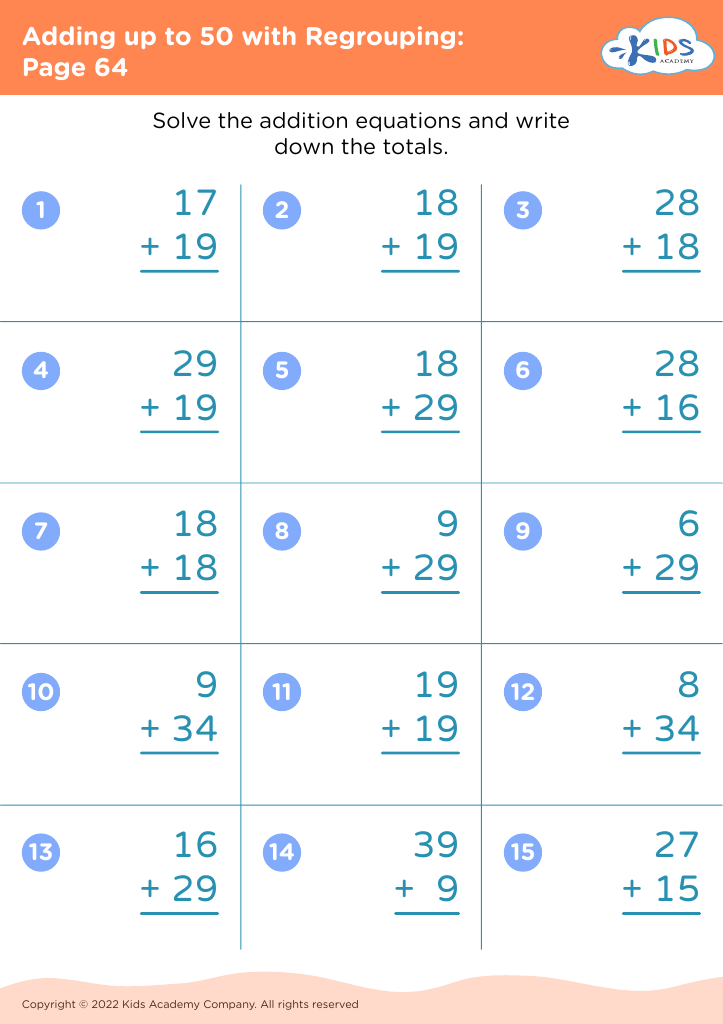
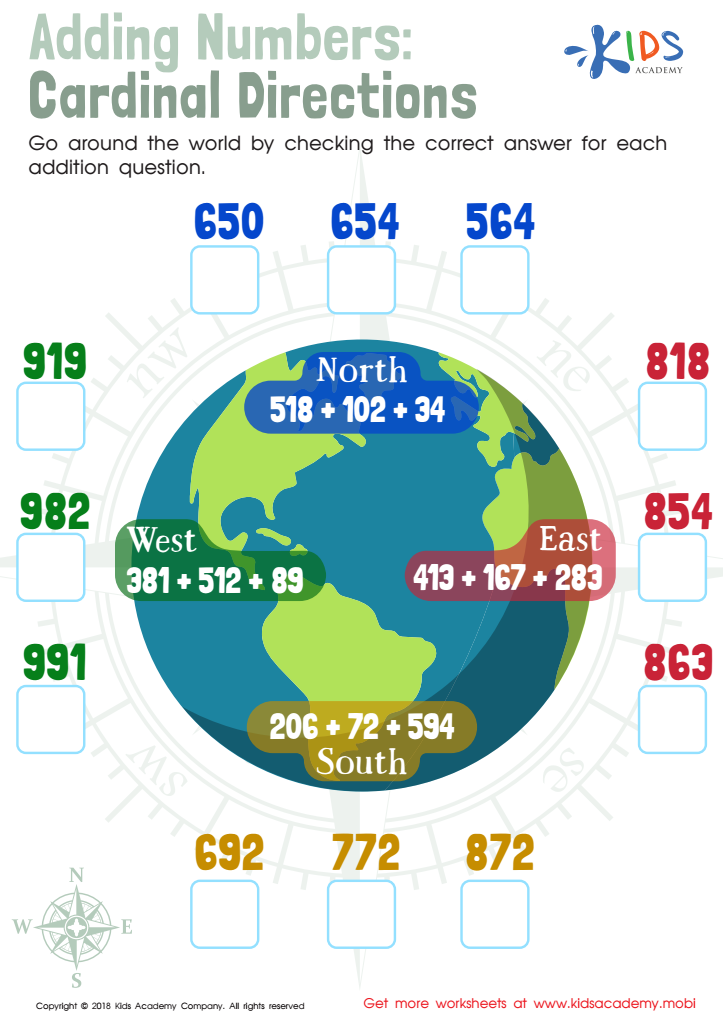
Adding Numbers: Cardinal Directions Worksheet








Parents and teachers should prioritize math skills improvement for children aged 5-8 because these early years are foundational for a child's cognitive development and future academic success. During this stage, children develop critical thinking, problem-solving abilities, and a positive attitude towards learning. Strong math skills foster analytical thinking and encourage logical reasoning, skills that extend beyond math and into everyday life and other subjects.
Mathematics lays the groundwork for more complex concepts. Mastering basic operations, counting, and simple geometry enables children to grasp advanced problems in later grades. Furthermore, early math exposure is linked to improved performance in reading and science, making it a vital aspect of overall education.
Additionally, instilling a love for math early can boost confidence and reduce anxiety towards the subject, promoting a lifelong positive relationship with learning. By engaging students with fun and interactive math activities, parents and teachers can ignite curiosity and sustain motivation, making math enjoyable.
Involving parents in this process nurtures a support system that reinforces skills at home. Thus, improving math skills at this early age is an investment in a child's future, equipping them for academic achievement and critical life skills.








