
Number formation Worksheets for Ages 5-8
3 filtered results
Difficulty Level
Grade
Age
-
From - To
Subject
Activity
Standards
Discover our engaging Number Formation Worksheets designed specifically for children ages 5-8! These interactive resources aim to enhance your child's math skills by helping them learn to write numbers confidently and correctly. Featuring a variety of fun exercises, children will practice tracing and independent writing, reinforcing number recognition and motor skills. Each worksheet is crafted to promote creativity and critical thinking, ensuring that learning numbers is both enjoyable and effective. Perfect for classroom use or at-home practice, our Number Formation Worksheets are a great tool for parents and teachers alike. Get started today and watch your child's numerical skills flourish!
Favorites
With answer key
Interactive
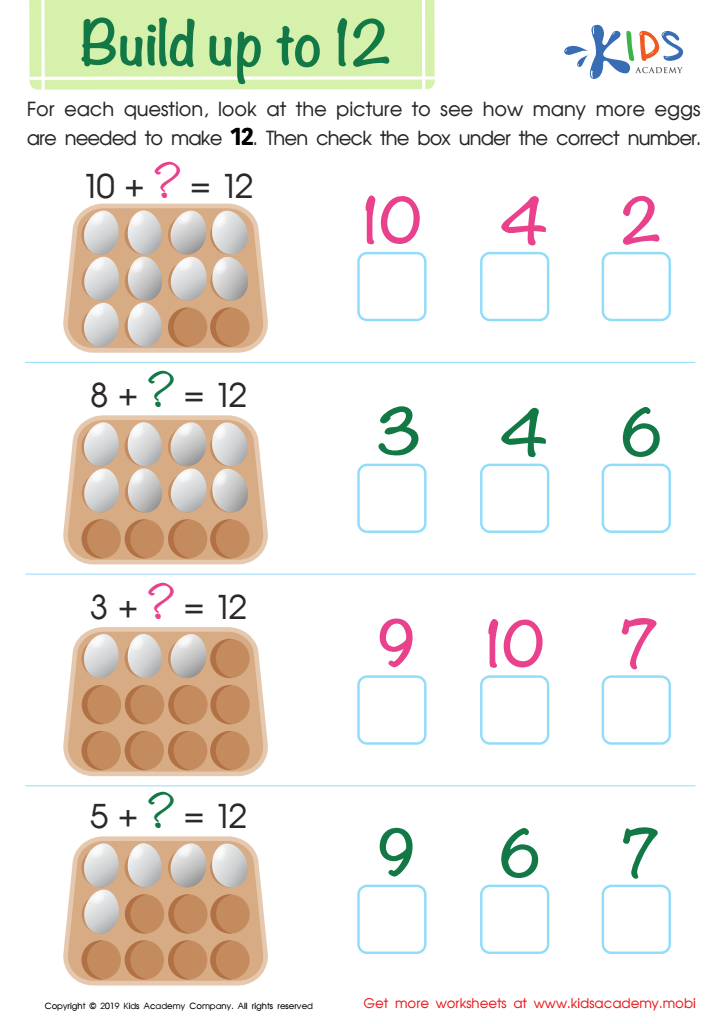
Build up to 12 Worksheet
Love eggs? Kids can identify them in the picture in this worksheet. We need to add numbers to make 12. Look at the picture and see how many eggs are needed. Check the correct number box. Breakfast or baking, eggs are essential!
 Assign to My Students
Build up to 12 Worksheet
Worksheet
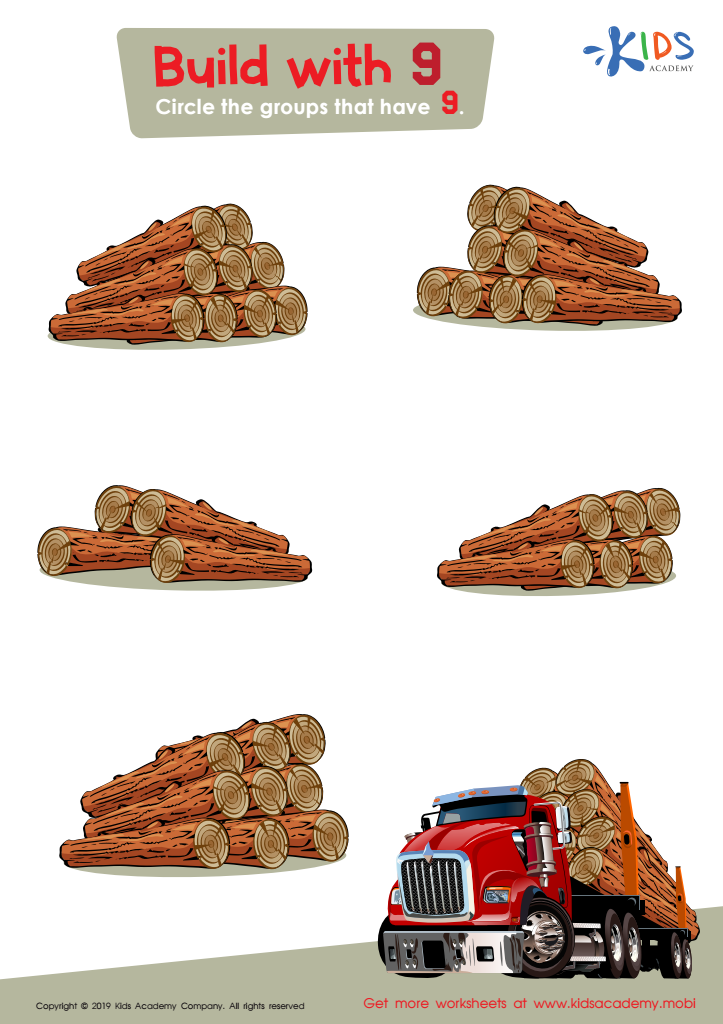
Build with 9 Worksheet
Your students' learning journey can be challenging, but ultimately rewarding. This worksheet helps them practice counting: count the logs in all the groups and circle those with 9 logs.
Build with 9 Worksheet
Worksheet
Join Kids Academy for Free
Who is primarily going to use this learning content?







Number formation is crucial for children aged 5-8 as it lays the foundation for their mathematical skills. At this age, children are developing both fine motor skills and cognitive understanding of numbers. Proper number formation helps them learn to write and recognize numbers accurately, which is essential for their confidence in mathematics.
When children learn how to form numbers correctly, it minimizes confusion and incorrect representations that can hinder their progress in math. For instance, mistaken formations can lead to misreading numbers, affecting their ability to solve problems or perform basic arithmetic. Moreover, consistent formation leads to clearer handwriting, which is important as they transition to more complex mathematical concepts and written assignments.
Additionally, good number formation practices instill a sense of order and attention to detail—skills that are valuable beyond math. Early investment in proper number formation can lead to stronger mathematical achievement later on, as well as a lasting positive attitude towards learning.
For parents and educators, fostering proper number formation is an integral part of nurturing a child's overall academic growth, promoting their readiness for future challenges, and building their confidence in their abilities.








