
Phonics comprehension Worksheets for Ages 5-8
3 filtered results
Difficulty Level
Grade
Age
-
From - To
Subject
Activity
Standards
Unlock the magic of reading with our engaging Phonics Comprehension Worksheets for ages 5-8! Designed to seamlessly blend fun with learning, these worksheets focus on vital phonics skills such as letter sounds, blends, and sight words. Accompanied by colorful images and interactive activities, each worksheet offers young learners the tools to improve their reading proficiency while fostering a love for literacy. Perfect for both classroom use and at-home practice, our phonics comprehension materials aim to build a strong foundation for your child's educational journey. Explore our rich library and watch your child's reading skills flourish!
Favorites
With answer key
Interactive
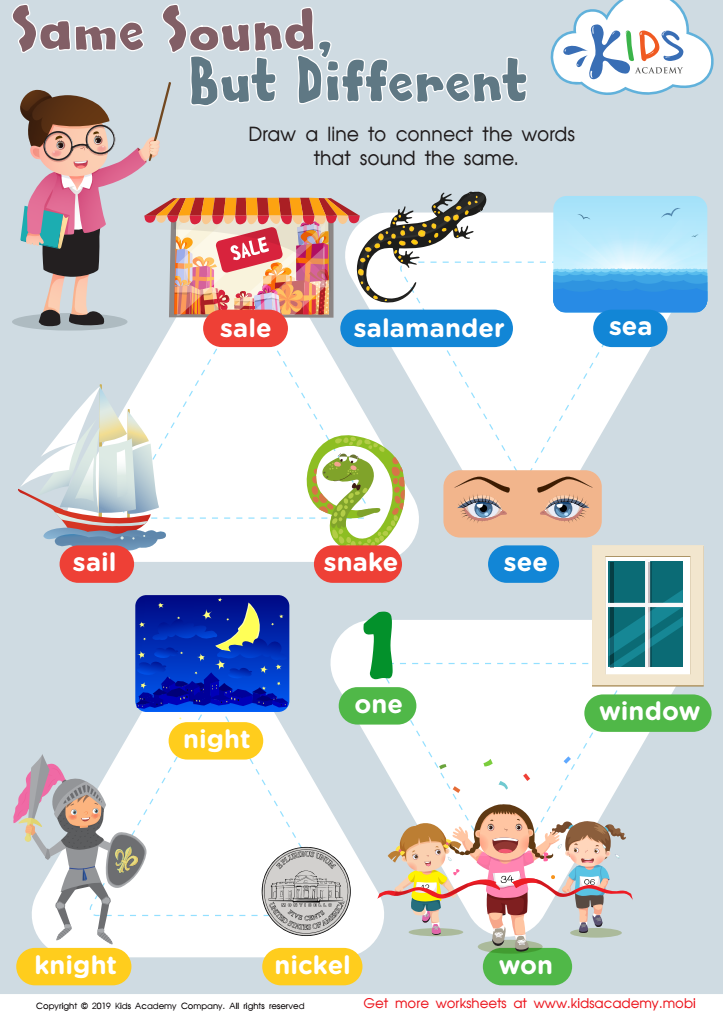
Sound Different Worksheet
Homophones can be tricky for new readers and writers. This PDF worksheet helps kids understand the differences using pictures. It asks them to draw lines to connect the homophones and provides concrete imagery for reference. It's a great way to learn the right definition and spelling of words that sound the same.
 Assign to My Students
Sound Different Worksheet
Worksheet
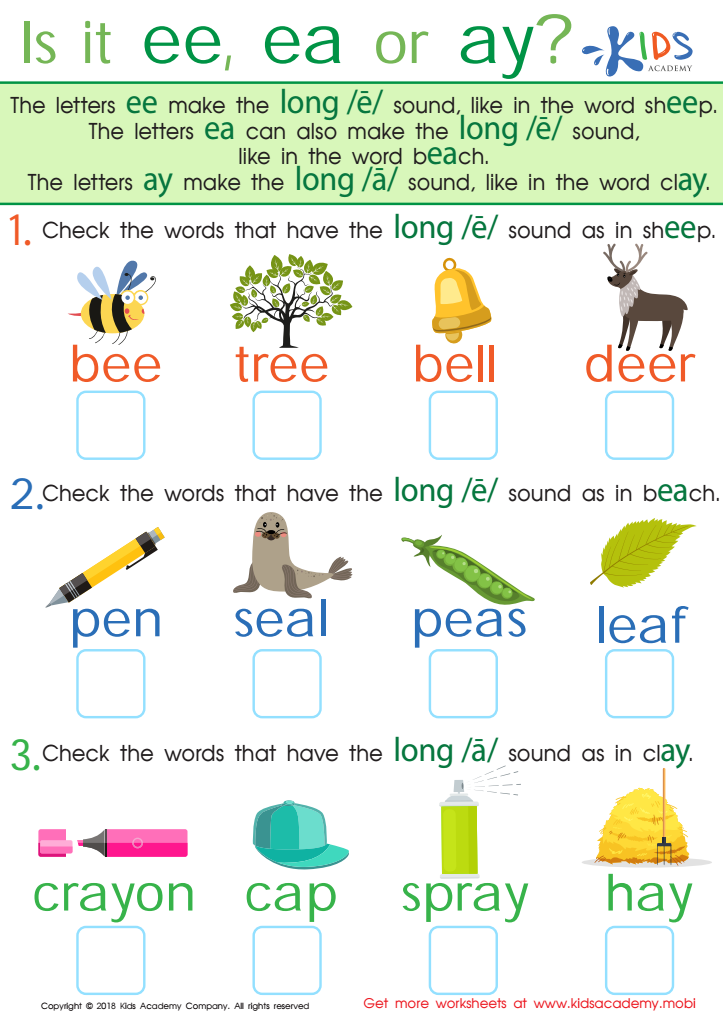
Is It EE, EA, or AY? Worksheet
When 'ee', 'ea' and 'ay' are in words, they usually make the long /e/ and /a/ sounds. Examples of words with 'ee' are "sheep", 'beach' and 'seat' with 'ea', and 'clay' and 'play' with 'ay'. Check this colourful worksheet with your kids; help them find the words that make the long /e/ sound like 'sheep'.
Is It EE, EA, or AY? Worksheet
Worksheet
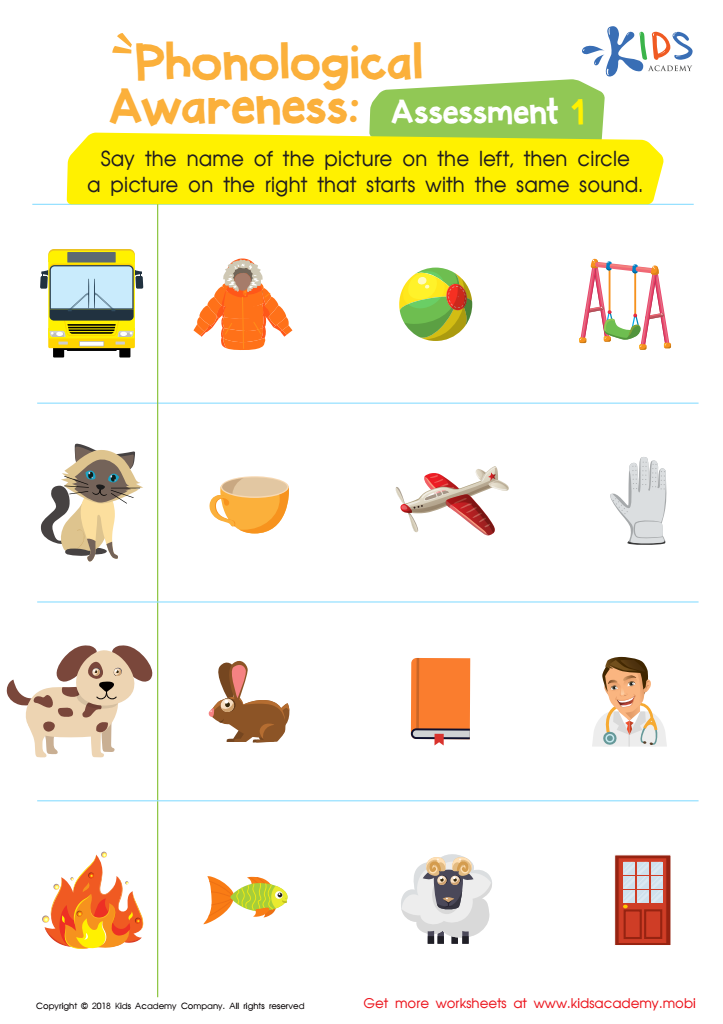
Phonological Awareness: Assessment 1 Worksheet
This worksheet helps kids build key phonics skills for pre-reading. They say each picture name aloud, focusing on the starting sound. Then, they match the sound with an image in the same row. Use as a checkpoint for kindergarten or grade 1 phonics readiness.
Phonological Awareness: Assessment 1 Worksheet
Worksheet
Join Kids Academy for Free
Who is primarily going to use this learning content?








Phonics comprehension is fundamentally important for children aged 5-8 as it lays the foundation for proficient reading and overall academic success. During these formative years, children are developing the ability to decode words, recognize patterns, and understand language structures. By grasping the relationship between sounds and letters, they can more easily decode new words, enhancing reading fluency and accuracy.
Caring about phonics comprehension is crucial because it critically affects a child's confidence and enjoyment in reading. When children can efficiently sound out words, they're less likely to feel frustrated and more likely to engage in regular reading, fostering a love for learning and exploration. Furthermore, strong phonics skills contribute to better spelling, writing, and even pronunciation, broadening their communication capabilities.
For parents and teachers, investing time in phonics education ensures that children receive the support they need to overcome reading difficulties that can lead to longer-term educational setbacks. Consistent phonics practice at this age prepares them for more complex literacy skills, achieving milestones that are fundamental to success across all school subjects. Ultimately, prioritizing phonics comprehension not only enhances literacy outcomes but also builds a robust academic and emotional foundation for future learning.








