
Recognition skills Worksheets for Ages 5-8
4 filtered results
Difficulty Level
Grade
Age
-
From - To
Subject
Activity
Standards
Enhance your child’s growth with our Recognition Skills Worksheets designed for ages 5-8. Our engaging activities include matching, sorting, and identifying exercises that build foundational cognitive skills essential for early learning. Tailored to ignite curiosity and boost confidence, these visually stimulating worksheets help young learners develop essential pattern recognition, memory, and observational skills. Perfect for home or classroom use, our resources support both independent learning and guided instruction. Empower your child to master key educational milestones with our expertly crafted worksheets, providing a fun and constructive way to learn. Unlock your child’s potential with Kids Academy today!
Favorites
With answer key
Interactive
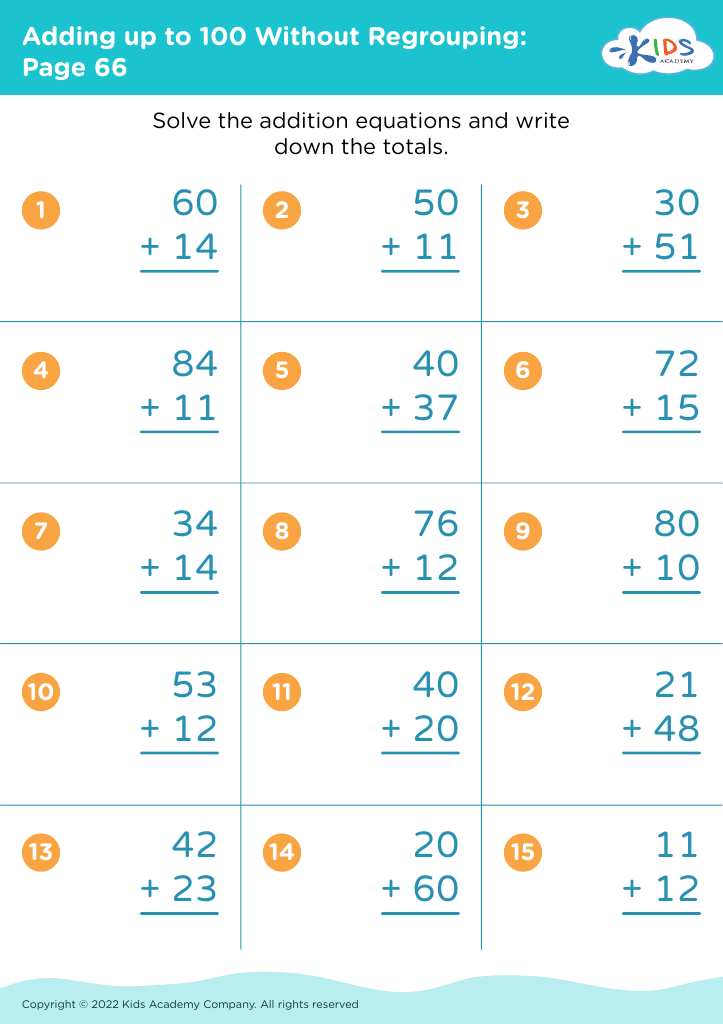
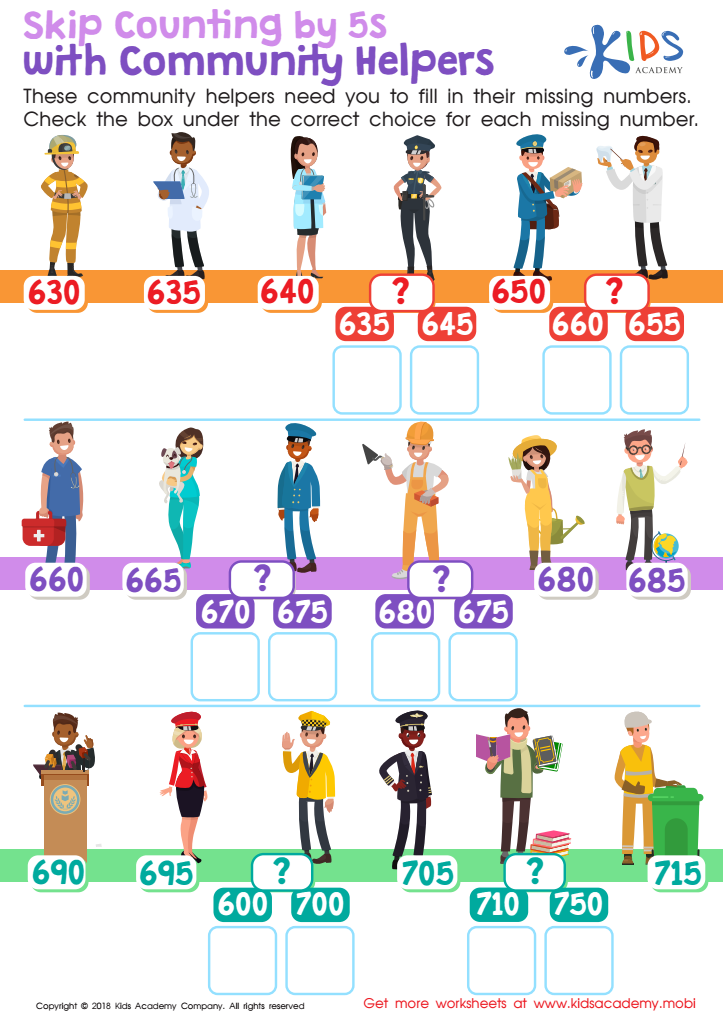
Skip Counting by 5s With Community Helpers Worksheet
This free worksheet combines social studies with math! Kids will practice counting by 5s, rounding numbers and honing their computation skills while also familiarizing themselves with community helpers. Develop your child's number sense and strengthen their math skills - all through a fun and interactive activity.
 Assign to My Students
Skip Counting by 5s With Community Helpers Worksheet
Worksheet
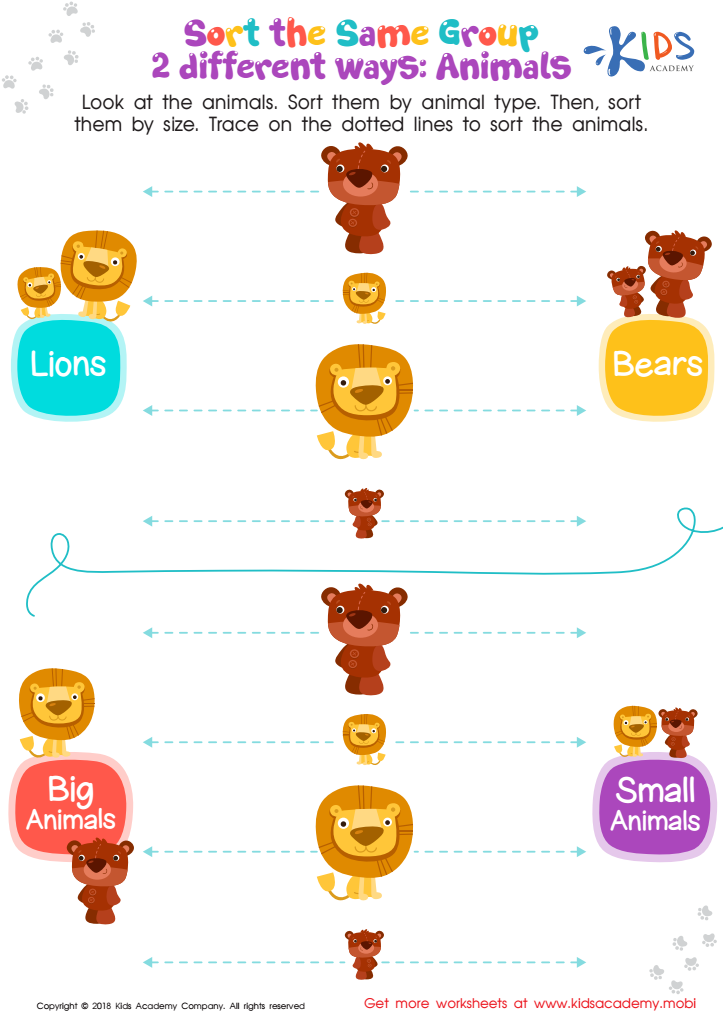
Sort the Same Group 2 Different Ways: Animals Worksheet
Look at the animals with your child. Ask them to name them, then sort them by type (e.g. lions and bears). Next, help them sort by size, tracing the dotted lines. This will teach them sorting skills.
Sort the Same Group 2 Different Ways: Animals Worksheet
Worksheet

Join Kids Academy for Free
Who is primarily going to use this learning content?







Recognition skills are essential building blocks in early childhood development, critical for the foundational years of ages 5-8. As children transition from preschool to elementary school, they encounter a broader range of stimuli that require keen recognition abilities. Parents and teachers should prioritize these skills because they lay the groundwork for both academic and social success.
For instance, recognizing shapes, letters, and numbers is crucial in early literacy and math education. When children accurately identify and differentiate these basic elements, they build confidence in reading and numerical problem-solving, setting a robust foundation for future learning. Furthermore, recognition skills promote cognitive development by enhancing memory, attention, and processing speed.
Socially, these skills enable children to understand emotions and facial expressions, facilitating effective communication and relationship-building. This awareness fosters a sense of empathy and cooperation in group settings, essential for positive peer interactions.
Moreover, strong recognition skills are linked to safety and independence. Recognizing common signs, symbols, and environmental cues helps children navigate their surroundings more confidently.
By emphasizing the development of recognition skills in early childhood, parents and teachers can create a supportive, enriching learning environment that nurtures well-rounded children ready to tackle the complexities of further education and life.








