
Sequencing skills improvement Worksheets for Ages 5-8
3 filtered results
Difficulty Level
Grade
Age
-
From - To
Subject
Activity
Standards
Enhance your child's sequencing skills with our engaging worksheets designed specifically for ages 5-8! These printable activities help young learners grasp the concept of order and improve critical thinking abilities. Our worksheets include fun exercises that encourage children to arrange pictures, sort events, and complete stories in the correct sequence. By practicing sequencing skills, kids will develop essential cognitive abilities vital for reading comprehension and problem solving. Perfect for home or classroom use, these resources make learning enjoyable while building foundational skills. Download our Sequencing Skills Improvement Worksheets today and support your child's academic journey with interactive, enriching experiences!
Favorites
With answer key
Interactive
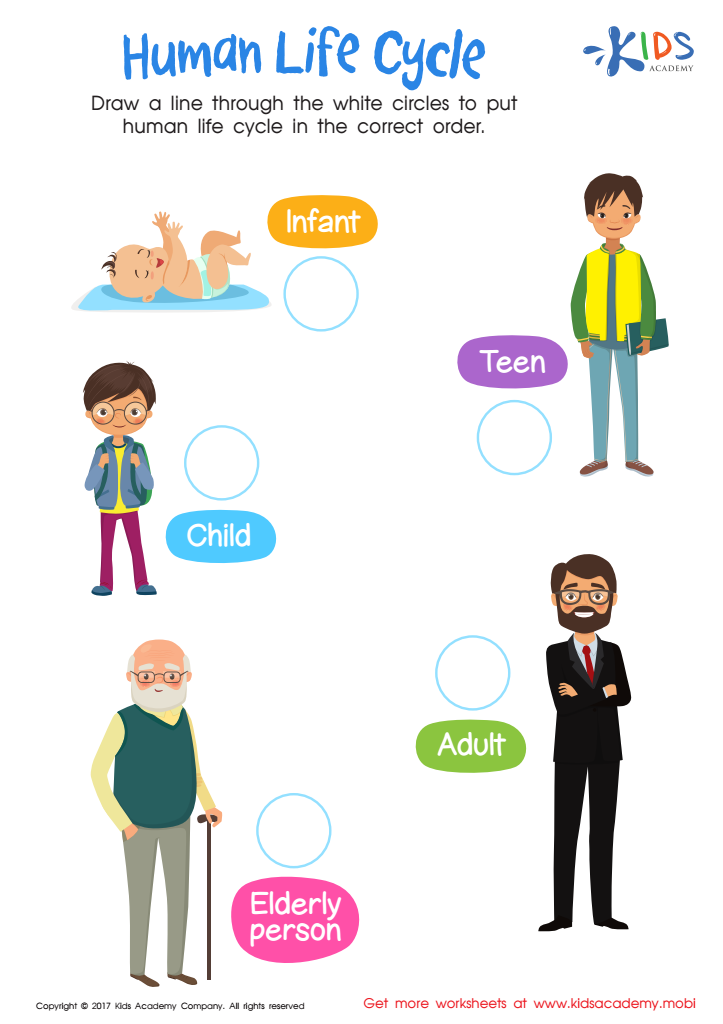
Human Life Cycle Worksheet
Kids can use this PDF to gain an understanding of their life cycle and important health concepts. It features colorful graphics to help solidify their learning.
 Assign to My Students
Human Life Cycle Worksheet
Worksheet
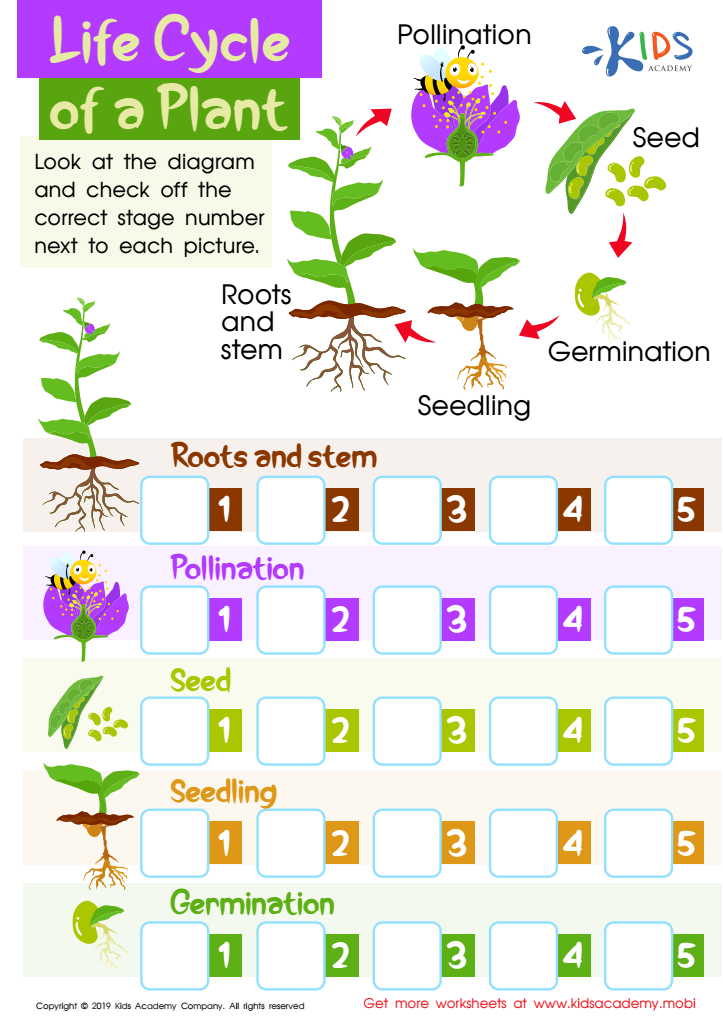
Life Cycle of a Plant Worksheet
This fun PDF worksheet lets young scientists explore the life cycle of plants. It features pictures to describe each stage: pollination, seed, germination, seedling, rooting and stems. They can check off each stage in the diagram, giving them a concrete understanding.
Life Cycle of a Plant Worksheet
Worksheet
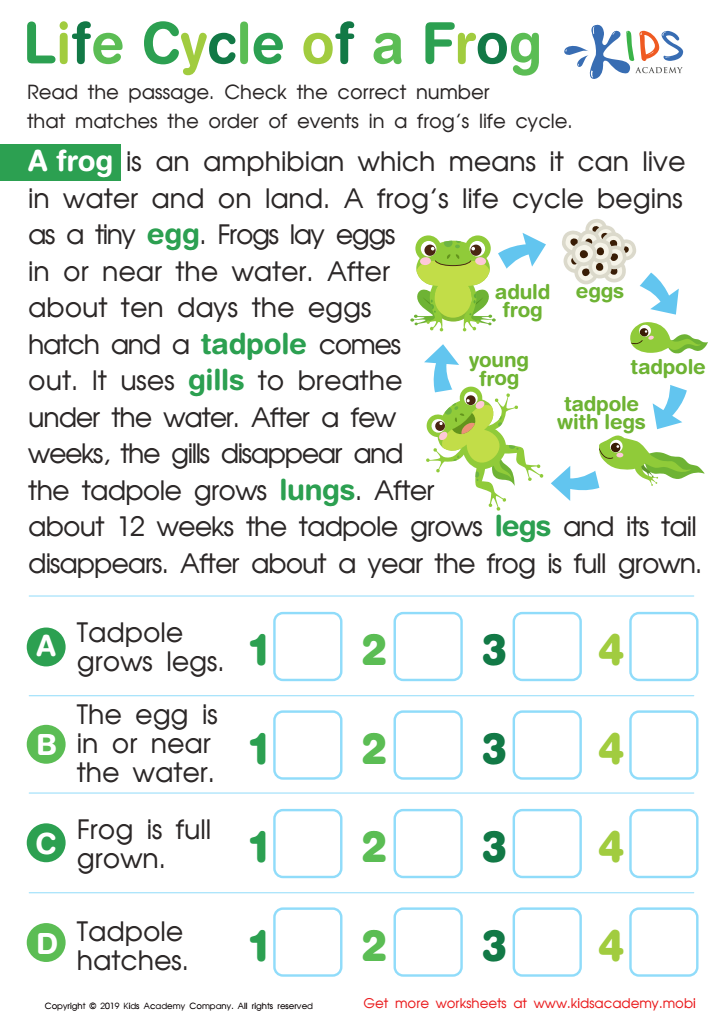
Life Cycle of a Frog Worksheet
Teach your kids to read and open their eyes to new knowledge. Frogs have fascinating life cycles. Show them the worksheet with pictures and guide them as they read the passage about it. Encourage them to check the number that matches the frog's life cycle order.
Life Cycle of a Frog Worksheet
Worksheet
Join Kids Academy for Free
Who is primarily going to use this learning content?








Sequencing skills are fundamental for children aged 5-8, serving as a building block for academic and daily life success. Parents and teachers should prioritize these skills because they encompass the ability to arrange events in order, recognize patterns, and understand relationships between concepts. Mastering sequencing aids in various subjects, particularly literacy and math, where understanding the order of operations or narrative structure is crucial.
Moreover, sequencing enhances critical thinking and problem-solving abilities. When children can sequence events for a story they read or their daily routine, they develop a clearer understanding of cause and effect, improving comprehension and retention. This paves the way for better organizational skills, enabling youngsters to approach tasks systematically and merely follow instructions effectively.
Additionally, improved sequencing skills foster creativity as children learn to connect ideas and construct either their own stories or solutions to challenges. Encouraging these skills early on can positively influence self-esteem and confidence, as children become adept at navigating their world. Lastly, investing in the development of sequencing skills can lay a solid foundation for lifelong learning, better preparing children for future academic endeavors and everyday experiences. Therefore, it is essential for parents and teachers to actively support skill improvement in this area.








