Sorting and categorizing Worksheets for Ages 5-8
3 filtered results
-
From - To
Discover our engaging "Sorting and Categorizing Worksheets" designed for children ages 5-8. These worksheets provide a fun and interactive way for young learners to develop essential skills in organizing, classifying, and differentiating items. Our varied activities, including images, objects, and themes, encourage kids to think critically while enhancing their cognitive abilities. Perfect for classroom use or at-home learning, these resources are aligned with educational standards to support knowledge retention. With colorful visuals and age-appropriate tasks, children will enjoy mastering sorting and categorizing concepts. Explore our collection today to help your child build a strong foundation in essential organizational skills!
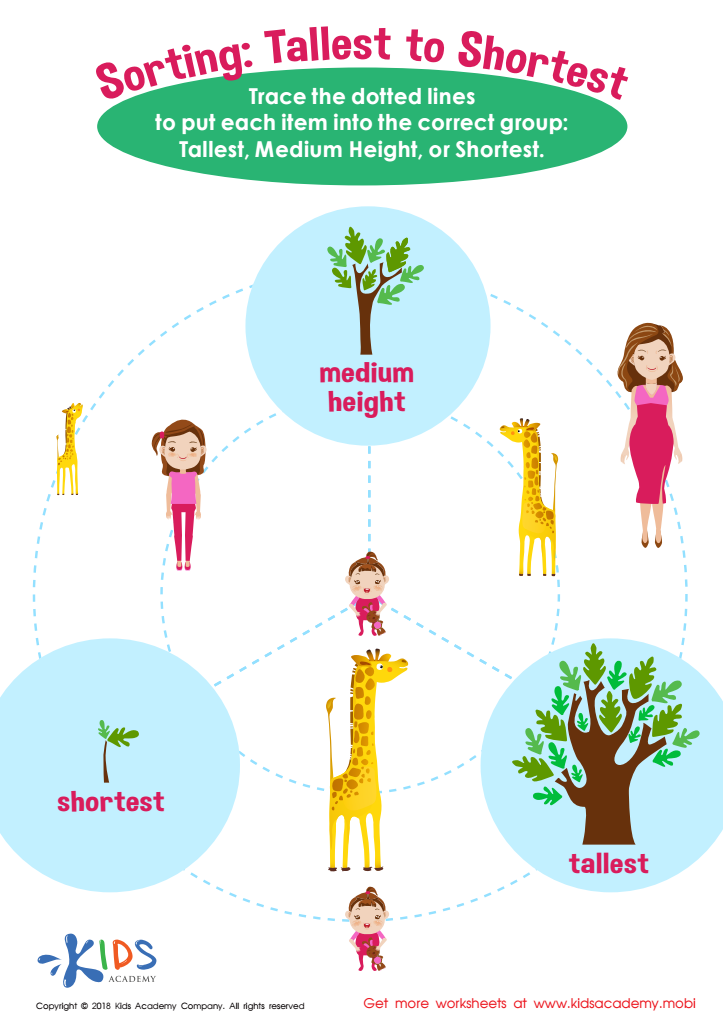
Sorting: Tallest to Shortest Worksheet
 Assign to My Students


.jpg)



Sorting and categorizing are foundational skills that play an essential role in the cognitive development of children aged 5-8. These skills help young learners make sense of the world around them by organizing information, which enhances problem-solving abilities and critical thinking. When children engage in sorting activities—such as grouping objects by color, size, or shape—they learn to identify similarities and differences, fostering observational skills and attention to detail.
Moreover, sorting and categorizing aid in the development of language skills. As children describe their groupings, they expand their vocabulary and improve their communication abilities. This practice also introduces early math concepts, as children learn about sets, counting, and properties of objects.
For educators and parents, encouraging sorting and categorizing activities provides opportunities for hands-on learning, making abstract concepts more tangible. Activities can be seamlessly integrated into daily routines or playtime, creating an enriching environment. Ultimately, these skills support not only academic success but also social skills, as children learn to collaborate and share ideas during sorting exercises. By prioritizing sorting and categorization, parents and teachers contribute significantly to a child’s overall developmental trajectory and cognitive readiness for future learning.








