Time recognition Worksheets for Ages 5-8
6 filtered results
-
From - To
Discover our engaging Time Recognition Worksheets designed specifically for children aged 5 to 8! These worksheets provide fun and interactive activities that help young learners understand time concepts, like reading clocks and differentiating between hours and minutes. Through colorful illustrations and fácil-to-follow exercises, kids will develop their time-telling skills while enhancing their overall math abilities. Perfect for both classroom use and at-home learning, our worksheets promote independent learning and boost confidence in time management. Start your child's journey to mastering the basics of time recognition today with our thoughtfully crafted resources that make learning enjoyable!
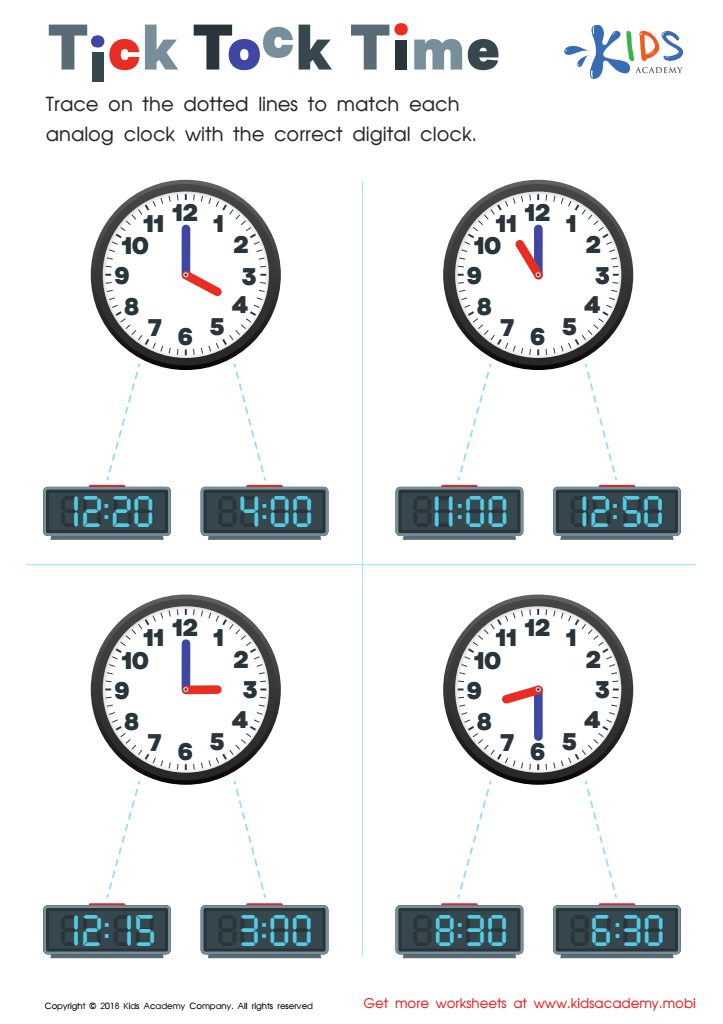
Tick Tock Time Worksheet
 Assign to My Students
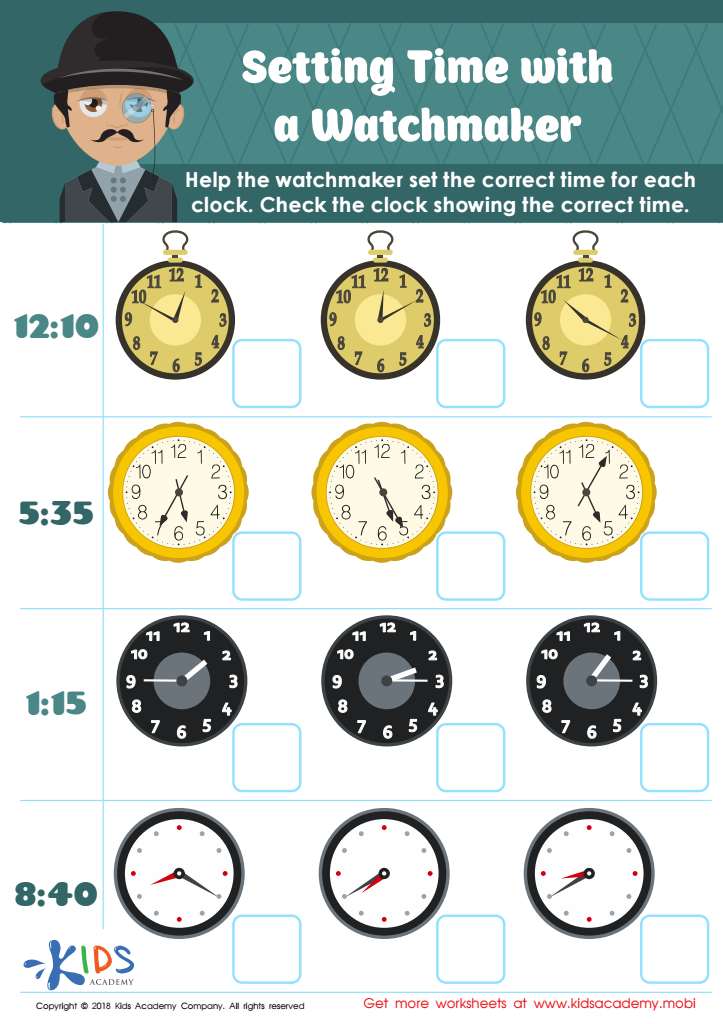
Setting Time with Watchmaker Worksheet
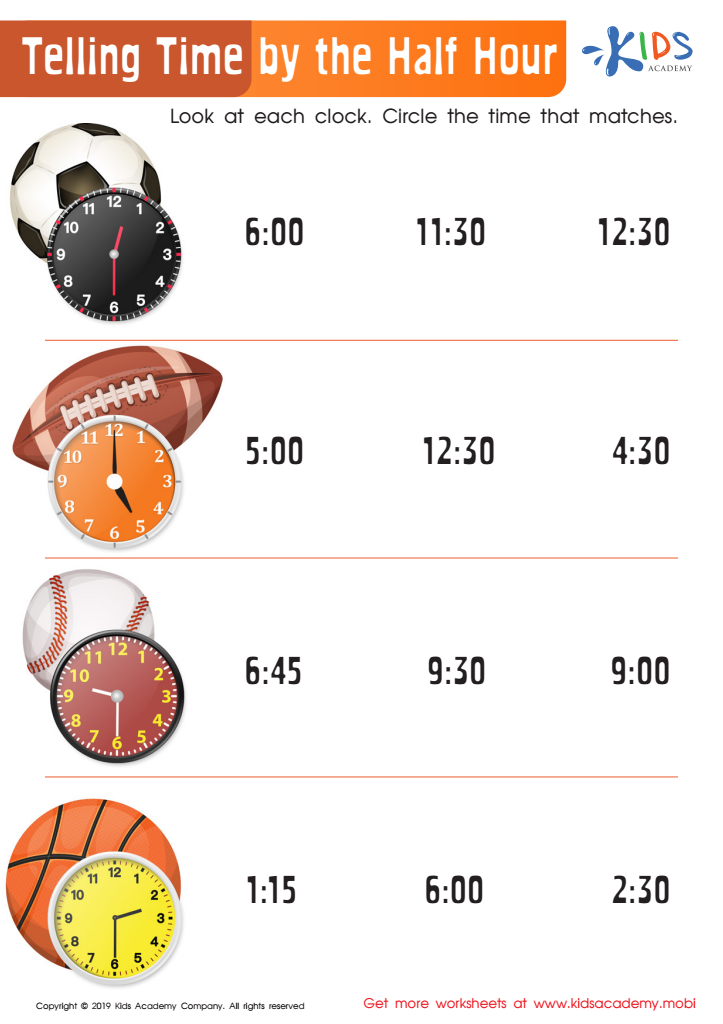
Telling Time by the Half Hour Worksheet
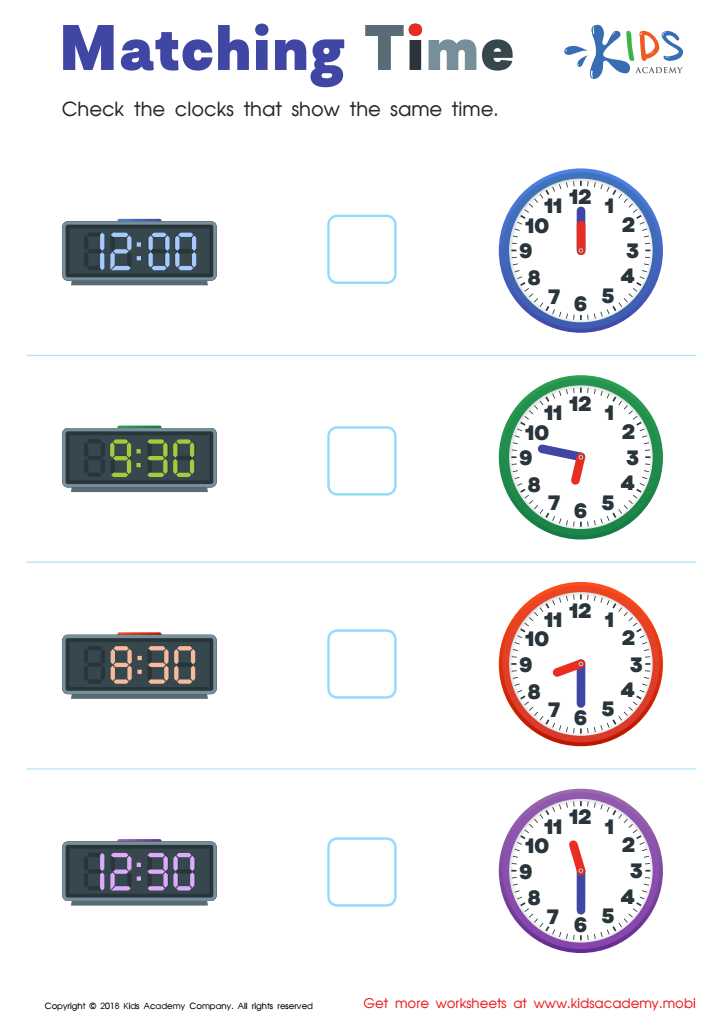
Matching Time Worksheet
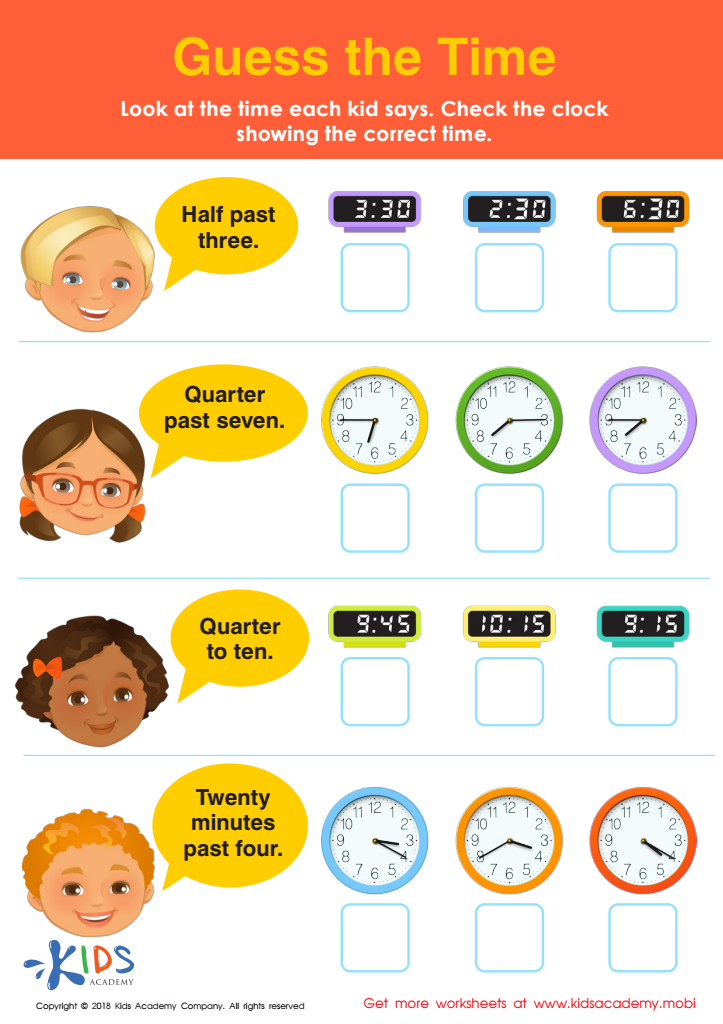
Guess the Time Worksheet
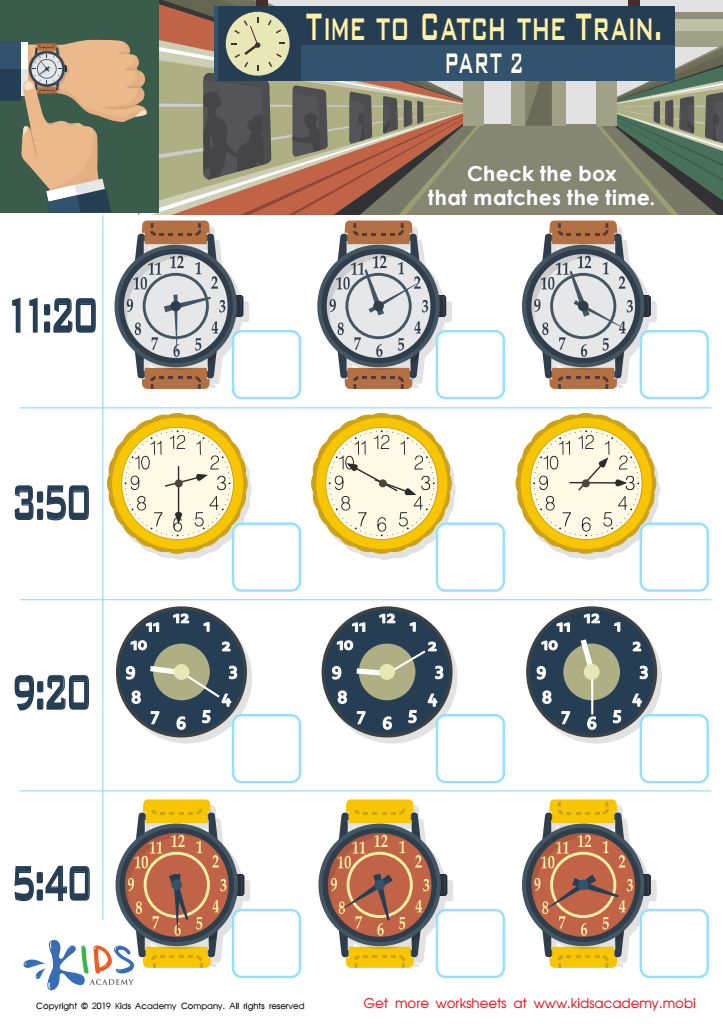
Time to Catch the Train Part 2 Worksheet


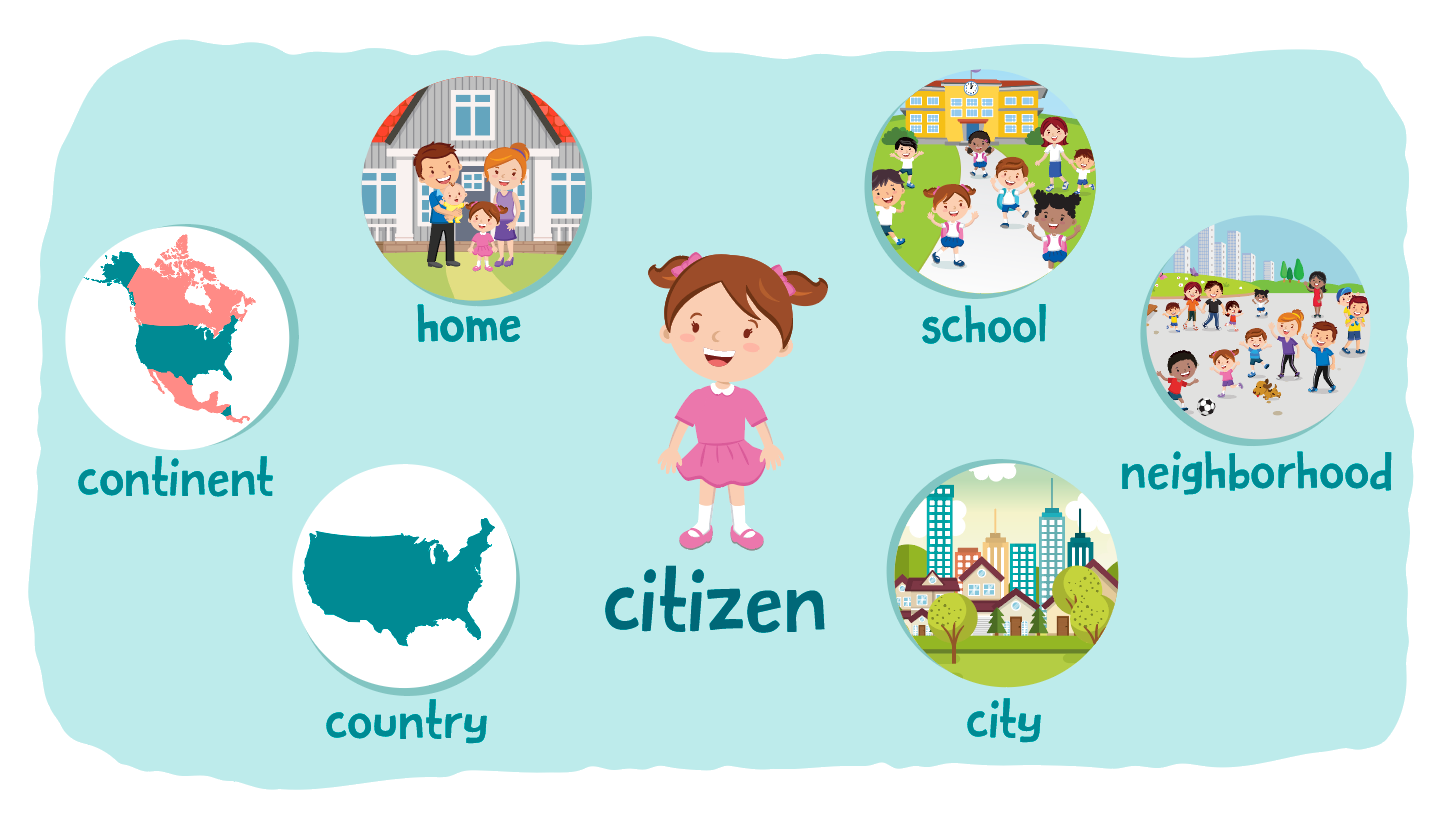




Time recognition is a crucial skill for children aged 5-8 and deserves the attention of both parents and teachers. At this developmental stage, children begin to understand the concept of time, which plays a significant role in their daily routines, school activities, and overall organization.
Understanding time helps children manage their schedules better, leading them to develop a sense of responsibility and independence. When children can tell time, they learn to recognize that certain activities occur at specific times, fostering an understanding of sequences and transitions throughout the day. This knowledge also helps them internalize the concepts of past, present, and future, enriching their storytelling and comprehension skills.
Moreover, learning to tell time enhances critical thinking, as children use mathematical skills to solve problems related to hours and minutes. Having a strong foundation in time recognition promotes time management skills essential for their future academic success. Parents and teachers can support this learning by incorporating time-related activities, such as morning routines or timed games, into their daily lives. Thus, developing time recognition not only equips children with practical skills but also nurtures their cognitive and emotional growth, preparing them for more complex concepts as they progress in their education.








