Understanding area Worksheets for Ages 5-8
3 filtered results
-
From - To
Discover the perfect introductory tool with our "Understanding Area Worksheets for Ages 5-8." These engaging worksheets are designed to help young learners grasp the concept of area through fun and interactive activities. Your child will enjoy counting squares, comparing areas, and solving puzzles, all while enhancing their critical thinking and spatial reasoning skills. Perfect for at-home learning or classroom use, our worksheets break down complex ideas into simple, easy-to-follow steps, ensuring a positive learning experience. Empower your child’s mathematics journey with these intuitive resources that lay a solid foundation for future success. Let’s make learning area fun!
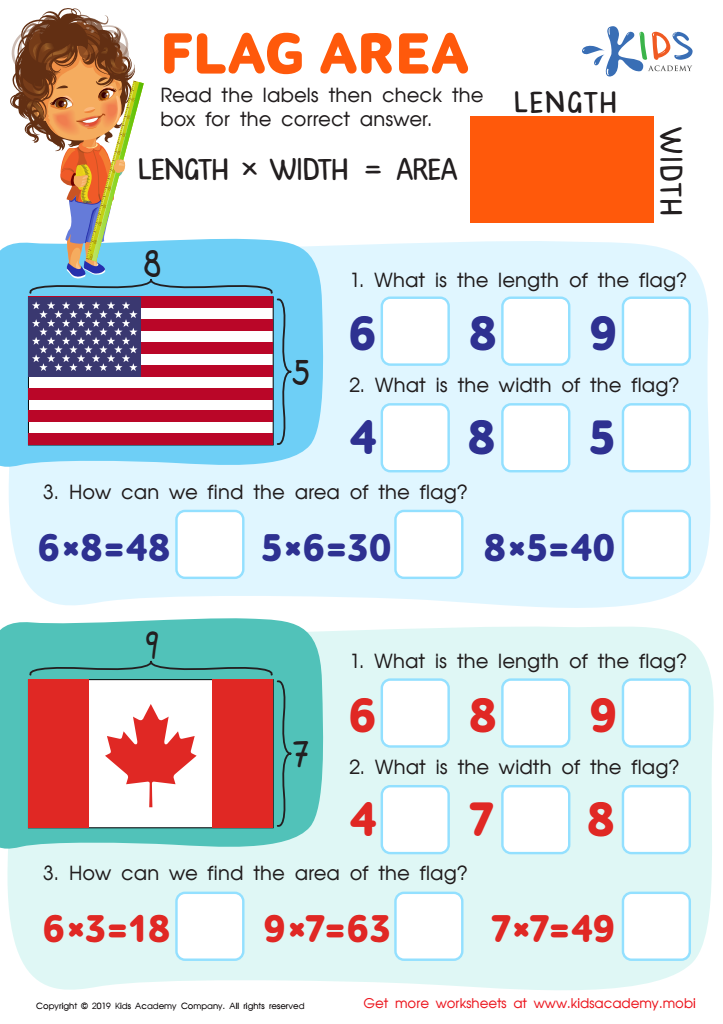
Flag Area Worksheet
 Assign to My Students
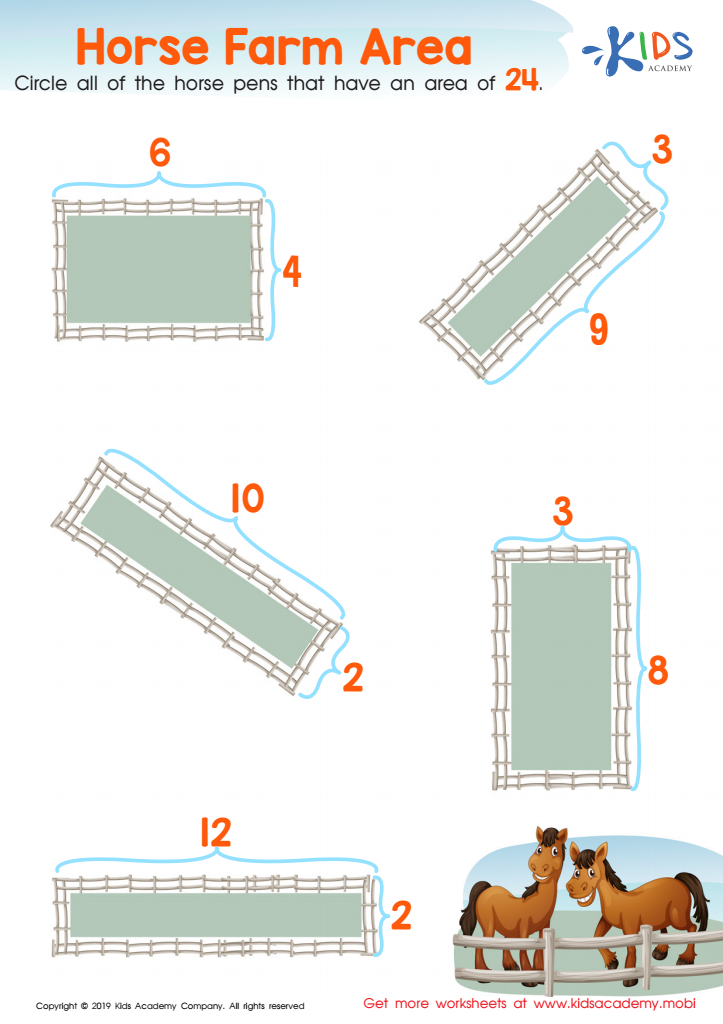
Horse Farm Area Worksheet
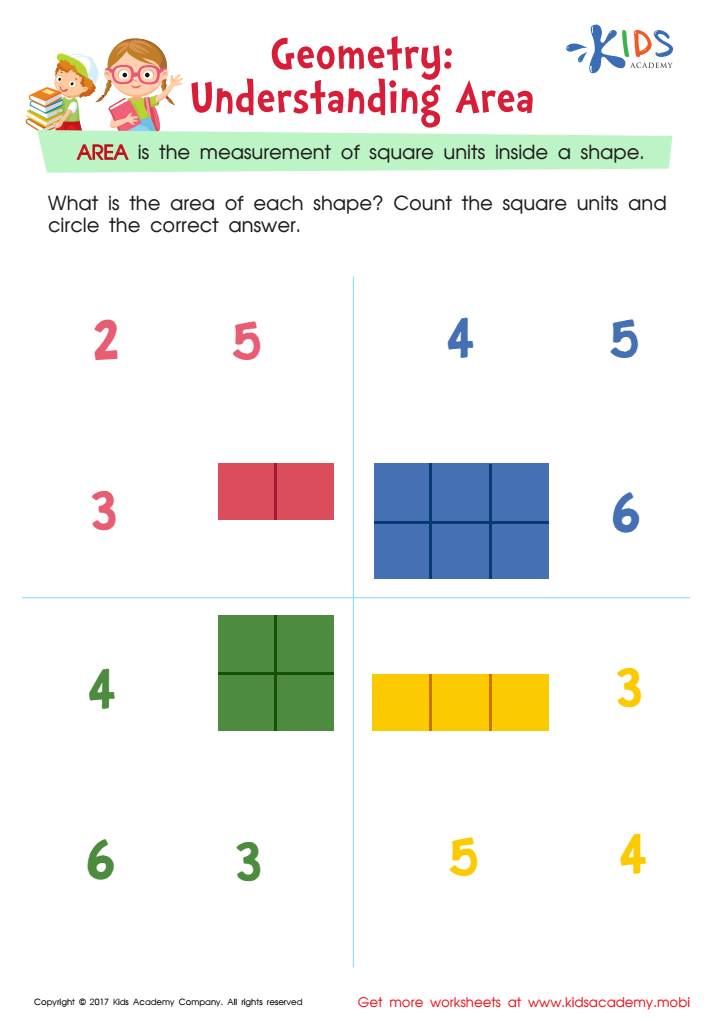
Understanding Area Worksheet




.jpg)


.jpg)
Understanding the concept of area is essential for young children aged 5-8 as it lays the foundation for future mathematical success and everyday life skills. Grasping the idea of how space is measured helps kids make sense of the world around them. For example, knowing the area helps them understand how much carpet is needed to cover a floor, how big their room is, or how much paint is required for a wall.
Parents and teachers need to emphasize this concept early because this is a period when children develop their critical thinking skills. Comprehending area assists in improved spatial reasoning, allowing children to visualize and manipulate objects, a skill particularly useful in STEM fields. Moreover, early exposure to hands-on activities involving area, such as measuring with blocks and tiles, promotes engagement and makes math tangible and less abstract.
By nurturing a solid understanding of area, parents and teachers contribute to a child’s overall numerical literacy, which can boost their confidence in tackling more complex subjects in the future. Eliminating misconceptions early on provides a strong mathematical foundation. Thus, caring about the comprehension of area ensures the development of well-rounded, mathematically proficient individuals.








