Understanding biodiversity Worksheets for Ages 5-8
4 filtered results
-
From - To
Explore the wonders of nature with our "Understanding Biodiversity Worksheets" designed specifically for children aged 5-8! These engaging worksheets help young learners grasp the concept of biodiversity, promoting awareness of different plant and animal species and their importance in our ecosystems. Featuring colorful illustrations and fun activities, this resource aims to spark curiosity about the natural world while developing critical thinking and observation skills. Activities include matching animals to their habitats, and counting species in various environments. Perfect for classroom use or at-home learning, these worksheets encourage a love for nature and environmental stewardship from an early age! Dive in and discover the diversity of life!
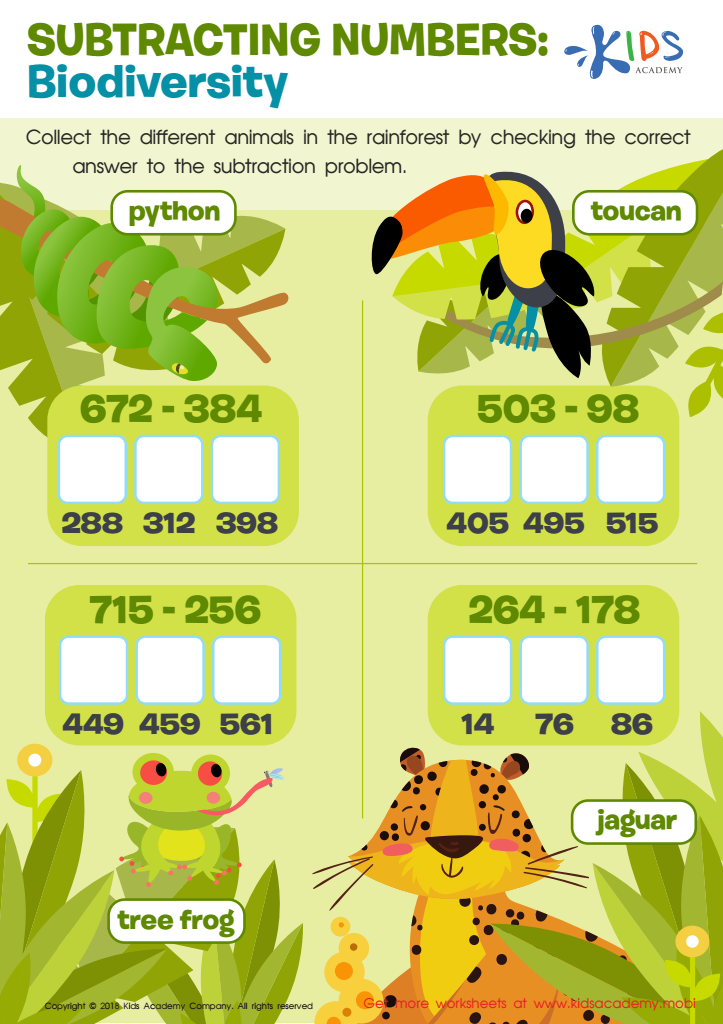
Subtracting Numbers: Biodiversity Worksheet
 Assign to My Students
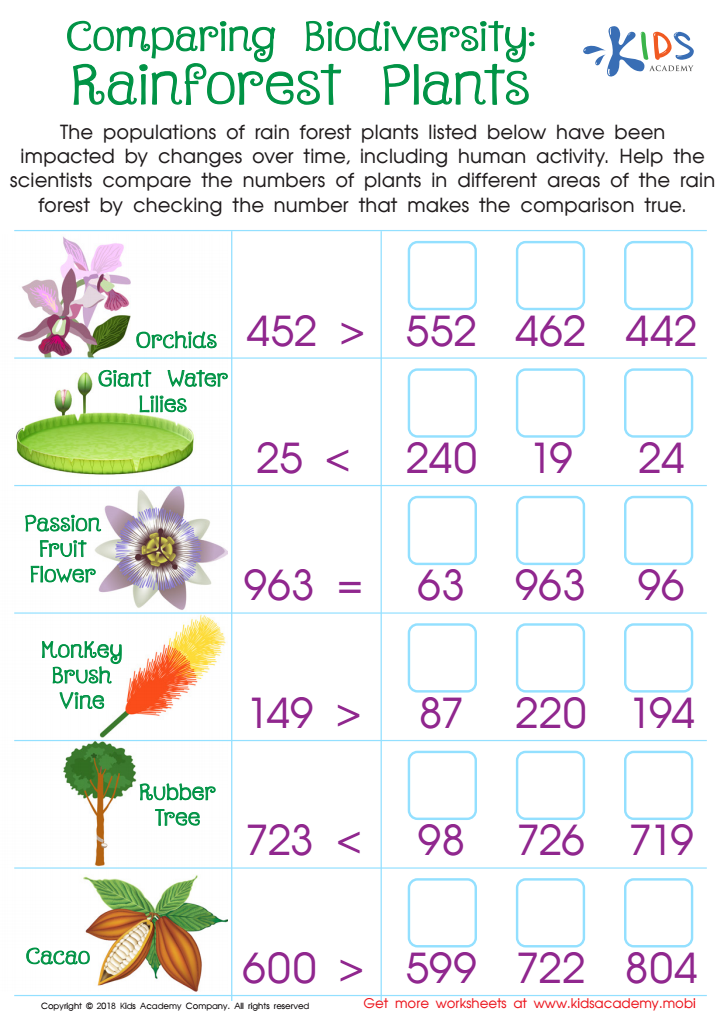
Comparing Biodiversity: Rainforest Plants Worksheet
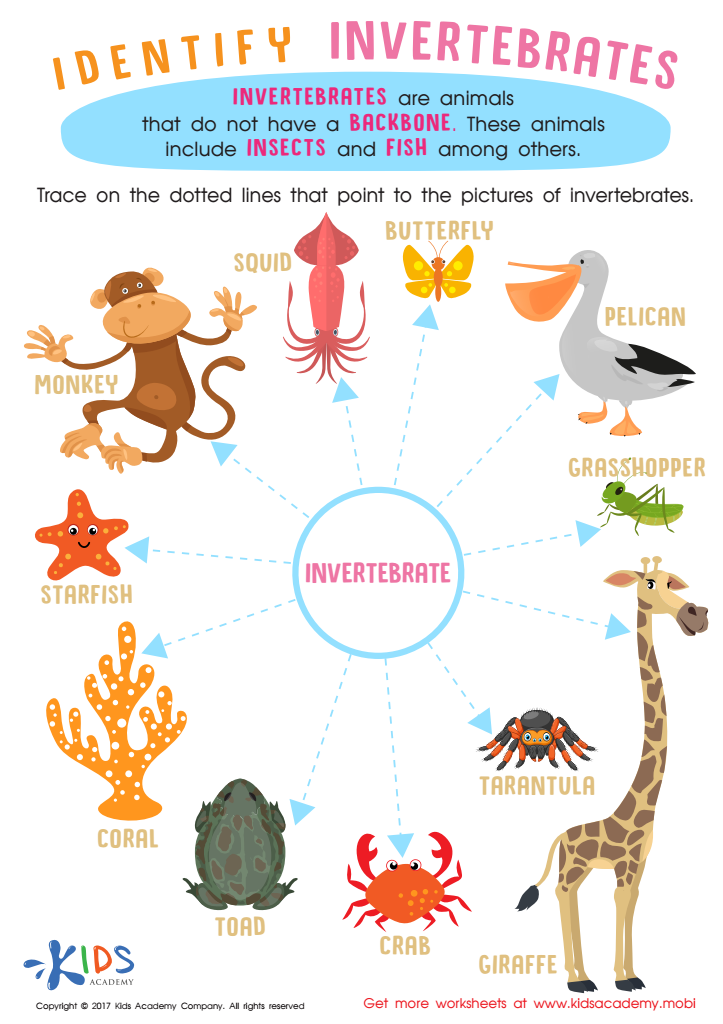
Invertebrates Worksheet for Grade 3
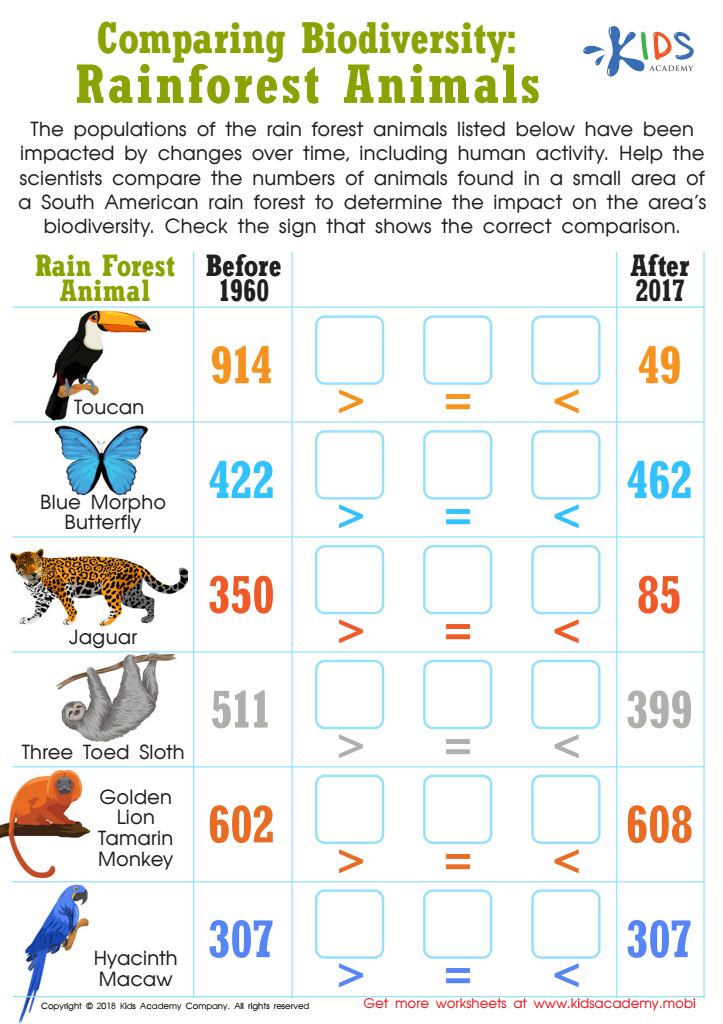
Comparing Biodiversity: Rainforest Animals Worksheet


.jpg)




Understanding biodiversity is essential for children aged 5-8, and it should matter to both parents and teachers for several reasons. First, it lays the foundational concept that life on Earth is interconnected. Young children are naturally curious about their environment, and introducing them to biodiversity helps foster a sense of wonder and respect for nature.
By understanding biodiversity, children learn about the variety of living organisms, from plants and animals to microorganisms. This knowledge is crucial for developing appreciation and empathy towards different life forms, encouraging children to see the importance of all species. Moreover, understanding how ecosystems function teaches them their role in the environment and the impact of their actions on it, embedding a sense of responsibility from a young age.
Biodiversity education also promotes critical thinking, as children begin to ask questions about how different species interact, adapt, and contribute to their ecosystem. Engaging with nature and exploring biodiversity can enhance creativity, spur interest in science, and promote environmental stewardship.
In essence, emphasizing biodiversity helps shape compassionate, informed future citizens who recognize their connection to the world and commitment to its well-being, making it a vital aspect of education for young learners.








