Understanding equations Worksheets for Ages 5-8
8 filtered results
-
From - To
Dive into our engaging "Understanding Equations Worksheets for Ages 5-8" and help young learners build a strong mathematical foundation! Designed to make learning fun, these worksheets introduce basic concepts of equations through colorful visuals and interactive activities. With a focus on critical thinking and problem-solving, children will master balancing equations, recognizing patterns, and understanding mathematical relationships. Ideal for both classroom and home use, our worksheets cater to various learning styles, ensuring every child grasps these essential skills. Empower your youngster with the confidence to tackle math challenges head-on with these specially crafted resources.
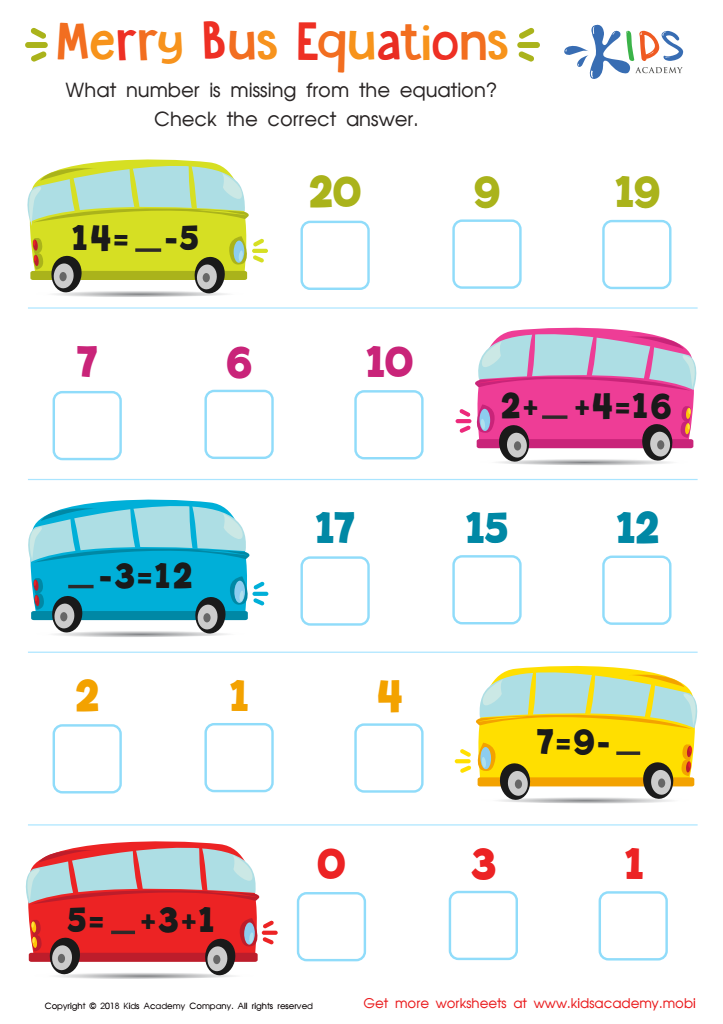
Merry Bus Equations Worksheet
 Assign to My Students
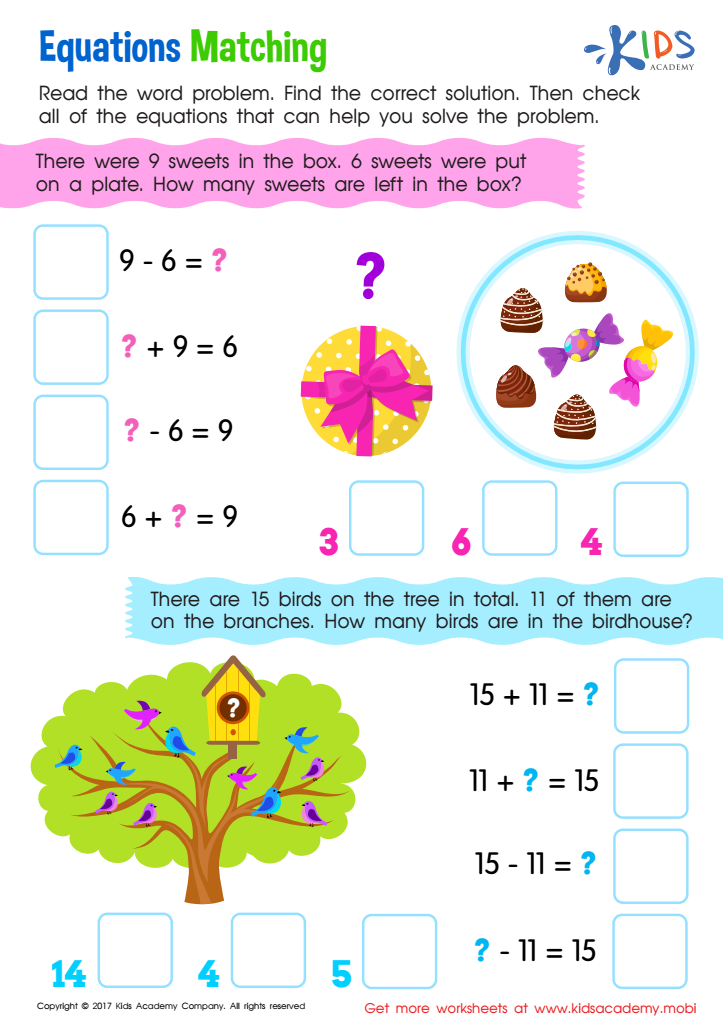
Equations Matching Word Problems Worksheet
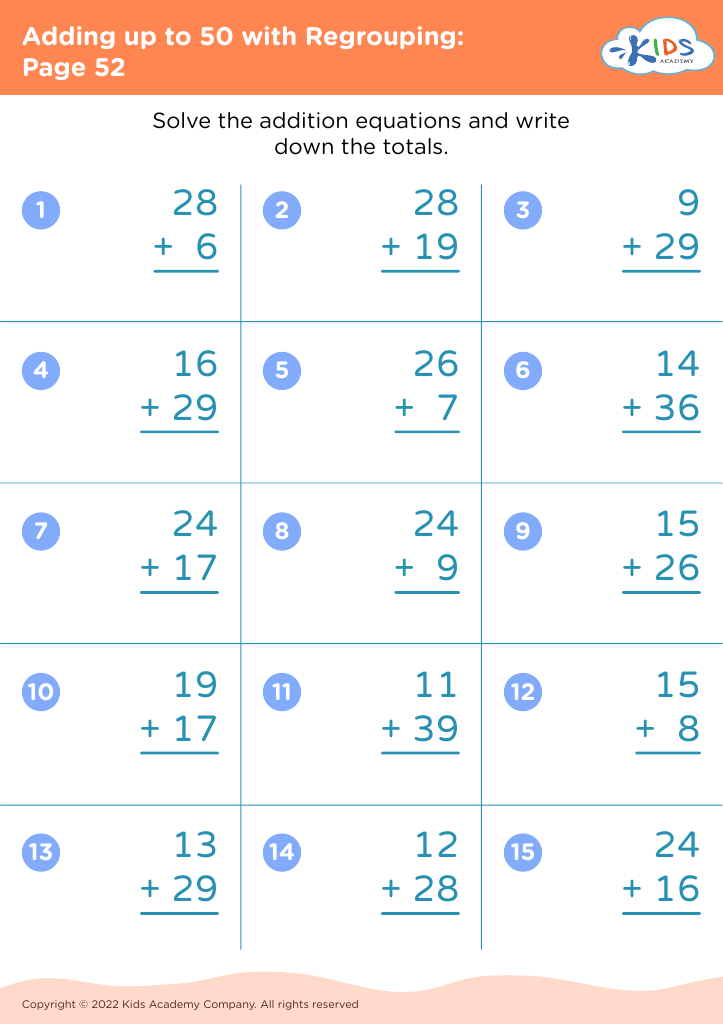
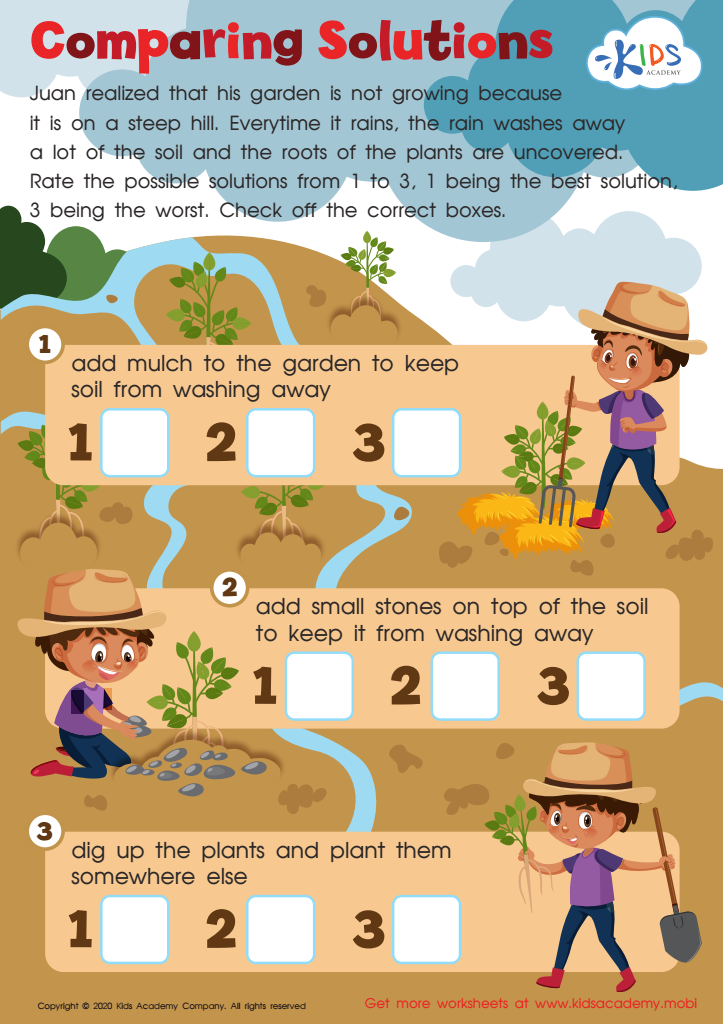
Comparing Solutions Worksheet
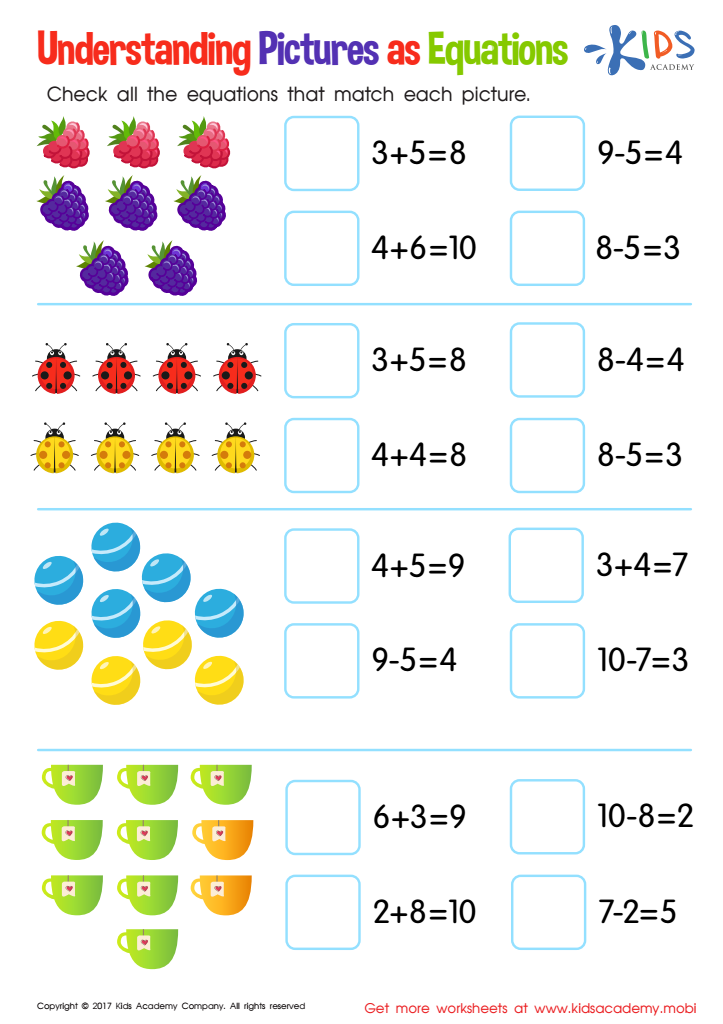
Understanding Pictures as Equations Worksheet
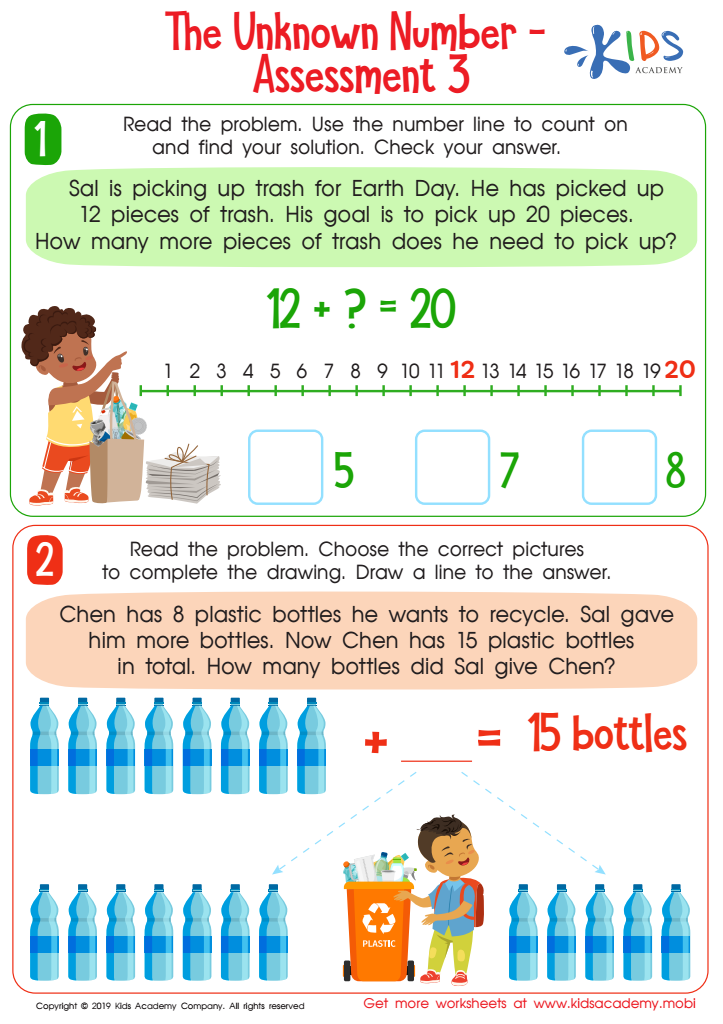
The Unknown Number - Assessment 3 Worksheet
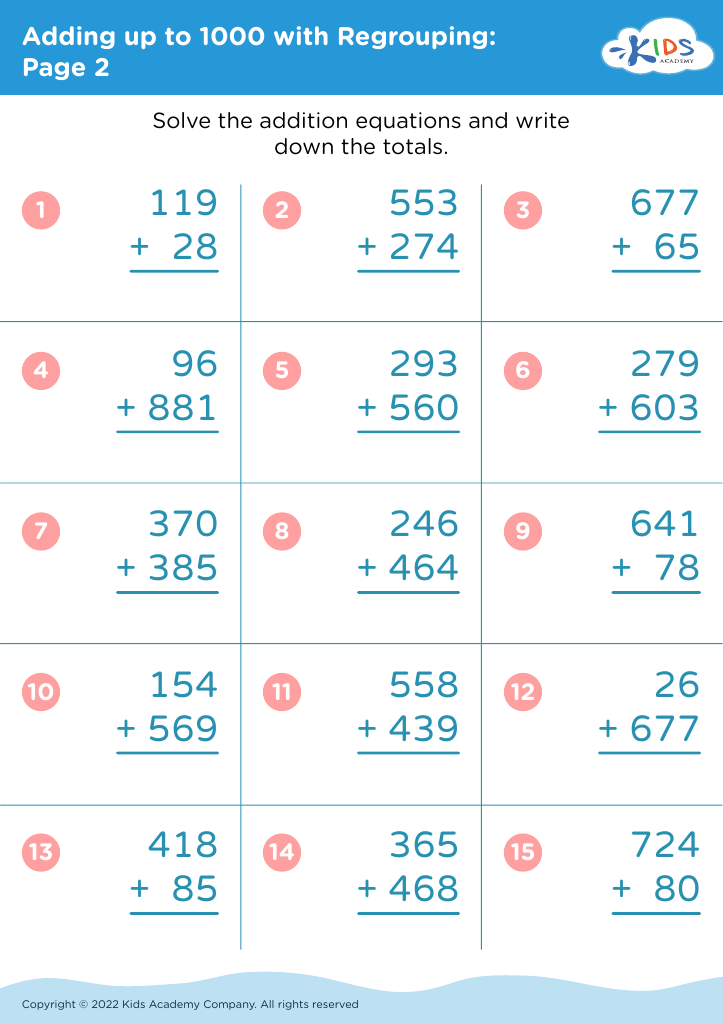
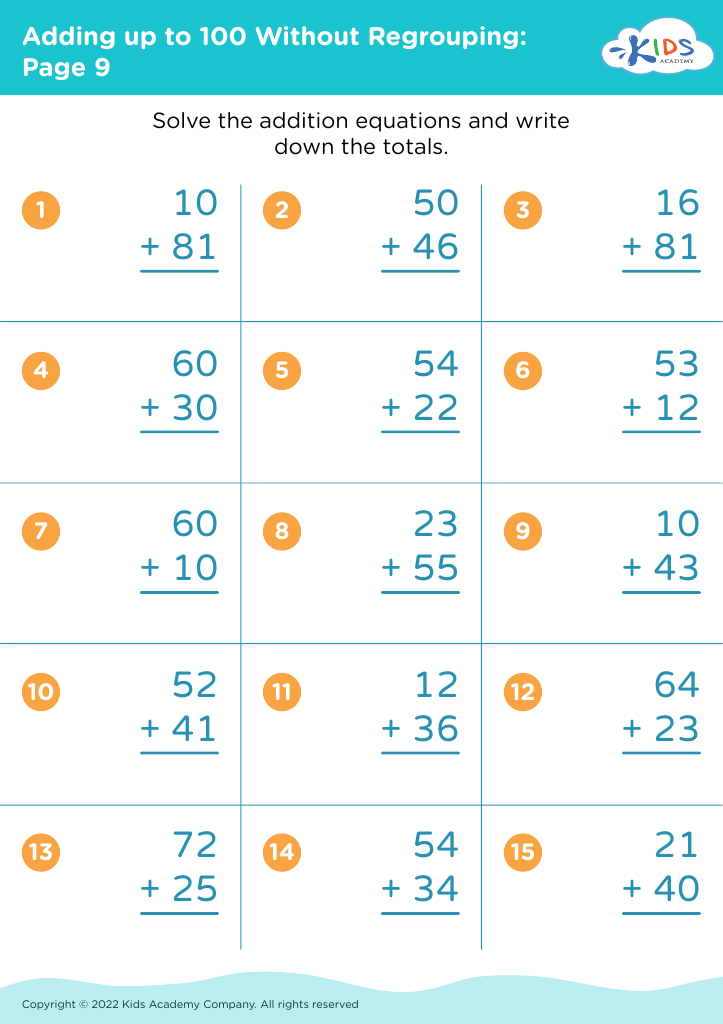






Understanding equations, even at an early age of 5-8, sets a solid foundation for mathematical literacy and critical thinking skills. Equations are simple but powerful tools in mathematics that teach children about relationships, quantities, and problem-solving.
For parents and teachers, engaging young children in understanding equations fosters cognitive development in several key ways. First, it enhances their number sense, helping them recognize patterns, understand the concept of equality, and develop logical thinking. For example, knowing that 2 + 3 = 5 allows a child to see the balance and relationship between numbers.
Moreover, early exposure to equations builds confidence in math skills by demystifying abstract concepts. When youngsters grasp that an equation represents parts of a whole, they become more comfortable with addition, subtraction, and eventually more complex operations.
Equations also encourage analytical thinking and perseverance. Children learn to approach problems systematically, testing different solutions and learning from mistakes. These problem-solving skills are invaluable, extending beyond math to other subjects and everyday life.
Furthermore, understanding equations at a young age makes future learning easier. Students who feel secure in their foundational math skills are more likely to excel in advanced topics, staying engaged and motivated throughout their educational journey. Encouraging this early mathematical engagement is, therefore, crucial for long-term academic and personal development.








