
Understanding geometry Worksheets for Ages 5-8
4 filtered results
Difficulty Level
Grade
Age
-
From - To
Subject
Activity
Standards
Explore our "Understanding Geometry Worksheets for Ages 5-8," designed to make geometry fun and engaging for young learners! Our curated collection introduces shapes, lines, and spatial understanding through vibrant images and age-appropriate activities. These worksheets encourage critical thinking, problem-solving, and creativity as children identify shapes, practice measuring, and explore geometric concepts. Perfect for both classroom and home learning, these resources help build a strong foundation in geometry. We emphasize hands-on activities that engage students, ensuring they grasp essential skills through interactive learning. Foster a love for math early on with our effective and stimulating worksheets tailored for young minds!
Favorites
With answer key
Interactive
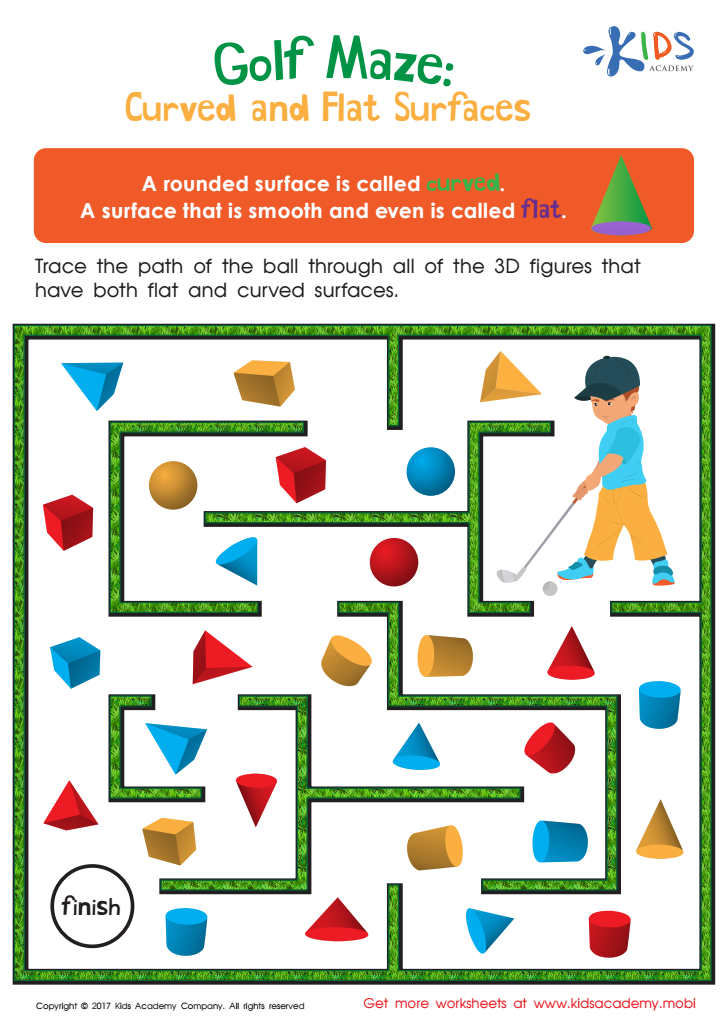
Golf Maze: Curved and Flat Surfaces Worksheet
Give your child a fun and educational challenge with this geometry maze! Your child will navigate 3D shapes to find objects with flat and curved surfaces, while learning important math concepts.
 Assign to My Students
Golf Maze: Curved and Flat Surfaces Worksheet
Worksheet
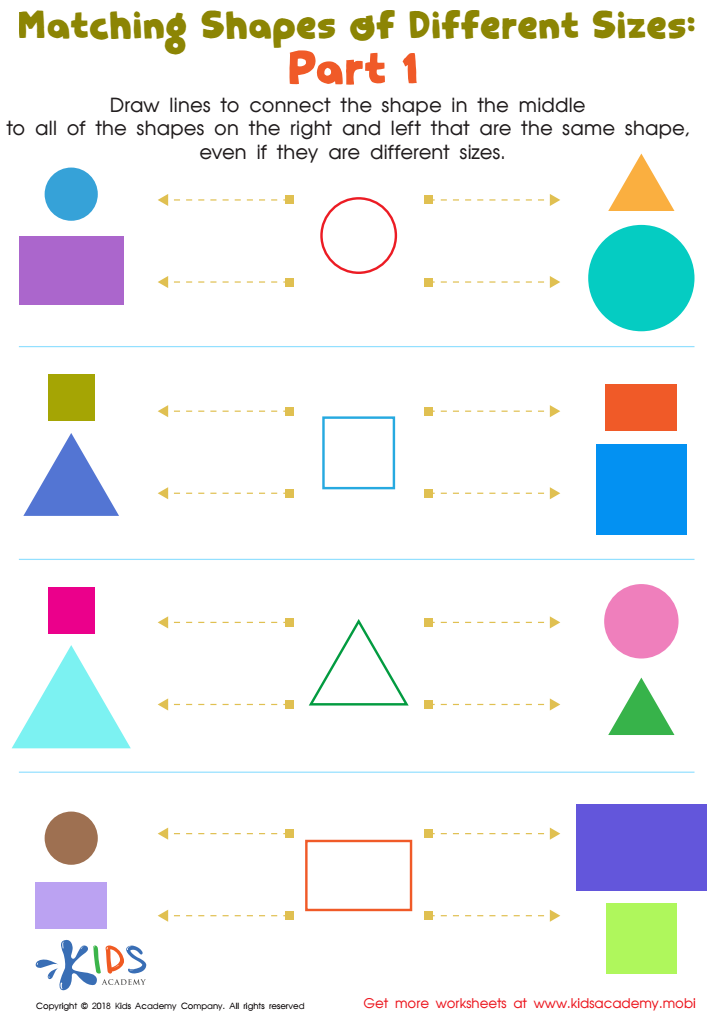
Geometry: part 1 Worksheet
Test your student's shape knowledge with this beginner-level geometry worksheet. This fun, challenging printable PDF will sharpen spacial recognition skills as they match shapes of different sizes. Get started now!
Geometry: part 1 Worksheet
Worksheet
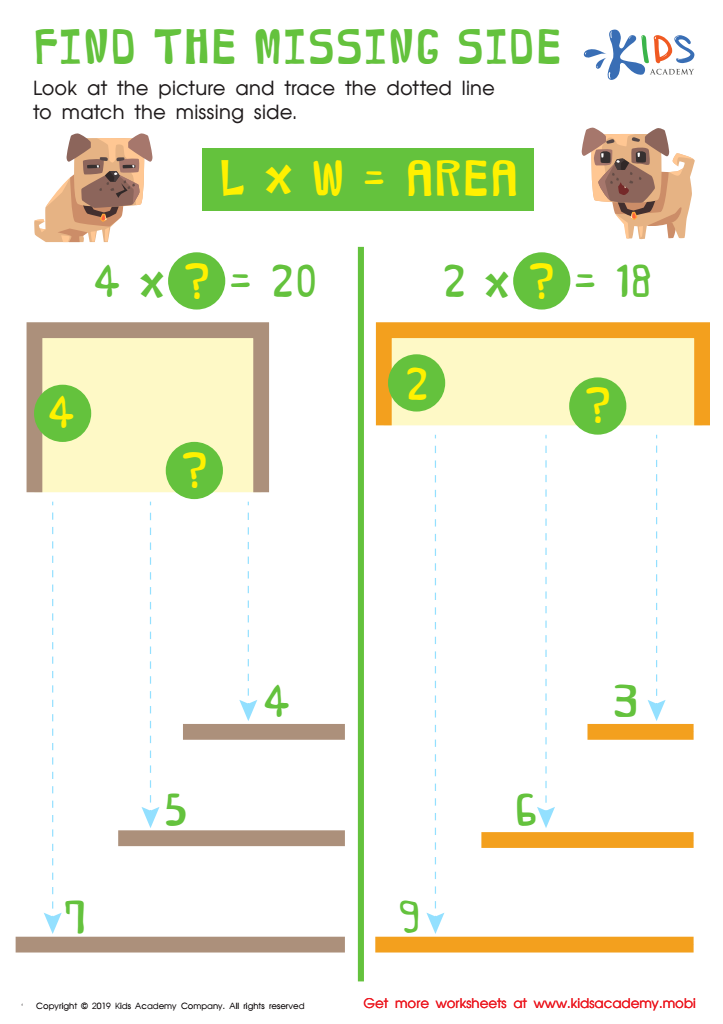
Find the Missing Side Worksheet
Supporting your children with math can significantly help their problem-solving skills. At school, they should already have the basics down, but if they struggle with certain topics, use this worksheet to give them extra practice. Together, look at the illustration and draw the missing side following the dashed line.
Find the Missing Side Worksheet
Worksheet
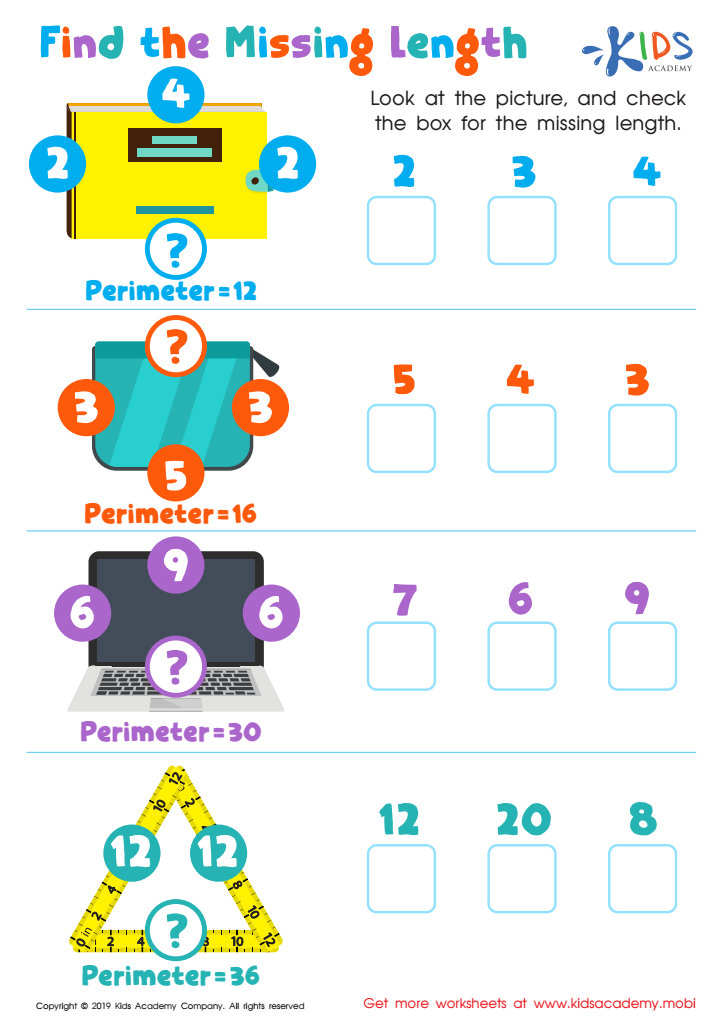
Find the Missing Length Worksheet
Help your kids learn more about geometry, addition and subtraction with this simple worksheet. Look at the four equations and solve the problems with your little ones. Have them check the box for the missing length. This will help your kids become more comfortable with math calculations.
Find the Missing Length Worksheet
Worksheet
Join Kids Academy for Free
Who is primarily going to use this learning content?








Understanding geometry for children ages 5 to 8 is crucial for several reasons. Firstly, it lays the foundational skills needed for more advanced math concepts. Early exposure to geometric shapes, spatial reasoning, and relationships helps children develop critical thinking and problem-solving skills essential for their future education.
Secondly, geometry enhances a child's ability to observe and interpret the world around them. By recognizing shapes, sizes, and spatial orientation, children build their ability to navigate their environment effectively. Activities incorporating geometry, such as sorting shapes or measuring different objects, boost not only mathematical understanding but also fine motor skills and coordination.
Moreover, geometric concepts foster creativity and innovation. Engaging with geometry through hands-on activities like building block construction or art projects encourages creative expression and critical exploration. These activities also promote collaboration and communication skills when children work together.
Finally, fostering a strong understanding of geometry supports parent-teacher collaboration in promoting a child’s learning journey. When parents value geometry, they can reinforce these concepts at home, creating a seamless educational experience. Overall, an early grasp of geometric principles shapes a well-rounded education that forms the basis for lifelong learning and cognitive development.








