Understanding matter Worksheets for Ages 5-8
3 filtered results
-
From - To
Welcome to our "Understanding Matter Worksheets" page designed specifically for children ages 5-8! Our engaging worksheets and activities help young learners explore the basic concepts of matter, including solids, liquids, and gases. These age-appropriate resources encourage hands-on learning through fun exercises that promote critical thinking and creativity. With vibrant illustrations and interactive tasks, students will grasp essential scientific principles while developing their observational skills. Perfect for at-home learning or classroom use, our worksheets will support your child’s academic journey in science. Explore the wonders of matter together and inspire a lifelong love of learning in your little ones!
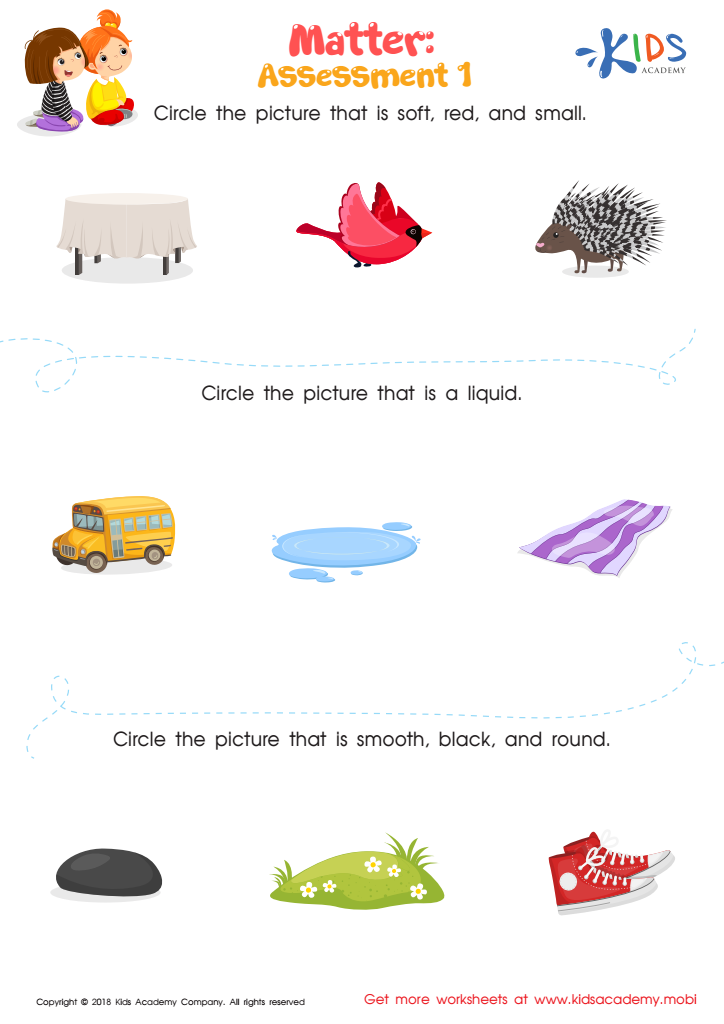
Matter: Assessment 1 Worksheet
 Assign to My Students
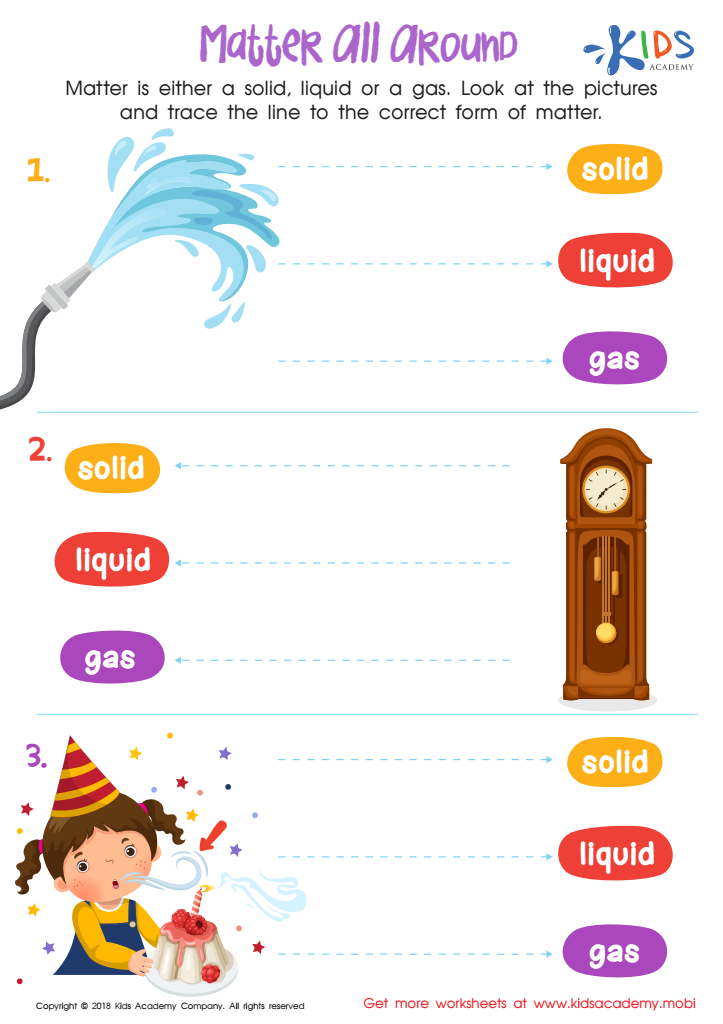
Matter all Around Worksheet
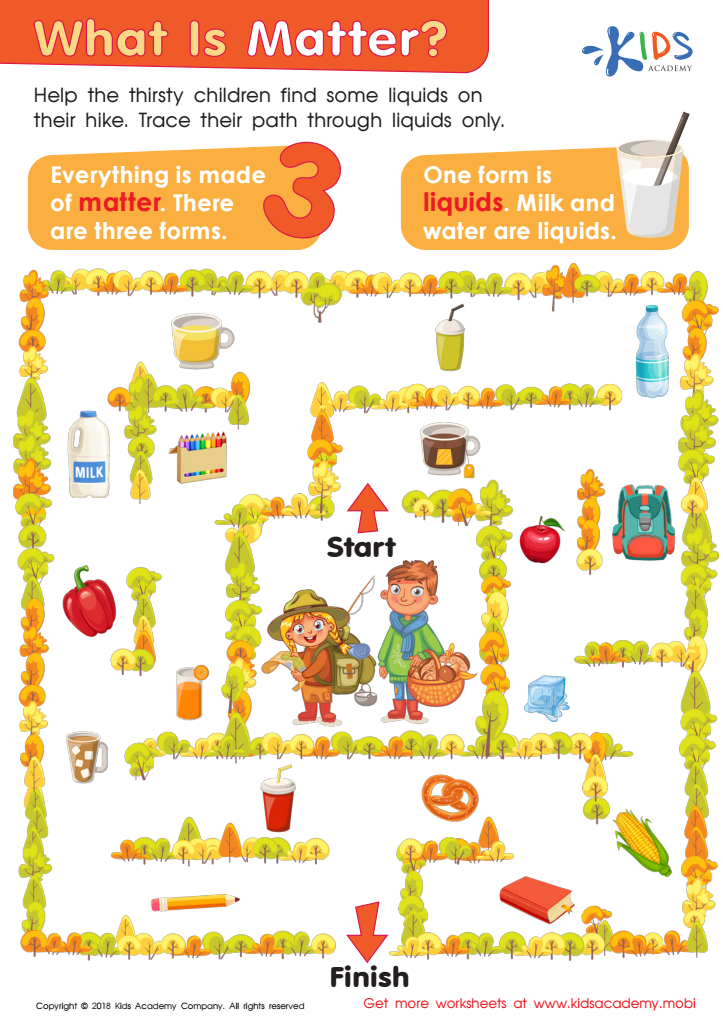
What Is Matter? Worksheet




.jpg)

.jpg)
Understanding matter is crucial for children ages 5-8 as it forms the foundation for their scientific literacy and critical thinking skills. At this age, curiosity is at its peak, and introducing concepts of matter—including solids, liquids, and gases—helps tap into that innate interest. Grasping these concepts allows children to make sense of the world around them, fostering observation and inquiry.
When parents and teachers engage with children in exploring matter, they help promote hands-on learning experiences. Simple experiments—like observing how ice melts or how water evaporates—introduce cause-and-effect relationships, encouraging children to formulate questions, make predictions, and conclude based on their findings. Such activities not only bolster their understanding of scientific processes, but also develop essential skills such as problem-solving, communication, and collaboration.
Moreover, a foundational understanding of matter has interdisciplinary benefits. It ties into language arts through descriptive vocabulary, math through measurement, and social studies through discussions on resources and recycling. Ultimately, when parents and teachers support children in understanding matter, they are nurturing inquisitive minds that will be better prepared for future scientific learning and the complexities of everyday life.








